What Is a Wolf Cut Hairstyle?
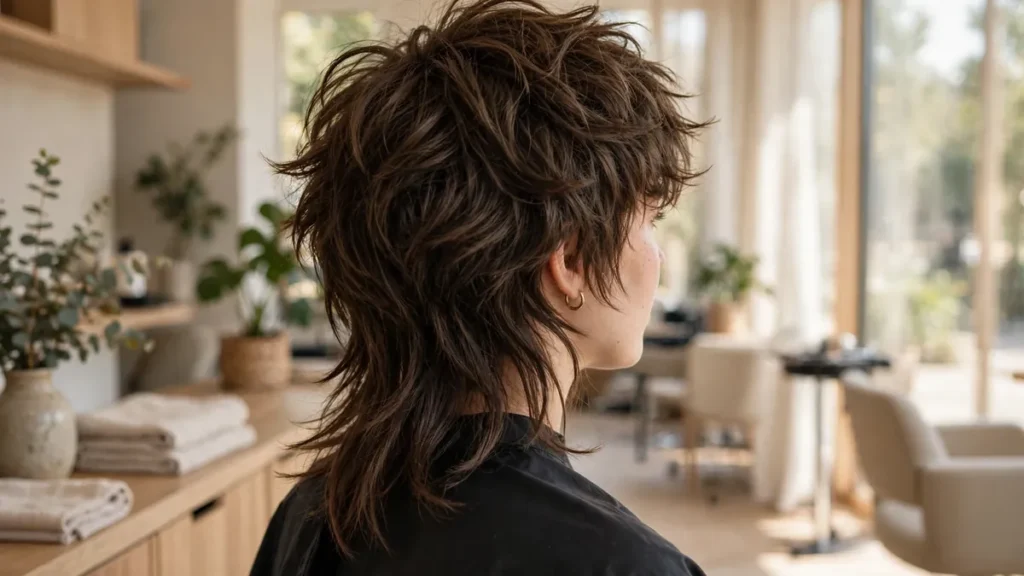
In fact, the wolf cut hairstyle is the bold, edgy layered cut that has taken over salons and social feeds. It blends the shaggy texture of a 70s shag with the disconnected layers of a mullet. As a result, you get a wild, textured look with shorter layers on top and longer length at the back.
A wolf cut works because it is full of movement. The crown gets short, choppy layers that create lift and volume. Meanwhile, the ends stay long and piecey, which gives the cut its signature untamed shape. It also looks effortlessly cool even on second-day hair.
This style suits many hair types, although it truly shines on thick or wavy hair. The layers remove bulk while also adding texture. However, people with fine hair can wear it too, as long as the layers are kept softer. A good stylist will adjust the weight removal to match your density.
The wolf cut haircut is also surprisingly versatile. For example, you can wear it messy for a rock-star vibe or smooth it out for a softer finish. In addition, it grows out gracefully because the layered shape stays interesting between trims. That makes it a great choice if you dislike frequent salon visits.
Before we go deeper, it helps to know where this cut sits in the bigger family of layered haircuts. Therefore, let’s walk through its cousins, from the classic shag to the trendy butterfly cut. You will see exactly how the wolf differs from each one.
The Layered Family: Where the Wolf Cut Fits
Layered haircuts for women have been popular for decades, and the wolf hairstyle is their rebellious youngest member. Layers are simply sections of hair cut to different lengths. They add shape, remove weight, and consequently create movement that one-length hair cannot offer.
Layered haircuts for long hair are a classic example. In particular, long layers keep your length while adding bounce and shape. The wolf cut takes this idea further by making the top layers much shorter and choppier. Consequently, it delivers far more drama than standard long layers.
Medium layered haircuts, also known as medium length layered haircuts, usually sit around the collarbone with blended layers for a soft, polished look. The wolf cut, by contrast, keeps its edges raw and piecey. So if you want polish, choose classic medium layers; if you want edge, choose the wolf.
Shoulder length haircuts with layers can actually be a gentle entry point into wolf territory. For this length, ask your stylist for choppy, disconnected layers around the crown with longer pieces in front. This gives you the wolf spirit at a wearable, office-friendly length.
Short layered haircuts and the short layer cut share the wolf’s love of texture. However, short layered cuts usually keep a neat, even silhouette. The wolf lets the top layers fly free instead. If you like short texture but want more attitude, the wolf is the bolder choice.
Finally, think of the wolf haircut as a volume haircut by nature. The short crown layers lift the roots automatically. Therefore, it is ideal if your hair tends to fall flat on top. The shape does most of the volumizing work for you.
Wolf Cut vs Shag: The Modern Shag Connection
The shag haircut is the wolf cut’s closest relative. A shag, for instance, uses feathered, face-framing layers all over the head. It therefore creates that famous tousled, rock-and-roll texture. Because the two cuts look similar, people often confuse them.
A modern shag haircut is softer and more blended than the vintage 70s version. It keeps the feathered feel, though with smoother transitions. The wolf, in comparison, keeps its layers more disconnected and dramatic. In other words, think of the modern shag as the polished sibling and the wolf as the wild one.
A layered shag haircut distributes layers evenly from crown to ends. In contrast, the wolf concentrates short layers on top and lets the back grow longer. As a result, the wolf has a more extreme top-to-bottom contrast. This is the key difference to explain to your stylist.
Long shag hairstyles are a beautiful middle ground. A long shag haircut, meanwhile, keeps the relaxed shag texture at a longer length. Similarly, long layered hairstyles with shaggy ends give you movement without the mullet-like disconnect of a true wolf.
When people say shag hairstyles or shag cut, they usually mean the all-over feathered look. If they say shag hair style in the context of the wolf, however, they often mean the shaggy top half. To avoid confusion at the salon, bring reference photos. Pictures communicate the exact vibe far better than words.
Wolf Cut vs Other Trendy Cuts
The wolf cut is not the only trendy layered cut right now. Several cousins compete for attention; moreover, each one suits a different taste. Let’s compare them so that you can choose with confidence.
The Butterfly Cut
The butterfly cut hairstyle is the wolf’s softer rival. A butterfly haircut, for example, uses long, face-framing layers that flip outward like wings. It also keeps the overall length looking full and bouncy. Meanwhile, a butterfly hairstyle stays smooth and blended, which makes it very wearable for work.
The main difference is attitude: the butterfly cut is romantic and polished, while the wolf cut is edgy and undone. If you love layers but fear the mullet vibe, the butterfly is your safer pick. Craving the bold, statement-making energy of a true layered transformation? Then go wolf.
The Feathered and Flicks Cuts
The feathered haircut is, in fact, the vintage ancestor of them all. Feathered layers flip back at the ends, thereby creating soft, airy movement. Still, the wolf borrows this flicked-out energy at the ends. However, it adds much choppier texture on top.
The flicks haircut is a close cousin, though with more pronounced flipped ends. As a result, it gives a playful, retro bounce. In comparison, the wolf’s flicks look more lived-in and messy. Both are great on medium to long hair, for example.
The Fluffy Cut
A fluffy haircut is all about soft, cloud-like volume. The fluffy hair style, in contrast, uses rounded layers that expand outward. It looks dreamy and touchable rather than edgy. The wolf can look fluffy too, but its texture is piecey instead of rounded. Choose fluffy for softness and wolf for grit.
The Layered Long Bob
The layered long bob, or lob, is similarly the wolf’s shorter, sleeker cousin. For instance, it sits around the collarbone with blended layers. Because it is shorter, it needs more frequent trims. Our guide to bob haircuts for women covers this length in full detail if you are torn between a lob and a wolf.
The Step Cut
The step cut haircut is famous in South Asia for its visible, stair-like layers. A step cut style, in other words, creates clear, defined steps rather than blended ones. Step cut for short hair can look especially striking since chunky layers frame the face.
The wolf differs because its layers are choppy and textured, not neat steps. However, both cuts love visible layering. If you like the step cut’s definition but want more texture, then ask for a wolf with slightly more structured layers.
A long layer cut is the simplest option of all, and it keeps long hair with soft, subtle layers. It is low-maintenance and, moreover, universally flattering. The wolf is its maximalist opposite; therefore, choose based on how much drama you want.
V Cut and U Cut: Shape Your Ends
The wolf cut’s back length often ends in a V or U shape. Let’s break down each option. Understanding these shapes, therefore, helps you customize your cut.
A v cut hairstyle tapers the back hair into a sharp point, like the letter V. The vcut hair style is dramatic and eye-catching from behind, for instance. It also makes long hair look even longer. A v shaped haircut pairs naturally with the wolf because the pointed ends echo the cut’s edgy mood.
In contrast, a u cut haircut rounds the ends into a soft curve, like the letter U. The u cut hairstyle, on the other hand, looks fuller and more classic. A u shape haircut is ideal, for example, if you want the wolf’s texture on top but calmer, thicker-looking ends. Many stylists, therefore, recommend the U shape for fine hair.
So which should you pick? Choose the V if you love drama and length. On the other hand, pick the U if you want fullness and softness. Either way, tell your stylist before the cut begins. The back shape is much easier to plan than to fix, after all.
How to Style Your Wolf Cut at Home?
The beauty of the wolf cut hairstyle is its wash-and-go potential. The shape does most of the work. Nevertheless, a few styling tricks will take it from good to great.
Everyday Texture
Start, for instance, with damp hair and a pea-sized amount of texturizing cream. Then scrunch the product into the mid-lengths and ends. After that, let your hair air-dry or diffuse it on low heat. This enhances the natural piecey texture without stiffness.
For extra grit, meanwhile, a light sea-salt spray works wonders. Spray it on the roots and then scrunch upward. As a result, you get that effortless, lived-in lift. Avoid heavy oils, since they can weigh down the short crown layers.
Sleek Occasions
You can also smooth a wolf cut for dressier events. Blow-dry with a round brush, for instance, turning the ends slightly outward. Then run a flat iron over just the top layer for polish. The contrast between sleek roots and textured ends looks surprisingly chic.
Because long layered hairstyles like the wolf have so much built-in shape, updos look great too. A messy bun, for example, lets the face-framing layers fall naturally. Similarly, a half-up style shows off the crown volume. Both take under five minutes.
Bangs and Face Framing
Most wolf cuts, for instance, include curtain bangs or wispy fringe. Style them with a small round brush, then sweep outward from the center part. As a result, this opens up the face beautifully. If your bangs fall flat, however, a quick blast of dry shampoo at the roots revives them instantly.
Choosing the Right Wolf Cut for Your Hair Type
Here is how to choose. Not every wolf cut is identical, however. For example, the best version depends on your hair’s texture, thickness, and face shape.
Thick and Wavy Hair
Thick, wavy hair is, for instance, the wolf cut’s natural home. The layers remove heavy bulk; moreover, the waves add free texture. Ask for lots of internal layering, for example, to prevent a triangle shape. In addition, keep the ends slightly thinned so they flick out nicely.
Fine Hair
Fine hair can wear a wolf cut, but the approach changes. Instead, keep the top layers softer and less choppy. As a result, this preserves fullness at the crown. Meanwhile, a U-shaped back keeps the ends looking thicker. Avoid over-thinning, since it can make fine hair look sparse.
Curly Hair
Curly hair and wolf cuts are, in fact, a match made in heaven. The layered shape lets curls stack beautifully instead of forming one big triangle. Ask for a dry cut if possible, since curls shrink differently when wet. As a result, the hair turns out bouncy, defined, and full of personality.
Face Shapes
Round faces, for example, benefit from longer front layers that slim the cheeks. Oval faces, on the other hand, can wear almost any version. Similarly, square faces look great with soft curtain bangs that ease the jawline. Heart-shaped faces, meanwhile, suit volume at the chin to balance a narrower jaw. A skilled stylist will, therefore, tailor the framing to your features.
Maintenance and Growing It Out
In fact, the wolf cut is refreshingly low-maintenance. Trims every eight to ten weeks, for instance, keep the shape fresh. Between appointments, the layered structure also hides regrowth well. Therefore, it suits busy schedules better than precision cuts like blunt bobs.
Color also plays beautifully with this cut. Balayage and lived-in highlights, for example, emphasize the layers. The lighter pieces catch the eye and also showcase the texture. However, avoid harsh lines of color, since they can look choppy against the cut’s soft chaos.
When you are ready to grow it out, the wolf transitions easily. Let the top layers catch up to the length. In the meantime, the shape morphs into a shaggy long-layered look. Eventually, you land at classic long layers with zero awkward phases. For shorter grow-out ideas along the way, the versatile short styles in our best haircuts for men guide show how texture works at every length.
The Wolf Cut in Pop Culture
Part of the wolf cut’s fame, in fact, comes from the screen. The style exploded partly because K-pop idols and stars of the best Korean dramas wore shaggy, layered looks on camera. Fans consequently rushed to salons with screenshots in hand.
Bold, experimental hair moments like those seen in Euphoria season 3 also fuel the trend. That show’s fearless beauty looks, for instance, match the wolf cut’s rebellious spirit perfectly. It is no surprise, therefore, that fans of the aesthetic want the haircut to match.
Even classic TV plays a role. Flip through our best sitcoms list, for example, and you will spot the 90s ancestors of this cut: feathered, face-framing layers everywhere. The wolf is simply the modern, edgier evolution. After a long salon day, for instance, settling in with the best series to watch on Netflix is the perfect way to debut your fresh layers.
Frequently Asked Questions
Is the wolf cut the same as a shag?
Not quite. The shag, for instance, spreads feathered layers evenly across the whole head. The wolf, by contrast, concentrates short, choppy layers on top with longer length at the back. They are cousins; however, the wolf is bolder and more disconnected.
Does the wolf cut work on straight hair?
Yes, though it needs styling help. Straight hair will not get the wolf’s signature texture on its own, for example. Instead, use texturizing spray and scrunching to create the piecey finish. Without product, a wolf on pin-straight hair can otherwise look like a plain layered cut.
How do I ask my stylist for a wolf cut?
Bring reference photos and, for example, use clear terms like short choppy layers on the crown, longer length at the back, curtain bangs, and lots of texture. Also mention whether you want a V-shaped or U-shaped back. As a result, photos prevent almost every salon misunderstanding.
Will a wolf cut suit a round face?
Absolutely, with the right framing. Longer front layers and curtain bangs, for example, slim a round face beautifully. Instead, avoid too much width at the cheeks. Your stylist can place the volume higher at the crown instead.
How often should I trim a wolf cut?
Every eight to ten weeks is enough for most people. The layered shape, moreover, grows out gracefully. If the crown starts looking heavy, however, a quick texturizing trim between full appointments keeps it fresh.