
The plane doors close, and your skin already feels tight. Sound familiar? Long-haul flying through Dubai tests even calm, balanced skin. Still, a smart in-flight skincare routine changes the whole story. Instead of landing dull and flaky, you step off feeling comfortable. Then you walk into DXB looking rested, not wrecked. Honestly, the secret is timing, not a suitcase of products.
Picture this scene at six in the morning. A tired traveller lands at DXB after an overnight flight home. Outside, the city already glows with early heat and light. Inside, her skin still feels soft, calm and hydrated. Why? Because she treated the journey itself like a skincare plan. So this guide follows that exact journey, stage by stage. First comes the night before, then the airport and the flight. Finally, you get a gentle recovery plan for landing evening.
Maybe your next long trip starts with a holiday rather than work. In that case, checking the next public holiday in the UAE helps you plan rest too. After all, tired skin often starts with tired planning. Therefore, give your skin the same care you give your itinerary.
Why does your skin suffer so much on a plane?
First, understand the cabin itself, because the cabin explains everything. Aeroplane air feels dry, stale and strangely tiring for good reason. Indeed, cabin humidity and skin comfort are closely linked. Most cabins sit far below the humidity your skin prefers. Consequently, water escapes from your skin faster than usual. Then tightness, flaking and dullness appear within a few hours.
Why does skin get dry on planes so fast?
So, why skin gets dry on planes comes down to simple physics. Dry cabin air pulls moisture from the surface of your skin. Meanwhile, recycled air keeps that dry air moving past your face. As a result, your cheeks may feel papery by mid-flight. Similarly, your hands and cuticles often dry out even faster. Fortunately, you can slow that moisture loss with smart layering.
Also, cabin pressure adds another quiet stress during long flights. Lower pressure can leave skin looking puffy and feeling sensitive. At the same time, disrupted sleep weakens your normal overnight repair. Thus, jet lag skin often looks grey, swollen and uneven. However, none of this means damage is inevitable. Instead, it simply means your routine must start before takeoff.
What do UV rays and window light do up there?
Next, think about light, because altitude changes the light too. UV rays through plane windows reach you more strongly at cruising height. Actually, window seats receive the most exposure during daytime flights. Therefore, sun protection matters even when you sit inside a cabin. Likewise, bright window light can disturb your sleep on day flights. So a window shade, sunglasses and sunscreen all earn their place.
Finally, remember your habits during the flight itself. Hot drinks, salty snacks and very little water add up quickly. For example, many travellers drink coffee yet forget plain water entirely. Then they blame the moisturiser, although dehydration started much earlier. In short, your skin reflects the whole journey, not one product.
The night before: how do you prep your skin?
First, keep the night before calm and deliberately gentle. Your goal is hydration and comfort, not a dramatic new treatment. So skip harsh scrubs, strong peels and brand-new active products. Instead, cleanse softly and moisturise a little more generously than usual. Then go to bed early if you possibly can. After all, sleep is the cheapest overnight flight skincare prep.
Second, shower lukewarm rather than hot before your travel day. Hot water strips natural oils and leaves skin tighter by morning. Afterwards, apply your moisturiser while skin still feels slightly damp. That simple step locks in extra water before you sleep. Meanwhile, pack your hand luggage skincare before you get sleepy. Consequently, you will not forget essentials during a rushed morning.
Third, drink water steadily through the evening before bed. However, avoid flooding yourself right before sleep and waking hourly. Rather, sip regularly with dinner and keep a bottle nearby. Similarly, eat a normal, balanced evening meal where possible. Then your body starts the journey hydrated, rested and steady. Ultimately, great travel skin begins on the ground, at home.
At the airport: what should you do before boarding?
First, cleanse gently once you reach the airport lounge or gate. Travel days collect sunscreen, dust and city grime on your face. Yet aggressive washing at this stage only invites more dryness. So use lukewarm water or a gentle cleanser, then pat dry. Immediately afterwards, apply a generous moisturiser for long flights ahead. That early layer becomes your base for the whole cabin routine.
Next, apply sunscreen before a daytime departure from Dubai. Even cloudy mornings still expose you during boarding and takeoff. Also, window seats need sunscreen after landing later that day. Therefore, keep a travel-size tube ready inside your clear pouch. Then reapplying later feels easy rather than annoying. In fact, small habits like this protect skin without any fuss.
Meanwhile, think about what awaits you after this flight ends. Perhaps you plan sightseeing straight after a short rest at home. Reading about things to do in Dubai can wait until you land, though. First, protect your skin, drink some water and board calmly. After all, a rested arrival makes every plan more enjoyable.
Your carry-on skincare kit: what belongs inside?
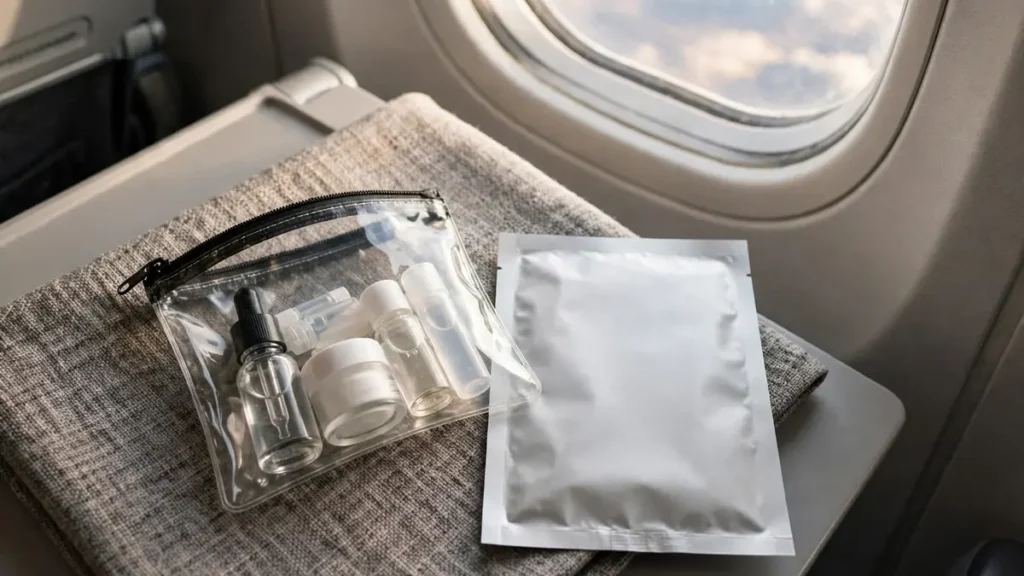
First, build a small carry-on skincare kit, not a mini bathroom shelf. Everything must respect general liquid rules for hand luggage, of course. Generally, liquids travel in small travel-size skincare containers inside one clear bag. So decant favourites into tiny pots instead of carrying full bottles. Then keep that pouch in your seat pocket, not overhead. Consequently, your routine stays easy even when lights dim.
Your skincare in hand luggage should cover five simple jobs. Cleanse, hydrate, seal, protect and comfort are those five jobs. For example, one gentle cleanser handles both face and hands. Likewise, one rich cream can cover cheeks, hands and elbows. Thus, a short checklist keeps packing calm and logical:
- A gentle cleanser in a small, leak-proof travel container
- A rich moisturiser for long flights, in a travel-size tub
- A facial mist spray for quick, light hydration top-ups
- A sheet mask for one quiet mid-flight treatment moment
- Hand cream for flights, because hands dry out fast
- Sunscreen for daytime flying and for after you land
- A small lip balm on a plane journey, used briefly as needed
- Soft tissues and a small bag for used items
Also, test every travel product at home before the trip. New products sometimes sting, especially when skin already feels dry. Instead, travel with familiar formulas that your skin already trusts. Then seal lids tightly and place the pouch inside another bag. After all, cabin pressure changes can nudge loose lids open. Finally, wipe the pouch after security, because trays are rarely clean.
In the air: how do you care for skin hour by hour?
First, settle in and reset your skin after takeoff. Once the seatbelt sign goes off, cleanse away airport grime gently. Then apply moisturiser while your skin still feels slightly fresh. Afterwards, seal drier areas with a slightly thicker layer of cream. Cheeks, the nose sides and chin usually need extra help. So think layers, not one heavy coat all over.
Next, use your facial mist spray with a little strategy. Mist lightly, then press moisturiser over it straight away afterwards. Otherwise, mist alone can evaporate and leave skin feeling tighter. Indeed, layering turns a pleasant spray into useful hydration support. Repeat this pairing every few hours on very long sectors. Meanwhile, keep drinking water in small, regular sips throughout.
Should you use a sheet mask on a plane?
Yes, and a sheet mask on a plane suits the middle hours best. By then, your first moisturiser layer has worn quite thin. So cleanse lightly, apply the mask and relax for fifteen minutes. Then remove it and massage the remaining essence gently inwards. Immediately afterwards, seal everything with your regular cream layer again. Consequently, the hydration stays on your skin instead of evaporating.
However, pick your moment with your neighbours in mind. Perhaps choose the quiet period after a meal service ends. Alternatively, use a clear, rinse-free hydrating mask if sheets feel awkward. Either way, avoid strong fragrances in a shared cabin space. Then dispose of packaging neatly inside your small rubbish bag. In short, considerate masking keeps the ritual relaxing for everyone.
How do you handle hands, sleep and overnight flights?
First, wash your hands before eating, then reapply cream afterwards. Soap and cabin air together dry hands surprisingly quickly, actually. So keep hand cream for flights inside your seat pocket always. Then massage a little into cuticles during films or reading. As a result, your hands arrive soft instead of cracked. Similarly, avoid touching your face between hand washes, where possible.
Next, treat sleep as a skincare step on overnight sectors. Good overnight flight skincare means moisturising richly before you dim lights. Then use an eye mask and settle into real rest. Even broken sleep still helps skin look calmer by landing. Conversely, scrolling bright screens all night worsens that tired look. Therefore, set a simple lights-out point and actually keep it.
Also, move a little whenever the cabin routine allows it. Short walks and ankle rolls support circulation during long sitting hours. Consequently, puffiness around eyes and cheeks often looks less obvious later. Then splash your face with cool water before the landing meal. That quick refresh wakes skin up without stripping it dry. Finally, add one thin moisturiser layer before descent begins.
Makeup on long-haul flights: what actually works?
First, decide honestly whether you need makeup on long-haul flights at all. Many Dubai-hub travellers board fresh-faced and apply makeup before landing. Honestly, that approach suits long sectors better than a full morning face. Because makeup sits over drying skin for many hours otherwise. Then it settles into lines and flakes by descent time. So bare, moisturised skin is a perfectly smart travel choice.
However, a meeting or family welcome may call for polish. In that case, keep the flying face deliberately light and simple. For example, use a tinted moisturiser instead of heavy foundation. Likewise, choose cream products, because powders highlight dry patches badly. Then skip mascara until the final hour before landing. As a result, you avoid smudges from sleep masks and naps.
Next, plan a small landing refresh rather than constant touch-ups. Before descent, cleanse lightly and rebuild hydration from the start. Then apply your light base, blush and brow touches quickly. Afterwards, read our guide to sweat-proof makeup tips for arrival in Dubai heat. Because stepping into UAE warmth melts careless makeup very fast. Ultimately, fresh makeup applied late beats old makeup repaired repeatedly.
Also, think about your hair during that same landing refresh. Cabin air flattens some hair and frizzes other hair types. If heat and humidity trouble your hair back home too, explore hair fall in Dubai advice after your trip. Meanwhile, a simple braid during the flight limits tangles overnight. Then you land looking tidy without any heat styling tools.
Landing at DXB: what are your first moves?
First, reapply sunscreen after landing if daylight waits outside. The walk to taxis and cars exposes you quickly in Dubai. Indeed, sunscreen after landing protects skin you just hydrated carefully. Then add sunglasses and seek shade where you sensibly can. After all, arrival sunshine feels stronger after a dark cabin. So treat those first outdoor minutes like midday, not morning.
Next, keep drinking water as you move through the terminal. Airports involve walking, queues and warm air at every stage. Meanwhile, your body still recovers from hours of dry cabin air. Therefore, finish a bottle before you reach home or hotel. Then eat something fresh and normal once you settle down. Consequently, your energy and skin both recover much faster.
Also, resist the urge to scrub your face immediately. Tired travellers often over-cleanse, hoping to feel instantly brand new. Instead, rinse gently and moisturise, then rest before deeper care. If you are visiting and planning your stay, the Dubai areas guide helps you settle first. Similarly, souvenir runs to malls can wait until tomorrow morning. Actually, our Dubai shopping guide is better enjoyed after a proper sleep anyway.
The first evening: how do you run a post-flight recovery?
First, start your post-flight hydration routine with a gentle evening cleanse. Wash away sunscreen, cabin dust and your light landing makeup. Then use lukewarm water and take your time over it. Afterwards, pat skin dry rather than rubbing with a towel. Immediately next, apply a hydrating layer on slightly damp skin. That damp-skin trick makes every evening product work harder.
Second, moisturise generously and cover the areas flights hit hardest. Cheeks, forehead and the skin around your nose need attention. Meanwhile, apply hand cream again after washing up at home. Then change into clean, soft sleepwear and dim bright lights. As a result, your body starts shifting towards local time. In fact, calm evenings repair jet lag skin surprisingly well.
Third, keep active treatments paused for this first evening only. Strong exfoliants can wait until skin feels calm again tomorrow. Instead, repeat moisturiser before bed if skin drinks it up. Then sleep in a cool, dark room where possible. Also, keep water beside the bed for overnight sips. Finally, judge your skin in morning light, not midnight mirrors.
So, can a simple routine really help you arrive with fresh skin? Yes, because small steps at the right moments compound beautifully. First you prep, then you protect, then you restore moisture steadily. Meanwhile, sleep and water quietly support everything from the inside. Therefore, pack that small pouch before your next long-haul departure. Then land in Dubai feeling human, comfortable and genuinely refreshed.
Frequently asked questions
How often should you moisturise during a long flight?
Generally, reapply moisturiser every three or four hours on long sectors. However, very dry skin may need a thinner top-up sooner. So mist lightly, then seal with cream each time afterwards. Then your skin stays comfortable without feeling heavy or sticky.
Can you take skincare in hand luggage through security?
Yes, because skincare in hand luggage is normal for most travellers. Keep liquids in small containers inside one clear resealable bag. Generally, airports limit container sizes, so check your departure airport rules. Then place the bag separately at security for faster screening.
Is a sheet mask on a plane actually worth it?
Yes, especially during the dry middle hours of long flights. First, the mask adds concentrated hydration exactly when skin feels tightest. Then sealing it with cream helps that hydration last longer. Alternatively, a clear gel mask works if sheets feel awkward.
Should you wear sunscreen on an overnight flight?
Overnight flight skincare needs less sunscreen while the cabin stays dark. However, sunrise through windows changes that situation quite quickly. So apply sunscreen before bright morning light reaches your seat. Then reapply again after landing for the journey home.
How do you fix jet lag skin after you land?
First, hydrate inside and out with water and gentle moisturiser. Then sleep at local night-time to reset your body clock. Meanwhile, skip harsh treatments until skin feels calm again. Usually, dull jet lag skin improves within a day or two.
What is the one product a carry-on skincare kit needs most?
Honestly, a rich and familiar moisturiser matters more than anything else. Because it seals hydration after cleansing, misting and masking alike. Also, it doubles for hands, elbows and dry patches easily. So choose your best moisturiser for long flights first, always.