
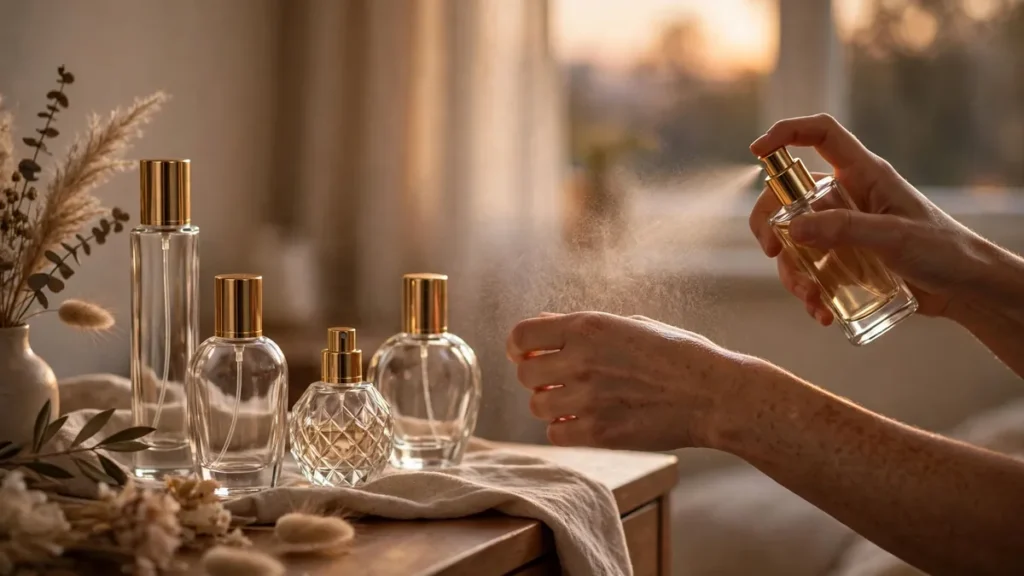
You spray perfume at home, and you feel confident. By lunchtime, however, the scent has almost vanished completely. Sound familiar? Heat, sweat, and dry air explain that vanishing act, so please stop blaming your bottle.
This guide shows you how to make perfume last longer with habits, not hype. First, you will learn why scent dies fast in the UAE. Then, you will bust four myths that waste perfume daily. Finally, you will build a simple routine for mornings and evenings.
Quick promise before we start, though. No trick here needs a new bottle or a bigger budget. Instead, small changes in timing, placement, and storage do the heavy lifting. So, are you ready to fix your routine?
Why perfume fades fast in Dubai heat?
Heat speeds up evaporation, and evaporation steals scent quickly. Warm skin pushes fragrance molecules into the air faster, so top notes disappear early. In fact, a scent that lasts all winter can fade within hours in July.
Sweat changes the picture again, and sweat arrives fast outdoors. Moisture dilutes the fragrance oils on your skin, and then friction from clothes rubs scent away. Consequently, your morning spray faces a tough shift before noon.
Air conditioning creates another quiet problem for scent lovers. Cool indoor air dries your skin through the day, and dry skin holds fragrance poorly. Therefore, perfume longevity on dry skin drops sharply by afternoon. Later, you step back into humid air, and the weakened scent fades even faster.
Sunlight plays a part before you even spray, too. Ultraviolet light breaks down delicate fragrance oils inside a poorly stored bottle. As a result, a weakened scent starts weak and finishes weaker. Luckily, good habits fix most of these problems, so keep reading.
Which perfume myths should you stop believing?
Myths survive because friends repeat them with total confidence. Your aunt swears by one trick, and your colleague swears by another. However, confident advice still fails when heat enters the room. So, let us test four famous claims honestly.
Does rubbing wrists together help scent last?
No, and this habit tops most lists of perfume application mistakes. Rubbing wrists together creates friction and gentle heat on the skin. That friction crushes delicate top notes, and then the scent smells flatter. Instead, spray each wrist once and let both dry naturally.
Try a simple test this week, for example. Spray one wrist and rub it against the other wrist. Next, spray your neck lightly and leave that spot untouched. After an hour, compare both spots honestly with a friend. Usually, the untouched spot smells brighter and lasts noticeably longer.
Should you spray the air and walk through it?
This dramatic move looks fun, but the move wastes most perfume. Most droplets land on the floor, your hair, or thin air. Meanwhile, very little scent settles evenly on warm skin. Therefore, a direct spray on skin always beats a scented cloud.
Think about a summer doorway in Dubai, for instance. Hot air rushes in, and your perfume cloud drifts away instantly. In contrast, a targeted spray stays exactly where you placed it. So, aim the nozzle at skin from a short distance instead.
Do more sprays always mean longer life?
Extra sprays raise volume, but extra sprays rarely extend wear time. Your nose also adapts quickly, so a heavy cloud can feel deceptively weak later. Indeed, ten sprays fade on the same schedule as four sprays. Placement and skin preparation matter far more than quantity, as you will see below.
Heavy spraying creates a social problem, too, especially indoors. Colleagues in a lift notice an overpowering cloud within seconds. Clients in a small meeting room notice even faster, unfortunately. Thus, a moderate routine protects both your scent and your reputation.
Should you store perfume in the fridge?
Cold storage sounds clever, yet a fridge rarely helps everyday bottles. Temperature swings harm fragrance when you move bottles in and out daily. Condensation also creeps in, and repeated chilling dulls delicate notes over time. Instead, a cool, dark drawer beats a fridge for most homes.
Bathroom shelves cause similar trouble, by the way. Steam from showers warms the room, and bright lights hit bottles daily. Consequently, bathroom storage quietly shortens a bottle’s best life. A bedroom drawer solves that problem in one simple move.
Which habits actually make perfume last longer?
Good news arrives now, because proven habits feel refreshingly simple. Each habit below tackles heat, dryness, or evaporation directly. Also, each habit costs nothing beyond a minute of patience. Pick two habits first, then add the rest gradually.
Why should you apply perfume after a shower?
Timing changes everything, so apply perfume after a shower whenever possible. Warm water opens your routine nicely, and clean skin welcomes fragrance evenly. Pat your skin dry gently, however, and leave a hint of dampness. Then, spray before you dress for the day.
Moisturiser comes next in this winning sequence, and moisturiser matters hugely. Simply put, moisturised skin holds perfume far better than dry skin does. An unscented lotion works best, because a scented lotion can clash with perfume. For example, a thin layer on your neck and arms creates a smooth base.
Dry skin drinkers, take special note here, please. Your skin absorbs fragrance oils quickly, and then the scent sinks and fades. Hence, that lotion step doubles your wear time on many days. Still unsure? Test one moisturised arm against one dry arm tomorrow.
Where are the best pulse points for perfume?
Warm spots release scent steadily, so choose your pulse points for perfume wisely. Classic pulse points for perfume include your neck sides and inner wrists. Your chest and the creases of your elbows also work beautifully. Behind your ears, a light touch adds a soft trail.
Warmth explains why these spots outperform cooler areas, in fact. Blood flows close to the surface there, and gentle heat lifts fragrance gradually. As a result, people near you catch pleasant waves, not one harsh blast. So, spray two or three spots, then stop and assess.
Clothing changes the plan slightly, though, as later sections explain. Bare skin suits pulse points best, because fabric blocks warmth. Meanwhile, a scarf or collar can hold a separate, softer layer. Together, skin and fabric create depth without extra sprays everywhere.
How many sprays of perfume do you actually need?
Most people need fewer sprays than habit suggests, honestly. Two to four sprays suit a normal workday for most wearers. A focused evening look might use four or five sprays, maximum. Beyond that point, extra sprays add volume, not hours.
Your setting should guide that final number, of course. An outdoor brunch tolerates a slightly stronger application than a clinic waiting room. Similarly, a large wedding hall handles more scent than a small car. Thus, read the room first, then spray with restraint.
Concentration changes the maths as well, as the next sections show. A rich formula often needs just two careful sprays. A lighter formula may need three sprays plus a fabric touch. Indeed, learning your own bottle beats following any fixed rule.
Perfume on clothes vs skin: which lasts longer?
Fabric holds scent longer than skin on most days, surprisingly. Cotton and linen trap fragrance oils, and then release them slowly for hours. Skin, however, warms scent beautifully and projects it further. So, perfume on clothes vs skin becomes a balance, not a battle.
Try a split approach on busy days, for example. Spray your neck and wrists for warmth and projection first. Next, mist your shirt or abaya lightly from a distance. Consequently, the fabric layer carries scent long after skin notes soften.
Caution matters with delicate fabrics, though, so test first. Spray a hidden seam, then check for marks after it dries. Silk and pale fabrics stain more easily than sturdy cotton. Also, avoid spraying jewellery, because fragrance can dull some finishes.
Shopping days offer a perfect practice run, in fact. A trip focused on buying perfume in Dubai lets you test skin and fabric side by side. Spray a tester on one wrist and another on a sleeve. Later, compare both honestly before you commit to a bottle.
Should you spray perfume on hair?
Hair holds scent wonderfully, but hair needs gentle handling here. You can spray perfume on hair lightly, yet alcohol can dry strands over time. Instead, mist your brush once, then run the brush through dry hair. Alternatively, spray the ends from a distance, never the scalp.
Long hair creates a lovely scent trail when you move. A ponytail swing releases soft waves, and a loose style does the same. However, daily direct spraying can leave ends feeling brittle. So, save hair spraying for occasions, not every single morning.
Grooming pairs neatly with scent, by the way. A fresh cut frames your whole look, and scent completes it quietly. That unisex pairing explains why many readers also browse grooming ideas and classic cuts before a big night. Together, tidy hair and lasting scent feel effortlessly polished.
Eau de parfum vs eau de toilette: does strength matter?
Labels confuse shoppers, so let us simplify eau de parfum vs eau de toilette. Eau de parfum usually carries more fragrance oil, and that richness often lasts longer. Eau de toilette feels lighter and fresher, and that lightness suits hot mornings. Neither choice is better universally, because your day decides.
A light formula shines during office hours in summer, for instance. You smell fresh, and close colleagues stay comfortable around you. Then, a richer formula earns its place at evening events. Hence, many Dubai residents keep one of each style ready.
Oil-based options deserve one brief mention here, too. A tiny dab of attar for long-lasting scent can anchor a base layer nicely. Still, this guide focuses on technique, so treat attar as one small layering option only. Your spray routine, not the product shelf, does the main work.
Which perfume layering tips actually help?
Layering sounds fancy, yet simple perfume layering tips rely on order. Start with an unscented lotion, then add your main spray on top. Next, finish with one light fabric mist for staying power. Indeed, that three-step stack outlasts a single heavy application easily.
Scent families should agree with each other, of course. Citrus over citrus feels clean, and vanilla under soft florals feels cosy. In contrast, two loud and unrelated scents can clash badly. So, test any new pairing at home before a big occasion.
Seasonal thinking helps your choices as well, ultimately. A thoughtful perfume for hot weather leans fresh, clean, and lightly applied. Heavier evening scents still work, but smaller doses suit warm nights. For evenings out across the city, plan scent alongside your outfit and your evenings out in Dubai plans together.
How to store perfume so it survives summer?
Storage protects your investment quietly, so learn how to store perfume properly. Heat, light, and air form the three enemies of fragrance. A dark drawer at steady room temperature defeats all three daily. Therefore, move bottles away from windows and sunny dressers today.
Perfume storage in heat deserves extra care in UAE homes especially. Cars, for example, bake bottles within an hour at midday. Balconies and bathroom windowsills cause slower damage across weeks. Instead, keep your daily bottle in a shaded bedroom drawer.
Caps matter more than most people realise, in fact. A tight cap slows air exposure, and slower air exposure protects freshness. Original boxes add another shield against light, too. So, keep the box, close the cap, and skip pretty sunny displays.
Travel days test storage habits quickly, however. A small travel perfume atomiser solves handbag heat and leak worries neatly. Fill your travel perfume atomiser at home, then keep it inside a shaded pouch. Consequently, your main bottle stays safe at home, untouched by daily heat.
Gift shopping adds another storage moment each year, by the way. Festive seasons and events and gifting occasions tempt everyone to store wrapped bottles in warm cars. Please resist that habit, because one hot afternoon can dull a gift. Instead, take purchases straight home before your next stop.
What does a smart evening refresh routine look like?
Evenings in the UAE often start after a long, warm day. Your morning scent has faded, and a full respray feels too heavy. Luckily, a gentle refresh routine revives scent in five minutes. Follow these steps before dinner, a majlis visit, or a night stroll.
First, splash your neck and wrists with cool water. Pat the skin dry, then add a pea-sized touch of unscented lotion. Next, spray each pulse point once, and only once. Finally, mist your outfit lightly if the fabric passed your patch test.
Timing shapes the result here as well, of course. Refresh about twenty minutes before you leave home, ideally. That pause lets the scent settle, and then the first impression smells smooth. Rushing out straight after spraying, however, leaves a harsh opening blast.
Weekend plans beyond Dubai reward the same routine, too. A sunset drive and an evening exploring Sharjah’s cultural spots both suit a soft, refreshed trail. Your atomiser rides in your pouch, and your confidence rides with it. Small pouch, big difference, as regular travellers happily confirm.
Beauty routines pair well on these nights, in fact. Heat-proof makeup and refreshed scent share one goal: lasting polish. Readers who love that pairing often combine this routine with heat-proof beauty tips for summer before heading out. Together, both routines survive warm evenings far more gracefully.
One last habit ties your whole day together neatly. Note which spots, sprays, and layers worked best each week. A tiny phone note takes seconds, and patterns appear within a fortnight. Ultimately, your own diary teaches you how to make perfume last longer fastest.
Frequently asked questions
How long should perfume last on skin in summer?
Most sprays last three to six hours on warm summer skin. Richer formulas often reach the higher end of that range. Moisturised skin, pulse points, and fabric layers stretch wear further, however. So, judge your bottle after a proper routine, not a rushed spray.
Why does perfume smell strong first, then disappear?
Fresh top notes evaporate quickly, especially on warm and dry skin. Your nose also adapts, so a steady scent feels weaker over time. Ask a friend after three hours, for example, before you respray. Often, others still smell your scent clearly at that point.
Can you spray perfume on clothes every day?
Yes, but rotate your outfits and test delicate fabrics first. Cotton handles daily light misting well, and dark colours hide marks. Silk needs more caution, though, because silk stains more easily. Indeed, a hidden-seam test protects your favourite pieces every time.
Does lotion under perfume really help?
Yes, a thin unscented layer genuinely helps most wearers. Moisturised skin holds fragrance oils instead of absorbing them too quickly. Apply the layer first, then wait a minute before spraying. Consequently, your pulse points release scent slowly through the day. Mall trips across different malls by area make great real-world tests for this trick.
How many sprays of perfume suit a workday?
Two to three sprays suit most offices and shared workspaces comfortably. Choose your neck and one wrist, then let the scent settle. A richer formula may need only two sprays in total. Thus, restraint keeps your trail pleasant for everyone nearby.
What is the biggest mistake people make in hot weather?
Most people spray dry skin at the last minute, then overcompensate later. That cycle wastes perfume and still delivers weak results by noon. Instead, moisturise first, spray pulse points, and carry an atomiser. Finally, refresh lightly in the evening rather than flooding scent at midday.