
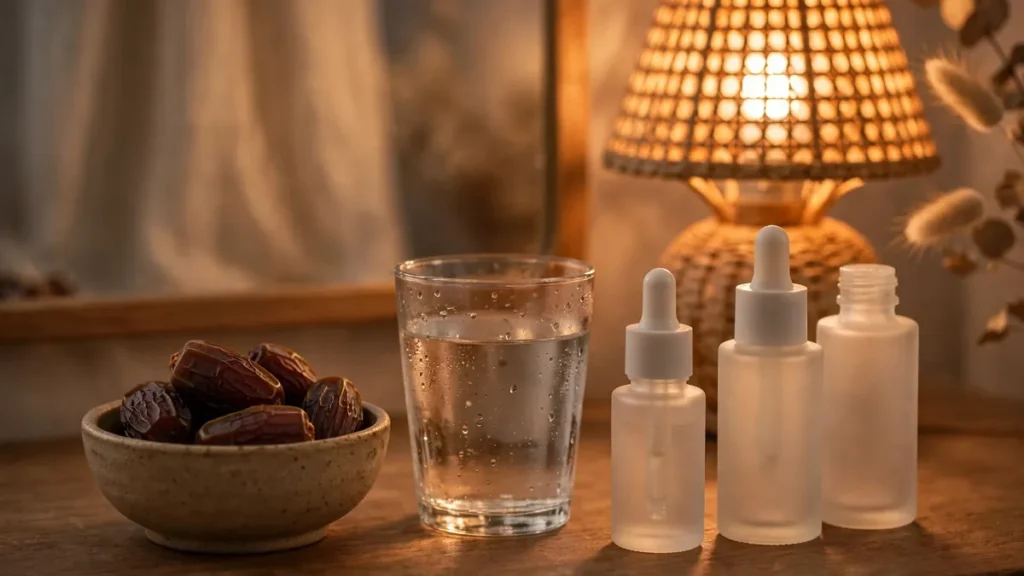
The alarm feels softer during Ramadan, somehow. Your home stays quiet, the kitchen light glows, and the day starts before sunrise. Does your skin also feel different once fasting begins?
This Ramadan beauty routine follows one ordinary day from suhoor to bedtime. First, you will prepare your skin gently before dawn. Then, you will protect it through long, dry hours outdoors. Later, you will restore it calmly after iftar and into the night.
Good skincare during Ramadan asks for less drama, not more products. Indeed, shorter steps suit tired evenings and early mornings far better. Honestly, consistency beats a crowded shelf every single time. Besides, your own practice guides your month, so adapt each step respectfully.
Suhoor: how do you start before dawn?
Your suhoor skincare begins while the house still feels half asleep. Warm water, a soft towel, and five quiet minutes suffice. In fact, this sleepy moment sets your skin up beautifully.
Start with water, because hydration supports your whole morning. Drink steadily rather than gulping a huge amount at once. Similarly, choose foods that release energy slowly through the morning. Our guide to a balanced diet offers simple ideas for steady meals.
Cleanse lightly if your skin feels oily or warm. Alternatively, splash with lukewarm water on very dry mornings. Then, pat your face dry instead of rubbing it roughly. Consequently, your skin keeps more comfort for the long day ahead.
Moisturiser matters more than extra serums at this hour. Apply a generous layer while your skin still feels damp. Next, seal dry areas with a slightly richer cream. As a result, your face starts the fast feeling calm and cushioned.
Keep this suhoor skincare ritual deliberately short and repeatable. Complicated routines collapse quickly when your alarm rings early. Instead, lay out your essentials the night before beside your towel. Therefore, even a groggy morning cannot derail your plan.
The fasting day: how does your skin cope?
By midday, fasting and dry skin often become close companions. Less water during daylight can leave faces feeling tight and tired. Indeed, dull skin during Ramadan usually reflects dryness, broken sleep, and heat.
Please keep that picture honest and calm, though. Most people notice dryness, dullness, or extra sensitivity during fasting weeks. Persistent pain, rashes, or sudden changes deserve a doctor instead. In other words, treat ongoing problems professionally rather than guessing at home.
During the day, your routine should mostly leave skin alone. Resist constant touching, picking, or checking your face in mirrors. Similarly, avoid trying a strong new active during fasting weeks. Consequently, your skin faces fewer surprises while your schedule already feels demanding.
Why does SPF during Ramadan matter so much?
SPF during Ramadan protects you exactly like it does all year. Apply sunscreen before school runs, work commutes, or errands outdoors. Then, reapply during long outdoor stretches whenever you possibly can.
Choose a texture you genuinely enjoy wearing daily. Light gels suit oily skin, while creams comfort drier faces. Above all, apply enough product across your forehead, cheeks, and nose. Therefore, you avoid patchy coverage on the sunniest zones.
Heavy layers rarely help during a hot fasting afternoon. Thick makeup can slide, crease, and feel uncomfortable by noon. Instead, keep daytime makeup minimal, breathable, and easy to refresh. As a result, your skin feels lighter until iftar arrives.
Many readers also ask about dry lips while fasting at this point. A plain, fragrance-free lip balm before suhoor helps briefly, so keep one handy.
Iftar: how do you restore yourself gently?
Evening finally arrives, and the table slowly fills with familiar favourites. Breaking fast with dates gives many families a gentle, traditional first bite. Then, water and soup usually follow in a calmer rhythm.
Dates bring natural sweetness after long, empty hours. Our article on dates benefits explores their nutrients and everyday uses further. Meanwhile, pace yourself before heavier dishes reach your plate. Consequently, your stomach and skin both settle more comfortably.
Hydrating foods at iftar deserve a proud place on the table. Water-rich fruits, soups, salads, and yoghurt all help beautifully. For example, melon, cucumber, oranges, and lentil soup all contribute fluid. Besides, steady sips through the evening beat one huge drink later.
Some evenings turn into outings with friends and family. Others stay quiet at home with leftovers and tea. If you head out, our list of things to do in Dubai sparks easy after-iftar plans. Still, leave yourself enough night for rest afterwards.
What does a gentle evening cleanse look like?
Wash the day away before you settle into evening plans. Sunscreen, dust, sweat, and city air all cling to skin. Therefore, a gentle cleanse helps your night products work better.
Use lukewarm water and a mild cleanser with soft hands. Massage slowly for a minute, and then rinse thoroughly. Next, pat dry and apply moisturiser onto slightly damp skin. In contrast, harsh scrubbing leaves faces sore and flushed.
Keep exfoliation occasional during Ramadan rather than nightly. One or two gentle sessions weekly suit most people well. However, skip exfoliation whenever your skin feels raw or stinging. As a result, your barrier stays calmer through shifting sleep.
The evening: how do you get ready for gatherings?
Evenings hold the social heart of Ramadan for many families. Taraweeh, visits, and late conversations stretch the night warmly. Meanwhile, you may want makeup that looks fresh without feeling heavy.
Simple makeup for iftar gatherings usually suits these evenings best. Start with moisturised skin, and then add thin layers slowly. For example, a light base, defined brows, and mascara already look polished. Consequently, you spend less time fixing your face later.
Can makeup for iftar gatherings actually last?
Yes, thin layers and smart setting steps make a real difference. Blot shine gently rather than piling powder onto dry patches. Then, set only your forehead, nose, and chin lightly.
Long evenings in warm rooms test every makeup look. Our sweat-proof makeup tips share extra tricks for humid Dubai nights. Similarly, a small blotting sheet in your bag rescues shine discreetly. Therefore, you can greet everyone confidently at midnight too.
Fragrance for Ramadan evenings adds one final, personal touch before gatherings. Apply a light hand, because close family spaces suit softer scents. Indeed, one gentle application respects other guests sharing the room.
The night routine: how do you repair and rest?
Your night skincare routine in Ramadan carries the real repair work. Night hours feel shorter, so every step must earn its place. In fact, a focused routine beats ten hurried products nightly.
Cleanse again only if you wore makeup or sunscreen late. Otherwise, a gentle rinse may suit very dry skin better. Then, apply your usual hydrating serum or moisturiser generously. As a result, your face wakes softer at suhoor.
Introduce strong new treatments cautiously during this month. Retinoids and strong acids can irritate tired, dry skin quickly. Instead, pause harsh experiments whenever your face feels sensitive. Similarly, return to basics until your routine feels calm again.
Keep a glass of water beside your bed for the night. Sip whenever you wake naturally before suhoor arrives. Besides, a humidifier helps some bedrooms battling constant air conditioning. Consequently, your skin loses less moisture while you sleep.
What does hair care during Ramadan look like?
Hair care during Ramadan often means washing less often than usual. Late nights and early alarms push wash days around easily. Still, a simple rhythm keeps your scalp comfortable all week.
Brush gently before bed and loosen tight daytime styles. Then, braid long hair softly to reduce tangles overnight. On wash days, shampoo your scalp thoroughly and condition only lengths. Therefore, roots feel clean while ends stay soft.
Dry shampoo can help occasionally, but it never replaces washing. Use small amounts, and then brush it through properly. In contrast, heavy daily use leaves build-up and itchiness behind. Our guide to hair fall in Dubai explains other common scalp stressors clearly.
Warm oil treatments suit a quiet evening at home beautifully. Massage lightly, leave the oil briefly, and then shampoo thoroughly. Meanwhile, avoid heavy oiling right before a gathering or bedtime. As a result, your pillow and hair both stay fresher.
How can you protect beauty sleep in Ramadan?
Beauty sleep in Ramadan follows a shifted, fragmented schedule for everyone. Short naps after work help many people recover energy. Similarly, an earlier main sleep protects your suhoor wake-up better.
Dim bright lights during the final hour before bed. Put your phone aside, and then let your mind unwind slowly. For example, reading, stretching, or quiet conversation all signal bedtime gently. Consequently, you fall asleep faster despite the shifted hours.
Guard your total rest across the full twenty-four hours. Skin looks duller after several short, broken nights in a row. Indeed, no cream can fully replace genuine rest. Therefore, trade one late outing weekly for proper sleep.
When should you book salon visits in Ramadan?
Salon visits in Ramadan work best after iftar for most people. Evening appointments avoid rushing, heat, and long waits while fasting. Besides, you can drink water freely before and after treatments.
Book popular evening slots early, because salons fill quickly late. Haircuts, gentle facials, and brow shaping all fit evening hours comfortably. However, schedule strong peels or new treatments cautiously this month. In other words, save experiments for calmer weeks after Eid.
Ask your salon about timing, products, and aftercare before booking. Clear answers help you plan transport, rest, and evening gatherings. Then, confirm your appointment a day ahead during busy weeks. As a result, you avoid stressful last-minute changes entirely.
Gentle treatments suit fasting skin far better than aggressive ones. Choose hydration-focused facials rather than harsh resurfacing during Ramadan. Similarly, patch-test new products well before any big occasion. Consequently, your skin avoids unwanted surprises near Eid.
The final days: how do you prepare your Eid glow?
The last week shifts attention toward joyful Eid beauty prep. Outfits come out, gifts get wrapped, and family plans multiply. Meanwhile, your skin needs calm consistency, not last-minute panic.
Start Eid beauty prep at least one week before celebrations. Keep cleansing, moisturising, sunscreen, and sleep steady every day. Then, add one gentle exfoliation several days before Eid morning. Therefore, makeup sits smoother without irritating your skin beforehand.
Long-lasting makeup for Eid deserves a practice run first. Test your base, blush, and lip colour during one evening. Next, check the look under warm indoor lighting and photographs. As a result, Eid morning feels relaxed instead of rushed.
Shopping often squeezes into these final evenings too. Our Dubai shopping guide helps you plan mall trips around crowded nights. Similarly, our guide to the next public holiday in the UAE helps you confirm Eid holiday dates. Consequently, you can plan outfits, visits, and rest properly.
On the night before Eid, keep everything deliberately simple. Lay out clothes, makeup, fragrance, and hair tools together. Then, sleep as early as your celebrations realistically allow. Above all, remember that rested eyes outshine any highlighter.
Eid morning then starts with moisturiser, sunscreen, and thin makeup layers. Smile, take photographs, and enjoy your family without mirror checks. Indeed, your gentle month of habits shows up quietly here. Finally, carry that calmer routine forward beyond Ramadan too.
Frequently asked questions
How should skincare during Ramadan change from your normal routine?
Keep your usual basics, but simplify everything around the fast. Gentle cleansing, generous moisturiser, and daily sunscreen still matter most. However, reduce strong actives whenever your skin feels dry. Therefore, your routine stays supportive instead of demanding.
Does fasting and dry skin always happen together?
No, experiences vary widely across people, climates, and routines. Some people notice tightness, while others notice extra oil instead. In fact, air conditioning and broken sleep influence skin heavily too. Still, see a doctor for persistent or painful changes.
What are the best hydrating foods at iftar?
Soups, salads, yoghurt, and water-rich fruits all help wonderfully. Melon, oranges, cucumber, and berries bring fluid plus gentle sweetness. Besides, steady drinks between iftar and suhoor matter hugely. Consequently, avoid relying on one large drink at dawn.
How do you make makeup last through taraweeh and gatherings?
Start with moisturised skin, and then build very thin layers. Set only shiny zones, and carry blotting sheets for later. Similarly, long-lasting makeup for Eid benefits from a trial evening beforehand. As a result, you fix problems before the big day.
When is the best time for salon visits in Ramadan?
Evenings after iftar suit most treatments and most people best. You feel refreshed, hydrated, and free from fasting-hour rushing. Meanwhile, salons grow busier during the final week before Eid. Therefore, book favourite evening slots as early as possible.
How early should Eid beauty prep begin?
Begin about one week before Eid with calm, steady habits. Keep sleep, moisturiser, sunscreen, and gentle cleansing consistent daily. Then, exfoliate gently several days before, never the night before. Finally, test your full makeup look once in advance.