
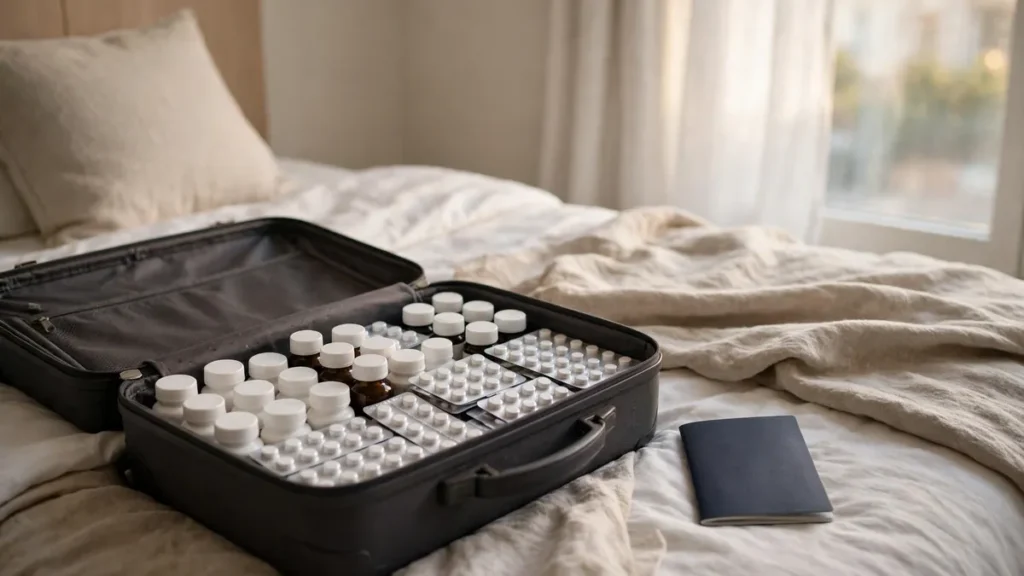
What changed for travellers this week?
If you are flying into Dubai, Abu Dhabi, Sharjah or any other emirate, your medicine bag deserves as much attention as your tourist visa. A story published by Gulf News on October 21 2026 has put the UAE’s medicine rules back under the spotlight. In fact, on November 1, a new restriction on a veterinary antibiotic takes effect. With it comes a fresh reminder of how strictly the Emirates Drug Establishment (EDE) controls what you can and cannot carry in your luggage. Therefore this guide covers the three categories in plain language. You will learn which medicines are banned outright, which need a prescription and a permit, and which everyday tablets you can pack without a second thought.
In addition, here is the good news first. The rules are simpler than most travellers fear. According to Emirates, one of three airlines quoted in today’s report, medicines fall into just three buckets: banned, controlled, and allowed. Because the whole system is published in a single EDE list, you can check every tablet in your bag by its generic name before you leave home. So instead of guessing, you get certainty — and that certainty is exactly what this guide gives you.
Why does the UAE police medicines so strictly?
Still, many common painkillers and sleep aids contain ingredients that the UAE treats as narcotics or psychotropics. However, what is available over the counter in London, Karachi or Delhi may need paperwork in Dubai. Therefore the Emirates Drug Establishment — the national drug regulator — keeps a controlled-medicines list. Meanwhile, that list divides roughly 268 drugs into prohibited or controlled groups. For instance, the list the airlines refer to is dated 15 September 2022. As a matter of fact, it remains the reference the Emirates, Etihad and Air Arabia all follow.
Here is an important detail travellers often miss: the EDE list is written by active ingredient, not brand name. In fact, your packet may say Panadol, Tylenol or Crocin on the front. In addition, the rule cares about the generic name — paracetamol — printed in smaller letters. Therefore always check the generic name of every medicine, cream, syrup and inhaler in your bag. Still, the brand on the box tells the customs officer nothing.
However, one more reason to take this seriously: getting it wrong is not a minor hiccup. Meanwhile, getting the category wrong can have serious consequences, which is why a little preparation matters. For instance, read on and you will know exactly where your medicines stand.
What is the new November 1 rule about?
As a matter of fact, the headline of today’s Gulf News report is a new restriction taking effect on November 1. In fact, it targets a veterinary antibiotic. Nine products in total are affected: eight imported and one from a locally registered company. Companies must stop manufacturing, importing and supplying the drug, and they must clear existing stock before the deadline. Still, any stock left over must be re-exported or destroyed under approved procedures.
However, crucially, this ban targets companies, not personal luggage. The report does not specify whether it applies to pet medicine carried in personal baggage. Meanwhile, travellers should not assume it changes what goes in their suitcase. Therefore the practical takeaway for ordinary passengers is simple. For instance, the November 1 rule is about the supply chain, not your handbag. Your job is still to make sure your personal medicines sit in the right category. As a matter of fact, the three categories below show you how.
In fact, one reassuring detail comes from the same report. Ciprofloxacin, an antibiotic prescribed to people, does not appear on the EDE controlled list. Because it is a common travel antibiotic, many visitors carry it. Still, it sits in the allowed bucket, per the reporting.
Which medicines are banned outright in the UAE?
However, this is the shortest list, and the one with the hardest consequences. The following substances are prohibited, and there is no permit or prescription that makes them legal for travellers to bring in:
| Banned substance | What it commonly is |
|---|---|
| Heroin | Opioid narcotic |
| Cocaine | Stimulant narcotic |
| Cannabis plant and resin | Marijuana, hashish in any form |
| THC | Cannabis’s psychoactive ingredient |
| Synthetic cannabinoids | Lab-made cannabis-like drugs |
| LSD | Hallucinogenic drug |
| MDMA | Ecstasy |
| Mescaline | Hallucinogenic cactus drug |
| Khat | Stimulant plant leaves |
| Psilocybin mushrooms | Magic mushrooms |
| Peyote | Hallucinogenic cactus |
| Opium poppy plant | Source of opium |
| Yohimbe bark | Herbal stimulant |
| Fentanyl variants such as 3-methylfentanyl | Illicit synthetic opioids |
Notice what is NOT on this list. Medical fentanyl prescribed for pain sits in the controlled group, not the banned one. It is the illicit variants like 3-methylfentanyl that are prohibited outright. Therefore do not panic if a legitimate prescription includes one of the similar-sounding names. Instead, check the exact generic name against the controlled list below. If you are still unsure after checking, contact the nearest UAE embassy or consulate before you fly. That advice comes straight from the airlines themselves.
Which medicines need a prescription and a permit?
This is the biggest group, and the one that catches most travellers out. Controlled medicines are allowed — but only with a prescription or an attested medical report. Only in quantities limited to the duration of your stay or three months’ use, whichever is less. Emirates adds that approval is needed through the Ministry of Health website before you travel. The classes below come straight from the EDE controlled list cited in today’s reporting.
Strong painkillers (opioids)
| Generic name | Brand examples you may know |
|---|---|
| Codeine | Often mixed into cough syrups and painkillers |
| Tramadol | Prescription pain tablets |
| Morphine | Hospital-grade pain relief |
| Oxycodone | Strong prescription painkillers |
| Hydrocodone | Prescription pain tablets and syrups |
| Methadone | Addiction-treatment and pain medicine |
| Fentanyl | Patches and lozenges for severe pain |
| Pethidine | Injectable and tablet pain relief |
Codeine deserves special attention because it hides in everyday products. In many countries you can buy codeine-containing cough syrup or headache tablets without much fuss. Across the Emirates, codeine is controlled. Therefore check the ingredients of every cough and cold remedy you pack. A familiar brand from home may quietly contain a controlled substance.
Anti-anxiety drugs and sedatives
| Generic name | Brand examples you may know |
|---|---|
| Diazepam | Valium |
| Alprazolam | Xanax |
| Clonazepam | Klonopin / Rivotril |
| Lorazepam | Ativan |
| Midazolam | Used in sedation procedures |
| Temazepam | Sleep-inducing sedative |
Sleep aids
| Generic name | Brand examples you may know |
|---|---|
| Zolpidem | Ambien / Stilnox |
| Zopiclone | Imovane |
| Zaleplon | Sonata |
Nerve pain and seizure medicines
| Generic name | Brand examples you may know |
|---|---|
| Pregabalin | Lyrica |
| Gabapentin | Neurontin |
| Phenobarbital | Barbiturate seizure medicine |
Pregabalin and gabapentin are increasingly common prescriptions for nerve pain, back pain and anxiety. Because they are controlled in the UAE, long-term users should start the permit process early. This is the classic case where “I’ll sort it at the airport” is a bad plan.
ADHD drugs and stimulants
| Generic name | Brand examples you may know |
|---|---|
| Methylphenidate | Ritalin / Concerta |
| Amfetamine | Adderall component |
| Dexamfetamine | Dexedrine |
| Lisdexamfetamine | Vyvanse / Elvanse |
Students and professionals moving to the UAE for study or work often arrive on these prescriptions. Because they are stimulants, the controlled rules apply in full — permit, prescription, three-month limit. If you are arriving on a visa on arrival and plan to sort long-term care locally, bring enough for your initial stay plus the permit, and then see a UAE-licensed doctor.
Others on the controlled list
| Generic name | What it is |
|---|---|
| Pseudoephedrine | Decongestant in cold and flu tablets |
| Ephedrine | Decongestant and stimulant |
| Phentermine | Weight-loss appetite suppressant |
| Buprenorphine | Addiction-treatment opioid |
| Ketamine | Anaesthetic, sometimes misused |
Pseudoephedrine is the sleeper hit here. It sits in countless cold, flu and allergy tablets sold freely around the world. And in the UAE it is controlled. Therefore anyone packing for a winter trip should read the back of every cold-remedy box. The decongestant that clears your nose at home needs paperwork in Dubai.
Which everyday medicines need no approval at all?
Here is the part most travellers find relieving. According to Emirates, over-the-counter and uncontrolled prescription medicines need no prior approval. The report specifically names paracetamol, ibuprofen, antihistamines, insulin, blood pressure tablets. Antibiotics such as ciprofloxacin as medicines that do not appear on the EDE list. So your everyday kit — headache tablets, allergy pills, stomach remedies — travels with you freely.
Still, carry these in their original packaging and keep a prescription handy to be on the safe side. The smart traveller treats “no approval needed” as permission, not as a reason to be careless. Therefore keep the boxes, keep the leaflets. Keep everything in one clear pouch so any inspection is quick and painless.
How does the EDE/MOHAP personal-use permit actually work?
For controlled medicines, the route is the Ministry of Health (MOHAP) website and the EDE personal-use permit. Emirates states that approval is needed through the Ministry of Health website before travel. Cross-source reporting from airtraveler.club on October 4 2026 adds practical detail. Transit passengers who stay airside and never clear immigration need no UAE permit at all for codeine or tramadol. Those who do clear immigration can either use the free EDE/MOHAP personal-use permit or declare at the port of entry with a prescription and an authenticated medical report.
The quantity rules are worth memorising. For narcotics and psychotropics, the limit is three months’ supply. Ordinary prescription-only medicines that are neither narcotic nor psychotropic can go up to six months’ supply. The EDE framework itself ties controlled quantities to the duration of stay or three months’ use, whichever is less. So a two-week tourist should pack two weeks’ worth, not three months’.
Your paperwork needs to be fresh. The cross-source report specifies a prescription issued within the last three months, stamped by the treating facility, plus a medical report issued within the last year that names the diagnosis and the treatment plan. Therefore do not dig out last year’s faded prescription slip. Ask your doctor for a current one before you fly. Keep it with the medicines in their original packaging.
Your pre-flight medicine checklist: are you ready?
Run through this list a week before departure. It takes twenty minutes and it covers everything the rules require.
- Empty your bag onto the bed. Gather every tablet, syrup, cream, inhaler, spray and supplement you plan to carry. Including the ones you might take “just in case”.
- Read the generic name on each box. Flip every pack over and find the active ingredient, not the brand. Then check it against the three EDE categories above.
- Sort into three piles. Banned: leave at home, no exceptions. Controlled: goes forward only with prescription, medical report and permit. Allowed: packs as normal in original packaging.
- Apply for the MOHAP/EDE permit if anything is controlled. Emirates says approval is needed through the Ministry of Health website before travel. Leave enough time for the application — do not leave it to the night before.
- Get a fresh prescription. It should be issued within the last three months and stamped by the treating facility, with a medical report from within the last year naming your diagnosis and treatment plan.
- Count your days. Pack for the duration of your stay or three months’ use, whichever is less, for narcotics and psychotropics. Ordinary non-narcotic prescription medicines can go up to six months’ supply.
- Keep everything in original packaging. Loose tablets in an unmarked bottle invite questions you do not want. Boxes, blister packs and leaflets stay together.
- Call your airline about cabin vs checked rules. The airlines advise that a quick call clarifies whether each item goes in hand luggage or the hold. Especially important for anything you need mid-flight.
- When in doubt, ask the embassy. Anyone unsure about a specific medicine should contact the nearest UAE embassy or consulate before flying, per the airlines’ own advice.
If you are visiting from South Asia, this checklist sits alongside your other travel admin. Many readers pair it with their Dubai visa for Indians or Dubai visa for Pakistanis paperwork in the same week. Therefore build the medicine check into the same preparation session and nothing gets forgotten.
What happens at UAE customs with your medicines?
At the airport, customs officers may ask about any medicines in your luggage. This is where your preparation pays off. With original packaging, a current prescription, an attested medical report and the EDE/MOHAP permit for anything controlled, you have a clean story: everything declared, everything documented. Because the officer’s job is to match what you carry against the three EDE categories, your sorted, labelled bag makes that match instant.
Travellers clearing immigration with codeine or tramadol have two legitimate routes: the free EDE/MOHAP personal-use permit arranged before travel. Declaring at the port of entry with a prescription and an authenticated medical report. Therefore even if you missed the online permit, honesty at the counter. With documents in hand — is far better than silence. Never try to hide a controlled medicine; discovery without paperwork turns a manageable situation into a legal one.
One boundary to respect: the rules above cover medicines. If you are also wondering about unrelated conduct rules during your trip, note that the UAE’s laws extend well beyond the airport. For example, online insults in the UAE can bring jail and heavy fines. So the same careful-visitor mindset that sorts your medicine bag should travel with you everywhere.
What do the airlines say about medicines in the cabin?
None of the three airlines quoted — Emirates, Etihad and Air Arabia — keeps its own banned-medicine list. They all follow the EDE. That simplifies your life enormously: one regulator, one list, one set of categories. Therefore you do not need to cross-check three different airline policies against each other.
What the airlines do add are cabin and baggage practicalities. Etihad exempts prescription and non-prescription medicines and medical items needed in flight. However there are powder limits: on flights from Australia, powder limits apply and supporting evidence is needed, while sealed medically prescribed powders get a similar exemption on flights to the US. Air Arabia’s rules are more specific still. One personal-use mercury clinical thermometer per passenger is allowed in checked baggage, provided it sits in a protective case. And oxygen cylinders are allowed only if they are approved medical cylinders meeting the airline’s conditions.
The airlines’ shared advice is refreshingly practical: a call to the airline clarifies cabin-versus-checked questions for your specific items. Anyone unsure about a medicine should contact the nearest UAE embassy or consulate before flying. Therefore treat the airline’s customer service line as part of your checklist, especially for liquid medicines, injections and anything refrigerated.
What mistakes do travellers most often make?
The most common mistake is checking the brand instead of the generic name. A traveller packs a well-known cold remedy, confident it is “just a cold tablet”, never realising the small print lists pseudoephedrine — a controlled substance. Because the EDE list is written by active ingredient, the brand tells you nothing. Therefore flip the box, read the ingredients, and check each one.
The second mistake is assuming a home-country prescription is enough on its own. In the UAE, controlled medicines need the prescription plus an attested medical report. Emirates says MOHAP approval is needed before travel. A prescription alone, however legitimate, is an incomplete file. Therefore start with the permit application, then gather the documents it requires.
The third mistake is packing too much. Even with full paperwork, narcotics and psychotropics are limited to the duration of stay or three months’ use, whichever is less. A six-month stash of a controlled sleep aid for a ten-day holiday is not “being prepared” — it is a red flag. Therefore count your days honestly and pack to the rule.
The fourth mistake is repackaging for convenience. Decanting tablets into a weekly pill organiser feels tidy. It strips away the original packaging that proves what each tablet is. Keep the boxes and blister packs, especially for anything controlled. Your future self at the customs counter will thank you.
The fifth mistake belongs to transit passengers. If you stay airside and never clear immigration, you need no UAE permit for codeine or tramadol. However the moment you clear immigration. A stopover hotel, a terminal change, a public holiday weekend break in the city — the full rules apply. Therefore know your itinerary before you decide which set of rules governs you.
Finally, do not let medicine paperwork distract you from the rest of your trip admin. Visitors often research medicines and forget basics like which ministries and departments handle official services. What legal advice resources exist if something goes wrong. A well-prepared traveller covers all of it — medicines included.
Frequently asked questions
Can I bring paracetamol and ibuprofen to the UAE?
Yes. Per the Gulf News report of October 21 2026, paracetamol, ibuprofen, antihistamines, insulin, blood pressure tablets and antibiotics such as ciprofloxacin do not appear on the EDE controlled list. Emirates confirms that over-the-counter and uncontrolled prescription medicines need no prior approval. Therefore carry them in original packaging, with a prescription to be on the safe side.
Do I need a permit for codeine or tramadol?
If you are entering the UAE (clearing immigration), yes — codeine and tramadol are controlled. You need a prescription or attested medical report plus the EDE/MOHAP personal-use permit, limited to the duration of stay or three months’ use, whichever is less. However transit passengers who stay airside and do not clear immigration need no UAE permit, per the October 4 2026 airtraveler.club report.
How do I apply for the medicine permit before travelling?
Emirates states that approval is needed through the Ministry of Health website before travel. Therefore apply in good time, and have ready a prescription issued within the last three months stamped by the treating facility, plus a medical report issued within the last year naming your diagnosis and treatment plan. Alternatively, travellers clearing immigration may declare at the port of entry with a prescription and an authenticated medical report.
Should I check the brand name or the generic name of my medicine?
The generic (active ingredient) name — always. Because the EDE controlled list is written by active ingredient, the brand on the box does not determine the rule. Therefore read the ingredients panel of every medicine and check each active ingredient against the three categories.
What is the new November 1 veterinary antibiotic rule?
From November 1, a veterinary antibiotic faces new restrictions. Nine products are affected (eight imported, one from a locally registered company). Companies must stop manufacturing, importing and supplying the drug and clear existing stock before the deadline, with remaining stock re-exported or destroyed under approved procedures. It targets companies, not personal luggage. The Gulf News report of October 21 2026 does not specify whether it applies to pet medicine carried in personal baggage.
Do the airlines have their own banned-medicine lists?
No. Emirates, Etihad and Air Arabia have no airline-specific banned-medicine lists — they all follow the EDE and its three categories. Therefore you only need to satisfy the regulator’s rules, while checking each airline’s cabin and checked-baggage practicalities (such as Etihad’s powder exemptions and Air Arabia’s thermometer and oxygen-cylinder conditions) for how items travel.
How much medicine can I carry into the UAE?
For narcotics and psychotropics: the duration of your stay or three months’ use, whichever is less. Ordinary prescription-only medicines that are neither narcotic nor psychotropic allow up to six months’ supply. Therefore a short-stay visitor should pack only for the trip, while longer-stay residents with ordinary prescriptions have more room. Always in original packaging with current paperwork.
What should I do if I am unsure about a specific medicine?
Contact the nearest UAE embassy or consulate before flying — this is the airlines’ own advice. A call to your airline can also clarify cabin-versus-checked rules for the item. Therefore never guess: a five-minute check before departure beats a long conversation at the customs counter.
All facts in this guide were checked on 21 October 2026 against the Gulf News report of that date and the airtraveler.club report of 4 October 2026. Rules can change — re-check the EDE/MOHAP guidance before you travel.