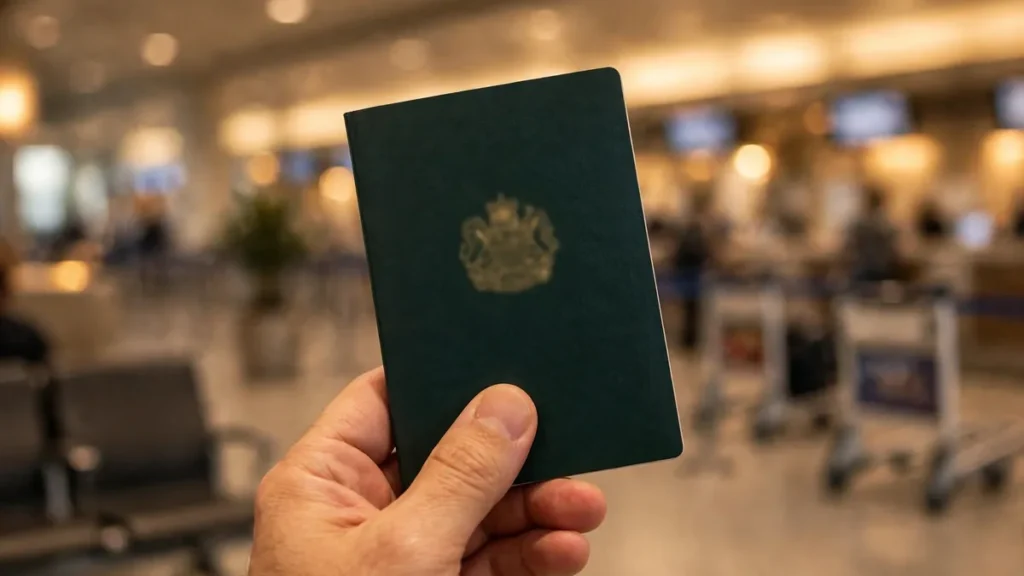
Big news for Pakistanis living in the UAE. From Friday, 23 October 2026, the two Pakistani missions in the UAE switched to e-Passports. These are the Embassy of Pakistan in Abu Dhabi and the Consulate General of Pakistan in Dubai. They now process every passport application as an e-Passport. Every new application submitted at either mission now goes through the e-Passport system. The missions say the process “has started and will continue”. More than two million Pakistanis live in the Emirates. This is the country’s second-largest expatriate community. The change touches an enormous number of families, workers, professionals and students.
If you hold a Pakistani passport and live in the UAE, this guide is for you. It explains what the change means in plain language. You will learn who needs to act right now and who can safely wait. It covers how much the e-Passport costs and the new name rule that could catch people out. You will also see how to prepare so your application goes through without delays.
What exactly changed on 23 October 2026?
The two Pakistani missions issued a public notice about the change. All passport applications submitted at the Abu Dhabi embassy and the Dubai consulate now go through as e-Passports. This covers new applications across the board — first-time passports, renewals and replacements.
The wording of the notice matters. It says the e-Passport issuance process “has started and will continue”. That is the missions’ way of saying this is permanent, not a trial or a temporary arrangement. Walk into either mission with a passport application from now on, and you will be applying for an e-Passport.
Khaleej Times and Gulf News reported the change on 23 October. Both cited the missions’ public notice. Because the information comes directly from the embassy and the consulate, it is official. When a diplomatic mission issues a public notice about its own services, that notice is the authority on the subject.
Do you need to replace your current passport?
Probably not, and this is the most important reassurance in the whole announcement. Pakistani nationals holding valid Machine Readable Passports (MRPs) do not need to replace them immediately. The missions have stated clearly that all valid MRPs remain valid until their date of expiry.
In other words, the e-Passport system applies to new applications. Your existing passport does not suddenly become invalid because the missions switched systems. If your MRP is valid with a comfortable amount of time left, you can carry on as normal.
The missions have given one clear timing rule. Apply for renewal only when your passport’s remaining validity is less than six months. That single line answers the question most people are asking. Check your passport’s expiry date today. If more than six months remain, you have nothing urgent to do. If six months or fewer remain, start your renewal.
This six-month guidance also matches how the travel world works. Many countries and airlines want to see at least six months of validity before they let you board or enter. Keeping your passport comfortably above that line protects you from refused boarding and visa problems. You can check your UAE visa status online by passport number at the same time. That way, your documents are aligned before you apply.
What is an e-Passport, and why does it matter?
An e-Passport is also called a biometric passport. It looks like a normal passport but carries a small electronic chip embedded in it. The chip stores the holder’s biometric data — typically a digital photograph and fingerprints — alongside the usual printed details. Immigration officers can read the chip to verify that the person holding the passport is its genuine owner.
The practical benefit for travellers is speed and security. At airports with e-gates, scanning a chip passport takes seconds. The biometric match makes the document far harder to forge or tamper with than a paper-only booklet. Countries around the world have been moving to e-Passports for years. Pakistan’s rollout in the UAE brings its missions in line with that global standard.
For you as an applicant, the day-to-day experience is mostly the same. You apply at the mission and receive a booklet. The mission captures your details and biometrics during the process. The difference sits inside the cover. Keep the booklet away from strong magnets. Do not bend it or punch holes in it. Physical damage can harm the chip. Treat it the way you would treat any important electronic document.
How much does the Pakistan e-Passport cost in the UAE?
The missions charge fees in UAE dirhams. Fees vary by the number of pages and the validity period. The processing type also affects the fee. So does a replacement after a loss. The figures below come from the missions’ notice as reported on 23 October 2026. They cover standard renewals under normal processing.
For a 36-page passport with five-year validity, the fee starts at Dh145 under normal processing. The same 36-page booklet with ten-year validity costs Dh215. The larger 72-page passport suits frequent travellers who fill pages with visas and stamps. Its five-year version costs Dh260 under normal processing. The ten-year version costs Dh390 under normal processing.
Urgent processing adds a premium across all categories. The missions have not published a single flat urgent fee in the notice summary. The premium scales with the booklet type. Expect to pay noticeably more if you need the passport quickly. If your validity is about to drop below six months, apply early. You will save yourself the urgent-processing surcharge.
Replacement fees rise sharply, and this is where carelessness gets expensive. Replacing a lost passport costs more than a standard renewal, and the penalty grows with repeated losses. A second loss of a 72-page passport costs more under urgent processing. The fee reaches Dh1,700 for five years and Dh2,540 for ten years. Those numbers should convince anyone to keep their passport in a safe place.
Two practical tips on fees. First, confirm the exact fee for your category before you visit the mission. The missions can revise fee schedules, and the notice lists several variables. Second, bring the right payment method. Missions typically specify accepted payment modes in their notices. Arriving unprepared is one of the most common reasons applications face delays.
What is the new name rule for e-Passport applicants?
Here is the detail that could catch people out. The missions’ notice says that both a first name and a last name are mandatory for the e-Passport. If your current passport carries only a single name, prepare for this requirement when you apply.
This matters because some older Pakistani passports and identity documents show a single name. Under the e-Passport system, that will not do. The international standard for machine-readable travel documents expects a surname and given names. The chip data has to match the printed page exactly.
If your current passport shows only one name, start preparing now. Check what supporting documents you hold that show your full name. Be ready to explain the situation at the mission. Do not wait until your passport is about to expire to discover a name mismatch. Sorting out name documentation takes time. Handle it while your current passport is still valid — it is far better that way.
The same principle applies to spelling. Make sure the name on your application matches your other official documents letter for letter. Small differences in spelling between documents cause some of the longest delays in passport processing worldwide. A few minutes of careful checking before you apply can save weeks of back-and-forth later.
How do you apply for the e-Passport in the UAE?
Applications go through the two missions. They are the Embassy of Pakistan in Abu Dhabi and the Consulate General of Pakistan in Dubai. Whichever is closer to you or serves your emirate is where you apply. Both are now on the e-Passport system for all new applications.
Before you go, work through this preparation checklist. First, check your current passport’s expiry date. Confirm that less than six months remain — or that you are applying for a first passport or a replacement. Second, verify the name question: does your current documentation show both a first and a last name? Third, look up the current fee for your booklet type and processing speed, and arrange payment in the accepted mode.
Fourth, gather your supporting documents. The missions’ notice sets the headline rules. Passport applications everywhere typically require proof of identity and nationality. They also need photographs to specification and the old passport for renewals. Check the mission’s public notice or official channels for the exact document list before your visit. The missions can update requirements at any time.
Fifth, plan your visit around the mission’s working hours and any appointment system. Missions serving two million people get busy, and showing up without checking the current procedure wastes a trip. If you are travelling from another emirate, factor in the journey. Residents heading to Dubai can check their nol card balance online beforehand. That way, the metro leg of the trip runs smoothly.
Finally, keep copies of everything you submit. Photograph or scan your application form, receipts and supporting documents. If anything goes missing or a question arises later, your own copies are the fastest way to resolve it.
What mistakes delay passport applications most?
The same handful of errors slows down passport applications everywhere, and the e-Passport rollout is no exception. The most common is the name mismatch described above. Your documents do not agree with each other on your full name. With the new mandatory first-and-last-name rule, this one will bite harder than before.
The second is photographs that do not meet specification. Passport photos have strict rules on size, background, expression and recency in every country. A photo that worked for another document may not work here. Ask for the photo in the mission’s stated specification, not a guess.
The third is applying too late. Every year, people discover their passport is expiring just as they need to travel. They then pay urgent-processing premiums or miss trips entirely. The missions’ six-month guidance exists precisely to prevent this. Put a reminder in your phone for nine months before expiry. That simple step keeps you safe.
The fourth is incomplete payment. Fee schedules with multiple variables — pages, validity, processing speed, loss history — are easy to misread. Confirm the exact amount for your case, and confirm the accepted payment method, before you stand in the queue.
The fifth is ignoring the old passport. For renewals, the mission normally requires the current passport as part of the application. If you lost it, say so upfront. Follow the replacement procedure rather than hoping nobody notices. The fee schedule’s steep replacement penalties show that the system takes loss seriously. Honesty at the counter is always faster than a discovered omission.
Why does this change matter for the Pakistani community?
Two million people is not a statistic; it is the second-largest expatriate community in the UAE. Pakistanis in the Emirates include professionals, entrepreneurs and skilled workers. They also include domestic staff, students and families who have lived here for years or even generations. For many, the Emirates are a second home. Their contribution runs through every sector of the economy. It also flows through the remittances that support families back in Pakistan.
A smoother, more secure passport directly serves that community. Faster airport processing and stronger document security help. So does alignment with global standards. All of this makes life marginally easier for people who travel regularly between the UAE and Pakistan. Parents visiting children benefit. So do workers going home on leave. Businesspeople shuttling between Karachi, Lahore, Islamabad and Dubai benefit too. All of them gain when the travel document in their pocket meets the latest standard.
There is also a timing angle worth noting. The announcement comes as the community navigates other administrative changes, and as travel patterns shift with the seasons. If your passport renewal coincides with planned travel, start the renewal early. This matters especially around the next public holiday in the UAE. Starting early keeps the two from colliding. And if your work depends on your documents, keep your passport valid and current. That is the foundation everything else rests on. This covers Dubai immigration procedures, immigration services in Dubai and UAE labour law matters.
Frequently asked questions
Is my current Pakistani passport still valid in the UAE?
Yes. The missions have confirmed that all valid Machine Readable Passports remain valid until their date of expiry. The e-Passport system applies to new applications. You do not need to replace a valid MRP before it expires.
When should I renew my Pakistani passport?
Apply for renewal when the remaining validity is less than six months. The missions state this guidance. Renewing earlier than needed wastes the remaining validity you have already paid for, and renewing later risks travel disruption.
How much does the e-Passport cost?
Under normal processing, the fees are as follows. A 36-page, five-year passport costs Dh145. The ten-year version of the same booklet costs Dh215. A 72-page, five-year passport costs Dh260. Its ten-year version costs Dh390. Urgent processing costs more across all categories. Replacement after loss costs significantly more. For a second loss of a 72-page passport under urgent processing, fees reach Dh1,700 to Dh2,540.
What if my passport has only a single name?
Both a first name and a last name are now mandatory for the e-Passport. If your current passport shows only one name, prepare supporting documents that establish your full name before you apply. Be ready to address the requirement at the mission.
Where in the UAE can I apply for the Pakistani e-Passport?
At the Embassy of Pakistan in Abu Dhabi or the Consulate General of Pakistan in Dubai. Both missions process all new passport applications as e-Passports from 23 October 2026. Check the mission’s public notice for working hours, appointment procedures and the exact document list before visiting.
How long does e-Passport processing take?
The missions’ notice distinguishes normal and urgent processing, with urgent carrying a premium. The notice summary gives no exact timelines. Confirm the current processing time with the mission when you apply. Apply early if you have travel planned.
Can I travel while my e-Passport application is being processed?
Renewal applications normally require submitting your current passport, which means you cannot travel internationally while it is with the mission. Plan around this: do not apply in the weeks before a planned trip. Time your renewal for a period when you will be in the UAE throughout.
What should I do if I lose my Pakistani passport in the UAE?
Report the loss and apply for a replacement at the mission as soon as possible. Expect higher fees than a standard renewal, especially for repeated losses or urgent processing. Keep a copy of your old passport’s data page stored securely. A phone photo or scan works. It speeds up the replacement process enormously.
The switch to e-Passports is one of those administrative changes that sounds minor. It turns out to matter a great deal. For two million Pakistanis in the UAE, the message is simple. Your current passport is fine until it expires. Renew when six months or less remain. Make sure your full name is in order. Budget from Dh145 under normal processing. Do those four things and the new system will treat you well. And one last word of caution for the digital age: keep your documents off social media. Posting passport pages online can invite fraud, and the UAE’s social media fine rules carry serious penalties for careless posts. Your new e-Passport deserves better than a public debut.