
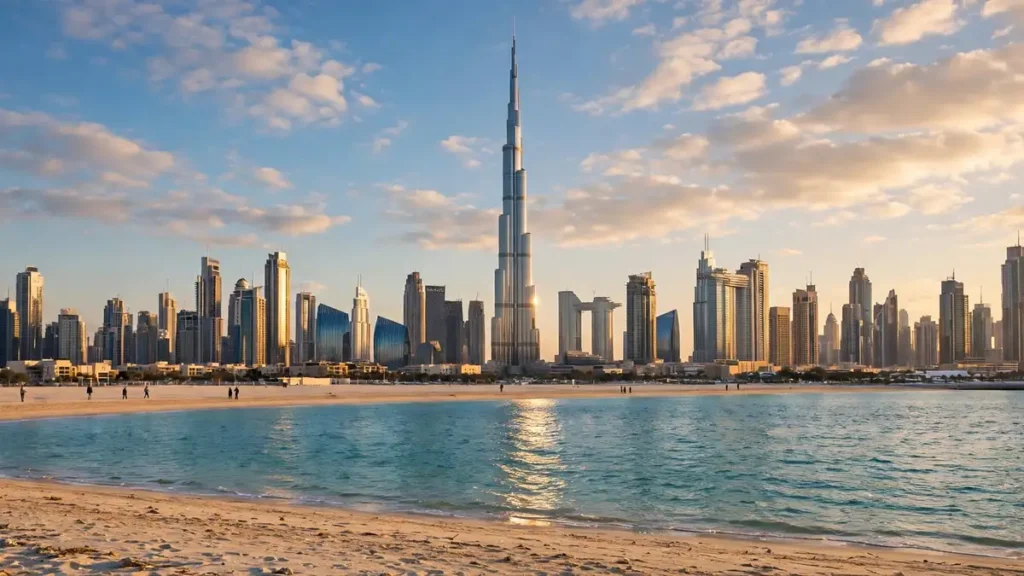
November has arrived in Dubai, and the city feels different already. The heavy summer heat has lifted at last. Daytime highs now sit around 31 degrees, evenings feel cool enough for a light jacket, and the beaches, souks and desert camps are busy again. If you have been waiting for the right moment to plan a Dubai trip, this is the moment the calendar turns in your favour.
Today is Wednesday 11 November 2026, and November is only just getting started. The Festival of Lights runs until Thursday 12 November, so the Diwali decorations, markets and shows are still lighting up malls and public spaces across the city. The DP World Tour Championship tees off at Jumeirah Golf Estates on the same day, with free entry on Thursday for spectators who register in advance. Meanwhile the Dubai Fitness Challenge is running through November, with free workouts and events all over the city.
This guide gives you the full picture, month by month. You will find average temperatures for every month, honest notes on crowds and hotel prices, and clear picks for families, beach lovers, shoppers and budget travellers. The temperature figures come from TimeandDate climate data, as published by travel site TravelCamel, and the event dates come from reports checked on 11 November 2026. Use this guide to pick your month, then book with confidence.
What is the best time to visit Dubai in one sentence?
November to March is the best time to visit Dubai. Daytime highs in that window sit between around 24 and 31 degrees, humidity stays low, rain is rare, and every outdoor attraction in the city is open and running. You can walk the Marina in the morning, spend the afternoon at the beach, and eat outside in the evening without once thinking about the heat.
Still, the best month depends on what matters most to you. December and January bring the finest weather and the biggest events, yet they also bring the highest hotel prices and the largest crowds. February offers nearly the same weather with thinner crowds and softer prices. October and March give you warm days at a fair price. June to August gives you the deepest discounts, yet the heat keeps most travellers indoors. So the short answer is November to March, and the full answer is the rest of this guide.
What does Dubai feel like month by month?
Start with the numbers, because they explain almost everything else. The table below shows average daytime highs and overnight lows for each month, with a simple read on rain, crowds and cost. Figures are rounded monthly averages from TimeandDate climate data, as published by TravelCamel, so treat them as typical conditions rather than a promise for any single day.
| Month | Average high | Average low | Rain | Crowds | Cost |
|---|---|---|---|---|---|
| January | 24 degrees | 14 degrees | Low | High | High |
| February | 26 degrees | 15 degrees | Low | High | High |
| March | 30 degrees | 18 degrees | Very low | Medium-high | Medium-high |
| April | 35 degrees | 22 degrees | Rare | Medium | Medium |
| May | 40 degrees | 27 degrees | Rare | Low | Low-medium |
| June | 42 degrees | 30 degrees | None | Very low | Low |
| July | 43 degrees | 31 degrees | None | Very low | Low |
| August | 43 degrees | 32 degrees | None | Very low | Low |
| September | 40 degrees | 29 degrees | None | Low | Low |
| October | 36 degrees | 24 degrees | Rare | Medium | Medium |
| November | 31 degrees | 19 degrees | Rare | Medium-high | Medium-high |
| December | 26 degrees | 15 degrees | Low | High | High |
What do the monthly figures mean for your trip?
Two patterns jump out at once. First, the gap between January and August is close to 20 degrees, so the month you pick changes the trip more than the hotel you pick. Second, rain is a minor factor in every month, because Dubai is dry for most of the year. January and February see the most rain, yet even then it usually arrives as a short heavy burst rather than a grey week.
Humidity is the hidden factor in the table. Winter air feels dry and fresh, while summer air feels thick and heavy, especially near the coast. A July evening at 31 degrees can feel harder than a January afternoon at 24 degrees, because the moisture in the air stops sweat from cooling your skin. Keep that in mind when you read the numbers, because the table shows temperature alone.
Why is November the month Dubai wakes up?
November is the month Dubai shakes off summer. Average highs fall to around 31 degrees, lows drop to around 19 degrees, and the city fills up again after the quiet summer. Outdoor restaurants put their tables back outside, desert camps reopen their evening programmes, and the beach clubs return to full swing. For many regular visitors, the first half of November is the most enjoyable fortnight of the year, because the weather has turned while the December crowds have not yet arrived.
Right now, the timing is hard to beat. Diwali fell on Sunday 8 November 2026, and Dubai Festival of Lights events run until Thursday 12 November, with markets, shows and festive menus still running across malls, Global Village and Dubai Miracle Garden. Our guide to the Diwali celebrations in Dubai covers what is still on. Then the DP World Tour Championship runs from Thursday 12 to Sunday 15 November at Jumeirah Golf Estates, with free general admission on Thursday for spectators who register in advance. The Dubai Fitness Challenge is also running through November, so free group workouts, runs and fitness events are taking place across the city every day.
November also works well as a planning month. Hotel prices sit below the December peak, yet the weather already feels like winter. Travel site Nomado reports November rooms in Downtown Dubai at around AED 600 to 800 a night, against AED 1,200 to 1,800 in the last two weeks of December. So you get most of the peak season experience for roughly half the peak season room price, as long as you travel before the National Day crowds arrive. If you want ideas for filling your days, our list of things to do in Dubai covers the big sights, the beaches and the neighbourhoods worth your time.
What makes December and January the busiest months?
December and January are Dubai at its best and its busiest. Daytime highs sit around 24 to 26 degrees, evenings are cool enough for a jacket, and the city runs its biggest events of the year. The Dubai Shopping Festival typically runs from January into February, with sales and entertainment across the malls. New Year fireworks light up the Burj Khalifa, and the whole city feels like one long celebration. For first-time visitors who want the classic Dubai experience, this is the window.
December brings one more draw for residents and visitors alike. Eid Al Etihad, the UAE National Day celebration, falls on Wednesday 2 and Thursday 3 December 2026, and those two days are official public holidays for the public and private sectors. Workers with a Saturday and Sunday weekend can stretch the break to five days by taking Friday 4 December as one day of annual leave, according to Khaleej Times. Our guide to the next public holiday in the UAE keeps the dates and the leave maths in one place. This year marks the 55th Eid Al Etihad, so expect fireworks, parades and celebrations across the Emirates.
The trade-off is price and crowds. December and January are the hardest months to book, and hotel rates reach their yearly high. Book at least two to three months ahead for the Christmas and New Year period, and expect queues at the Burj Khalifa observation deck and the most popular restaurants. If you travel in this window, pick your base with care, because your neighbourhood shapes the trip. Our guide to Dubai neighbourhoods explains which areas suit beach lovers, shoppers and families.
Why do so many travellers call February the sweet spot?
February is the month experienced Dubai travellers quietly recommend. Daytime highs average around 26 degrees, nights are cool, and rain stays low. The Dubai Shopping Festival is still running in the early weeks, so the sales and shows continue without the Christmas rush. The weather feels almost identical to January, yet the crowds have eased and hotel prices have softened.
February also suits travellers who want to do everything outdoors. Beach days work from morning to late afternoon, desert safaris feel comfortable after sunset, and walking tours through old Dubai are pleasant at any hour. The sea sits around 22 to 24 degrees, which is cool but comfortable for a swim. For families, February avoids the school holiday crush of late December, so queues are shorter and restaurants are easier to book. If shopping is a big part of your plan, our Dubai shopping guide maps the malls, souks and deals worth your time.
What should you expect in March and April?
March is warm, bright and often underrated. Average highs reach around 30 degrees, lows sit near 18 degrees, and the city still feels comfortable for most of the day. Mornings and evenings are ideal for the beach, the desert and the Creek, while midday calls for shade, water and a slower pace. Crowds thin out after February, and hotel prices drop below peak levels, so March gives you a strong mix of good weather and fair value.
April turns up the heat. Average highs reach around 35 degrees, and midday starts to feel serious, especially away from the coast. Outdoor sightseeing still works in the early morning and after sunset, yet the middle of the day belongs indoors. April can also bring occasional dust storms, known locally as shamal, which cut visibility and can disrupt outdoor plans for a day. Keep one flexible day in your plan if you travel in April, and book desert trips for the evening, when the temperature falls fast.
Is October a good month to visit Dubai?
October is a good month, and it is getting better every year. The brutal summer heat breaks during October, with average highs near 36 degrees and lows near 24 degrees. Early October still feels hot at midday, yet by the last week of the month the evenings turn comfortable. Beach clubs reopen their full schedules, outdoor dining returns, and the city starts to feel alive again after the summer lull.
October suits travellers who want decent weather without peak prices. Hotel rates sit in the middle range, crowds are moderate, and the main attractions are far quieter than in December. Plan outdoor activities for the morning or the evening, and save the malls, museums and indoor attractions for the middle of the day. If you can travel in the last ten days of October, you will feel the difference, because the temperature drops steadily through the month.
When is the cheapest time to visit Dubai?
June to August is the cheapest time to visit Dubai by a clear margin. Hotel rates drop sharply in summer, with discounts of roughly 30 to 50 percent against peak season, according to booking platform data reported by TravelCamel. Flights are cheaper too, and the city is quiet. You will find short queues, easy restaurant bookings and generous room upgrades, because hotels are competing hard for fewer guests.
The catch is the heat. Daytime highs average 42 to 43 degrees from June to August, with high humidity near the coast. Outdoor sightseeing between late morning and early evening is uncomfortable, and often unsafe for small children or older travellers. Yet Dubai handles summer better than almost any other hot city, because the indoor world is enormous. Air-conditioned malls, an indoor ski slope at Ski Dubai, the Dubai Aquarium and the Dubai Summer Surprises festival, which runs from late June through August, can fill a week on their own.
Summer works best for a specific kind of trip. If your plan is a hotel stay with a pool, a spa, big malls and late dinners, June to August gives you five-star comfort at three-star prices. If your plan is beaches, desert safaris and walking tours, wait for winter. September sits between the two worlds, with highs near 40 degrees and prices still low, so it suits bargain hunters who can handle the heat in short bursts.
What changes when you visit Dubai during Ramadan?
Ramadan changes the rhythm of Dubai, yet it does not close the city. The holy month follows the Islamic lunar calendar, so its dates shift around 10 to 11 days earlier each year. During daylight hours, eating, drinking and smoking in public are restricted, many restaurants open only after sunset, and the pace of the city slows during the day. Check the official calendar for your travel dates before you book, because the exact dates move every year and this guide does not fix them in advance.
Evenings during Ramadan are special. After sunset, the city comes alive for Iftar, the meal that breaks the fast, and hotels across Dubai serve elaborate Iftar buffets that are worth experiencing in their own right. Malls stay open late, the atmosphere feels warm and communal, and some travellers plan their visit around Ramadan for exactly that reason. If your trip centres on beach clubs, daytime dining and nightlife, the experience will feel different, so check whether your dates overlap with Ramadan before you book. If you value quiet streets, lower hotel prices and a gentler pace, a Ramadan visit can be a rewarding choice.
Which month suits your kind of trip best?
The best month is the one that matches your trip, not the one that tops a weather chart. A honeymoon couple, a family with small children and a bargain hunter need different things from the same city. Use the table below as a shortcut, then read the season sections above for the detail behind each pick.
| Traveller | Best months | Why it works |
|---|---|---|
| First-time visitors | November to February | Mild weather, full events calendar, everything open |
| Beach holidays | November to March | Warm sea, comfortable sun, long beach days |
| Families with children | February and November | Great weather, thinner crowds, shorter queues |
| Shopping trips | January to February | Dubai Shopping Festival sales and events |
| Budget travel | June to August | Deepest hotel discounts, quiet attractions |
| Avoiding crowds | May, September, October | Low visitor numbers, warm evenings |
| Desert safaris | October to April | Cool desert evenings, full camp programmes |
Notice how November appears in three rows. That is no accident, because November gives you winter weather, fair prices and a full events calendar at the same time. February is the other month that appears again and again in travel advice, because it pairs peak conditions with calmer crowds. If you can only pick one month and you want the safest choice, pick February for the weather or November for the value.
When should you book flights and hotels?
Book early for the peak months and late for the summer. For December and January, book flights and hotels at least two to three months ahead, and earlier if you want a specific hotel or a room with a view. The Christmas and New Year period sells out first, and prices rise steeply in the final weeks. For November and February, six to eight weeks ahead is usually enough, yet the best rooms still go early. For June to August, you can book a few weeks ahead and still find strong deals, because supply is high and demand is low.
Before you book, sort the practical details. Check Dubai visit visa prices and the entry rules for your nationality, because visa costs and options change, and the wrong choice can cost more than the flight. Then keep an eye on the latest UAE flight updates in the days before you fly, because schedules and routes can shift at short notice. A little planning here saves real money, and it also saves the stress of fixing documents at the airport.
What should you pack for each season?
Pack for the season, not for the postcard. For November to March, bring light clothes for the day and a light jacket or shawl for the evening, because desert nights and air-conditioned malls both feel cool. Comfortable walking shoes matter more than dress shoes, since the best parts of old Dubai are explored on foot. Sunscreen, sunglasses and a hat belong in your bag in every month, because the sun stays strong even on a mild winter day.
For April to October, pack light, loose clothes in breathable fabric, and plan your days around the heat. A refillable water bottle, strong sunscreen and a cap are essential for any time outdoors. For June to August, add a light layer for the malls, because the air conditioning runs cold enough to feel chilly after an hour inside. Modest dress is the safe choice for mosques, government buildings and older neighbourhoods in every season, so pack at least one outfit that covers shoulders and knees.
What else do travellers ask about the best time to visit Dubai?
What is the best month to visit Dubai for the first time?
February is the best month for a first visit. The weather is warm and dry, the Dubai Shopping Festival is still running, and the Christmas crowds have gone. You can see the beaches, the desert and the old city in comfort, without paying peak season prices.
Is November a good time to visit Dubai?
Yes, November is one of the best months to visit Dubai. Average highs sit around 31 degrees, the sea is still warm, and the events calendar is full. Hotel prices sit below the December peak, so November gives you winter weather at a fair price.
When is Dubai at its cheapest?
June to August is the cheapest time to visit Dubai. Hotels discount rooms by roughly 30 to 50 percent against peak season, and flights are cheaper too. The trade-off is extreme heat, so plan most of your time indoors.
Is Dubai too hot to visit in summer?
Dubai is very hot in summer, yet it is still possible to enjoy a trip. Daytime highs average 42 to 43 degrees, so keep outdoor time to the early morning or the evening. The malls, indoor attractions and hotel pools handle the rest of the day with ease.
Does it rain in Dubai in winter?
Rain is rare in Dubai, even in winter. January and February see the most rain of the year, yet it usually arrives as a short heavy burst rather than a full day of rain. A rainy day almost never ruins a Dubai trip, because the sun usually returns within hours.
Do I need to check Ramadan dates before I book?
Yes, check the official calendar before you book. Ramadan shifts around 10 to 11 days earlier each year, so the dates move. Daytime dining is limited during Ramadan, while evenings are lively, so the overlap changes the feel of your trip.