If you woke up on Friday, 23 October 2026 to a strange fuel-like smell in the air, you are not imagining it. Early this morning, the UAE’s Ministry of Climate Change and Environment (MOCCAE) confirmed that a tanker oil spill has affected the beaches of Umm Al Quwain, and the authorities have now temporarily closed every beach and coastal area in the emirate while emergency teams work to contain and clean it up.
This is the answer to the question thousands of residents have been asking all week. Since earlier this week, people across Dubai and the northern emirates have reported a strong petrol-like odour drifting through their neighbourhoods. Social media filled up with guesses, rumours and theories. Now the authorities have given the official explanation, and it comes with clear instructions for beachgoers, fishermen and anyone planning a weekend by the sea.
Here is everything confirmed so far: what happened, which areas the closure covers, whether the smell is dangerous, what the cleanup involves, and what you should do next.
What exactly did the UAE authorities confirm on Friday morning?
In a statement issued early on Friday, MOCCAE said its technical monitoring teams had detected a tanker oil spill affecting Umm Al Quwain’s beaches. The ministry described the situation as an active marine pollution incident and announced immediate protective measures for the emirate’s coastline.
The key points of the official confirmation are straightforward. A spill from a tanker has reached the coastal waters off Umm Al Quwain. The ministry has deployed specialist teams. The ministry has closed all beaches and coastal areas in the emirate until further notice. And the ministry stressed that the odours residents have noticed in Sharjah, Ajman and Umm Al Quwain pose no health risk to the public.
Khaleej Times, Gulf News, The National, Reuters and Arab News all reported the statement on Friday morning, carrying the ministry’s account of the incident. Because the confirmation comes directly from the federal environment ministry, this is as official as it gets. When MOCCAE speaks about a marine incident, its word is the one that counts.
The ministry also issued two clear requests to the public. People should stay away from any oil washing ashore, and they should avoid fishing in the affected areas. The ministry urged fishermen and sea users to follow official instructions until it gives the all-clear. The ministry further asked everyone to rely on official channels for updates and to avoid spreading rumours, which can cause unnecessary panic during environmental incidents.
Which beaches and coastal areas are closed right now?
The closure covers all beaches and coastal areas of Umm Al Quwain, and it is temporary. That is the blanket position announced by MOCCAE on Friday morning. The closure stays in force until technical teams finish their assessments and put the necessary safety and marine protection measures in place.
Umm Al Quwain is the UAE’s quiet coastal emirate, known for its long sandy beaches, lagoons and a laid-back seaside character that draws weekend visitors from Dubai and Sharjah. Its shoreline includes popular public beaches as well as sensitive coastal habitats. For now, none of them are open to the public.
The closure covers the full coastline of the emirate, not just one or two named beaches. If you were planning a beach day in Umm Al Quwain this weekend, you will need to change your plans. The authorities have not published a list of individual beach names, because the order applies to the emirate’s beaches and coastal areas as a whole.
What about the other emirates? Authorities in Sharjah, Ajman, Dubai and the other emirates have announced no beach closures. However, residents in Sharjah and Ajman have reported the same fuel-like smell, because odours from a spill can travel a long way on the wind. The Dubai areas guide gives a useful sense of how the northern emirates sit along one continuous coastline, which is exactly why a spill off Umm Al Quwain can be smelled many kilometres away.
For the moment, beaches outside Umm Al Quwain remain open. But conditions can change quickly during a cleanup operation, so it is sensible to check official announcements before heading to any beach in the northern emirates this weekend.
Why could you smell fuel from Sharjah all the way to Dubai?
This is the part that confused many residents. How can an oil spill off Umm Al Quwain produce a smell strong enough to notice in Sharjah, Ajman and even parts of Dubai? The answer lies in how oil behaves once it hits seawater.
When crude or fuel oil spills into the sea, its lighter, more volatile components begin to evaporate almost immediately. That evaporation releases the sharp, petrol-like vapours people have been smelling. Marine experts speaking to The National explained that these fuel odours can travel tens of kilometres on coastal winds, which is why the smell has reached such a wide area.
Think of it like paint fumes drifting through an open-plan building. The source is in one room, yet the smell reaches every corner. Along the UAE’s northern coastline, the sea breeze does the same job, carrying evaporated hydrocarbons from the spill zone toward populated areas.
This also explains why the smell appeared before any official announcement. Residents noticed the odour earlier in the week, while the authorities were still investigating its source. Once MOCCAE’s technical monitoring confirmed the spill on Friday morning, that solved the mystery. The timeline fits: smell first, investigation second, official confirmation third.
It is worth noting that a strong smell does not automatically mean a large or dangerous spill. Even a relatively contained spill can produce powerful odours because the human nose is extremely sensitive to petroleum vapours. The smell is unpleasant, yet MOCCAE has stated clearly that it poses no health risk to residents.
Is the smell harmful to your health?
According to MOCCAE, no. The ministry stated explicitly on Friday that the odours reported in Sharjah, Ajman and Umm Al Quwain pose no health risks to residents. That is the official medical-environmental position, and it is reassuring for the thousands of people who have been breathing this air all week.
That said, common sense still applies. If you are particularly sensitive to strong smells, or if you have a respiratory condition such as asthma, you may find the odour irritating. In that case, the practical advice is simple: keep windows closed when the smell is strong, limit time outdoors in the worst-affected hours, and use air conditioning with recirculation if the odour bothers you indoors.
Children, elderly people and anyone with breathing difficulties should take the same basic precautions they would on a dusty or hazy day. There is no official guidance to wear masks or stay indoors, because the authorities do not consider the situation a health emergency. The guidance is precautionary and practical, not alarming.
What you should not do is panic, and you should not trust alarming health claims circulating on social media. During incidents like this, dramatic warnings often spread faster than facts. MOCCAE’s explicit advice was to rely on official channels and avoid rumours. If the health assessment changes, the ministry will say so. Until then, the official word is that residents are safe.
One more important point: do not touch or collect any oil you see washed up on the shore. Even though the airborne smell is not considered dangerous, direct contact with spilled oil or tar-like residue is a different matter. Oils and their residues can irritate skin, so keep your distance and report what you see to the authorities instead of handling it yourself.
Can you swim, fish or walk the beach this weekend?
The short answer is no, at least not in Umm Al Quwain. With all beaches and coastal areas in the emirate closed, swimming, sunbathing, beach walks and water sports are off the table there until the authorities reopen the coastline.
Fishing is also restricted. MOCCAE specifically asked the public to avoid fishing in the affected areas, and urged fishermen and sea users to follow official instructions. This matters because Umm Al Quwain’s waters support local fishing activity, and contaminated waters are no place for nets or lines right now. If you fish recreationally in the northern emirates, give the UAQ coastline a wide berth this weekend.
What about kayaking, paddleboarding or jet skiing? The same closure applies. The order covers coastal areas generally, and cleanup vessels plus containment equipment will be operating in the water. Staying clear is not only a legal requirement while the closure lasts, it is also a safety matter. Response boats, floating booms and survey teams need open water to work.
If your weekend plans revolved around the beach, you still have options. Dubai’s beaches remain open, and there is no shortage of alternatives. Our list of things to do in Dubai is full of ideas for a weekend that does not depend on the northern emirates’ shoreline, from indoor attractions to desert experiences. A little flexibility turns a cancelled beach day into a different kind of day out.
One thing to avoid: do not try to sneak onto a closed beach for a look. Barriers and closure orders exist to protect both you and the cleanup operation. Anyone who ignores them risks a fine, and more importantly risks interfering with work that protects the marine environment everyone wants to enjoy again.
What is the cleanup operation actually doing?
MOCCAE said its teams began containment, cordoning, cleanup and remediation work in coordination with local and federal authorities. Each of those words describes a distinct phase of the response, so here is what they mean in practice.
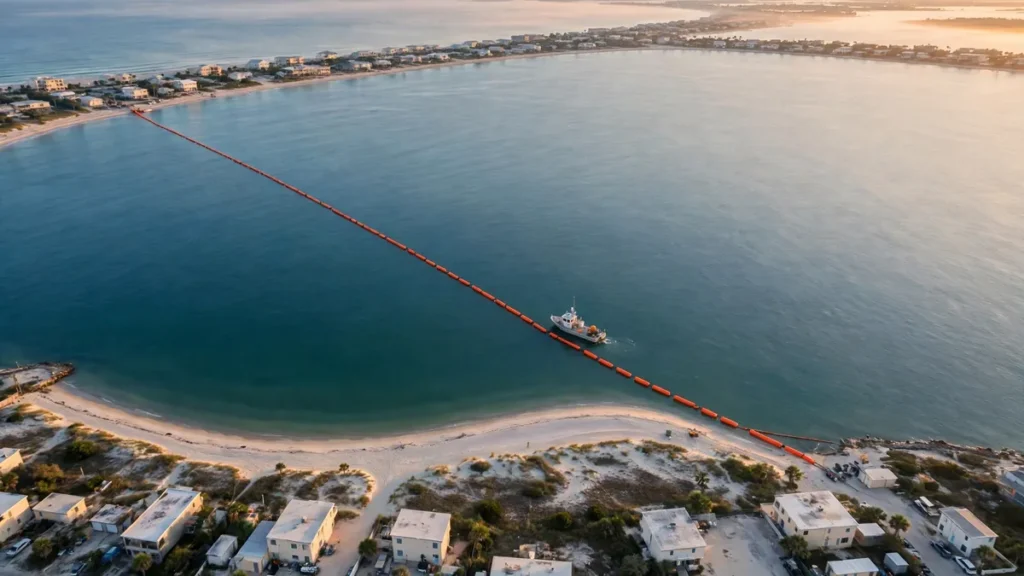
Containment comes first. Response vessels deploy long floating barriers, known as booms, around the spill to stop it spreading further across the water surface. You may have seen photos of bright orange booms strung across the sea; that is containment in action. The goal is to trap the oil in one area so it can be dealt with.
Cordoning is the next layer. Authorities establish an exclusion zone around the affected waters so that unauthorised boats, swimmers and onlookers stay out. This protects the public and gives cleanup crews the space they need.
How do crews actually remove oil from the sea and sand?
Cleanup itself involves several techniques. Skimmer vessels can suck oil off the water surface. Absorbent materials can soak up thinner slicks. On beaches, crews manually remove tar balls and oiled sand, because even small residues need to come off the shoreline. The exact mix of methods depends on the type of oil, the sea conditions and how far the spill has spread.
Remediation goes further. It means restoring the affected environment after the visible oil is gone: monitoring water quality, checking marine life, and making sure the coastline is genuinely safe before it reopens. This phase is slower and less visible, yet it is the reason beaches stay closed even after the water looks clean.
Who is running the cleanup operation?
Alongside all of this, MOCCAE said precautionary coastal surveys are continuing. Survey teams are checking the shoreline for new deposits of oil, because tides and winds can push residue ashore days after the initial spill. Until those surveys come back clear, the closure remains the safe choice.
The operation involves both local and federal authorities, which is standard for a marine incident of this scale. Umm Al Quwain’s local teams handle the shoreline, while federal bodies coordinate the wider response. It is a serious, multi-agency effort, not a token gesture.
What caused the spill, and what is still unconfirmed?
This is where you need to be careful about what you read online. As of Friday morning, MOCCAE has not named a vessel, a company or a cause. The ministry confirmed that a tanker spill affected Umm Al Quwain’s beaches, and it described the response. It did not say which tanker, how the oil escaped, or how much was spilled.
Some international reporting has gone further. The National reported that international maritime agencies identified the vessel involved as the supertanker Gem No.2, and linked it to a suspected drone attack in early October. That reporting is attributed to those agencies and to the publication’s own sources; it is not part of the UAE’s official statement.
What has been claimed but not officially confirmed?
So how should you treat such claims? As unverified until the authorities confirm them. There is a real difference between an official government statement and a media report citing unnamed agencies. Both can be valuable, yet only the first is authoritative. If MOCCAE or another UAE authority names the vessel or explains the cause, this article’s account will reflect that. Until then, claims about specific ships, attacks or spill volumes remain unconfirmed.
This is also why the ministry asked the public to avoid rumours. During marine incidents, speculation spreads quickly: exaggerated spill sizes, invented health warnings, fake closure maps. Sharing unverified claims can cause real harm, from panic buying to needless fear. And there is a legal angle too. The UAE takes online misinformation seriously, and posting false claims can lead to serious penalties, as explained in our guide to the UAE social media fine rules. When in doubt, check an official source before you share.
The honest position right now is simple: a tanker spill happened, the authorities are handling it, and the cause is still officially unconfirmed. Anything beyond that is speculation, however confidently it is presented.
How long will Umm Al Quwain’s beaches stay closed?
There is no official reopening date yet, and you should be sceptical of anyone who claims to know one. MOCCAE said the beaches and coastal areas will remain closed until technical teams complete their assessments and establish the necessary safety and marine protection measures. In other words, the closure lasts as long as the experts say it needs to.
How long does that usually take? It depends on factors nobody can predict precisely: the type and amount of oil, sea and wind conditions, how much reaches the shore, and how quickly cleanup crews can work. Crews might resolve a contained offshore spill in days. A spill that soils beaches thoroughly can take weeks of cleanup plus a remediation and monitoring period.
The precautionary coastal surveys are the key indicator. As long as teams are still finding oil deposits along the shore, reopening would be premature. When surveys consistently come back clear and water quality checks pass, the authorities will have the evidence they need to lift the closure.
For residents planning ahead, this is a good moment to think about the calendar. If you were counting on a beach trip soon, keep an eye on official announcements rather than fixing a date in your mind. And if you are planning around time off, our guide to the next public holiday in the UAE can help you plan alternative dates once the coastline reopens.
The pattern with incidents like this is consistent: authorities reopen in stages, often starting with visual inspections, then water testing, then a formal announcement. Expect the all-clear to arrive as an official statement, not as a rumour. When it comes, it will be unambiguous.
How will you know when the beaches reopen?
Officials will announce the reopening through official channels, and that is the only announcement that matters. MOCCAE will issue a statement when its technical teams are satisfied that the coastline is safe. Local authorities in Umm Al Quwain will echo it. Until you see that, assume the closure is still in force.
Where should you look? The ministry’s official social media accounts and website are the primary sources. Reputable UAE news outlets will carry the announcement within minutes, because they monitor these channels constantly. If you want to be systematic about it, bookmark the key government portals online so you can check primary sources directly instead of relying on forwarded messages.
What you should not rely on is word of mouth. “My friend said the beach is open” is not a reopening. Neither is a TikTok video of an empty shoreline. During the closure, physical barriers and official notices at beach access points are the ground truth. If the barriers are still up, the beach is still closed, whatever anyone tells you.
It also helps to understand what reopening looks like. Authorities rarely lift a marine closure silently. Expect a clear statement confirming that assessments are complete and that safety measures are in place. There may be phased reopening, with some stretches of coast opening before others. And the announcement will almost certainly remind the public to report any remaining oil sightings, because community eyes help the final monitoring phase.
Could the weekend weather affect the cleanup?
Timing matters in any spill response, and this weekend’s weather adds an interesting dimension. The National Center of Meteorology (NCM) has forecast a changeable few days across the UAE, with a chance of convective rain from Friday through Tuesday, fog and mist forming tonight and on Saturday morning, and winds gusting up to 50 km/h in some areas. The NCM expects cooler temperatures to follow next week.
What does that mean for the spill? Wind is the biggest factor. Strong gusts can push surface oil toward the shore faster, which may deposit more residue on beaches. On the other hand, wind and wave action also help break up and disperse thinner slicks naturally. Fog complicates the response differently: it can limit visibility for survey vessels and slow aerial monitoring, though marine radar and modern tracking reduce that problem.
Rain itself has a mixed effect. Light rain does little to a spill, while heavy rain can wash beached oil back into the sea or push floating oil around. The NCM’s forecast speaks of a chance of rain rather than a definite downpour, so this is a watch-and-see factor rather than a game changer.
What is the per-emirate outlook for the weekend?
For residents, the practical takeaway is to factor the weather into any outdoor plans this weekend, spill or no spill. Foggy Saturday morning driving needs extra caution, and sudden gusts can make beach-adjacent areas unpleasant even where beaches are open. The per-emirate outlook below comes from the NCM forecast reported on Friday. For day-to-day updates, check the UAE weather today page before you head out.
| Emirate / area | High | Low |
|---|---|---|
| Dubai | 37°C | 26°C |
| Abu Dhabi | 38°C | 28°C |
| Sharjah | 38°C | 24°C |
| Ajman | 36°C | 26°C |
| Umm Al Quwain | 35°C | 26°C |
| Ras Al Khaimah | 38°C | 22°C |
| Fujairah | 35°C | 27°C |
| Al Ain | 38°C | 26°C |
| Liwa | 38°C | 24°C |
One thing the forecast does confirm: summer is loosening its grip. With cooler temperatures on the way next week, the weeks ahead would normally be prime beach season in the UAE. That makes a swift, thorough cleanup even more valuable. Everyone wants the coastline back before the best weather of the year arrives.
What should residents and visitors do right now?
Here is a practical checklist distilled from the official guidance. It covers the essential dos and don’ts while the closure lasts.
What does the official guidance boil down to?
First, stay away from Umm Al Quwain’s beaches and coastal areas entirely. The closure is not advisory; it is an official order. Respect barriers, signs and instructions from personnel on the ground.
Second, do not touch oil or tar-like residue if you come across it outside the closed zone. Report it to the authorities instead. Direct contact with petroleum residue can irritate skin, and handling it yourself helps nobody.
Third, pause fishing plans along the affected coastline. MOCCAE asked the public to avoid fishing in the affected areas, and fishermen should follow official instructions. If you had a fishing trip booked in the northern emirates, contact your operator about alternatives.
Fourth, treat the smell calmly. The ministry says it poses no health risk. Keep windows closed during the strongest periods if it bothers you, and take normal precautions if you have a respiratory condition. There is no need for masks, no need to stay indoors, and no need to panic.
Fifth, get your news from official sources. Follow MOCCAE’s announcements and reputable outlets. Do not forward alarming messages you cannot verify, and do not share speculation about the vessel, the cause or the spill size. Rumours during an environmental incident cause real confusion.
Sixth, rethink weekend plans that depended on UAQ beaches. Dubai’s coastline is open, indoor attractions are air-conditioned, and the desert is always there. A small change of plan beats a wasted trip to a closed beach.
Finally, be patient with the process. Marine cleanup is methodical work. Booms, skimmers, surveys and lab tests each take time, and rushing the reopening would risk public health and the marine environment. The teams on the water are working so that the beaches come back properly, not just quickly.
Your questions about the UAE oil spill, answered?
Below are the questions readers are asking most about the Umm Al Quwain oil spill, with answers based only on what the authorities and reputable outlets have confirmed.
When did the UAE confirm the oil spill?
MOCCAE confirmed the tanker oil spill early on Friday morning, 23 October 2026. The ministry said its technical monitoring had detected the spill affecting Umm Al Quwain’s beaches, and Khaleej Times, Gulf News, The National, Reuters and Arab News all reported the announcement the same morning.
Which beaches are closed because of the oil spill?
All beaches and coastal areas of Umm Al Quwain are temporarily closed. The closure applies to the emirate’s entire coastline until technical teams complete their assessments and establish safety and marine protection measures. Authorities have announced no beach closures in any other emirate.
Is the fuel smell in Sharjah and Ajman dangerous?
According to MOCCAE, no. The ministry stated that the odours reported in Sharjah, Ajman and Umm Al Quwain pose no health risks to residents. People with respiratory sensitivity should take normal precautions, such as keeping windows closed when the smell is strong, but there is no official health emergency.
Can I go fishing in Umm Al Quwain this weekend?
No. MOCCAE asked the public to avoid fishing in the affected areas and urged fishermen and sea users to follow official instructions. Wait for the all-clear before fishing anywhere along the Umm Al Quwain coastline.
What is causing the fuel smell across the UAE?
The smell comes from the tanker oil spill off Umm Al Quwain. When oil reaches seawater, its lighter components evaporate and release petrol-like vapours. Marine experts speaking to The National explained that these odours can travel tens of kilometres on coastal winds, which is why residents have noticed the smell in Sharjah, Ajman and parts of Dubai.
Has the UAE named the tanker responsible for the spill?
Not officially. As of Friday morning, MOCCAE has not named any vessel or company and has not stated a cause. Some international reporting has attributed claims about a specific vessel to maritime agencies, but those claims are unverified by UAE authorities. Treat them as unconfirmed until an official source speaks.
How long will the beach closure last?
There is no official end date. MOCCAE said the closure will remain until technical teams finish their assessments and put safety and marine protection measures in place. The duration depends on sea conditions, how much oil reaches the shore, and how quickly cleanup and remediation proceed. Watch for an official reopening announcement.
Where can I get reliable updates on the oil spill?
Follow MOCCAE’s official channels and reputable UAE news outlets. The ministry asked the public to rely on official sources and avoid rumours. Do not trust forwarded messages or social media speculation about spill size, health effects or reopening dates unless they cite an official announcement.
Friday’s confirmation ends a week of guesswork and replaces it with something far more useful: facts, a plan and clear instructions. A tanker spill has affected Umm Al Quwain’s beaches. The beaches are closed. Teams are containing and cleaning the spill. The smell, though unpleasant, is officially not a health risk. And the public’s job is refreshingly simple: stay away from the closed coastline, don’t fish the affected waters, don’t touch what washes ashore, and don’t spread rumours.
The UAE’s northern coastline is one of the country’s quiet treasures, and nobody wants to see it oiled. The good news is that spill response is a well-practised science, the authorities moved quickly once the source was confirmed, and the cooler months ahead give everyone a reason to want the beaches back at their best. When the all-clear comes, it will come officially. Until then, give the cleanup crews the space they need, and give the rumour mill nothing at all.