Picking a straightener feels simple in the shop. Then you get home, and the plates tug, or the heat fries your ends. Sound familiar? Learning how to choose a hair straightener saves you that regret. In fact, the right tool depends on your hair, not on the box.
So forget the longest feature list for a moment. Instead, start with your own strands, your routine, and your home. A buyer in humid Dubai faces different problems from a buyer elsewhere. Therefore, this guide compares plates, heat, and size in plain language. You will finish with a short, clear shortlist.
Answer these three questions first?
First, be honest about your hair type. Is it fine and soft, or thick and stubborn? Your answer sets the heat and plate size you need. For example, fine hair needs gentle, controlled heat. Thick hair, however, needs stronger heat and wider plates.
Second, think about how often you straighten. Daily use demands better plates and tighter heat control. Occasional use, in contrast, gives you more freedom. Still, even rare use can damage weak hair. So frequency matters, but condition matters more.
Third, decide where you will use the tool most. Will you style mainly at home, at the gym, or on trips? Travel changes the size and voltage you should pick. Home use, meanwhile, favours a full-size tool. Keep your three answers in mind as you read.
Ceramic, titanium or tourmaline: which plate suits you?
The plate material shapes heat, glide, and comfort. Ceramic heats evenly, so hot spots stay rare. Titanium heats fast and holds high heat well. Tourmaline is usually a coating over ceramic plates. Each option suits a different head of hair.
The ceramic vs titanium plates debate causes most confusion. Ceramic feels gentler and suits most people well. Titanium feels faster and suits very thick hair better. Neither material wins for everyone, though. Your hair thickness and habit decide the winner.
| Plate type | Heat feel | Best match | Watch out for |
|---|---|---|---|
| Ceramic | Even and steady | Fine, normal, and colour-treated hair | Slower heat-up on cheap models |
| Titanium | Fast and intense | Thick, coarse, and very curly hair | Easy to overheat fine hair |
| Tourmaline-coated | Smooth and even | Frizz-prone and dry-feeling hair | Coating can wear over time |
A hair straightener for fine hair usually uses ceramic plates. Ceramic spreads heat gently across thin strands. A hair straightener for thick hair often uses titanium plates instead. Titanium holds the heat that dense hair absorbs quickly. Tourmaline sits between them and adds a smoother glide.
Planning a sleek cut soon? Then match the tool to the style you will wear daily. Short, smooth styles like bob haircuts for women reward precise, narrow plates. Longer styles, however, reward wider plates and faster passes.
What temperature should you use for your hair type?
Heat does the straightening, yet heat also does the harm. So the safest heat is the lowest heat that works. That simple rule protects shine and strength. Start low, test a small section, and adjust slowly.
Many shoppers ask what temperature to straighten hair safely. Sadly, no single number suits every head. Fine hair often straightens at lower settings. Thick curls, in contrast, often need higher settings. The table below gives calm starting points, not promises.
| Hair type | Starting range | Passes per section | Note |
|---|---|---|---|
| Fine or fragile | Low setting, about 130–160°C | One slow pass | Stop if hair feels hot or dry |
| Normal or wavy | Medium setting, about 160–185°C | One to two passes | Raise heat only if waves return |
| Thick or coarse | Higher setting, about 185–210°C | One to two passes | Use smaller sections for control |
| Very curly or resistant | Higher setting, used briefly | One slow pass | Never linger on one spot |
Adjustable temperature control matters more than maximum heat. A dial or clear settings let you repeat your sweet spot. A single fixed heat, however, forces one choice on you. Consequently, adjustable temperature control suits almost every buyer. Look for clear numbers, not vague dots.
A hair straightener for curly hair needs steady, even heat. Curls absorb heat unevenly across each section. So smaller sections help the plates work evenly. Indeed, section size often beats extra heat. Work slowly, and let one good pass do the job.
How wide should the plates be?
Plate width controls speed, reach, and comfort. Narrow plates reach roots, fringes, and short layers easily. Wide plates cover more hair with each pass. Therefore, length and thickness should guide your choice. This straightener plate size guide keeps the logic simple.
| Plate width | Best for | Why it works |
|---|---|---|
| Narrow, about 2–2.5 cm | Short hair, fringes, and touch-ups | Close control near roots and edges |
| Standard, about 2.5–3.5 cm | Most hair lengths and daily use | Balance of speed and control |
| Wide, about 4–5 cm | Long, thick, or very full hair | Fewer passes across large sections |
Plate width for long hair deserves special thought. Long hair takes time, and repeated passes add heat exposure. Wide plates, therefore, cut styling time for long hair. Still, wide plates feel clumsy near the roots. So long but fine hair often suits standard plates better.
Short hair tells the opposite story. Narrow plates grip short sections without slipping. They also shape ends and fringes with care. Men with short, neat styles benefit from that control too. Our guide to the best haircuts for men shows styles where precision matters.
Floating plates add comfort at any width. The plates tilt slightly and adjust to each section. As a result, hair gets even pressure without harsh squeezing. Floating plates also reduce snagging on uneven sections. Test the feel in hand if you can.
Which features actually matter?
Feature lists grow long, yet only a few features help daily. Focus first on heat control and plate quality. Then check safety, cord length, and heat-up time. Extras help only after those basics pass. Use this checklist before you buy.
- Adjustable heat: clear settings you can repeat every time.
- Floating plates: even pressure and smoother glide.
- Auto shut-off: the tool switches off after a set time.
- Heat-up time: fast heat helps busy mornings.
- Cord length and swivel: easy movement without tangles.
- Plate edges: rounded edges glide better and crease less.
- Lock and heat cover: safer storage, especially for travel.
An ionic hair straightener claims smoother, calmer results. Ionic models release negative ions during styling. Fans say the hair feels smoother afterwards. Evidence varies, however, so treat ions as a bonus. Never pay extra for ions over heat control.
Likewise, a hair straightener for frizz should start with even heat. Frizz often worsens when plates heat unevenly. Smooth plates and steady heat help more than slogans. Also, dry hair straightens calmer than damp hair. So judge frizz tools by plates and control first.
Comfort counts more than people expect. A heavy tool tires your arm on long hair. A hot outer body makes close work awkward. Hold the tool, open it, and close it. Your hand will spot problems quickly.
Travel, mini and cordless options: do you need one?
Travel tools solve real problems, yet they compromise on power. A dual voltage travel straightener works across different countries safely. Voltage matters because outlets differ around the world. Without dual voltage, a tool can fail or overheat abroad. Check the label before any big trip.
A mini hair straightener suits fringes, edges, and short trips. Mini plates heat fast and pack easily. However, mini plates make long hair painfully slow. So treat a mini tool as a backup, not your main tool. Keep your full-size straightener for home styling.
A cordless hair straightener offers freedom from the socket. Cordless models help at the gym, office, or car mirror. Battery limits, though, cap heat time and power. Therefore, cordless suits touch-ups better than full styling. Charge habits and battery life deserve a close look.
Planning a holiday look around the tool? Then pack heat protection and a heat-safe pouch too. You can plan outings with our list of things to do in Dubai while your kit stays simple. Good planning beats a heavy bag every time.
How can you straighten safely in UAE humidity?
UAE humidity fights sleek hair all day long. Moist air creeps back into styled strands quickly. As a result, technique matters as much as the tool. Start with fully dry hair, always. Damp hair plus hot plates means steam and stress.
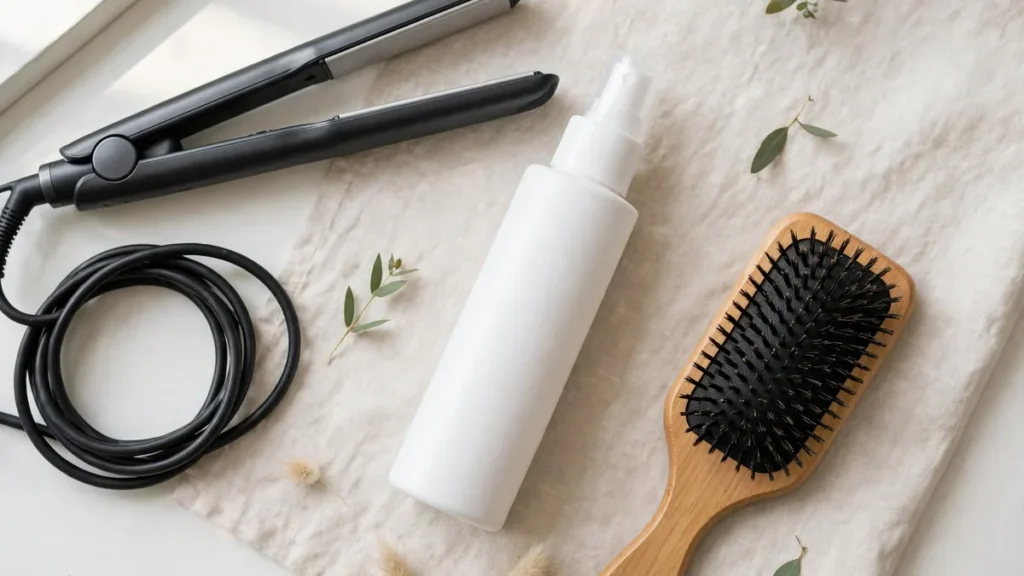
Always use a heat protectant spray before the plates touch hair. The spray forms a light shield against heat. Apply it evenly, section by section, and let it dry. Indeed, skipping a heat protectant spray is the costliest habit. Choose one you will actually use every time.
Learning how to straighten hair safely takes a few calm habits. Work in small sections, and move the plates steadily. Never clamp and hold on one spot. Let each section cool before you touch it. Cooling helps the smooth shape set properly.
- Dry hair fully before you start.
- Apply protectant to every section.
- Use the lowest heat that works.
- Take one slow pass, not five fast ones.
- Cool, then finish and store the tool safely.
Watch for heat damage signs as weeks pass. Dry, rough ends signal too much heat. Split ends and breakage signal bigger trouble. Hair that stops responding also warns you. If you spot heat damage signs, lower the heat and pause styling.
Worried about shedding too? Then separate heat damage from other causes calmly. Our guide to hair fall in Dubai explains common local triggers clearly. Heat stress adds strain, but it rarely acts alone. Gentle habits protect both length and roots.
Humidity also rewards a smart finish. Let hair cool fully before you step outside. A light finish helps, yet heavy products weigh hair down. Pair sleek hair with lasting makeup using our sweat-proof makeup tips for humid days. Small steps, combined, keep a look fresher longer.
Which buying mistakes catch people out?
First, many buyers chase maximum heat only. High heat looks powerful on the box. Yet daily hair rarely needs the top setting. Consequently, those buyers scorch fine sections fast. Choose control over raw power every time.
Second, many buyers ignore their real hair length. A wide tool on short hair feels clumsy. A narrow tool on waist-length hair feels endless. Both errors waste money and patience. Measure your needs against the size guide above.
Third, shoppers often copy a friend’s perfect tool. Her thick curls need different heat from your fine waves. His short crop needs different plates from your long layers. So borrow lessons, not exact models. Your own three answers from the start still rule.
Finally, price alone misleads in both directions. Expensive tools can still fit your hair badly. Cheap tools can lack safe, steady heat. Shop in person where you can feel and compare. Our Dubai shopping guide helps you plan a smart mall trip. Compare plates, weight, and controls side by side.
Getting ready for a big day? Then test the tool well before the event itself. A first attempt on the morning itself invites stress. Practise once, note your heat setting, and relax. A polished finish also pairs well with our job interview tips for confident presentation.
In short, match plates, heat, and size to your hair. That match matters more than any single feature. Buy control, comfort, and safety first. Then let extras earn their place. Your hair will thank you every morning.
Frequently asked questions
How do I know my hair type before buying?
Look at a single strand and your full head together. Fine strands feel soft and straighten fast. Thick hair feels dense and resists heat longer. Also, note curl pattern, dryness, and colour treatment. Those clues point to the right plates and heat.
Is ceramic or titanium better for daily use?
Ceramic usually suits daily use on fine or normal hair. It heats evenly and feels gentler overall. Titanium, however, suits thick hair that needs stronger heat. Daily users should favour control over peak heat. Either way, low effective heat protects hair best.
What temperature to straighten hair without damage?
Start at the lowest setting that smooths a test section. Fine hair often responds near 130–160°C. Thick hair may need 185–210°C briefly. Raise heat slowly, and never repeat passes endlessly. Lower heat plus protectant always beats raw heat.
Can I straighten wet or damp hair?
No, straighten only fully dry hair unless the maker says otherwise. Wet hair plus hot plates creates steam fast. Steam stresses strands and ruins the finish too. So dry first, apply protectant, and then style. Patience here prevents most damage.
Do I really need a heat protectant spray?
Yes, use a heat protectant spray every single time. The spray adds a buffer between plates and strands. It costs little time and saves real strength. Apply it evenly and let it dry first. Skipping it remains the most common mistake.
How often should I replace a hair straightener?
Replace it when plates scratch, heat unevenly, or controls fail. Worn coatings snag hair and create hot spots. Frayed cords also signal time to stop. Check plates monthly under good light. Safe tools protect hair and skin alike.