You love the water, yet your skin often pays the price afterwards. Sound familiar? In Dubai, swimming rarely means a quick dip in mild weather. Instead, you get blazing sun, warm sea water, and strong pool chlorine. Therefore, learning how to protect your skin while swimming changes everything. Your skin stays calmer, softer, and far more comfortable all summer.
This guide gives you a simple before, during, and after playbook. First, you will prep your skin properly before you enter the water. Next, you will build smart habits while you swim and lounge. Finally, you will recover your skin gently once you come home. In short, you get one clear routine for pools and beaches alike.
Picture a Friday at a beach club on Palm Jumeirah. The pool sparkles, the sea looks calm, and the sun feels relentless. Without a plan, that lovely day ends with tight, dry, itchy skin. However, with a plan, you leave glowing instead of sore and flaky. So, shall we build your swim playbook together, step by step?
Why does swimming feel harder on skin in the UAE?
Your skin faces three challenges at once during a UAE swim day. Firstly, the sun stays strong for most of the year here. Secondly, pool water carries chlorine and other treatment chemicals. Thirdly, sea water brings salt, sand, and wind into the mix. As a result, one swim can dry, sting, and dull your skin.
The chlorine effects on skin surprise many new swimmers in Dubai. Chlorine strips away some of your natural surface oils quite quickly. Consequently, your skin barrier weakens and loses moisture much faster. You then notice tightness across your cheeks, shoulders, and shins. In fact, regular swimmers often describe that tight feeling as totally normal.
Salt behaves differently, yet it still challenges your skin barrier. For example, salt water on skin can feel cleansing at first. Meanwhile, the salt keeps drawing moisture out as it dries. Your skin then feels rough, especially around your elbows and knees. Therefore, beach swimmers need recovery care just as much as pool swimmers.
Heat adds one more layer to the whole picture. You sweat under the sun, even while you sit in water. Similarly, hot air dries wet skin surprisingly fast between dips. Your sunscreen also works harder in this intense, reflective light. Above all, smart skin care for swimmers starts before the first splash.
Phase one: your pre-swim prep playbook
Great swim skin starts at home, roughly one hour before you leave. Think of this phase as your warm-up for the water. You cleanse lightly, you protect generously, and you pack wisely. Indeed, ten calm minutes here save you days of dryness later.
Should you take a pre-swim shower first?
Yes, and this simple step does more than you might expect. A quick pre-swim shower wets your skin with clean water first. As a result, your skin absorbs less chlorinated water afterwards. Think of your skin like a sponge that fills up fast. Once the sponge holds clean water, it takes in far less pool water.
Most Dubai pools ask you to shower before you enter anyway. So, use lukewarm water and keep the shower short and gentle. Hot water strips oils, so lukewarm water protects you better. Afterwards, pat your skin dry instead of rubbing it hard. Then apply your barrier and sunscreen layers while skin feels calm.
How should you apply sunscreen before swimming?
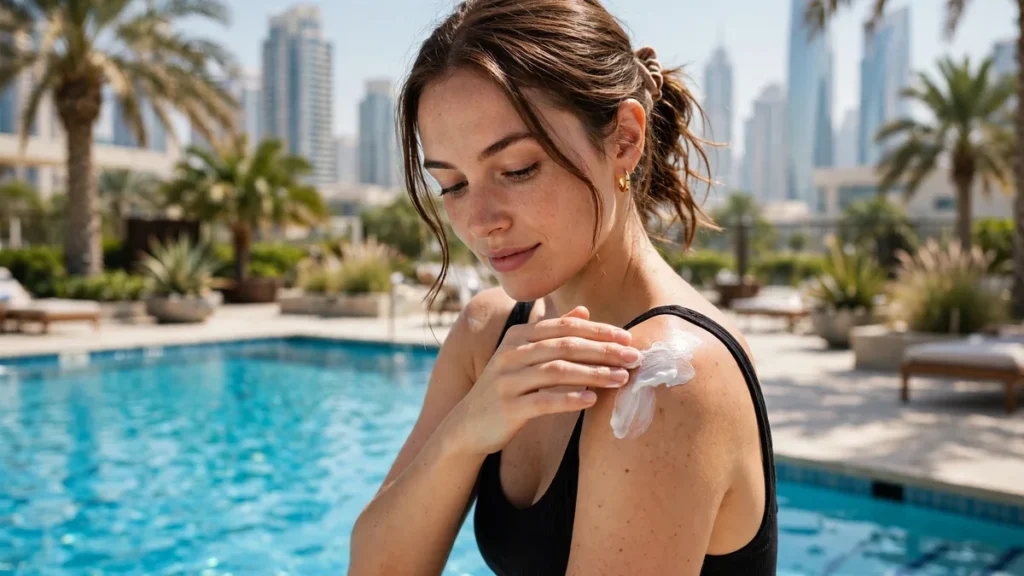
Sunscreen before swimming works best on dry, calm, settled skin. Apply it about twenty to thirty minutes before you swim. That pause lets the formula settle into an even, protective film. In contrast, sunscreen on wet skin slides around and covers unevenly.
Use enough product, because thin layers protect you far less. For example, most adults need roughly two finger lengths for the face. Your body needs about a shot-glass amount for full coverage. Spread it over ears, neck, shoulders, feet, and the backs of hands. Indeed, those small spots burn first at Dubai beach clubs.
Choose SPF 50 for swimming whenever you swim outdoors in the UAE. The sun reflects off water, tiles, and pale sand around you. Consequently, your exposure feels stronger than a normal walk outside. Broad-spectrum protection matters too, because UVA rays age skin deeply. Overall, SPF 50 for swimming gives you a sensible safety margin.
Pick a water-resistant sunscreen that suits your skin type well. Water-resistant sunscreen resists sweat and splashes better than regular formulas. However, no sunscreen stays fully waterproof, whatever the label suggests. So, treat water resistance as extra help, not total protection. Later in this guide, you will learn the reapply rhythm.
Does a barrier cream before swimming really help?
A thin barrier layer helps many swimmers, especially frequent pool users. Barrier cream before swimming sits between your skin and pool chemicals. As a result, chlorine touches your actual skin surface far less. You can use a plain, rich moisturiser as that barrier layer. Alternatively, many swimmers use a simple occlusive balm on dry patches.
Focus the barrier on your driest and most reactive areas. For instance, shins, elbows, knees, and hands usually need extra help. Your cheeks and shoulders may need help during long sessions too. Apply the barrier first, then add sunscreen on top afterwards. In short, barrier first and sunscreen second gives you both benefits.
One quick warning belongs here for regular lap swimmers. Thick, greasy layers can feel slippery and uncomfortable in water. Therefore, keep the barrier thin and let it absorb briefly. You want comfort in the water, not a heavy, sticky film. Similarly, test any new product at home before a big swim day.
Phase two: smart habits while you are in the water
You prepped well, so now you protect your work in the water. Small habits during your swim preserve your sunscreen and barrier. Meanwhile, smart timing protects you from the harshest midday sun. Shall we look at the habits that matter most poolside?
How can you protect skin from pool chemicals mid-swim?
Shorter, planned sessions usually treat sensitive skin far more kindly. To protect skin from pool chemicals, limit very long soaking sessions. Take breaks on the lounger, rinse briefly, and sip water regularly. Indeed, hydrated swimmers usually report calmer, happier skin afterwards.
Rinse quickly whenever you take a break between swim sets. Most outdoor pools in Dubai offer showers right beside the deck. A thirty-second rinse removes surface chlorine before it keeps working. Afterwards, pat dry gently and check your sunscreen coverage again. That tiny habit makes a real difference over a long afternoon.
Goggles and swim caps protect equipment, yet skin needs its own plan. Your face stays in chlorinated water during front crawl especially. Therefore, front-crawl swimmers should rinse their faces during every break. Breaststroke fans get more sun on the face and shoulders instead. Either way, breaks plus rinses keep your skin far calmer.
When should you reapply sunscreen after swimming?
Reapply sunscreen after swimming every single time you towel dry. Towelling removes sunscreen, even from so-called water-resistant formulas. As a general rhythm, reapply after swimming, after heavy sweating, and every two hours. That rhythm keeps your protection steady through a long beach day.
Dry your skin first, because sunscreen grips dry skin far better. Wait a minute or two, then apply a fresh, generous layer. Pay extra attention to shoulders, nose, ears, and upper back. In fact, those areas catch reflected light from the water surface. Consequently, they burn faster than spots in direct sun alone.
Shade counts as protection too, so use it deliberately. Sit under an umbrella between swims, especially near midday. Wear a wide hat and a light cover-up on deck. If you plan a full day out, browse ideas for things to do in Dubai and schedule swims for early or late hours. Your skin will thank you for avoiding peak midday rays.
Makeup wearers face one extra poolside puzzle, of course. Reapplying sunscreen over makeup feels tricky, yet spray and cushion formats help. Our guide to sweat-proof makeup tips shows how to layer products in UAE heat. Pat products on gently instead of rubbing them across your face. As a result, your base stays neater and your protection stays even.
Phase three: your post-swim recovery routine
The swim ends, yet your skin routine still has important work. Recovery in the first hour decides how your skin feels tomorrow. You rinse, you cleanse gently, and you moisturise generously. Finally, you soothe any warmth or redness with calm, simple care.
Why does a rinse off after swimming matter so much?
A thorough rinse off after swimming removes chlorine, salt, and sand. Those residues keep drying and irritating your skin for hours otherwise. So, rinse as soon as you leave the pool or sea. Use lukewarm water and spend extra time on skin folds. For example, rinse behind your knees, under straps, and around your neck.
Follow the rinse with a gentle, low-foam cleanser if needed. Harsh scrubs feel satisfying, yet they damage a stressed barrier. Instead, use soft hands and short, circular motions only. Pat your skin dry with a clean, soft towel afterwards. In short, gentle handling now prevents dry itchy skin after swimming later.
How should you use moisturiser after swimming?
Apply moisturiser after swimming while your skin still feels slightly damp. Damp skin absorbs creams better and locks water in effectively. Therefore, keep your moisturiser ready in your swim bag always. Smooth it over your body within a few minutes of rinsing. Then add a richer layer on shins, elbows, and feet.
Look for fragrance-free formulas with ceramides, glycerin, or panthenol inside. Those ingredients support your barrier without stinging sensitive areas. Similarly, plain formulas usually suit freshly sunned skin far better. Avoid strong acids and retinoids on swim days, especially after sun. Your barrier needs rest, not an active-ingredient workout that evening.
Dry itchy skin after swimming often signals a thirsty, stressed barrier. Scratch gently if you must, but cream usually solves the urge better. Apply another moisturiser layer before bed on very dry days. Meanwhile, wear soft cotton at home instead of rough fabrics. By morning, your skin usually feels noticeably calmer and softer.
What does good after-sun soothing care look like?
After-sun soothing care starts with cooling the skin down gently. A cool shower or a damp, cool cloth calms surface warmth. Then apply a plain, soothing gel or light lotion generously. Aloe-based gels feel lovely, provided your skin tolerates aloe well. Above all, keep the routine boring, gentle, and fragrance-free.
Drink water too, because recovery works from the inside out. Your body loses fluid through sun, heat, and swimming effort. A balanced meal helps as well, so explore our balanced diet guide for simple, nourishing ideas. Hydrated bodies generally support calmer, more resilient skin over time. Indeed, recovery food and fluids belong in every swim playbook.
Watch your skin over the next day or two carefully. Mild tightness usually settles with moisturiser and gentle care alone. However, spreading redness, blisters, or strong pain need medical attention. Similarly, persistent irritation deserves a proper skin check soon. Please see a dermatologist promptly if irritation keeps returning after swims.
Your poolside skin-kit checklist
A ready bag removes guesswork on busy swim mornings. Pack your poolside skincare essentials the night before, every time. Then you simply grab the bag and go, stress-free. Here is the checklist regular Dubai swimmers swear by:
- Water-resistant sunscreen with SPF 50 for face and body
- A small barrier cream or rich moisturiser for dry patches
- A gentle, low-foam cleanser in a travel-size bottle
- A generous body moisturiser for your post-swim routine
- A soothing after-sun gel for warm or flushed skin
- A wide hat, sunglasses, and a light cover-up
- A soft microfibre towel for gentle patting, not rubbing
- A refillable water bottle to support hydration all day
- Lip protection with SPF, because lips burn surprisingly fast
- A small dry pouch that keeps products away from wet kit
Keep the kit simple, because simple kits actually get used. Restock sunscreen often, since heat inside cars degrades formulas quickly. Check expiry dates at the start of every summer season. You can find swim-day basics easily across malls listed in our Dubai shopping guide. In fact, one organised kit saves money and stress all season.
Beach day skin care needs two small extras beyond pool kit. Firstly, pack a spare rinse bottle for sandy, salty skin. Secondly, pack a clean change of clothes for the drive home. Wet swimwear holds salt and chlorine against skin for hours. Therefore, changing quickly protects your skin during long drives home. Those two extras turn beach day skin care into an easy habit.
How can you adapt this playbook for the beach?
Beach swims add sand, wind, and stronger reflected light. The sea around Dubai feels warm and inviting most months. Still, your beach day skin care needs a few tweaks. Shall we adjust the playbook for Jumeirah, Kite Beach, and beyond?
Sand acts like a gentle scrub, whether you want it or not. It rubs sunscreen off your legs, ankles, and feet quickly. Consequently, reapply sunscreen after swimming and after long sandy walks too. Sit on a towel or mat instead of directly on hot sand. That barrier protects both your skin and your sunscreen layer.
Wind dries wet skin faster than still air does. Therefore, moisturise sooner after a windy beach swim session. Cover up during long chats on the shore as well. If you explore different neighbourhoods, our Dubai areas guide helps you pick beaches near your stay. Each beach offers different shade, showers, and facilities, after all.
Sea swimming also brings jellyfish season into your planning sometimes. Rinse stung skin with sea water first, according to lifeguard advice. Then seek help from lifeguards or medical staff if pain spreads. Avoid home remedies that lifeguards have not approved for you. Above all, follow the flags and local advice on every beach.
Swimming with sensitive skin: a gentler version of the playbook
Sensitive skin can absolutely enjoy swimming with a calmer plan. Swimming with sensitive skin simply needs softer products and shorter sessions. Start with patch tests before you try any new product. Then introduce one new product at a time, never several. That slow approach shows you exactly what your skin likes.
Choose fragrance-free sunscreen and fragrance-free moisturiser as your defaults. Mineral sunscreens often suit reactive skin, though formulas vary widely. Apply barrier cream before swimming on your most reactive patches. Rinse sooner, moisturise sooner, and skip long soaks at first. Gradually, you will learn your personal comfort window in water.
Eczema-prone skin deserves extra caution and personalised medical advice. Chlorine bothers some eczema-prone swimmers, while others tolerate it well. Therefore, talk to your dermatologist about your personal swim plan. Ask about bathing routines, barrier products, and flare care afterwards. In short, personal advice beats generic tips for eczema-prone skin.
Kids need the same gentle logic, plus extra shade breaks. Reapply their sunscreen often, because kids rub and splash constantly. Dress them in rash vests for longer, safer water play. Plan family swim days around holidays using the next public holiday in UAE guide. Early starts keep everyone cooler, calmer, and far less sun-stressed.
Myth-busting: five swim-skin stories to retire
Myths waste your money and sometimes harm your skin too. Let us clear up five stories you hear poolside often. Each myth sounds convincing, yet each one misses the truth. Ready for some friendly myth-busting before your next swim?
Myth one: does a base tan protect you safely?
No, a tan signals damage, not a safe protective shield. Tanned skin still burns and still ages under strong sun. Therefore, sunscreen stays essential, whatever your natural skin tone. Everyone in Dubai needs protection during long outdoor swims. In fact, deeper skin tones can still suffer pigmentation from sun.
Myth two: is cloudy weather safe without sunscreen?
Clouds block some light, yet plenty of UV still passes through. You can burn on grey, breezy beach days surprisingly easily. So, apply sunscreen before swimming on cloudy days as usual. Keep the same reapply rhythm after every swim and towelling. Clouds change comfort, but they change protection needs very little.
Myth three: does salt water heal every skin problem?
Sea water feels refreshing, yet it cures nothing on its own. Salt water on skin can dry and irritate reactive areas quickly. Some people enjoy the feeling, while others flare up afterwards. Therefore, rinse and moisturise after sea swims, just like pool swims. Please see a dermatologist for ongoing skin conditions, not the sea.
Myth four: does one morning application last all day?
One application fades through sweat, water, sand, and towelling. Even water-resistant sunscreen loses strength after swimming and rubbing. Hence, reapply sunscreen after swimming without debating it each time. Set a phone timer if beach days distract you easily. Consistent reapplication protects far better than one perfect morning layer.
Myth five: do indoor pools remove all skin stress?
Indoor pools remove sun exposure, yet chlorine still challenges skin. Your pre-swim shower and barrier steps still matter indoors. Rinsing and moisturising afterwards still matter indoors as well. Explore indoor options on rainy days through things to do in Sharjah for family day ideas. Indoor fun still deserves the full playbook, minus the sunscreen.
A simple weekly rhythm for regular swimmers
Regular swimmers benefit from a rhythm, not daily perfection. Swim days follow the playbook from start to finish. Rest days focus on gentle moisturising and barrier recovery. Meanwhile, one weekly review keeps your kit and habits current. Ask yourself three quick questions every Sunday evening at home.
Did any product sting, itch, or cause a rash this week? Was your skin tight for hours after any swim this week? Honestly, did you run low on sunscreen or moisturiser at all? Honest answers help you adjust products and timing quickly. As a result, your routine keeps improving without complicated tracking.
Keep expectations realistic and kind towards your own skin. Occasional dryness happens, even with a careful, consistent routine. What matters is the pattern across weeks, not one rough day. Overall, steady habits beat expensive products almost every single time. Your playbook works because you repeat it, not because it feels fancy.
Frequently asked questions
How long before swimming should you apply sunscreen?
Apply sunscreen before swimming about twenty to thirty minutes early. That pause lets the film settle evenly on dry skin. Then top up after swimming, towelling, and heavy sweating sessions. Indeed, timing plus reapplication matters more than brand or price.
Can you swim with moisturiser on your skin?
Yes, a thin moisturiser layer can work as a helpful barrier. Use barrier cream before swimming on dry or reactive patches only. Then add sunscreen above the barrier for outdoor swims. Keep layers thin, so you still feel comfortable in water.
Why does your skin itch after every pool swim?
Dry itchy skin after swimming usually follows chlorine exposure and moisture loss. Chlorine strips surface oils, so your barrier feels tight and reactive. Rinse promptly, moisturise generously, and shorten very long soaking sessions. However, please see a dermatologist if itching persists or spreads.
Is SPF 50 for swimming better than SPF 30?
SPF 50 for swimming gives stronger protection under intense UAE sun. The difference matters during long, reflective sessions beside water. Still, application amount and reapplication matter just as much overall. Apply generously, then reapply after swimming and towelling every time.
How does skin care for swimmers differ in the sea?
Sea swims add salt, sand, and wind to the challenge. Salt water on skin dries the surface as it evaporates afterwards. So, rinse with fresh water and moisturise soon after leaving. Beach day skin care also needs sand-proof reapplication habits throughout.
What should sensitive skin do before a first swim?
Swimming with sensitive skin starts with a patch test at home. Choose fragrance-free products and plan a short first session only. Rinse quickly afterwards and moisturise while skin feels slightly damp. Finally, build session length slowly as your confidence grows.