
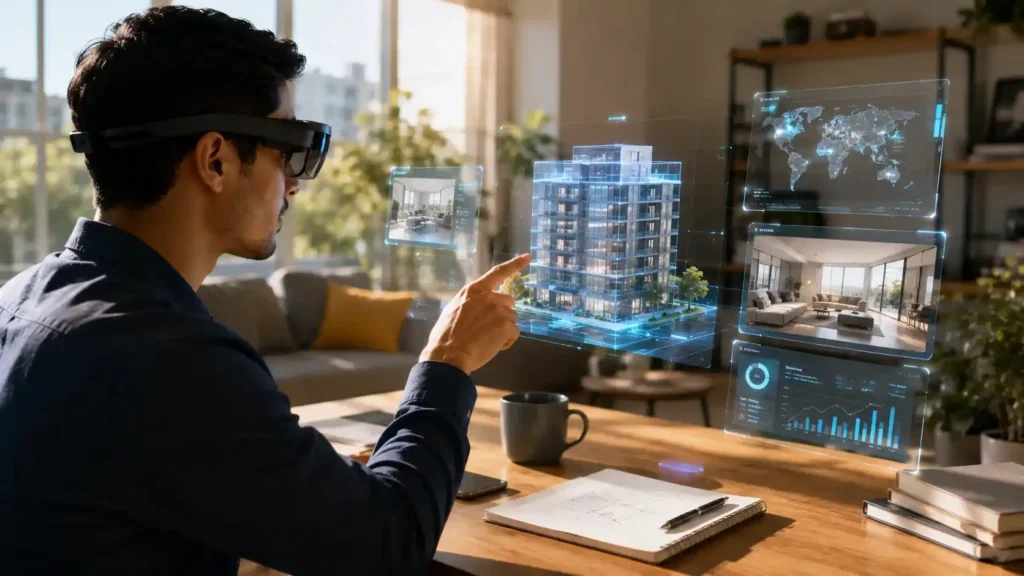
Augmented Reality: A Simple Guide to AR, VR and Immersive Tech
Imagine pointing your phone at an empty corner of your room and seeing a new sofa appear there, exactly to scale. Or picture wearing light glasses that show directions floating on the street ahead of you. This is the world of augmented reality, a technology that blends the digital and the real in surprising ways. Once the stuff of science fiction, it is now appearing in phones, games, shops, and workplaces. In this guide, we will explain what augmented reality is, how it differs from virtual reality, and why it matters for the future.
What Is Augmented Reality?
Augmented reality, often shortened to AR, adds digital elements to the real world around you. Instead of replacing your surroundings, it layers helpful or fun information on top of them. When you see a game character appear on your living room floor through your phone, that is augmented reality in action.
The key idea is enhancement. AR takes what you already see and makes it richer, more useful, or more entertaining. It is a fast-growing part of the wider wave of new tools we explore in our guide on emerging technology. As devices improve, AR is becoming smoother, smarter, and far more common in daily life.
How Does Augmented Reality Work?
Behind the magic, AR relies on a few clever pieces working together. Your device uses its camera and sensors to understand the space around you. Software then figures out where to place digital objects so they look natural, as if they truly belong in the scene.
This often involves a touch of artificial intelligence, helping the system recognise surfaces, objects, and movement. The result is digital content that stays in place as you move your phone or head. To understand the intelligence behind such tools, our guide on artificial intelligence and its uses gives helpful background on how these systems think.
Augmented Reality vs Virtual Reality
People often mix up AR and VR, but they are quite different experiences. Augmented reality adds digital elements to your real surroundings, so you still see the world around you. Virtual reality, on the other hand, replaces your surroundings entirely with a digital world you step into.
With VR, you usually wear a headset that blocks out the real world, immersing you fully. With AR, you stay connected to your actual environment while extra content appears within it. Both are exciting, and together they are often called immersive technologies. Each has its own strengths and its own perfect uses, which we will explore next.
Everyday Uses of AR
Augmented reality is already part of daily life, often without us realising. Popular phone games use it to place characters in the real world. Shopping apps let you see how furniture would look in your home, or how glasses would suit your face, before you buy.
Social media filters that add fun effects to your photos are another form of AR. Navigation tools are starting to show directions overlaid on the real street. These everyday uses make AR feel friendly and practical rather than futuristic. It is quietly becoming a natural, helpful part of how we use our phones every day.
AR in Education and Training
One of the most exciting uses of augmented reality is in learning. AR can bring lessons to life, letting students explore a beating heart, a historical building, or a distant planet right in their classroom. This makes learning more engaging and easier to remember.
In training, AR helps people practise real skills safely. A trainee can see step-by-step guidance overlaid on real equipment, learning by doing without risk. From medicine to engineering, this hands-on approach is powerful. By making complex ideas visual and interactive, AR is opening up fresh, effective ways to teach and learn at every level.
AR in Business and Retail
Businesses have embraced augmented reality with real enthusiasm. In retail, AR lets customers try products virtually, from furniture in their home to makeup on their face. This helps people shop with confidence and reduces the guesswork of buying online.
Beyond shopping, AR helps with design, marketing, and customer engagement. Companies use it to show off products in eye-catching, interactive ways. It creates memorable experiences that stand out. As more businesses discover its potential, AR is becoming a valuable tool for connecting with customers and making everyday transactions smoother and more enjoyable.
What Are Holograms?
Holograms are one of the most striking ideas linked to immersive technology. A hologram is a three-dimensional image that appears to float in space, viewable from different angles as if it were really there. They have long captured our imagination through films and stories.
Today, real hologram-style technology is developing quickly, used in displays, events, and communication. While true holograms are still advancing, related techniques already create stunning 3D effects. They represent an exciting frontier where digital images step out of flat screens and into the space around us, blending beautifully with ideas from augmented reality.
AR and Mobile Computing
Much of augmented reality’s success comes from the power now packed into our phones. Mobile computing has advanced so far that the device in your pocket can handle complex AR experiences with ease. This puts immersive technology into the hands of billions of people.
Because most people already own a capable smartphone, AR does not always need special equipment. This makes it easy to try and enjoy. As phones keep getting more powerful, AR experiences will only become richer and smoother. Mobile computing has quietly become the doorway through which most of us first meet augmented reality.
AR in Healthcare
Healthcare is another field where augmented reality is making a real difference. Surgeons can use AR to see helpful information overlaid during procedures, improving precision. Medical students can practise on realistic virtual models, learning safely before working with patients.
AR also helps explain conditions to patients, showing them what is happening inside their bodies in a clear, visual way. This builds understanding and eases worry. By blending digital guidance with real-world care, augmented reality is helping doctors work more accurately and helping patients feel more informed and involved in their own treatment.
AR in Gaming and Entertainment
Gaming is where many people first discover augmented reality. Popular AR games place characters and challenges right into your neighbourhood, encouraging you to explore the real world while you play. This mix of digital fun and physical activity has proved hugely popular.
Beyond games, AR is transforming entertainment more widely. Live events use it for dazzling visual effects, and theme parks create magical interactive experiences. Even watching sport can be enhanced with AR overlays showing stats and replays. By blending imagination with reality, augmented reality is making entertainment more interactive and unforgettable than ever before.
The Benefits of Augmented Reality
Augmented reality offers plenty of practical benefits. It helps people visualise things before making decisions, whether buying furniture or learning a new skill. It makes information easier to understand by showing it in context, right where you need it.
AR also makes experiences more engaging and memorable, which is valuable in education, business, and entertainment alike. Because it often works on ordinary smartphones, it is accessible to almost everyone. These advantages explain why so many industries are eagerly adopting AR. It adds a helpful, interactive layer to the world without getting in the way.
Challenges and Things to Consider
Like any technology, augmented reality comes with a few challenges. Privacy is one, since AR devices often use cameras to understand your surroundings. It is important that this information is handled carefully and respectfully by the companies involved.
There are also practical points, such as making devices comfortable and affordable for everyone. And, as with any screen-based tool, balance matters, so AR enhances real life rather than distracting from it. Being aware of these considerations helps us enjoy the benefits of augmented reality while using it thoughtfully and responsibly in our daily lives.
The Future of Immersive Technology
Augmented reality is still young, and its future looks bright. Devices are becoming lighter, cheaper, and more capable, moving from phones toward comfortable everyday glasses. As this happens, AR could become as normal as checking a smartphone is today.
We can expect AR and VR to blend more smoothly, creating rich mixed-reality experiences. This will open new possibilities in work, learning, entertainment, and connection. For a wider view of the innovations on the horizon, our guide on emerging technology explores the trends shaping tomorrow’s digital world.
AR in the UAE
The UAE, always keen on innovation, has embraced immersive technology with enthusiasm. From interactive attractions to smart retail and creative events, augmented reality is finding a natural home in the region’s forward-looking cities. It fits perfectly with the UAE’s love of bold, futuristic experiences.
Visitors and residents alike can encounter AR in entertainment, shopping, and cultural spaces. To see how technology shapes the region, our guide on technology in Dubai is a great read, while our guide on things to do in Dubai shows where such experiences come to life.
AR and Virtual Reality Together
While AR and VR are different, the most exciting future may lie in combining them. This blend is often called mixed reality, where digital and physical worlds merge smoothly. You might interact with realistic virtual objects that also respond to your real surroundings.
This combination opens up remarkable possibilities, from immersive training to shared virtual meetings that feel almost real. As technology advances, the lines between AR, VR, and mixed reality will keep blurring. Together, these immersive tools promise experiences that were once impossible, reshaping how we work, learn, play, and connect with others.
Everyday Devices for AR
You do not need expensive gear to enjoy augmented reality today. Ordinary smartphones and tablets already support a huge range of AR apps and experiences. This makes the technology wonderfully accessible to almost anyone with a modern device.
Looking ahead, lightweight AR glasses are steadily improving and may one day become as common as headphones. These would let you enjoy AR hands-free, woven naturally into daily life. For now, though, the phone in your pocket remains the easiest and most popular way to step into the world of augmented reality.
Getting Started With AR
The wonderful thing about augmented reality is how easy it is to try. If you have a modern smartphone, you already have everything you need to begin. Many free apps and games let you experience AR in minutes, whether placing objects in your room or adding fun effects to photos.
Start by exploring a shopping app that offers a “view in your space” feature, or a game that brings characters into your world. Playing with these tools is the best way to understand AR. Once you see it in action, this once-futuristic technology quickly feels familiar, fun, and genuinely useful.
Common Questions About AR
People often ask whether augmented reality is expensive, and the happy answer is that it usually is not. Most AR experiences run on the smartphone you already own, and countless apps are free to try. Another common question is whether AR is hard to use, but most apps are designed to be simple and intuitive.
Many also wonder how AR differs from VR, which simply comes down to whether the real world stays visible. Keeping these basics in mind makes augmented reality far less mysterious. With a little curiosity, anyone can start enjoying this friendly, fascinating technology today.
Conclusion: A More Immersive Future
Augmented reality is quietly transforming how we see and interact with the world, blending digital content with our real surroundings. From games and shopping to education, healthcare, and business, its uses are growing every day. Together with virtual reality and holograms, it is leading us toward a more immersive and engaging future.
The key takeaway is that AR is no longer science fiction; it is already in your pocket, ready to explore. As devices improve, immersive technology will only become more natural and useful in daily life. To keep learning, visit our guides on emerging technology and artificial intelligence, and browse more articles on the Gulf Lights blog and our full technology section. And whenever you need advice, feel free to contact our team for personalised support.