
Have you ever wondered what actually happens between a car being just an idea and it rolling out of a showroom ready to drive? The answer involves one of the most complex and coordinated systems humanity has ever built: the auto industry. Thousands of parts, hundreds of companies, and countless skilled people all come together to produce the vehicles we depend on every day. It is a genuinely remarkable process once you understand how it works.
The auto industry can seem mysterious from the outside, full of huge factories and complicated supply chains. But the basic ideas behind it are surprisingly logical and easy to follow. In this guide, we will break down what the auto industry really is, how cars are actually made, the network of companies that make it all possible, and how manufacturing works, including in places like the UAE. Whether you are curious about the industry or considering working in it, you will come away understanding how this fascinating system fits together.
What Is the Auto Industry?
The auto industry is the network of companies and activities involved in making, selling, and maintaining motor vehicles. It is a huge part of the global economy, employing millions of people and shaping how the world moves. When people talk about the automotive sector, they mean this entire interconnected system, from the factories that build cars to the shops that repair them.
At its core, the industry exists to meet a simple need: people and businesses need vehicles to move themselves and their goods. Meeting that need, however, requires an extraordinary amount of coordination. Designing a vehicle, sourcing thousands of parts, assembling them precisely, and then selling and servicing the finished product all demand specialised skills and careful organisation. The auto industry brings all of this together on a massive scale.
Understanding the auto industry means seeing it as an ecosystem rather than a single activity. Manufacturers, suppliers, dealers, and service providers all play their parts, and each depends on the others. This interconnected nature is part of what makes the industry so fascinating and so important. It sits at the heart of the wider automotive industry, driving economies and shaping daily life around the world.
How a Car Is Made?
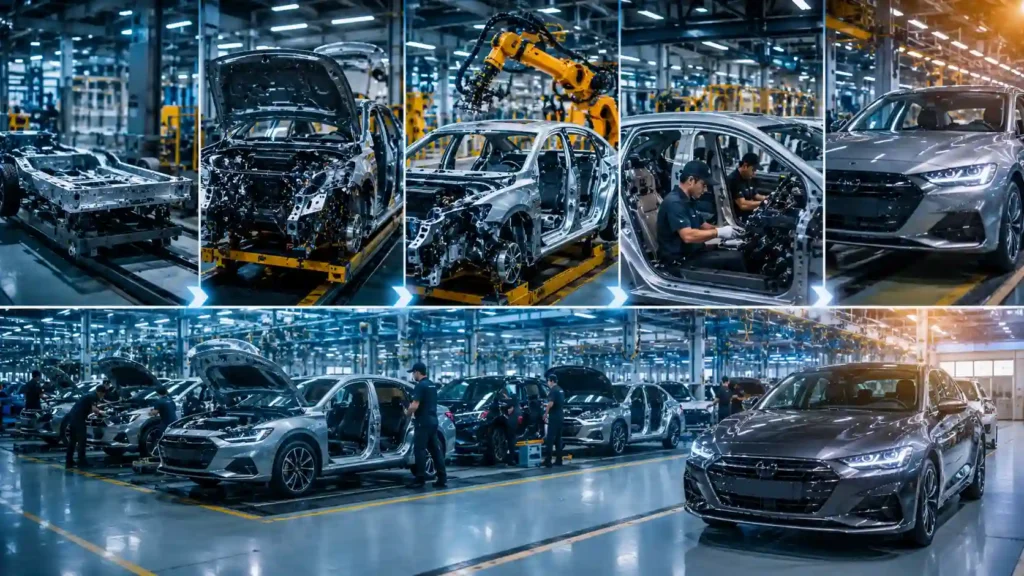
One of the most fascinating aspects of the auto industry is how an automobile car actually comes into being. The journey from concept to finished vehicle involves several distinct stages, each requiring skill and precision. Following this process reveals the incredible coordination behind every car on the road.
The process generally follows these main stages:
- Design and engineering: Ideas become detailed plans, with engineers designing every part and system of the vehicle.
- Sourcing parts: Thousands of components are gathered from suppliers around the world.
- Manufacturing: Parts are assembled on production lines, often with robots and skilled workers together.
- Quality control: Vehicles are carefully checked to ensure they meet safety and quality standards.
- Distribution: Finished cars are shipped to dealers and markets around the world.
Each stage is remarkable in its own right. Modern car factories are marvels of coordination, where a new vehicle can roll off the line every minute, drawing on the precision of advanced automotive technology. The level of automation and accuracy involved is genuinely impressive, with parts fitting together to tolerances finer than a human hair. This careful process is why modern cars are so reliable and consistent, no matter where they are built.
The Supply Chain Behind Every Car
Behind every vehicle lies an enormous supply chain, one of the most complex in all of manufacturing. A single car contains thousands of individual parts, and these come from a vast network of suppliers, often spread across many countries. Understanding this supply chain reveals just how interconnected the modern auto industry really is.
Car manufacturers rarely make every part themselves. Instead, they rely on specialised suppliers who produce specific components, from tyres and electronics to seats and engine parts. These suppliers, in turn, may depend on their own suppliers for raw materials and sub-components. The result is a deep, layered network that must work smoothly for production to continue. When this supply chain functions well, cars are built efficiently and affordably.
This interconnected system also means that disruptions in one part can ripple through the whole industry. A shortage of a single component can slow production across many companies. This is why managing the supply chain is such a crucial and challenging part of the auto industry. It connects the automotive world to broader questions of logistics, technology, and global trade, showing how the industry is woven into the wider economy.
The Key Players in the Industry
The auto industry brings together many different types of companies, each playing a distinct role. Understanding who these players are helps you see how the whole system works. From the giants who build vehicles to the many businesses that support them, each is essential to keeping the industry running.
At the centre are the vehicle manufacturers, the major car companies that design and build cars. Around them sits a huge network of parts suppliers who provide the components manufacturers need. Then there are the dealers who sell vehicles to buyers, and the service providers who maintain and repair them throughout their lives. Each of these groups is a substantial industry in its own right.
Beyond these core players are many supporting businesses. There are logistics companies that move parts and vehicles, financial services that help people buy cars, and technology providers who supply the increasingly important software and electronics in modern vehicles. This rich variety of businesses is part of what makes the auto industry so large and economically important. It also creates the diverse ecosystem that includes everything from global corporations to your local auto repair shop, from big auto parts stores to sellers of affordable used car parts.
Automotive Manufacturing in the UAE
While the UAE is best known as a vibrant market for buying and servicing vehicles, there is also growing interest in automotive manufacturing and related industries in the region. Understanding this side gives a fuller picture of the automotive world in the Emirates and its ambitions for the future.
The topic of automotive manufacturing companies in the UAE reflects the country’s broader push to diversify its economy and develop advanced industries. While the region’s automotive strength has traditionally been in trade, sales, and services, there is increasing attention to manufacturing, assembly, and related activities. This aligns with the UAE’s forward-looking vision and its investment in technology and industry.
For anyone interested in the specifics of manufacturing or particular companies in the region, it is always best to consult official and reliable sources for accurate, current information. The automotive landscape in the UAE continues to evolve, and details change over time. What is clear is that the region takes its automotive sector seriously, from the busy market of car companies in the UAE and car companies in Dubai to the wider automotive scene in the UAE and growing interest in local industry and innovation.
Cars from Around the World
One of the interesting features of the auto industry is how different regions have developed their own automotive strengths and traditions. Cars come from many countries, each bringing its own character, engineering philosophy, and reputation. This global variety enriches the choices available to buyers everywhere.
Different regions are known for different qualities. Some are famous for reliability and value, others for luxury and performance, and still others for innovation and affordability. This includes the increasingly popular korean cars, known for their strong value, and the rapidly rising chinese car companies that are making a growing impact on the global market. Meanwhile, the makers behind German cars maintain a strong reputation for engineering.
This global nature means buyers have an incredible range of choices, and the industry is truly international. Cars, parts, and expertise flow across borders, creating a connected worldwide industry. For markets like the UAE, this global variety is especially visible, with vehicles from all over the world available to buyers. Understanding where cars come from and what different regions offer helps you appreciate the rich diversity of the automotive world.
Buying, Selling, and Servicing
The auto industry is not just about making cars; a huge part of it involves what happens after vehicles are built. Buying, selling, and servicing vehicles form enormous sectors in their own right, and they are where most people interact with the industry directly. Understanding these activities completes the picture of how the industry works.
The buying and selling side connects manufacturers to customers through dealers and markets. This is a substantial industry, involving showrooms, sales professionals, financing, and increasingly online platforms. Once people own vehicles, the servicing side takes over, with a vast network keeping cars running. This includes everything from routine car maintenance to major car repair services, along with the supply of auto parts that keep vehicles on the road.
In markets like the UAE, these activities are especially active. There are many options for buying and servicing vehicles, from a convenient auto mechanic in Dubai to numerous auto service centres. As always, for specific businesses or providers, it is wise to confirm details and reputation from official and reliable sources before making decisions.
How the Industry Is Changing?
The auto industry is not standing still. In fact, it is going through one of the biggest transformations in its history, driven by new technology and changing needs. Understanding these changes helps you see where the industry is heading and why it matters. It is a genuinely exciting time to follow the automotive world.
The shift to electric vehicles is reshaping how cars are powered and built. Vehicles are becoming smarter and more connected, integrating advanced technology in ways that transform the driving experience. These changes connect the traditional auto industry to the cutting edge of automotive technology and even artificial intelligence, blending mechanical engineering with advanced computing.
These transformations affect every part of the industry, from manufacturing to sales to service. Companies are investing heavily in new technologies, workers are learning new skills, and the whole ecosystem is adapting. For forward-looking regions like the UAE, these changes align well with broader ambitions in innovation and technology. The industry that emerges from this period of change will look quite different from the one that came before, and that makes it a fascinating time to pay attention.
Why Understanding the Auto Industry Matters?
You might wonder why understanding how the auto industry works matters to you personally. The truth is that this knowledge is genuinely useful, whether you own a car, are thinking of buying one, or are simply curious about the world around you. A little understanding goes a long way.
Knowing how the industry works helps you make smarter decisions as a consumer, understanding what goes into vehicles and their prices. It helps you appreciate why cars cost what they do and what factors affect quality and value. For those considering careers, understanding the industry reveals the many opportunities it offers. And for anyone interested in the economy and technology, the auto industry provides a fascinating window into how modern manufacturing and business work.
This understanding also helps you follow news and trends more intelligently. When you know how the pieces fit together, developments in the automotive world make much more sense. Whether it is a new technology, a shift in the market, or changes in the local scene, you can understand what it means and why it matters. This kind of informed awareness is valuable in a world so shaped by vehicles and the industry that produces them.
Frequently Asked Questions
How many parts are in a car? A typical modern car contains thousands of individual parts, often around thirty thousand when you count every small component. These come from a vast network of suppliers and must all work together perfectly, which is why the auto industry’s supply chain is so complex.
Where are most cars made? Cars are manufactured in many countries around the world, with different regions known for different strengths. Major manufacturing happens across Asia, Europe, and the Americas, among other places. The industry is truly global, with parts and vehicles flowing across borders.
Is car manufacturing growing in the UAE? The UAE is traditionally strong in automotive trade and services, with growing interest in manufacturing and related industries as part of its economic diversification. For specific and current details, official sources provide the most accurate information.
Final Thoughts
The auto industry is a remarkable system, bringing together design, manufacturing, supply chains, sales, and service to produce the vehicles that keep our world moving. From the thousands of parts in every car to the global network of companies that make it all possible, it is one of the most complex and important industries in the world.
Understanding how it works gives you valuable insight, whether as a consumer, a potential worker, or simply a curious mind. As the industry transforms through new technology, following its evolution becomes even more fascinating. To keep exploring the world of cars and the industry behind them, browse more articles across the Automotive section of our blog, and feel free to contact us with any questions. The auto industry keeps evolving, and now you understand the system that builds our vehicles.