Many readers in the UAE now ask one simple question. How the UN Secretary-General is chosen rarely makes headlines here. However, Lana Nusseibeh’s late entry changed that overnight. Indeed, this UN chief election explained guide breaks down every step in plain language.
The UN Secretary-General selection process looks secretive from the outside. Still, diplomats follow a clear sequence of nominations, polls and votes. For example, one short Charter article creates the whole framework. Then, informal straw polls test support long before any formal vote.
This explainer uses the deadlocked 2026 race as its worked example. So, you can see each rule operating in real time. Our main report on Lana Nusseibeh’s candidacy for UN Secretary-General covers her vision and career in full. Meanwhile, this guide focuses only on the process itself.
What does Article 97 actually say?
Article 97 UN Charter text runs to only a few lines. Yet, those lines decide who leads the United Nations. Indeed, the Charter says the General Assembly appoints the Secretary-General. However, the Assembly acts only on the Security Council’s recommendation.
The Council therefore controls the decisive stage of the contest. For instance, the Council submits one name only to the Assembly. Consequently, rival candidates never face a public run-off in the Assembly hall. Instead, members settle the real contest inside the Council first.
The Charter also gives the job a formal title. Specifically, it calls the Secretary-General the chief administrative officer of the organisation. Reuters, quoting the UN website, describes the role differently in practice. Indeed, the UN calls the post equal parts diplomat and advocate, civil servant and chief executive officer.
“equal parts diplomat and advocate, civil servant and chief executive officer”
That description explains why the Guterres successor process attracts such intense lobbying. Above all, the winner runs a huge global administration daily. Meanwhile, the same person also mediates wars and speaks for vulnerable people. So, governments treat the choice as a major strategic decision.
How does a candidacy actually start?
A candidate cannot simply apply for the job alone. First, a member state must nominate that person formally. Then, the nomination enters the official selection process in New York. Indeed, state backing signals serious political support from the start.
Nusseibeh’s entry shows this opening step clearly. President Sheikh Mohamed bin Zayed Al Nahyan formally nominated her on 21 October 2026. Then, he sent a nomination letter to two office holders. Specifically, the letter went to the presidents of the General Assembly and the Security Council.
WAM reported the President’s reasoning in that nomination. For example, he highlighted her extensive experience at the UN. He also praised her judgement in addressing international challenges. Finally, he cited her record of constructive work at the organisation.
What must a candidate publish under the new transparency rules?
The transparent selection reform 2025 package changed how candidacies begin. First, a General Assembly resolution from September 2025 set new expectations. Indeed, each candidate should provide a vision statement on nomination. Then, each candidate should present that statement publicly.
The United Nations then publishes each statement on a dedicated web page. So, any reader can compare rival platforms side by side. For instance, Nusseibeh published hers under the title A United Nations for the Next Eighty Years. Readers can find that candidate vision statement UN link at www.lananusseibeh.org.
The September 2025 rules also tackle money and conflicts directly. Specifically, candidates should disclose their funding sources openly. Meanwhile, candidates holding UN posts should consider suspending UN work during the campaign. Consequently, the rules aim to prevent conflicts of interest during the race.
A separate step formally opened this cycle in New York. Indeed, the presidents of the General Assembly and the Security Council sent a joint letter. Reuters explainers describe that letter as a pledge of transparency and inclusivity. Then, the letter invited member states to put names forward.
Nusseibeh knows these transparency rules from the inside too. For instance, she co-chaired a General Assembly working group in 2016 and 2017. That group changed how secretaries-general are selected afterwards. Indeed, the reforms made the process more participatory and transparent.
Why did Nusseibeh step back from her government role?
She has taken a leave of absence from her UAE Government role. Indeed, her vision statement links that move directly to independence. Specifically, she says the step reflects the independence the Charter requires of a Secretary-General. Then, she made the pledge in unusually blunt words.
“I wish to offer myself to this office as I would serve it: speaking frankly with every government and answering to none. There will be no exemptions for friends and no grudges against critics.”
That promise matters for the process as well as the politics. Above all, a Secretary-General must answer to all member states equally. So, a candidate on leave signals distance from her own government. Meanwhile, the September rules encourage similar steps for UN post holders.
Readers tracking official UAE announcements can use official UAE government portals alongside WAM reports. However, the selection itself happens entirely inside UN buildings in New York. Indeed, no national government runs any stage of the voting. Instead, member states act together through the Council and the Assembly.
What is a straw poll in the Security Council?
A Security Council straw poll tests support without binding anyone legally. Indeed, members vote in secret during these informal rounds. Then, diplomats read the results and judge who can actually win. Consequently, weak candidates often lose momentum after a poor poll.
Each councillor marks every candidate on the same secret ballot. For example, the encourage discourage no opinion ballot gives three choices for every name. A member can encourage one candidate strongly in this way. Alternatively, that member can discourage a rival or record no opinion.
The system deliberately avoids a simple ranking of the field. Instead, members judge each name on its own merits separately. So, a candidate can collect encourages from many members at once. Meanwhile, another candidate can collect discourages from the same voters.
Officials keep the headline results secret after each round. However, figures routinely leak to specialist outlets afterwards. Indeed, IANS reported that results leaked to PassBlue and 1for8Billion this cycle. Candidates also learn their standing through a formal channel, though.
Specifically, officials inform candidates via their nominating states’ permanent representatives. Then, campaigns adjust their lobbying before the next round begins. Greece’s Aglaia Balta holds the Council presidency for October this year. Indeed, Balta confirmed publicly that the sixth poll took place.
Where did the straw poll system come from?
Diplomats developed this polling system during the 1980s in New York. Indeed, Reuters explains that the practice dates back to that decade. Then, councils needed a private way to test veto risks early. Consequently, the straw poll became the standard screening tool.
One colourful detail links this cycle directly to that history. GenzNewz, citing Uganda’s foreign ministry, reports a striking origin story. Specifically, Olara Otunnu introduced the straw-ballot formula during his 1981 Council presidency. Diplomats now call that method the Otunnu Formula in his honour.
Otunnu now contests this race as a candidate himself. So, his own system now judges his own candidacy directly. Indeed, few selection processes offer such a neat historical twist. Meanwhile, the formula still works exactly as he designed it.
Why does the ballot colour matter so much?
Permanent members receive ballots in a different colour from elected members. Indeed, that colour split reveals veto danger instantly after counting. For example, officials can separate permanent-member votes from the rest immediately. Then, everyone sees whether a big power opposes a candidate.
A permanent-member discourage carries a meaning far beyond one vote. In practice, diplomats read that signal as a likely veto later. Consequently, one colour-coded discourage can end a candidacy overnight. However, the straw poll itself remains informal and legally non-binding.
The permanent members veto power shapes every calculation in the race. Indeed, the United States, Russia, China, Britain and France hold that power. So, strategists count permanent-member support before they count anyone else. Then, they treat total encourages as a secondary signal only.
Polls repeat until one pattern finally emerges from the numbers. First, a leading candidate must hold the highest encourages overall. Second, that candidate must hold no permanent-member discourages at all. Only then do diplomats judge a formal recommendation vote safe.
What happened in the sixth straw poll on 16 October?
The 16 October round was the sixth poll of this cycle. However, this round changed the information game for everyone involved. Indeed, it was the first poll to use colour-coded ballots distinguishing permanent members. Consequently, diplomats could finally see exactly where veto threats sat.
Reuters reported the leaked figures from that sixth round in detail. Rebeca Grynspan led the ballot narrowly once again that day. Specifically, she recorded nine encourages, five discourages and one no opinion. However, permanent members delivered two of her five discourages.
| Candidate | Encourage | Discourage | No opinion |
|---|---|---|---|
| Rebeca Grynspan | 9 | 5 | 1 |
| Carolyn Rodrigues-Birkett | 8 | 6 | 1 |
| Rafael Grossi | Near-identical to Rodrigues-Birkett | Near-identical | Near-identical |
Carolyn Rodrigues-Birkett finished close behind Grynspan in that poll. Indeed, she recorded eight encourages, six discourages and one no opinion. Permanent members again delivered two of her discourages as well. So, the colour-coded split blocked her path just as clearly.
Rafael Grossi posted numbers near-identical to Rodrigues-Birkett that day. However, one fewer permanent member supported him in the count. Consequently, his veto problem looked at least as serious as hers. Indeed, the top three each drew two permanent-member negatives.
The blockage extended far beyond the leading trio, though. Indeed, all seven contenders received at least two opposing permanent-member votes. Khaleej Times reports confirm that same pattern clearly in its coverage. So, no candidate held a clean sheet after six rounds.
How did the earlier polls build this deadlock?
Grynspan led five of the six polls during this cycle. However, Rodrigues-Birkett led the second poll back in August instead. Then, Grynspan reclaimed the lead and held it through October. Still, leading the count never removed her permanent-member problem.
The fourth poll shows how misleading headline leads can be. Indeed, Grynspan recorded ten encourages in that earlier round. She also recorded three discourages and two no opinions then. Consequently, her support looked broader before the colour coding arrived.
The third poll, held on 18 September, tells a darker story. Specifically, Grynspan won nine encourages in that September round. However, her discourages rose from one in July to five by September. Meanwhile, Rodrigues-Birkett saw her discourages rise from two to six.
That trend explains why diplomats call this race deadlocked now. Indeed, support polarised further as the rounds continued this year. Then, the colour-coded sixth poll exposed the veto maths fully. Consequently, a fresh candidacy became a rational response, not a gamble.
Who else contested the straw polls this cycle?
Eight people entered the contest before the polling began this year. Indeed, The National listed all eight names on 21 October. Seven candidates contested the straw polls across the six rounds. Ivonne Baki, however, did not take part in those polls.
The wider field shows how global this contest became quickly. For example, Macky Sall represented Senegal among the original eight names. Michelle Bachelet entered from Chile with a major UN record. Maria Fernanda Espinosa entered from Ecuador as a former foreign minister.
Sall then reshaped the field immediately after the sixth poll. Indeed, he withdrew from the race and announced it on 17 October. Business Insider Africa, via World Today Journal, reported his reasoning in detail. Specifically, he said he wanted to help build consensus instead.
Sall consulted regional leaders before he reached that decision too. For instance, he spoke with Burundi President Evariste Ndayishimiye, the African Union chair. He also spoke with Senegal President Bassirou Diomaye Faye, the ECOWAS chair. Consequently, his exit left Otunnu as Africa’s sole remaining candidate.
Six candidates remained after Sall withdrew from the contest. Then, Nusseibeh’s entry lifted the active field back to seven. Indeed, Khaleej Times describes her as one of seven candidates now. So, readers should count seven active candidates from this week.
How does the final recommendation vote work?
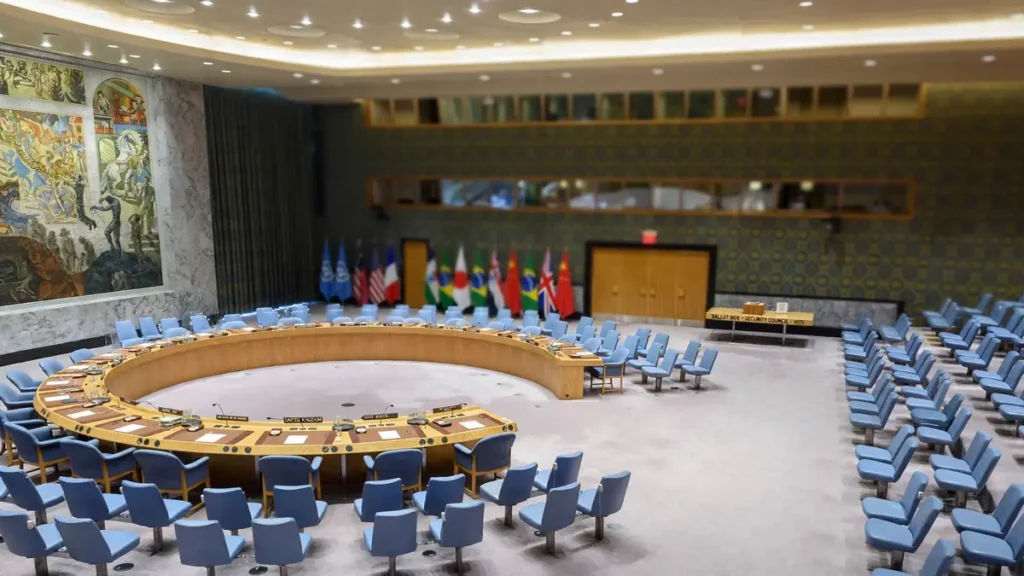
The straw polls end when diplomats spot a winnable candidate finally. Then, the Council moves from informal polling to formal action. Indeed, the Council adopts a recommendation resolution naming one person. Traditionally, members adopt that resolution behind closed doors in private.
Since 1996, councils have typically adopted that resolution by acclamation. Indeed, acclamation means members approve the name without a contested ballot. However, the underlying voting threshold still protects the outcome legally. Consequently, negotiators refuse to call the vote until the maths works.
Why do nine votes and no veto decide everything?
The nine votes Security Council threshold sets the minimum winning coalition. Indeed, a recommendation needs at least nine votes in favour overall. Then, the candidate must also survive the veto test completely. Specifically, no permanent member can cast a veto against the name.
That dual test explains the whole logic of straw polling. For example, a candidate can win twelve encourages and still fail. One permanent-member veto would still block that candidate completely. Conversely, a quieter candidate can win with nine votes and no veto.
Readers in the UAE know how one official check can decide an outcome. For instance, many residents have checked their UAE visa status by passport number before travelling. Similarly, one veto check decides this entire global appointment process. Indeed, diplomats therefore obsess over discourages more than encourages.
What does the General Assembly do after the Council decides?
The General Assembly appointment stage follows the Council recommendation directly. Indeed, the Assembly formally appoints the single name the Council submits. Then, that appointment completes the selection process under the Charter. Consequently, the winner gains authority from both organs together.
Reuters notes that observers have long viewed Assembly approval as a rubber stamp. However, that description reflects past practice, not a Charter rule. Indeed, the Assembly still holds the formal appointment power itself. So, campaigns still brief Assembly members throughout the Council stage.
The winner then serves a five-year term in the job. Specifically, the next Secretary-General takes office on 1 January 2027. Meanwhile, António Guterres ends his second term on 31 December 2026. Consequently, diplomacy in New York faces a hard end-of-year deadline.
Many UAE readers track dates through the UAE public holiday calendar each year at home. Similarly, diplomats now track one date above all others in New York. Indeed, missing the December deadline would leave the organisation leaderless briefly. So, pressure for a consensus name grows every week now.
How does the 2016 race for António Guterres compare?
The 2016 contest offers the closest recent comparison for readers. Indeed, Guterres also needed six straw polls during that race. Then, his support held firm while rivals accumulated permanent-member discourages. Consequently, the Council moved to a formal recommendation for him.
That comparison highlights what makes 2026 feel so different today. For example, Guterres emerged from his sixth poll as the clear frontrunner. However, Grynspan emerged from her sixth poll with two permanent-member discourages. So, the 2026 sixth poll clarified blockage rather than producing consensus.
The 2016 race also pioneered a more open selection style. Indeed, candidates took part in public dialogues during that cycle. Organisers also explicitly invited member states to nominate women then. Seven women received formal nominations during that historic contest overall.
Helen Clark entered that race after leading the UN Development Programme. Irina Bokova entered after leading UNESCO as director-general then. Susana Malcorra entered as Argentina’s foreign minister at the time. Christiana Figueres and Kristalina Georgieva also entered that crowded field.
Women still crowded the bottom five places in early 2016 polls. Then, Bulgaria withdrew backing from Bokova during the race itself. Bulgaria nominated Georgieva as a late entrant instead of Bokova. Consequently, that switch divided support among women candidates that year.
Why is the 2026 cycle different from every recent race?
Deadlock defines this cycle more than any single candidacy does. Indeed, six polls produced no candidate acceptable to all five permanent members. Then, the first colour-coded round confirmed the blockage in hard numbers. Consequently, the race stayed open far later than diplomats expected.
Late entrants thrive in exactly this kind of stalled contest. For example, Nusseibeh entered only after six polls had failed. Reuters, via Aaj TV, reported that multiple countries approached her recently. Specifically, delegations approached her during the last General Assembly session.
She told reporters that this moment demands a different kind of leader. Indeed, she framed her pitch around generational change for the organisation. She said that point enjoys broad recognition across the membership today.
“It’s recognized today that we need someone who offers generational change for the organisation.”
She also addressed the historic gender barrier in the race directly. Indeed, nine secretaries-general have served since 1946, and all were men. She welcomed the prospect of a woman winner in principle too. However, she rejected gender as the basis of her own candidacy.
“I think it would be great if the next secretary-general was a woman, but I’m not running because I’m a woman; I’m running because I am stubbornly optimistic about the future of the United Nations and I believe we need someone who is relentless in the pursuit of diplomacy to open doors.”
How do gender and regional expectations shape this race?
Two unwritten expectations also shape this contest in background discussions. First, many members call for a woman leader for the first time. Second, informal regional rotation created expectations of a Latin American candidate. However, neither expectation appears as a formal Charter requirement anywhere.
A September 2025 Assembly resolution strengthened the gender call formally too. Indeed, resolution 79/327 urged states to nominate a woman strongly. The text noted with regret that no woman has held the post. Consequently, nominators now face explicit pressure on this point.
Nusseibeh would also break a regional barrier if she won. Indeed, she would become the first woman Secretary-General since 1945. She would also become the second Arab holder, after Boutros Boutros-Ghali. The National notes she would be the first from an Arab Gulf state.
Her background also fits the consensus-builder profile this deadlock demands. For instance, diplomats in New York describe her as a respected, competent manager. She previously led the UAE’s successful campaign for election to the Security Council. Then, she led the UAE’s elected Council term during 2022 and 2023.
Workplace credibility matters in this building just as it matters at home. Indeed, UAE readers know how UAE labour law frames fair treatment and clear accountability at work. Similarly, her vision promises stronger accountability across the UN Secretariat itself. So, her managerial record forms a central part of her pitch.
What happens next this week and this year?
Council members now negotiate the timing of the next step actively. Indeed, Reuters reports talks about another straw poll this Friday, 23 October. Alternatively, members may hold that poll at a later stage instead. Consequently, Nusseibeh may face her first ballot test within days.
Her first poll will reveal her permanent-member standing immediately afterwards. For example, any colour-coded discourage would signal a serious veto risk. However, a clean permanent-member sheet would transform the race overnight. Then, campaigns would recalculate their strategies around her candidacy quickly.
Whoever wins eventually inherits an exceptionally difficult in-tray in January. Indeed, Reuters lists several wars among the immediate crises awaiting the winner. American funding cutbacks also strain the organisation heavily right now. Meanwhile, Washington has pulled out of dozens of UN agencies recently.
Reuters links those withdrawals to the body’s declining political relevance too. So, the next leader must rebuild influence as well as manage crises. Indeed, that challenge explains why members prize managerial competence so highly. Consequently, the process now rewards operators over orators in New York.
Visitors often discover Dubai’s diplomatic buzz during a short stay here. For instance, our guide to things to do in Dubai shows why the city hosts so many global gatherings. Similarly, New York now hosts a contest with direct UAE interest. Indeed, residents will follow every poll leak from this week.
Share process updates carefully when you discuss the race online. Indeed, the UAE’s social media rules punish unverified claims and insults severely here. So, rely on confirmed reports from WAM, Reuters and established UAE outlets. Then, treat leaked poll numbers as reports, not official results.
What are readers asking about the selection process?
How many votes to become UN Secretary-General?
A candidate needs at least nine votes in the Security Council overall. Then, that candidate must also avoid any permanent-member veto completely. Indeed, the Council then recommends that single name to the Assembly. Finally, the General Assembly appoints the winner for a five-year term.
Is a straw poll result the same as a formal veto?
No, a straw poll discourage does not equal a formal veto legally. However, diplomats read a permanent-member discourage as a likely veto signal. Indeed, that reading drives the whole screening purpose of the polls. Consequently, candidates treat colour-coded discourages as near-fatal warnings.
Can the General Assembly choose a different person instead?
The Charter gives the Assembly the appointment power under Article 97. However, the Assembly appoints only on the Council’s recommendation in practice. Indeed, the Council submits one name for that appointment stage. So, the decisive contest always happens inside the Council first.
Does the Charter require a woman or a Latin American winner?
No, the Charter sets no gender or regional requirement at all. Indeed, calls for a first woman leader reflect political expectations only. Similarly, regional rotation reflects an informal tradition among member states. Consequently, any nominated candidate can win if the Council maths works.
When does the winner actually start work in New York?
The winner takes office on 1 January 2027 in New York. Meanwhile, Guterres completes his second term on 31 December 2026. Indeed, that fixed handover date drives the current negotiating urgency. So, members must settle the recommendation well before year-end.
Why do officials keep straw poll results secret officially?
Secrecy lets members signal honest doubts without public diplomatic rows. Indeed, a public discourage could damage relations between major powers quickly. However, leaks still reach PassBlue, 1for8Billion and wire reporters regularly. Consequently, secrecy shapes the tone more than the information flow.
Where can readers follow the Guterres successor process from the UAE?
Readers should follow WAM, Khaleej Times, Gulf News and Reuters for confirmed steps. Indeed, those outlets reported the nomination, the polls and the reforms directly. Then, readers can compare each new poll leak against the numbers above. Finally, our main candidacy report links the process back to Nusseibeh’s vision.