
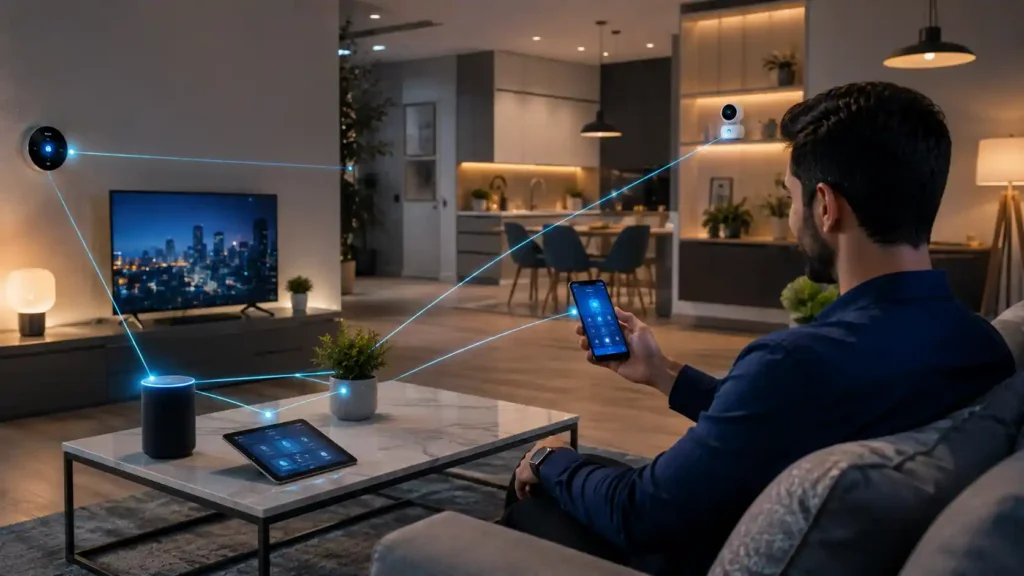
Think about the last hour of your day. Maybe your phone reminded you about a meeting, your watch nudged you to stand up, or you asked a speaker to play a song without lifting a finger. None of that felt remarkable, and that is exactly the point. Smart technology has slipped so quietly into our routines that we barely notice it anymore. It anticipates, adjusts, and responds, turning ordinary objects into helpful companions that seem to understand what we need.
But what actually makes a device “smart”? Why does your fridge suddenly need an internet connection, and is any of this genuinely useful or just clever marketing? In this guide, we will cut through the hype and explain what smart technology really is, how it works, where you already benefit from it, and where it is taking us next. Whether you are setting up your first smart home gadget or simply curious about the connected world around you, this article will give you a clear and honest picture.
What Is Smart Technology?
At its simplest, smart technology refers to devices and systems that can collect information, process it, and respond in helpful ways, often without needing constant human input. A regular light switch does one thing: it turns a light on or off when you flip it. A smart light can dim itself at sunset, change colour on command, and switch off automatically when you leave the room. The difference is intelligence and connection.
Three ingredients usually make a device smart. First, it has sensors that gather data about the world — temperature, movement, light, sound, or location. These sensors keep shrinking thanks to advances in fields like nanotechnology, which makes them cheaper and easier to fit into everyday objects. Second, it has some processing ability, letting it make decisions based on that data. Third, it has connectivity, so it can talk to other devices, to your phone, or to the internet. When these three come together, an ordinary object becomes part of a responsive, connected system.
This is closely tied to a concept you have probably heard: the Internet of Things, often shortened to IoT. It simply means everyday objects being connected to the internet and to each other. Your thermostat, doorbell, car, and even your coffee machine can join this network, sharing information and working together. It is one of the most important threads in modern emerging technology, and it is growing fast.
How Smart Systems Actually Work
It is easy to feel that smart devices work by magic, but the process is refreshingly logical once you break it down. Let us follow a simple example: a smart thermostat learning to keep your home comfortable.
First comes sensing. The thermostat measures the current temperature and notices when you are home or away, sometimes using your phone’s location. Next comes thinking. It compares that information against your past preferences and any schedule you have set, then decides whether to warm the place up or cool it down. Finally comes acting. It adjusts the heating or cooling on its own, and over time it learns your habits, getting better at guessing what you want before you even ask.
This sense-think-act loop sits at the core of nearly all smart systems, from a single gadget to an entire connected building. What makes it powerful is that many devices can share this loop together. Your smart lock can tell your lights you have arrived home, which can tell your speaker to start your evening playlist. Individually, each action is small. Woven together, they create an experience that feels genuinely intelligent.
Behind much of this cleverness sits artificial intelligence. The more a smart system learns from your behaviour, the better it predicts your needs, and AI is what turns raw sensor data into useful decisions. This partnership between connected devices and intelligent software is the real engine driving the smart revolution forward.
Smart Technology in Your Home
The home is where most people first meet smart technology, and it is easy to see why. These devices promise more comfort, better security, and lower bills, all controlled from the phone already in your hand. Here are some of the most popular examples you will encounter:
- Smart speakers and assistants: Voice-controlled helpers that answer questions, play music, set reminders, and control other devices.
- Smart thermostats: Systems that learn your routine and manage heating and cooling to save energy.
- Smart lighting: Bulbs you can dim, colour, and schedule from your phone or by voice.
- Smart security: Video doorbells, cameras, and locks that let you watch and control your home from anywhere.
- Smart appliances: Fridges, ovens, and washing machines that offer remote control and helpful alerts.
The real value appears when these pieces work together rather than in isolation. Imagine arriving home in the evening: your door unlocks as you approach, the lights fade on, the temperature is already perfect, and your favourite music begins playing. No single gadget did all that. It was a smart system quietly cooperating in the background, and once you experience it, going back feels strangely inconvenient.
Smart Cities and the Bigger Picture
Smart technology does not stop at your front door. Scale the same ideas up to an entire city and you get one of the most ambitious applications of all: the smart city. Here, connected sensors and systems help manage traffic, energy, water, waste, and public safety across millions of people.
Picture traffic lights that adjust in real time to ease congestion, street lamps that brighten only when someone is near, and sensors that warn city workers about a water leak before it becomes a flood. Public transport can update you on exactly when your bus will arrive, and energy grids can balance supply and demand more efficiently. The goal is a city that runs more smoothly, wastes less, and responds faster to the needs of its residents.
This is especially relevant in a forward-looking region like the UAE, where cities such as Dubai and Abu Dhabi have embraced connected infrastructure as part of their vision for the future. It fits naturally alongside broader national ambitions in artificial intelligence in the UAE, since smart cities depend heavily on intelligent systems to make sense of the enormous streams of data they generate. As always, specific projects and features evolve over time, so it is wise to confirm current details from official sources.
Mobile Technology: Smart Tech in Your Pocket
If you want to see the most successful smart device ever made, just look at the phone in your hand. Mobile technology is the beating heart of the connected world, acting as the remote control, the sensor, and the brain for so much of what we do. Your smartphone knows your location, responds to your voice, recognises your face, and connects instantly to a vast web of services.
What makes modern mobile technology so powerful is how much it packs into such a small space. Sensors detect motion, orientation, light, and fingerprints. Cameras capture and even understand images. Wireless connections keep you linked to the internet almost everywhere you go, often relying on the same satellites that power modern space technology. And increasingly, phones handle intelligent tasks right on the device, from translating languages to enhancing photos in real time.
This tiny powerhouse is also your gateway to nearly every other smart device you own. You use it to set up your smart lights, check your security camera, and talk to your assistant. In many ways, the smartphone is the glue holding the whole smart ecosystem together, and it keeps getting more capable with every generation.
Cool Gadgets Worth Knowing About
Part of the fun of smart technology is the sheer creativity on display. Beyond the practical staples, there is a whole world of cool gadgets that show just how far connected devices have come. Some solve real problems, others are simply delightful, and many are both.
- Fitness trackers and smartwatches: Wearables that monitor your heart rate, sleep, and activity, gently nudging you toward healthier habits.
- Smart glasses: Eyewear that layers useful information over the real world, an early taste of what wearable computing may become.
- Robot vacuums: Little machines that map your home and clean the floors while you do something more interesting.
- Smart water bottles and kitchen gear: Devices that track hydration or guide you through recipes step by step.
- Smart pet feeders: Gadgets that feed and even entertain your pets while you are away.
Many of these gadgets connect to the same ecosystems as your other devices, so they slot neatly into your daily routine. Wearables in particular are fascinating, because they bring smart technology right onto your body, blending seamlessly with immersive experiences like augmented reality to create genuinely futuristic possibilities. Before buying, it is always sensible to check current features and compatibility from official product sources, since specifications change often.
Benefits and Challenges of a Connected Life
Smart technology brings real advantages, but a balanced view means acknowledging the trade-offs too. Let us look honestly at both sides so you can make informed choices.
On the benefits side, the appeal is clear. Smart systems save time by automating repetitive tasks, save money by using energy more efficiently, and add convenience by letting you control your world from anywhere. They can improve safety through better security and health monitoring, and they make life more comfortable in dozens of small, satisfying ways. For many people, once they experience a well-designed smart home, they never want to go back.
The challenges deserve equal attention. Privacy is the big one: devices that watch, listen, and gather data raise fair questions about who sees that information and how it is protected. Security matters too, since any connected device can potentially be targeted by hackers if not properly secured. There is also the frustration of gadgets that do not work well together, and the cost of building a fully connected setup. None of these are reasons to avoid smart technology, but they are good reasons to choose devices carefully and keep them updated.
How to Start Building Your Own Smart Setup?
If all of this has you eager to try smart technology yourself, the good news is that you do not need to transform your whole home overnight. The smartest approach, fittingly, is to start small and grow gradually. Here is a simple way to begin without feeling overwhelmed.
Pick one problem you actually want to solve. Maybe you want better security, so a video doorbell is a great first step. Maybe you want to save on energy, so a smart thermostat makes sense. Starting with a real need means you will actually use the device rather than letting it gather dust. Once you are comfortable, you can add a second device that works with the first, slowly building a system that fits your life.
When choosing devices, it helps to stick within one main ecosystem so everything talks to each other easily. Read reviews, check that products are compatible, and pay attention to how each company handles your privacy and data. A little research up front saves a lot of frustration later. And remember, the goal is to make your life easier, not to collect gadgets for their own sake. The best smart setup is the one you barely have to think about.
Frequently Asked Questions
Do smart devices always need the internet to work? Many do rely on an internet connection for full features, though some can perform basic functions locally. If reliability matters to you, look for devices that still work when the connection drops.
Is smart technology safe for my privacy? It can be, if you choose reputable brands, use strong passwords, and keep devices updated. Being thoughtful about which devices you allow to listen or watch goes a long way toward protecting your privacy.
Is it expensive to make my home smart? It does not have to be. You can start with a single affordable device and expand over time. Beginning small lets you spread the cost and learn what actually adds value for you.
Final Thoughts
Smart technology has moved from novelty to normal, quietly reshaping how we live, work, and move through our cities. At its best, it fades into the background, handling small tasks so smoothly that life simply feels easier. From the phone in your pocket to the connected home around you and the smart cities taking shape worldwide, connected devices are becoming the invisible helpers of modern life.
The key is to approach it thoughtfully, choosing devices that genuinely improve your day while staying mindful of privacy and security. Used well, smart technology is a wonderful tool. To keep exploring the innovations shaping our connected future, browse more articles across the Technology section of our blog, and feel free to contact us with any questions. The connected world is only getting smarter, and now you understand exactly how.