Hunting for the tastiest shawarma in dubai is a beloved ritual for residents, foodies, and international travelers. While the emirate boasts world-famous fine dining and towering skyscrapers, its casual street food culture holds legendary status. In fact, nothing defines casual late-night dining in the city quite like a freshly sliced, garlicky shawarma wrap. At Gulf Lights, we deliver verified culinary guides to help you discover authentic gastronomic treasures across the United Arab Emirates.
Middle Eastern and Levantine cuisine forms an integral pillar of the city’s multicultural dining scene. For decades, skilled Lebanese, Syrian, and Palestinian chefs have brought authentic culinary traditions to the Arabian Gulf. Consequently, you will discover exceptional bakeries, family grills, and bustling street cafeterias in every neighborhood. Furthermore, these handheld culinary masterpieces deliver extraordinary flavor at remarkably affordable prices. Explore our complete food series through our food category hub.
The Cultural Significance of Shawarma in Dubai
Shawarma is far more than a convenient fast-food snack in the Emirates. In reality, it functions as a unifying cultural staple connecting people from diverse walks of life. Corporate executives, university students, and neighborhood families stand side-by-side outside bustling street counters every evening. You can review municipal safety standards and administrative regulations through our legal and government services directory.
The dish traces its origins to the Ottoman Empire, where roasting meat on vertical rotisseries first began. Over the twentieth century, Levantine cooks refined the recipe into the modern street wrap we adore today. In addition, the influx of Arab expatriates into Dubai during the late twentieth century established shawarma as an everyday necessity. When you explore active jobs in dubai, you will observe how Levantine hospitality fuels a dynamic restaurant sector across the emirate.
Anatomy of the Perfect Shawarma: Meat, Bread, and Toum
Crafting exceptional shawarma in dubai requires master-level technique and strict ingredient balance. While recipes vary between establishments, every legendary wrap relies on three core components: seasoned meat, artisanal bread, and authentic condiments.
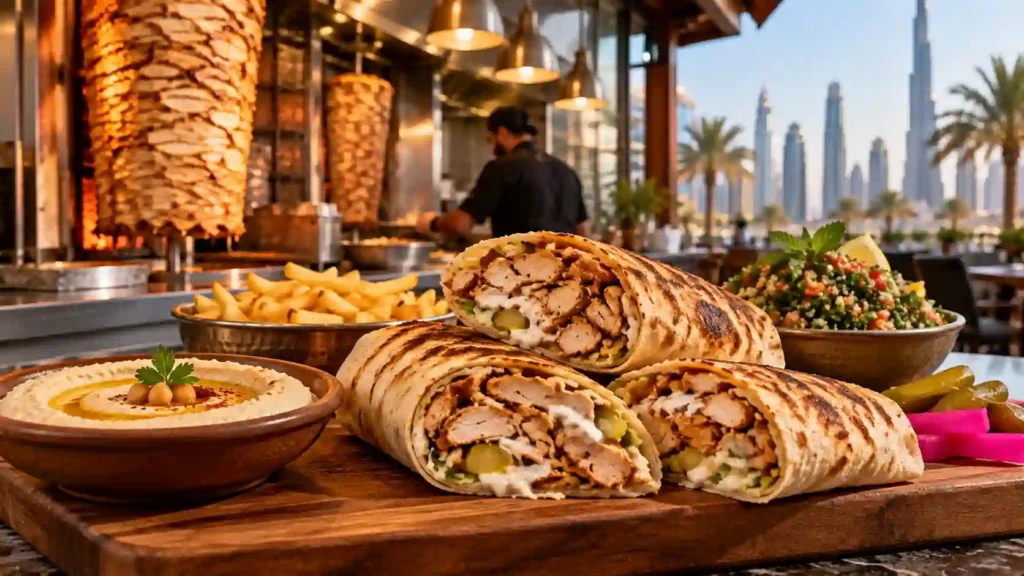
First, the meat is marinated for up to twenty-four hours in olive oil, vinegar, and fragrant spices. Chefs stack thin cuts of meat onto a tall vertical skewer to form a conical rotisserie spit. As the spit rotates against radiant gas heat, outer layers caramelize while interior slices remain remarkably juicy. Second, the chef carves thin, crispy shavings directly from the spit using a sharp knife.
Third, the condiments dictate the authentic Levantine flavor profile. True chicken wraps never feature lettuce, mayonnaise, or ketchup. Instead, chefs spread velvety Lebanese garlic paste, known as toum, directly across warm bread. Next, they add crispy french fries and tart pickled cucumbers to balance the rich chicken. Finally, the wrapped sandwich is pressed on a smoking flat-top griddle until the exterior turns wonderfully crisp.
Chicken Shawarma vs Beef and Lamb: Distinct Flavor Profiles
When approaching a busy shawarma counter, diners encounter two distinct vertical skewers rotating side-by-side. Deciding between juicy chicken and savory red meat depends on your preferred flavor balance.
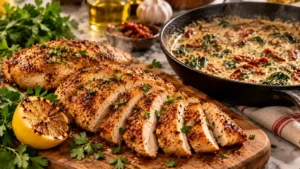
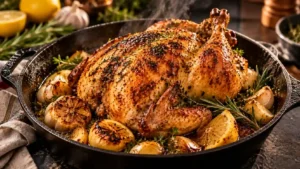
The iconic chicken shawarma offers bright, punchy, and intensely garlicky flavors. Cooks marinate boneless chicken thighs with cardamom, coriander, white pepper, and lemon juice. The resulting wrap pairs the succulent chicken with pungent garlic toum and salty pickles. If you enjoy classic poultry preparations, compare this technique with our versatile roast chicken recipe guide.
In contrast, beef and lamb shawarma delivers a deeper, earthier culinary experience. Chefs season tender beef flank or lamb shoulder with ground allspice, sumac, cinnamon, and cloves. Instead of garlic toum, red meat wraps feature rich sesame tahini sauce, sliced red onions, fresh parsley, and sumac powder. The earthy tahini cuts through rich roasted meat beautifully, creating a sophisticated balance of savory and tangy notes.
Artisanal Breads: Arabic Khubz, Saj, and Samoon
The bread chosen to wrap your shawarma fundamentally transforms the texture and eating experience. Dubai’s multicultural bakeries offer several authentic styles of bread to satisfy different palates.
The most ubiquitous option is traditional Arabic flatbread, known locally as khubz. This soft, dual-layered pocket bread absorbs meat juices and garlic sauce generously without tearing. In addition, thin unleavened saj bread, cooked over a domed metal griddle called a markook, produces an ultra-crispy, slender wrap. Many food lovers prefer saj because the thin dough allows the seasoned meat to shine prominently.
Furthermore, Iraqi and Gulf cafeterias frequently offer samoon bread. Samoon is a diamond-shaped, yeast-leavened bread with a crisp crust and pillowy interior. Stuffing roasted shawarma shavings into a toasted samoon creates a hearty, sandwich-style meal. You can study traditional baking techniques through our authentic naan bread recipe.
The Magic of Al Reef Lebanese Bakery: Manakish and Shawarma
No culinary journey through Dubai is complete without visiting an iconic heritage institution. For decades, al reef bakery dubai has stood as a beloved gastronomic landmark in the heart of Jumeirah and Al Wasl.
Operating twenty-four hours a day, al reef lebanese bakery dubai is universally renowned for its brick-oven manakish flatbreads. Crowds gather at all hours to order freshly baked dough topped with tangy zaatar, creamy akkawi cheese, and spiced minced meat. In addition to manakish, their dedicated street counter serves some of the finest chicken and beef shawarmas in the city. The contrast of piping hot bread and perfectly seasoned fillings creates pure culinary comfort.
Visiting Al Reef offers an authentic glimpse into Dubai’s historic community culture. Taxis, sports cars, and delivery scooters line the street outside as patrons wait eagerly for warm brown paper bags. Dining here proves that simple, time-honored recipes often surpass complicated luxury concepts. To plan your dining expenses across traditional bakeries and modern eateries, review our guide to prices in dubai for food.
Legendary Cafeterias and Street Spots in Deira, Karama, and Satwa
While Jumeirah hosts upscale cafes, historic neighborhoods like Deira, Karama, and Satwa remain the true epicenter of street food. Exploring these neighborhoods reveals cafeterias that have perfected their recipes over thirty years.
In Satwa, Al Mallah on 2nd of December Street is an undisputed institution. Diners sit on outdoor plastic chairs while waiters deliver smoking hot chicken shawarmas alongside fresh avocado juices. The chicken at Al Mallah is famously juicy, featuring a generous smear of garlic toum and a perfectly pressed exterior. Another legendary contender is Laffah Cafeteria, originating in Sharjah and expanding across Dubai, renowned for its paper-thin Syrian-style saj wraps.
Similarly, exploring Deira reveals hidden spots like Automatic Restaurant and Hatam, serving authentic charcoal grills and spiced wraps. If you are searching online for the freshest shawarma near me, these historic neighborhoods guarantee unmatched authenticity. You can compare Levantine street traditions with South Asian spices in our guide to the best indian restaurant in dubai.
Exploring the Best Lebanese in Dubai: Beyond Street Wraps
While shawarma represents the pinnacle of casual dining, Levantine cuisine extends far beyond street snacks. Savoring the best lebanese in dubai introduces diners to elaborate family feasts and refined hospitality traditions.
Premier Lebanese establishments celebrate communal dining through generous charcoal mixed grills. Skewers of spiced shish taouk, minced lamb kafta, and tender lamb cubes roast slowly over natural charcoal embers. Furthermore, authentic dining rooms serve aromatic spiced rice dishes and hearty stews that recall classic Arabian hospitality. You can explore regional rice traditions through our guide to the national dish of uae.
Upscale dining destinations like Al Nafoorah at Jumeirah Al Qasr and Babel at Dubai Mall showcase refined lebanese food in opulent settings. Diners enjoy freshly caught seafood, gourmet mezze, and panoramic views of the Arabian Gulf. Savoring authentic grills while watching waterfront scenery provides an unforgettable evening. Executive professionals who secure highest paying jobs frequently choose these elegant venues for corporate entertaining.
Cold and Hot Mezze Culture: Hummus, Baba Ganoush, and Tabbouleh
Every proper Lebanese meal begins with an abundant spread of cold and hot mezze. Mezze consists of small, colorful sharing plates designed to stimulate conversation and whet the appetite before main courses arrive.
The undisputed king of cold mezze is velvety hummus. Chefs blend cooked chickpeas with rich sesame tahini, fresh lemon juice, garlic, and extra virgin olive oil until silky smooth. Another essential dip is smoky baba ganoush (moutabal), made from roasted eggplants charred over open flames to impart deep smoky undertones. In addition, vibrant tabbouleh salad delivers refreshing acidity using finely chopped flat-leaf parsley, mint, tomatoes, and soaked bulgur wheat.
Hot mezze selections include golden cheese sambousek, crispy meat kibbeh shells, and spicy batata harra potatoes. Sharing these vibrant dishes with warm flatbread fosters a wonderful sense of community around the dining table. Furthermore, the natural focus on legumes, olive oil, and herbs aligns with modern health goals. Learn how wholesome Mediterranean ingredients support a balanced diet.
Falafel and Plant-Based Middle Eastern Street Delights
Vegetarian diners enjoy exceptional variety across Middle Eastern street establishments. In particular, searching for freshly fried falafel near me leads you to wholesome, protein-rich plant-based dining.
Authentic Levantine falafel combines soaked chickpeas, fava beans, fresh coriander, parsley, and garlic. Cooks grind the mixture coarsely, shape it into small patties, and fry them until golden brown and shatteringly crisp. When tucked into warm pita pockets with tahini sauce, pickled turnips, and mint, falafel delivers a deeply satisfying vegetarian meal. Renowned spots like Operation: Falafel and Sultan Dubai Falafel serve magnificent platters daily.
Moreover, chickpea and fava bean dishes provide exceptional plant protein and dietary fiber without cholesterol. Pairing crispy falafels with fresh greens and tahini provides lasting energy for busy days. You can explore the nutritional value of plant staples in our guide on dates benefits. Wholesome street dining ensures that plant-based food lovers never feel excluded.
Modern Gourmet and Artisanal Shawarma Trends
While traditional cafeterias preserve classic recipes, a new generation of culinary entrepreneurs is reimagining shawarma for modern palates. Innovative fast-casual concepts now introduce gourmet ingredients, artisanal brioche buns, and creative sauces across modern Dubai districts.
Concepts like Allo Beirut, Streetery Food Hall, and modern boutique eateries blend vintage aesthetics with contemporary menus. For instance, diners can sample shawarmas topped with truffle garlic sauce, spicy pomegranate molasses, or pickled jalapenos. In addition, some upscale lounges present miniature shawarma sliders filled with premium Japanese wagyu beef.
These modern concepts provide comfortable indoor seating, stylish retro decor, and extended delivery options across digital apps. However, despite inventive garnishes, the foundational technique of slow vertical roasting remains unchanged. Modern adaptations keep centuries-old recipes exciting and accessible for younger generations. Discover creative food service roles in our guide on dubai retail sales jobs.
Food Safety, Halal Standards, and Municipal Regulations
One of the greatest advantages of enjoying street food in Dubai is the city’s spotless regulatory hygiene. The Dubai Municipality Food Safety Department enforces some of the strictest commercial kitchen standards in the world.
First, all meat and poultry imported into the United Arab Emirates must carry verified halal certification. Municipal inspectors conduct regular audits across processing plants, butchers, and restaurant kitchens. Second, rotating shawarma spits must adhere to strict temperature controls to ensure meat is thoroughly cooked and stored safely. Spits are kept shielded from outdoor dust and environmental contaminants.
Third, kitchen staff must undergo mandatory food handler hygiene training and wear proper protective gear. Consequently, diners can enjoy street food from neighborhood cafeterias with complete peace of mind. You can learn about municipal government standards in our overview of dubai government visa jobs. These strict regulations maintain Dubai’s reputation as a world-class culinary capital.
Late-Night Dining Culture and 24-Hour Cafeterias
Dubai is a dynamic metropolis that thrives long after midnight. During the warm summer months, social life shifts into the cooler evening hours. Consequently, shawarma counters function as the primary late-night dining destinations across the emirate.
Bustling commercial avenues in Al Barsha, Deira, and Al Rigga remain vibrant until three or four in the morning. Patrons congregate after cinema screenings, weekend concerts, or late airport arrivals to grab warm wraps and fresh juices. In addition, car service culture is widespread; drivers honk politely outside cafeterias, and attentive servers take orders directly through car windows.
This round-the-clock energy creates a lively, welcoming atmosphere unique to the Gulf region. Enjoying a hot, garlicky wrap in the cool night breeze under glowing neon signs is an essential Dubai memory. Review national labor frameworks supporting continuous commercial operations in our guide to the labour law uae.
Economic Impact and Hospitality Careers in Levantine Dining
The thriving Middle Eastern restaurant sector contributes significantly to Dubai’s commercial economy. From small neighborhood grills to multinational franchise networks, food and beverage operations drive steady employment and supply chain growth.
Skilled grill masters, butchery experts, and restaurant managers command strong demand in the hospitality market. If you are exploring professional career paths in gastronomy, review our detailed guide on hospitality tourism jobs. In addition, culinary professionals can achieve corporate leadership roles through strategic career change growth. Many international talents relocate to the region using our guide to work abroad.
Furthermore, restaurant operations require dependable agricultural supply chains, cold storage facilities, and food logistics networks. Candidates interested in logistics operations can explore opportunities in our guide on dubai warehouse logistics jobs. Entry-level personnel can also find foundational employment through our overview of entry level no experience roles. The restaurant sector provides reliable avenues for upward mobility.
Step-by-Step Guide: How to Craft Authentic Chicken Shawarma at Home
Recreating the magic of a Dubai street shawarma in your home kitchen is remarkably simple. While you may lack a vertical rotisserie spit, a hot cast-iron skillet or oven broiler achieves delicious caramelized results.
- Marinate the Poultry: Slice one kilogram of boneless chicken thighs into thin strips. Marinate with olive oil, lemon juice, minced garlic, ground cumin, coriander, smoked paprika, cardamom, cinnamon, salt, and black pepper for at least four hours.
- Whip the Garlic Toum: In a food processor, blend fresh garlic cloves, salt, lemon juice, and neutral oil into a thick, fluffy white garlic paste resembling whipped cream.
- Sear to Caramelize: Heat a heavy cast-iron skillet over high heat. Sear the marinated chicken strips in small batches until deeply browned, slightly charred at the edges, and fully cooked.
- Assemble the Wrap: Lay a warm sheet of thin Lebanese bread or saj flat. Spread a generous tablespoon of garlic toum across the center. Add seared chicken, thin french fries, and salted cucumber pickles.
- Toast to Perfection: Roll the flatbread tightly into a neat cylinder. Place the wrap seam-side down on a hot griddle or panini press for two minutes until golden and delightfully crispy.
Slice the wrap diagonally and serve immediately alongside extra garlic sauce and pickled turnips. Recreating this street masterpiece at home brings authentic Middle Eastern comfort straight to your family table. Discover additional lifestyle recipes and culinary tours on the Gulf Lights blog.
Practical Tips for Finding the Freshest Shawarma in Dubai
With hundreds of cafeterias competing across the city, selecting the finest spot requires observing a few key insider details. Following these practical tips ensures a fantastic dining experience every time:
- Look for High Spit Turnover: Choose establishments with long queues and rapid customer turnover. Busy counters ensure the meat on the spit is freshly roasted, juicy, and sliced to order rather than drying out under heating lamps.
- Inspect the Bread Freshness: The best shawarma spots bake their khubz or saj flatbreads in-house. Warm, freshly baked bread elevates the wrap to an entirely different culinary tier.
- Ask for Extra Toum and Pickles: Authentic wraps depend on bold acidity and pungent garlic. Requesting extra garlic paste and pickled turnips enhances every bite.
- Pair with Fresh Fruit Juices: Street cafeterias in Dubai are famous for their towering fresh juice menus. Pairing your savory wrap with freshly blended mango, pomegranate, or avocado juice completes the street dining experience.
Applying these practical guidelines guarantees that your culinary explorations across the city yield sensational, mouthwatering rewards. Check out general job search advice and administrative resources in our guide on how to find a job.
Frequently Asked Questions About Shawarma in Dubai
How much does a typical shawarma cost in Dubai?
A standard chicken or beef shawarma in a local street cafeteria costs between AED 6 and AED 12. Upscale casual restaurants and modern dining halls typically charge between AED 22 and AED 45 for gourmet platters and specialty wraps.
What is the difference between Lebanese shawarma and Turkish doner kebab?
While both dishes utilize vertically roasted meats, Lebanese shawarma is marinated with warm spices like cardamom, sumac, and vinegar, served with garlic toum or tahini in thin flatbread. Turkish doner kebab features distinct herbs like oregano and paprika, commonly served in thick pide bread or over rice.
Where can I find the best shawarma in Dubai late at night?
Iconic late-night hotspots include Al Mallah on 2nd of December Street in Satwa, Al Reef Lebanese Bakery in Jumeirah, and Laffah Cafeteria in Deira. These legendary venues operate until late morning hours or remain open twenty-four hours daily.
Is street food shawarma safe to eat in Dubai?
Yes, street food in Dubai is exceptionally safe. The Dubai Municipality Food Safety Department enforces strict temperature controls, mandatory staff hygiene training, and regular unannounced kitchen inspections across all registered cafeterias.
The quest for the ultimate shawarma in Dubai is a celebration of culinary heritage, multicultural friendship, and irresistible street flavor. From humble midnight cafeterias in Old Dubai to historic brick-oven Lebanese bakeries in Jumeirah, the city delivers unforgettable handheld feasts for every palate. For customized dining recommendations, culinary travel guides, and verified UAE lifestyle insights, connect with our specialist team via the Gulf Lights contact page.