Understanding the realistic prices in dubai for food is essential whether you plan an exciting holiday or relocate permanently. Dubai carries an international reputation for high-end glamour, gold-leaf steaks, and luxury dining. However, the reality of dining in the emirate is remarkably diverse and accessible for every budget. In fact, you can enjoy a delicious meal for as little as fifteen dirhams or spend thousands in celebrity chef establishments. At Gulf Lights, we deliver detailed lifestyle guides to help visitors and residents navigate the vibrant United Arab Emirates.
Every commercial neighborhood offers a different culinary personality and price point. For instance, historic districts like Deira and Bur Dubai provide authentic multicultural street meals at modest rates. In contrast, waterfront districts like Downtown Dubai and Dubai Marina focus on upscale experiential dining. Furthermore, mastering daily grocery costs versus restaurant dining protects your personal wallet. Therefore, learning the true cost breakdown ensures a stress-free culinary journey. Explore our complete food series through our food category hub.
Understanding Prices in Dubai for Food: The Culinary Spectrum
Dubai functions as a global gastronomic capital home to over two hundred distinct nationalities. Consequently, restaurant pricing accommodates diverse income groups and lifestyles. To plan accurately, travelers and expats calculate expenses using the local currency, the United Arab Emirates Dirham (AED). You can review corporate living standards and administrative regulations through our legal and government services directory.
The culinary market divides broadly into three distinct categories: street cafeterias, mid-range family eateries, and fine-dining luxury venues. Each tier caters to specific dining preferences and wallet sizes. For example, traditional cafeterias serve hearty portions that satisfy daily labor needs affordably. In addition, shopping mall dining satisfies tourists seeking familiar international comfort foods. When you examine contemporary jobs in dubai, you will observe how dining options adapt directly to various professional income brackets.
Average Meal Cost in Dubai Across Different Tiers
Calculating your daily dining allowance requires a realistic assessment of average meal expenses. The typical meal cost in dubai varies dramatically depending on where you choose to pull up a chair. Understanding standard averages allows you to set a dependable daily food budget.
First, budget breakfast in a local cafeteria typically costs between AED 10 and AED 20. This usually includes fresh eggs, toasted paratha bread, and hot karak tea. Second, lunch in a casual neighborhood diner averages between AED 20 and AED 40 for a hearty rice or curry platter. Third, dinner at a mid-scale family venue generally ranges from AED 60 to AED 120 per person including beverages. In contrast, upscale multi-course dinners start around AED 250 and easily exceed AED 800 per guest.
Furthermore, dining with family multiplies overall table expenses. A casual dinner for a family of four in a shopping mall averages around AED 200 to AED 350. However, choosing local neighbourhood eateries cuts that bill by half. You can discover classic Arabian dining traditions in our comprehensive guide to the national dish of uae.
Exploring Dubai Street Food: Incredible Taste on a Budget
Street food represents the vibrant heartbeat of the city’s culinary culture. Far from being unhygienic, dubai street food adheres to exceptionally strict municipal health regulations. Government inspectors enforce spotless hygiene standards across every kitchen in the emirate.
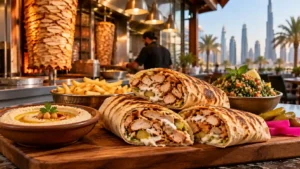
Neighborhoods such as Al Karama, Satwa, Deira, and Meena Bazaar are legendary for affordable street food. For instance, a piping hot chicken shawarma wrapped in freshly baked flatbread costs only AED 6 to AED 10. In addition, falafel sandwiches wrapped with tahini and pickles cost between AED 5 and AED 8. Pair your meal with an authentic karak chai for just AED 1 to AED 2. You can explore iconic Levantine street eats through our specialized guide to shawarma in dubai.
Moreover, South Asian street stalls serve generous portions of vegetable biryani, samosas, and stuffed parathas for under AED 15. These bustling spots offer unmatched culinary authenticity and deep flavor profiles. If you appreciate fragrant rice meals, try recreating our traditional biryani recipe at home. Street food dining proves that incredible gastronomy does not require immense wealth.
Mid-Range Casual Dining: Malls and Family Restaurants
Mid-range eateries form the backbone of everyday social dining in Dubai. These venues include popular chain diners, casual Italian trattorias, Lebanese grills, and Asian noodle houses. Families and corporate colleagues gather at these venues for casual weekend catch-ups and lunch meetings.
In a casual mall restaurant, expect main courses like gourmet burgers, artisanal pizzas, or pasta dishes to cost between AED 45 and AED 75. Non-alcoholic drinks, fresh juices, and specialty coffees typically range from AED 18 to AED 30 each. In addition, sharing platters of hot mezze, hummus, and grilled kebabs cost approximately AED 70 to AED 110. These spots provide comfortable air-conditioned seating and attentive table service.
Furthermore, food courts inside major shopping destinations offer quick, predictable value. Fast-food combo meals from international brands generally cost between AED 25 and AED 38. Local Arabic and Indian counter spots provide complete meal trays for around AED 30. You can review commercial customer service career pathways in our guide to dubai retail sales jobs.
Luxury and Fine Dining: World-Class Gastronomic Splurge
At the opposite end of the spectrum, Dubai hosts an extraordinary collection of luxury fine-dining establishments. Michelin-starred venues, celebrity chef concepts, and sky-high lounges populate DIFC, Downtown Dubai, and Palm Jumeirah. These establishments cater to affluent residents and travelers seeking unforgettable sensory experiences.
In premier luxury restaurants, a single appetizer often commands AED 90 to AED 180. Meanwhile, premium entrees like wagyu tenderloin, Chilean sea bass, or black cod range from AED 220 to AED 650. Multi-course chef tasting menus commonly start at AED 600 per person and reach upwards of AED 1,800 without beverage pairings. Executive professionals who secure highest paying jobs frequently frequent these prestigious establishments for business celebrations.
Furthermore, luxury dining emphasizes architectural drama and personalized hospitality. Guests enjoy breathtaking views of the Burj Khalifa or private seaside cabanas. While expensive, the quality of imported ingredients and culinary artistry justify the premium for special occasions. Discover corporate dining standards in our guide on hospitality tourism jobs.
Supermarket and Grocery Expenses: Cooking at Home
For expatriate residents and long-term visitors, preparing meals at home significantly reduces overall monthly living expenses. Managing your personal food cost in dubai depends on where you choose to purchase your weekly groceries. Supermarkets across the UAE cater to different demographic preferences and price sensitivities.
Budget-friendly hypermarkets like Viva, Union Coop, and Carrefour offer substantial savings on bulk pantry goods. In contrast, premium international supermarkets like Spinneys and Waitrose specialize in imported European organic goods at higher prices. Here is a breakdown of standard grocery staples in Dubai:
- Fresh Whole Milk (1 Liter): AED 6 to AED 8 across leading supermarket brands.
- White Loaf Bread or Flatbreads: AED 3.50 to AED 7 depending on brand and bakery.
- White Long-Grain Rice (1 Kilogram): AED 6 to AED 14 for premium basmati rice.
- Fresh Chicken Breast (1 Kilogram): AED 22 to AED 38 for locally sourced halal poultry. Learn roasting tips in our roast chicken recipe guide.
- Table Eggs (Pack of 30): AED 18 to AED 26 for farm-fresh eggs.
- Fresh Tomatoes, Onions, and Potatoes (Per Kg): AED 3.50 to AED 6.50 for regional produce.
- Fresh Local Dates (500 Grams): AED 12 to AED 35 depending on variety and packaging. Discover their health profile in our guide on dates benefits.
Cooking at home allows a single individual to eat wholesome meals for approximately AED 800 to AED 1,400 per month. A family of four typically spends between AED 2,200 and AED 3,800 monthly on well-balanced groceries. Learn how whole foods build long-term wellness through our analysis of a balanced diet.
Food Prices in Abu Dhabi and the Northern Emirates
While Dubai garners significant international attention, food pricing varies noticeably across other emirates. In particular, comparing food costs in the capital city of Abu Dhabi and northern emirates reveals distinctive economic patterns. Understanding these regional variations enriches your travel planning across the nation.
In Abu Dhabi, dining at mid-range and fine-dining venues closely mirrors Dubai’s prices. However, finding authentic abu dhabi street food in downtown neighborhoods like Al Danah and Khalidiya provides outstanding value. Traditional shawarmas, grills, and cafeterias charge nearly identical modest rates. Overall, daily food abu dhabi costs are comparable to Dubai for supermarket shopping and casual meals.
Conversely, the northern emirates like Sharjah, Ajman, and Ras Al Khaimah offer noticeably lower restaurant dining rates. Family-run restaurants in Sharjah frequently offer identical dining portions for twenty to thirty percent less than Dubai equivalents. Check out broader national employment benchmarks in our detailed overview of jobs in uae.
The Famous Dubai Friday and Saturday Brunch Culture
No culinary discussion of the UAE is complete without addressing the legendary weekend brunch tradition. Weekend brunches in Dubai are lavish daytime feasts rather than modest late-morning breakfasts. Hotels and resorts host four-hour banquets featuring unlimited global buffet stations and live entertainment.
Weekend brunch packages vary according to venue prestige and beverage selections. Non-alcoholic brunch packages with mocktails and soft drinks typically range from AED 200 to AED 380 per person. Meanwhile, standard beverage packages range from AED 350 to AED 550, while luxury champagne brunches reach AED 650 to AED 900. While brunches sound costly, they provide extraordinary culinary value when enjoyed as a celebratory weekly feast.
Brunch buffets feature live cooking stations with freshly shucked oysters, sushi, roasted meats, and elaborate dessert rooms. Many venues offer discounted rates for children or host dedicated family-friendly brunches with kids’ entertainment. Planning your brunch outings carefully allows you to experience luxury hotel dining at a single predictable price.
Smart Strategies to Save Money on Food in Dubai
Eating well in Dubai does not require draining your savings account. Savvy residents utilize clever dining strategies and discount platforms to enjoy premier restaurants without paying full retail prices. Adopting these smart habits will stretch your dining budget significantly.
- Leverage Two-for-One Dining Apps: Subscription apps like The Entertainer and Smiles offer thousands of “Buy One Get One Free” main course vouchers across premier restaurants. Utilizing these vouchers immediately cuts your restaurant bill in half.
- Take Advantage of Business Lunch Specials: Elite restaurants in DIFC and Downtown Dubai offer discounted business lunch menus on weekdays. You can enjoy a two-course gourmet lunch at a luxury venue for AED 90 to AED 140.
- Embrace Ethnic Food Hubs: Skip tourist strip restaurants and explore vibrant immigrant communities. Karama, Deira, and International City offer authentic Chinese, Indian, Pakistani, and Filipino food for a fraction of tourist prices.
- Shop at Traditional Produce and Fish Markets: Purchasing fresh seafood directly at the Waterfront Market in Deira saves up to forty percent compared to retail hypermarkets. Vendors will clean and portion your fish free of charge.
- Cook Simple Meals at Home: Balance restaurant outings with easy homemade cooking. Pair simple stir-fries or roasted meats with our freshly baked naan bread recipe for quick, satisfying dinners.
Applying these practical methods ensures you dine out frequently while maintaining disciplined monthly expenditure. Explore additional lifestyle tips and budget strategies on the Gulf Lights blog.
Sample Daily and Monthly Food Budgets in Dubai
To help you structure your personal finances, we have outlined three realistic daily dining scenarios based on actual consumer spending across Dubai. Select the tier that matches your current financial objectives:
The Budget Traveler / Backpacker (AED 50 to AED 75 per day):
Breakfast: Karak chai and cheese egg roll at a local cafeteria (AED 8). Lunch: Chicken biryani or falafel platter in Deira (AED 20). Dinner: Two chicken shawarmas and fresh mango juice in Satwa (AED 25). Snacks and bottled water from local grocers (AED 10). Total: Approximately AED 63 daily.
The Comfortable Mid-Range Diner (AED 150 to AED 250 per day):
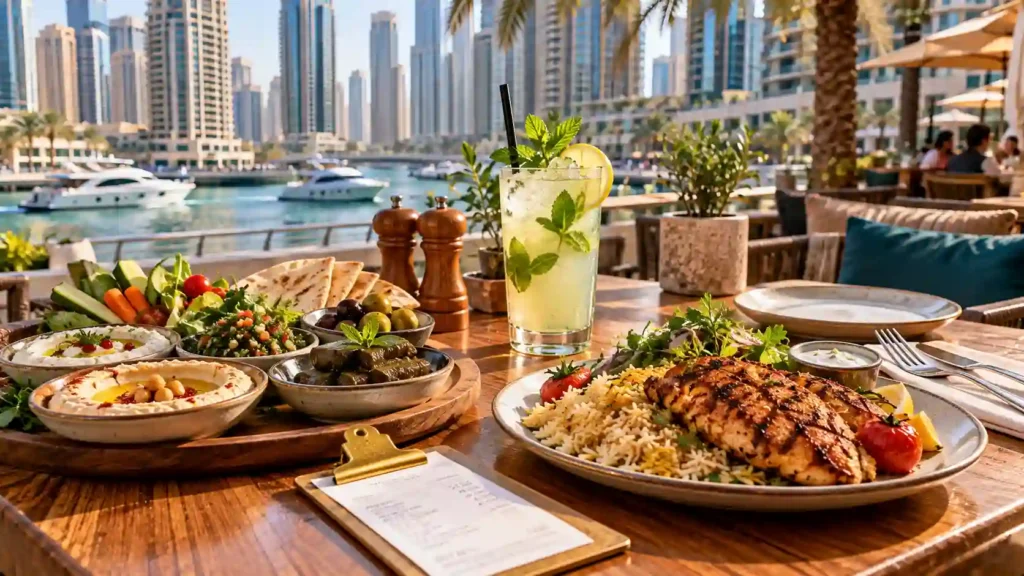
Breakfast: Bakery croissant and flat white at an independent specialty cafe (AED 35). Lunch: Casual mall bistro combo with iced tea (AED 65). Dinner: Mixed grill platter, hummus, and mocktail at a beachfront Lebanese restaurant (AED 110). Incidental bottled beverages and gelato (AED 25). Total: Approximately AED 235 daily.
The Resident Home-Cook Hybrid (AED 1,500 to AED 2,200 per month):
This balanced lifestyle combines home-cooked weekday breakfasts and dinners with weekday cafeteria lunches and two vibrant weekend dinners out. It represents the sustainable financial lifestyle practiced by thousands of working expatriates across the country.
Taxes, Service Charges, and Tipping Etiquette
Understanding restaurant billing practices prevents unexpected surprises when the final check arrives. The UAE government imposes a nationwide 5% Value Added Tax on commercial dining transactions. In addition, high-end hotel venues occasionally include a 7% municipality fee and a 10% service charge on bills.
Menus in casual street eateries display final prices inclusive of taxes. In contrast, upscale hotel restaurants often note additional taxes in small print at the bottom of menus. Always verify whether published prices include VAT before placing large celebratory orders. You can study statutory consumer regulations through our overview of the labour law uae.
Tipping is not legally mandatory in Dubai, but it is customary and appreciated for attentive service. In casual cafeterias, rounding up the bill by leaving small coins (AED 2 to AED 5) is standard practice. In mid-range and upscale restaurants, leaving a tip of 10% to 15% is customary if the service charge is not already included. Tipping directly rewards hardworking service staff who support the thriving tourism ecosystem.
Culinary Industry Synergies and Food Supply Logistics
The culinary sector in Dubai does not operate in isolation. In fact, providing fresh ingredients to thousands of commercial kitchens requires massive supply chain and storage infrastructure. Agricultural shipments arrive daily via Dubai International Airport and Jebel Ali Port.
Cold storage facilities and industrial warehouses preserve imported meats, dairy, and produce under climate-controlled conditions. Candidates interested in supply chain operations can examine warehousing opportunities in our guide on dubai warehouse logistics jobs. In addition, food packaging and transport networks require dependable personnel. Explore entry pathways through our overview of entry level no experience roles.
Furthermore, the food and beverage industry provides versatile employment avenues for international workers. Talented culinary professionals can advance from commis chefs into executive banquet directors. Review career advancement strategies in our guide on career change growth. In addition, candidates moving abroad can study relocation steps in our guide to work abroad.
Frequently Asked Questions About Food Prices in Dubai
Is food expensive in Dubai for average tourists?
No, food in Dubai is not inherently expensive unless you choose to dine exclusively in luxury hotels and tourist venues. The city features thousands of affordable cafeterias, ethnic diners, and street food stalls where full, hearty meals cost between AED 15 and AED 35.
How much should I budget per day for food in Dubai?
A realistic budget for a solo traveler is AED 60 to AED 90 per day for street food and casual diners. A mid-range traveler enjoying cafe breakfasts and sit-down dinners should budget between AED 180 and AED 250 daily.
Is tap water safe and free to drink in Dubai restaurants?
Tap water in Dubai is desalinated and safe for cooking, but most restaurants and residents drink bottled mineral water. Restaurants provide local bottled water (such as Al Ain or Masafi) for AED 5 to AED 15, while imported sparkling water costs significantly more.
Are groceries expensive in Dubai compared to European or American cities?
Locally sourced poultry, dairy, dates, and regional vegetables are very reasonably priced. However, imported Western branded goods, specialty cheeses, and organic berries carry higher price tags due to international air freight and refrigerated storage.
Understanding the true prices in Dubai for food allows you to experience the city’s extraordinary culinary tapestry without exceeding your personal budget. From six-dirham street shawarmas in historic Deira to opulent weekend hotel brunches, Dubai welcomes every palate and wallet with warmth. For customized dining recommendations, lifestyle advice, and verified UAE travel guides, get in touch with our team through the Gulf Lights contact page.