Dubai opens the final bridge of the World Trade Centre Roundabout Development Project on Friday 30 October 2026. The Roads and Transport Authority (RTA) says the new bridge cuts the journey from Al Majlis Street to 2nd December Street from six minutes to one minute. This guide explains what opens today, how the wider junction works, and what drivers should expect in the first days.
RTA announced the project in October 2024, with five bridges spanning 5,000 metres and a cost of more than Dh696 million. The project opened in stages, and the final bridge completes the major construction works at one of Dubai busiest intersections. For context, the junction links Sheikh Zayed Road with the World Trade Centre, the Dubai International Financial Centre (DIFC) and several busy residential areas.
Every figure in this guide comes from RTA information reported by Gulf News, Emirates 24/7 or Khaleej Times. Time savings below carry RTA wording as estimates, since real journey times depend on traffic on the day. For that reason, check the tables and sections separately, since each source reports the project in slightly different groupings.
What opens on Friday 30 October?
RTA opens a 1,000-metre bridge with two lanes on Friday 30 October 2026. The bridge connects Al Majlis Street in Zabeel towards 2nd December Street in the Al Jafiliya area. It carries traffic directly between the two streets, without forcing drivers through the old roundabout layout.
The bridge accommodates approximately 3,000 vehicles per hour, in RTA figures reported by Emirates 24/7 and Gulf News. In particular, that capacity matches the other single bridges in the project, while paired bridges carry more. In practical terms, the bridge gives one busy movement its own direct route through the junction.
Overall, Friday marks the completion of major works, rather than the start of a new project. Gulf News reports that all five bridges now stand open with the final opening. Drivers still need care in the first days, since some drivers told Khaleej Times that barricades remained on some roads on 28 October.
Where does the new bridge sit in the junction?
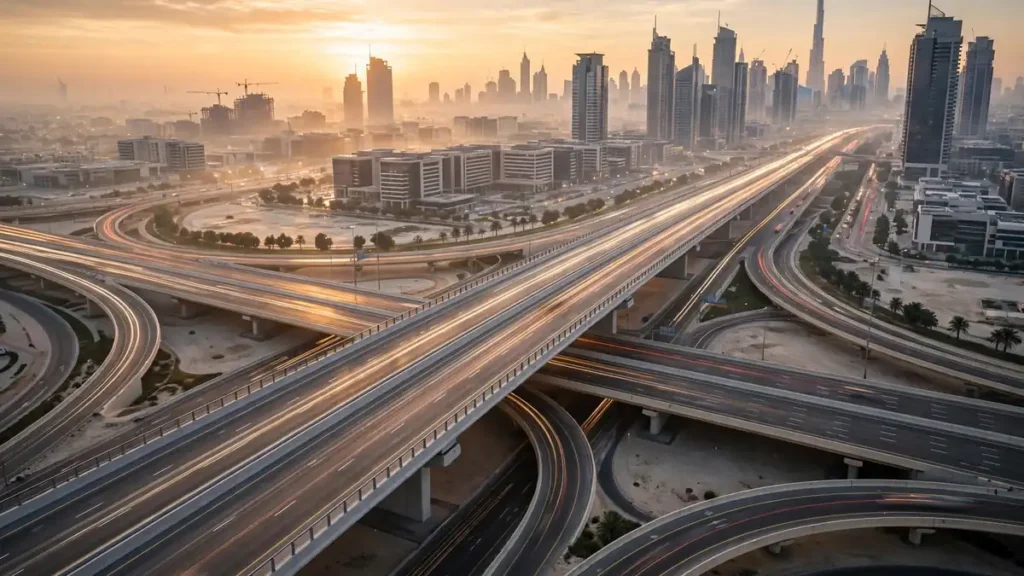
The bridge sits at the World Trade Centre intersection, where Sheikh Zayed Road meets several major streets. Gulf News lists Sheikh Khalifa bin Zayed Street, Sheikh Rashid Street, 2nd December Street, Za’abeel Palace Street and Al Majlis Street around the junction. In contrast, the former roundabout now works as a ground-level intersection, with bridges carrying traffic in different directions above it.
Flyovers carry traffic over and under the junction, and lane markings plus sign boards help drivers choose the right route. Khaleej Times reports that drivers found the new layout clearer, with more direct journeys in several directions. For example, one driver described separate routes over a flyover towards Al Majlis Street and Al Mustaqbal Street, with another route continuing towards Sheikh Zayed Road.
The final bridge serves one direction of travel in the RTA account, from Al Majlis Street towards 2nd December Street. Drivers travelling the opposite way use the wider junction layout, with its other bridges and ground-level routes. In other words, the new bridge solves one key movement, while the full project handles the rest.
How much time will drivers save?
RTA estimates the Al Majlis Street to 2nd December Street journey at one minute with the new bridge, against six minutes before. Gulf News and Emirates 24/7 report the same RTA estimate, while Khaleej Times repeats it with a clear caution. Khaleej Times stresses that the figures count as authority estimates, not measured journey times.
Average delays at the intersection should fall from 12 minutes to 90 seconds, in the wider RTA estimate for the project. That figure covers the junction as a whole, rather than the single new bridge alone. Real delays will vary with the time of day, the volume of traffic, and events at the World Trade Centre.
More than 500,000 residents and visitors should benefit from the improvements, in the RTA estimate. Gulf News links that figure to commuters plus people attending exhibitions and events at Dubai World Trade Centre. Meanwhile, drivers should treat the first days as a learning period, since new exits and diversions need familiarisation.
What did the full project build?
The project built five bridges with a combined length of 5,000 metres, at a cost of more than AED 696 million. Emirates 24/7 reports the cost and length together, while Gulf News breaks the bridges into three groups. The table below follows the Emirates 24/7 grouping, since it lists each bridge group in one place.
| Bridge group | Length | Capacity |
|---|---|---|
| Sheikh Zayed Road to Sheikh Khalifa bin Zayed Street | 1,000 metres | 3,000 vehicles per hour |
| Sheikh Rashid Street to 2nd December Street | 2,000 metres combined | 6,000 vehicles per hour |
| Al Majlis Street to 2nd December Street | 2,000 metres combined | 6,000 vehicles per hour |
Each group serves a different movement through the junction, with two lanes in each direction on the paired bridges. The Sheikh Zayed Road bridge runs towards Deira, with a capacity of 3,000 vehicles per hour. In contrast, each paired group carries up to 6,000 vehicles per hour across two bridges.
Gulf News groups the same bridges slightly differently, with the final bridge counted inside the Al Majlis Street group. That grouping still gives the same totals, with five bridges and 5,000 metres overall. RTA announced the Dh696-million project in October 2024, and the project opened in stages through to the final bridge on 30 October.
Which areas and journeys benefit most?
The junction serves motorists travelling between Jumeirah, Al Satwa, Dubai World Trade Centre, DIFC and Deira, in the Gulf News account. Neighbourhoods around the junction include Za’abeel, Al Satwa, Al Karama and Al Jafiliya, with several more areas close by. For a wider sense of the city, see the Dubai areas guide on this site.
Exhibition and event visitors gain a clearer route to Dubai World Trade Centre, since the junction sits beside the venue. Commuters gain direct routes that bypass the old roundabout, with flyovers separating different movements. In particular, drivers heading to DIFC gain smoother links from Sheikh Zayed Road and the surrounding streets.
Residential journeys also benefit, with Al Satwa, Al Karama and Al Jafiliya all sitting close to the improved junction. For example, visitors planning a trip can combine the bridge news with the things to do in Dubai guide for the wider area. For longer trips beyond the city, the Etihad Rail passenger trains guide between Abu Dhabi and Dubai explains the new rail option.
What happens with the Al Mustaqbal Street works nearby?
Roadworks continue nearby on Al Mustaqbal Street, even as the World Trade Centre bridges reach completion. Gulf News reports that the Al Mustaqbal Street Development Project runs to completion in 2027. The project widens Al Mustaqbal Street from three to four lanes in each direction, with bridges and tunnels spanning a combined 1.5 kilometres.
RTA expects the Al Mustaqbal works to lift road capacity by 33 per cent and cut journey times from 13 minutes to six minutes. Similarly, Emirates 24/7 reports a similar picture, with travel time falling by more than half, from 13 minutes to six minutes. The two reports agree on the direction of travel, while each report groups the details in its own words.
Once finished, the Al Mustaqbal project should complement the World Trade Centre bridges, with better links between business districts and residential areas. Gulf News links the project to future traffic growth, since the road network must handle more journeys over time. For now, drivers should expect works nearby, and should follow signs around the Al Mustaqbal Street area.
What should drivers expect in the first days?
Drivers using the junction told Khaleej Times that routes felt clearer, with less traffic on several journeys. Emaad Shareef, an automobile salesperson in Al Quoz, said taking the correct exit had felt difficult during construction. He also added that traffic had eased, with most work appearing complete, and with lanes marked properly.
Other drivers still needed care with new exits and diversions, in the same Khaleej Times report. Raza Khamer, a Karama resident, found lanes and exits easier to follow, although some barricades remained. Abdul Qayyum, a resident of Al Hudaiba, said he previously waited at the roundabout, while the new layout gave drivers separate routes.
General advice for the first days stays simple, and it sits apart from RTA estimates. Drivers should read lane markings early, follow sign boards, and avoid last-minute lane changes. In particular, drivers should allow extra time on the first journeys, since unfamiliar exits can slow even a short trip.
- Check lane markings before the junction
- Follow sign boards for Al Majlis Street and 2nd December Street
- Keep a safe gap in merging traffic
- Allow extra time on first journeys through the junction
Drivers can also check fines after a journey with the RTA fine check by plate number guide on this site. Overall, the junction should feel easier with each journey, as drivers learn the new layout.
What else changes on Dubai roads this weekend?
New speed limits take effect on five Dubai roads on Sunday 1 November 2026, the day after the bridge opening. RTA and Dubai Police authorised the changes, with limits rising on three streets and falling on two. Read the Dubai new speed limits from 1 November guide for the street-by-street list, since this article does not repeat it.
Daytime E611 closures and autonomous taxi tests run until Saturday 31 October near Al Maktoum International Airport. Three lanes close on Emirates Road opposite the airport, with the airport tunnel shut in both directions from 9am to 4pm each day. Drivers heading that way should plan extra time, and should follow RTA directional signs on site.
The 10th Dubai Fitness Challenge starts on Saturday 31 October, with Dubai Ride following on Sunday 1 November. Time Out Dubai reports road closures around the Dubai Ride and Dubai Run routes on the mornings of Sunday 1 November and Sunday 22 November. For longer-term planning, the next public holiday in the UAE guide helps with dates beyond this weekend.
Weekend drivers should check RTA updates before each journey, since event closures and new limits arrive together. In particular, Sunday combines the new speed limits with event road closures, so early starts need the most care. Finally, keep the bridge opening in perspective, since one new route helps most when drivers know the wider weekend picture.
Why does this junction matter for Dubai?
The World Trade Centre intersection ranks among Dubai busiest junctions, linking Sheikh Zayed Road with the city business core. For example, Gulf News describes the wider project as a way to ease congestion and improve traffic flow at that key point. Emirates 24/7 calls the intersection one of the key intersections in the city, with links to major hubs around Dubai.
Business travel gains the most direct benefit, since the junction serves Dubai World Trade Centre and DIFC. Exhibition visitors, conference delegates and office commuters all pass through the same intersection on busy days. As a result, smoother flow at the junction should ease pressure on surrounding streets, including Sheikh Zayed Road and Al Mustaqbal Street.
Future growth also matters, since Dubai road network must handle more residents, visitors and events over time. Gulf News links the Al Mustaqbal works to that growth, with extra capacity for journeys still to come. The bridge opening today marks one step in a longer programme, rather than the end of road investment in the area.
What else do readers ask about the new bridge?
Is the bridge open today?
RTA opens the final bridge on Friday 30 October 2026, in reports from Gulf News, Emirates 24/7 and Khaleej Times. The opening completes the major works of the World Trade Centre Roundabout Development Project. Drivers should still check RTA updates on the day, since opening times can shift with final works.
Which roads does the new bridge connect?
The bridge connects Al Majlis Street in Zabeel towards 2nd December Street in the Al Jafiliya area. It gives traffic from Al Majlis Street a direct route to 2nd December Street. In contrast, other movements through the junction use the remaining bridges and the ground-level intersection.
How long is the bridge, and how many vehicles can it carry?
The bridge runs 1,000 metres long, with two lanes, in RTA figures reported by Emirates 24/7 and Gulf News. It accommodates approximately 3,000 vehicles per hour. Paired bridge groups in the wider project carry up to 6,000 vehicles per hour across two bridges each.
How much time will drivers save?
RTA estimates the Al Majlis Street to 2nd December Street journey at one minute, against six minutes before. Meanwhile, average delays at the intersection should fall from 12 minutes to 90 seconds, in the wider project estimate. Both figures count as RTA estimates, and real times depend on traffic on the day.
What about the other four bridges?
The project includes five bridges in total, with a combined length of 5,000 metres. The remaining bridges link Sheikh Zayed Road with Sheikh Khalifa bin Zayed Street, and Sheikh Rashid Street with 2nd December Street, plus the paired Al Majlis Street link. In fact, RTA opened the project in stages, with the final bridge completing the set on 30 October.
Will the Al Mustaqbal Street works cause disruption?
Al Mustaqbal Street works continue nearby, with completion scheduled for 2027 in RTA reports. The project widens the street and adds bridges and tunnels, with a capacity lift of 33 per cent. Drivers should follow signs in the area, and should check RTA updates for any temporary changes.