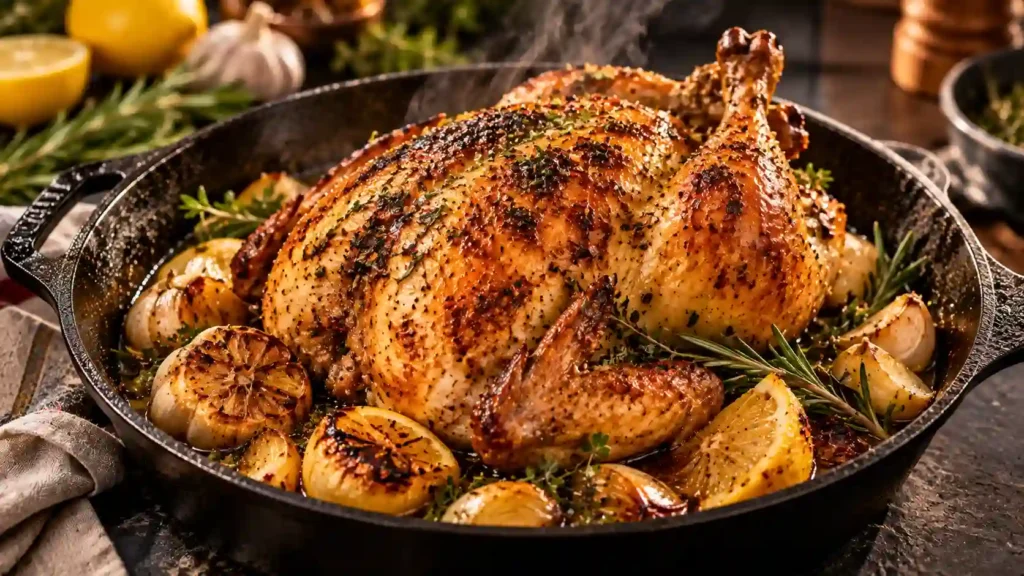
Mastering a foolproof roast chicken recipe is an essential milestone for every home cook and professional chef. Few culinary experiences compare to the comforting aroma of a whole bird sizzling in the oven. The crackling golden skin and succulent, juicy meat create an unforgettable centerpiece for family dinners. At Gulf Lights, we deliver verified culinary guides to elevate your everyday home dining across the United Arab Emirates and beyond.
Roasting a whole bird seems simple, yet many cooks struggle with dry breast meat or rubbery skin. In fact, achieving restaurant-quality results requires understanding basic food science, heat regulation, and seasoning chemistry. Furthermore, roasting poultry represents one of the most economical cooking methods available. Consequently, you can feed an entire family affordably while creating versatile leftovers for future meals. Explore our complete gastronomic series through our food category hub.
Why Roasting Whole Birds Is a True Culinary Superpower
Cooking with whole poultry delivers immense benefits over packaged boneless cuts. First, cooking meat on the bone locks in natural juices and intensifies savory flavors. The bones and connective tissue melt during roasting, creating a rich gelatin that keeps the meat moist. Second, whole birds are significantly cheaper per kilogram than pre-cut fillets. You can review regional household budget strategies in our guide to prices in dubai for food.
Furthermore, roasting a whole bird yields culinary dividends long after the initial feast concludes. You can carve the tender breast meat for tonight’s dinner and shred the leg meat for salads tomorrow. Finally, you can simmer the roasted carcass with aromatics to produce nourishing homemade bone broth. These diverse whole chicken recipes minimize household waste while maximizing kitchen flavor. Discover how whole foods support long-term wellness through our analysis of a balanced diet.
Selecting the Best Poultry: Quality, Sizing, and Freshness
Exceptional roasted poultry begins with thoughtful ingredient selection at the butcher counter. The quality of raw poultry directly impacts final texture, juiciness, and flavor. Therefore, knowing what to look for when shopping ensures successful kitchen results.
When selecting a whole bird, aim for a weight between 1.5 and 2 kilograms. Smaller birds roast more evenly than massive birds, preventing dried-out white meat. In addition, look for poultry with plump breasts, smooth skin, and no unpleasant odors. The skin should appear intact without deep tears or bruising. In the UAE, supermarkets offer fresh, locally sourced halal poultry certified by municipal authorities. You can review corporate regulatory standards through our legal and government services directory.
Moreover, consider investing in organic or free-range birds when possible. Free-range poultry develops richer muscle tone and deeper natural flavor than conventionally raised chickens. If you prefer cooking individual cuts, check out our quick chicken breast recipes. However, for sheer comforting grandeur, a whole roasted bird remains unmatched.
The Science of Crispy Skin: Dry Brining vs Wet Brining
Achieving crisp, papery skin alongside moist meat is the ultimate goal of any roasted poultry dish. Moisture is the greatest enemy of crispy skin. When surface moisture turns into steam inside the oven, the skin turns rubbery rather than crisp. Therefore, understanding brining methods is critical.
Wet brining involves submerging the bird in a seasoned saltwater solution for twelve hours. While wet brining ensures juicy meat, it saturates the skin with excess water. In contrast, dry brining produces far superior skin texture. To dry brine, rub the chicken generously with kosher salt and refrigerate it uncovered on a wire rack for twenty-four hours. During this resting period, the salt draws out moisture, dissolves, and absorbs back into the muscle fibers.
Meanwhile, the circulating refrigerator air dehydrates the skin thoroughly. When the dry skin hits the hot oven, the fat renders immediately, resulting in glass-like crispness. Furthermore, dry brining seasons the meat down to the bone without diluting its natural flavors. If you enjoy quick high-heat cooking, explore our techniques for air fryer chicken breast. Proper salt distribution transforms ordinary poultry into culinary perfection.
Creating the Perfect Herb Compound Butter and Chicken Marinade
While salt provides foundational seasoning, fats and herbs deliver mouthwatering aroma and golden color. Creating a tailored chicken marinade or compound butter infuses the meat with incredible richness.
A classic French compound butter blends softened unsalted butter with minced garlic, fresh rosemary, thyme, and lemon zest. Gently separate the skin from the breast and thigh meat using your fingers. Next, spread the herb butter directly under the skin against the raw meat. As the bird roasts, the butter melts directly into the lean white meat, basting it continuously from within. You can check kitchen ingredient measurements in our guide on 1 cup butter in grams.
Alternatively, liquid marinades utilizing olive oil, crushed garlic, smoked paprika, and lemon juice yield vibrant results. In Middle Eastern kitchens, cooks incorporate warm spices like sumac, cumin, and dried mint into their marinades. You can explore regional flavor inspirations in our guide to shawarma in dubai. Applying seasoned fat guarantees flavorful meat and irresistible skin.
The Spatchcock Method: Faster Roasting and Even Doneness
One major challenge of roasting a whole bird is that breast meat cooks faster than dark leg meat. Consequently, the breast often dries out before the thighs reach safe temperatures. The spatchcock method, also known as butterflying, solves this dilemma brilliantly.
To spatchcock a bird, use sturdy kitchen shears to cut along both sides of the backbone and remove it. Next, flip the bird over and press firmly down on the breastbone until it cracks and flattens. Flattening the bird exposes all parts to uniform heat. In addition, all the skin faces upward toward radiant oven heat, allowing every inch to crisp evenly.
Furthermore, a spatchcocked bird roasts in nearly half the time of a traditional trussed chicken. A two-kilogram bird roasts completely in just forty-five minutes at 200°C (400°F). This technique is ideal for busy weeknights when you want whole-bird flavor without long waiting periods. If you love crispy poultry textures, compare this method with our famous fried chicken recipe. Spatchcocking delivers speed, crispness, and uniform doneness.
Rotisserie-Style Roasting and Oven Baking Techniques
Commercial delis produce famously moist rotisserie birds because continuous rotation bastes the meat in its own juices. You can replicate this succulent texture in your home oven with clever roasting setups.
If your oven includes a rotisserie spit attachment, secure the seasoned bird tightly with butcher twine and metal prongs. Set a drip tray lined with sliced potatoes underneath to catch flavorful rendered fat. As the spit rotates, the juices roll continuously over the meat rather than dripping away. In contrast, standard oven baked chicken relies on high-sided roasting pans or heavy cast-iron skillets.
A preheated cast-iron skillet conducts heat directly into the dark leg meat, accelerating cooking where it is needed most. Meanwhile, elevate the bird on a bed of thick onion slices, carrots, and celery stalks. These aromatic vegetables caramelize in the chicken drippings, creating a magnificent built-in side dish. Compare these traditional oven techniques with fast multicooker options in our guide to instant pot chicken recipes.
Mastering the Ultimate Roast Chicken Recipe at Home
This classic, time-tested preparation delivers shatteringly crisp skin, fragrant garlic-herb notes, and exceptionally juicy meat every single time. Follow these precise culinary steps for flawless results.
- Prep and Dry Brine: Pat a 1.8-kilogram whole chicken thoroughly dry with paper towels. Season inside and out with one tablespoon of kosher salt. Place on a wire rack in the refrigerator uncovered for twelve to twenty-four hours.
- Infuse with Herb Butter: Mix sixty grams of softened butter with two minced garlic cloves, one tablespoon of chopped fresh rosemary, and lemon zest. Gently rub this mixture directly underneath the breast skin.
- Stuff the Cavity: Stuff the internal cavity with half a lemon, four crushed garlic cloves, and fresh thyme sprigs. Do not overpack the cavity, allowing hot air to circulate freely.
- Truss the Legs: Tie the drumsticks together with butcher twine and tuck the wing tips behind the shoulders. Trussing promotes uniform cooking and prevents wing tips from burning.
- Roast at High Heat: Place the chicken in a heavy skillet. Roast in a preheated oven at 220°C (425°F) for twenty minutes to initiate skin browning.
- Finish Gently: Reduce oven temperature to 180°C (350°F). Continue roasting for another forty to fifty minutes until an instant-read thermometer registers 74°C (165°F) in the thickest part of the thigh.
- Rest Before Carving: Transfer the bird to a cutting board and let it rest undisturbed for fifteen minutes. Resting allows muscle fibers to relax and reabsorb savory internal juices.
Serve this masterpiece with fresh pan drippings and crusty bread. You can explore artisanal bread pairing ideas through our authentic naan bread recipe.
Pan Drippings and Rich Homemade Velouté Gravy
Never discard the golden pan drippings pooled at the bottom of your roasting vessel. These drippings contain caramelized chicken proteins, rendered fat, and roasted garlic essences known as fond. Transforming these drippings into silky pan gravy elevates your entire meal.
First, remove the roasted bird and set the roasting pan over medium stovetop heat. Pour off excess surface fat, leaving two tablespoons in the pan. Whisk in two tablespoons of all-purpose flour and cook for two minutes to eliminate raw flour taste. Second, deglaze the pan with half a cup of dry white grape juice or chicken stock, scraping up all browned bits from the pan bottom.
Third, slowly whisk in one and a half cups of warm chicken broth. Simmer gently until the gravy thickens into a glossy, velvety sauce. Season with freshly cracked black pepper and a squeeze of fresh lemon juice. This savory gravy pairs exquisitely with comforting dishes like our homemade chicken and dumplings recipe. Homemade pan gravy transforms simple poultry into an opulent feast.
Global Variations: Beer Can Chicken and International Flavors
Roasting whole poultry is a universal culinary art practiced across diverse cultures. Adapting your seasoning profiles allows you to explore global culinary traditions without leaving home.
In American barbecue culture, beer can chicken remains a summer favorite. Cooks perch a whole bird over an opened can of seasoned liquid and cook it indirectly on a barbecue grill. The evaporating steam keeps interior meat tender while exterior coals crisp the skin. In contrast, Asian roasting traditions emphasize sweet and savory glazes. Cooks brush whole poultry with soy sauce, ginger, honey, and five-spice powder before roasting. Compare these sweet glaze profiles with our popular orange chicken recipe.
Furthermore, Middle Eastern kitchens roast whole poultry with aromatic spice blends like baharat and sumac. The bird roasts over a bed of spiced basmati rice, allowing savory juices to season the grains directly. Savoring spiced rice and roasted poultry is the essence of Arabian hospitality, as seen in our celebrated national dish of uae. International spices keep your weekly dinner routine vibrant and exciting.
Food Safety and Critical Internal Temperature Guidelines
Cooking poultry safely requires strict adherence to food safety standards. Undercooked poultry carries risks of foodborne pathogens like Salmonella. Fortunately, modern digital thermometers remove all guesswork from the cooking process.
Visual cues like clear juices or wobbly drumsticks are unreliable indicators of doneness. Always insert an instant-read meat thermometer into the thickest part of the inner thigh, avoiding contact with bone. Poultry is safe to consume when the internal temperature reaches 74°C (165°F). Breast meat is exceptionally juicy when pulled from the oven at 71°C (160°F), as carryover heat brings it to safe temperatures during resting.
In addition, maintain sanitary kitchen practices when handling raw poultry. Never wash raw chicken in your kitchen sink, as splashing water spreads bacteria across countertops. Use dedicated cutting boards and wash your hands thoroughly with warm soapy water. Understanding hygiene regulations aligns with municipal safety standards found across jobs in dubai. Prioritizing food safety protects your family’s health.
The Art of Carving: Professional Kitchen Presentation
Carving a roasted bird with confidence ensures beautiful presentation and prevents tearing delicate crispy skin. Using the correct tools and technique makes carving swift and effortless.
Always use a sharp carving knife or chef’s knife and a sturdy cutting board with a juice groove. First, slice through the skin between the leg and the breast. Pull the leg outward and cut through the hip joint to remove the entire leg quarter. Separate the drumstick from the thigh by cutting cleanly through the joint.
Second, remove the wings by slicing through the shoulder joints. Third, carve the breast meat by slicing horizontally along the breastbone, lifting off each breast lobe whole. Finally, slice the breast lobes crosswise into thick, elegant medallions. Fan the sliced breast meat onto a warm serving platter alongside the drumsticks and thighs. Garnish with fresh herbs and roasted lemon wheels for an elegant presentation.
Transforming Leftovers: Soups, Salads, and Sandwiches
One of the greatest joys of preparing whole poultry is enjoying versatile leftover meals throughout the week. Cooked roast chicken stores safely in the refrigerator for up to four days.
You can shred cold breast meat to toss into a crisp salad dressed with garlic and parmesan. Explore classic salad pairings in our authentic caesar salad recipe. In addition, shredded chicken makes comforting weekday curries. Simmer leftover roasted chicken in a fragrant tomato-butter gravy using our royal butter chicken recipe. Leftover chicken absorbs rich sauces rapidly, making weeknight dinners effortless.
Moreover, layered rice dishes benefit enormously from roasted chicken pieces. Fold shredded chicken into spiced basmati rice using our step-by-step biryani recipe. Savoring multiple distinct meals from a single roast showcases kitchen efficiency at its finest.
Pairing Side Dishes for an Unforgettable Family Feast
While succulent poultry anchors the dining table, vibrant side dishes balance rich savory flavors. Selecting complementary textures and colors creates a memorable dining experience.
Classic roasted root vegetables like carrots, parsnips, and baby potatoes roast beautifully alongside poultry. The natural sugars in root vegetables caramelize under oven heat, providing sweet contrast to savory meat. In addition, crisp green salads dressed with lemon vinaigrette cut through rich herb butter effortlessly. Furthermore, sweet dried fruits like dates offer wonderful dietary fiber and natural sweetness. Discover the health benefits of whole fruits in our guide on dates benefits.
For celebratory weekend feasts, pair roasted poultry with aromatic rice pilafs or warm flatbreads. If you are exploring Indian dining traditions, discover premier restaurants in our guide to the best indian restaurant in dubai. Thoughtful side pairings ensure your meal satisfies every guest.
Hospitality Careers and Culinary Industry Connections
Mastering whole-bird roasting is a fundamental qualification tested during professional culinary interviews. In commercial banquet kitchens and luxury hotels, roasting hundreds of birds simultaneously requires precise temperature control and inventory discipline.
Aspiring culinary professionals, banquet supervisors, and executive sous chefs find abundant career avenues across the hospitality sector. If you are pursuing a culinary vocation, explore our comprehensive guide on hospitality tourism jobs. In addition, culinary leaders command attractive compensation in premier international venues. Review executive salaries through our analysis of the highest paying jobs.
Furthermore, food logistics networks require robust warehousing infrastructure to distribute fresh poultry safely across commercial centers. Explore logistics career tracks in our guide on dubai warehouse logistics jobs. Dedicated professionals can achieve career milestones through strategic career change growth. Culinary mastery opens doors to fulfilling international careers.
Frequently Asked Questions About Roast Chicken
Should I cover roast chicken with aluminum foil while baking?
No, do not cover the chicken with foil during baking if you want crispy skin. Foil traps evaporating steam, causing the skin to turn rubbery. Roast uncovered so radiant heat can brown and render skin fats effectively.
Why is my roast chicken breast dry while the legs are cooked?
Breast meat is lean white meat that cooks much faster than fat-rich dark leg meat. To prevent dry breast meat, dry brine the bird, roast in a hot preheated skillet, and let the chicken rest fifteen minutes before carving.
Can I roast a whole chicken directly from frozen?
No, always thaw frozen poultry completely in the refrigerator before roasting. Roasting partially frozen poultry causes the outer meat to overcook while the interior remains dangerously raw and undercooked.
How do I get the chicken skin exceptionally crispy?
Dry brine the chicken uncovered in the refrigerator for twenty-four hours to remove surface moisture. Rub softened butter under the skin and roast at high heat (220°C / 425°F) for the first twenty minutes.
Mastering this timeless roast chicken recipe empowers you to create luxurious, comforting meals with minimal stress and maximum flavor. By understanding dry brining, temperature control, and proper resting techniques, you can produce golden, crackling poultry that rivals premier rotisserie houses. For additional culinary tutorials, kitchen advice, and verified lifestyle guides, connect with our specialist team via the Gulf Lights contact page. Read more inspirational cooking guides on the Gulf Lights blog.