
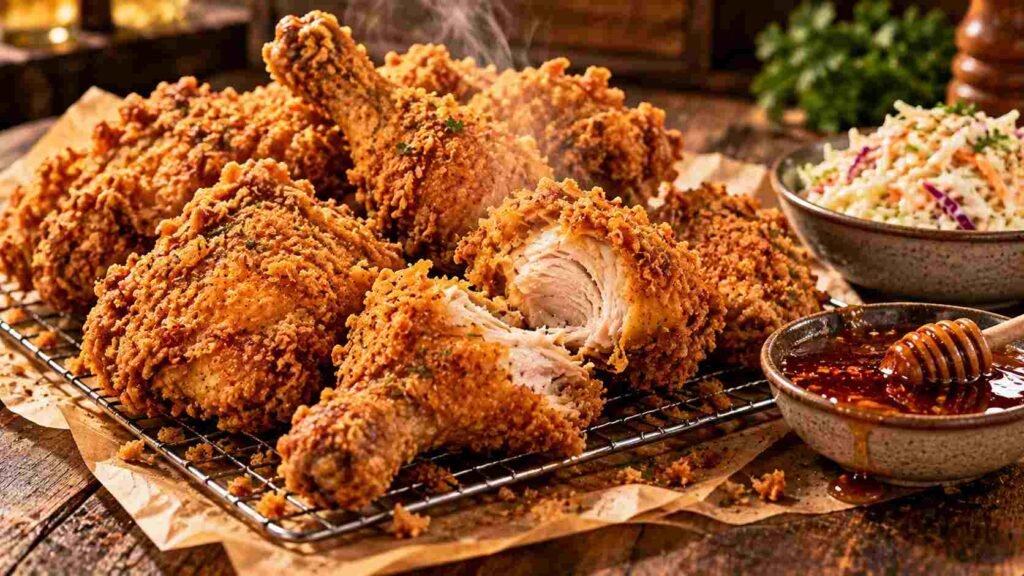
Cooking an unforgettable fried chicken recipe is one of the most rewarding achievements in modern home cooking. Across virtually every culture and continent, golden battered poultry represents the ultimate comfort food. The contrast between a shatteringly crisp seasoned crust and intensely juicy, tender meat creates pure dining bliss. At Gulf Lights, we deliver verified culinary guides to help you elevate everyday cooking into restaurant-quality feasts.
Achieving legendary crunch requires far more than dropping raw poultry into hot oil. In fact, true culinary mastery depends on precise brining, seasoned flour dredging, and strict oil temperature control. Furthermore, mastering these fundamental frying skills allows you to prepare everything from game-day wings to elegant schnitzels. Consequently, you can treat your family to incredible homemade feasts that rival famous fast-casual chains. Explore our complete culinary collection through our food category hub.
The Food Science of Irresistible Crispy Chicken
Creating sensational crispy chicken is an exercise in applied food science. The greatest obstacle to achieving lasting crispness is internal moisture escaping as steam. When steam pushes through wet batter during frying, it can make the crust soggy and greasy.
Therefore, successful frying relies on creating an impenetrable starch barrier. Combining all-purpose wheat flour with cornstarch creates a lighter, crunchier crust than wheat flour alone. Cornstarch contains high amylose levels, which absorb oil quickly and fry into rigid, glass-like microscopic structures. In addition, adding a splash of liquid brine directly into your dry flour creates craggy clumps. These textured clumps transform into jagged, shatteringly crisp ridges when submerged in hot fat.
Furthermore, maintaining the correct frying temperature seals the crust instantly. Rapid crust formation locks natural juices inside the muscle fibers. You can review corporate regulatory standards and commercial licensing frameworks through our legal and government services directory. Understanding these thermal dynamics ensures your chicken never emerges oily or heavy.
Essential Brining: Buttermilk, Pickle Juice, and Salt Ratios
The secret to succulent poultry lies in proper advance preparation. Many home cooks skip brining, which often results in bland meat that tastes seasoned only on the surface. Submerging your poultry in an aromatic liquid brine seasons the meat down to the bone.
Buttermilk is the gold standard for traditional poultry brining. The gentle lactic acid in buttermilk breaks down tough surface proteins without turning the meat mushy. Furthermore, dairy sugars caramelize during frying, producing an appetizing golden-brown hue. Alternatively, dill pickle juice provides an acidic, garlicky brine that infuses the meat with mouthwatering tanginess.
Always add kosher salt, garlic powder, onion powder, and smoked paprika directly into your liquid marinade. Let the chicken soak in the refrigerator for at least four hours, or preferably overnight. If you prefer roasting whole birds without deep frying, explore our comprehensive guide to a classic roast chicken recipe. However, for deep-fried perfection, buttermilk brining remains non-negotiable.
The Seasoned Dredge: Flour, Cornstarch, and Spice Blends
A bland flour coating ruins even the best-marinated poultry. Your dry dredge must carry bold seasoning to complement the savory meat underneath. Balancing starches and spices creates an irresistible aromatic profile.
A dependable master dredge combines three cups of all-purpose flour with one cup of cornstarch. Next, whisk in two tablespoons of kosher salt, black pepper, garlic powder, onion powder, and sweet paprika. Add a teaspoon of cayenne pepper for gentle warmth and dried thyme for herbal depth. You can verify baking and pantry measurements in our guide on 1 cup butter in grams.
To execute the double-dredge technique, lift chicken pieces from the buttermilk and coat them thoroughly in seasoned flour. Shake off the excess, dip the chicken back into the buttermilk briefly, and dredge it in flour a second time. Press the flour firmly into every crevice using your palms. This double coating builds a thick, jagged armor that fries into legendary crunch.
Mastering the Fry: Oil Selection and Temperature Management
Selecting the right cooking oil and managing heat are crucial steps during deep-frying. Using oil with a low smoke point results in burnt flour, unpleasant bitterness, and dangerous kitchen smoke.
Always select neutral cooking oils with high smoke points, such as peanut oil, canola oil, or corn oil. Peanut oil is widely prized by commercial kitchens because it withstands intense heat and imparts a clean flavor. Pour at least eight centimeters of oil into a heavy Dutch oven or deep cast-iron skillet. Heavy cast iron retains thermal energy efficiently, preventing drastic temperature drops when cold meat enters the pan.
Use a clip-on deep-fry thermometer to heat your oil to exactly 175°C (350°F). When cold chicken enters the pot, the temperature will drop to roughly 160°C (320°F), which is the ideal frying zone. Never overcrowd your pot; fry only three or four pieces at a time. If you prefer rapid multi-cooker meals, check our guide on instant pot chicken recipes. Careful temperature monitoring ensures perfectly cooked meat without burnt edges.
Mastering the Ultimate Southern Fried Chicken Recipe
This master recipe produces deeply seasoned, shatteringly crisp chicken that stays crunchy for hours. Follow these detailed steps for guaranteed dining triumph.
- Brine the Poultry: Submerge 1.5 kilograms of bone-in chicken thighs and drumsticks in two cups of buttermilk, two teaspoons of salt, and hot sauce. Refrigerate for at least six hours.
- Prepare the Seasoned Flour: Whisk three cups of flour, one cup of cornstarch, two tablespoons of paprika, garlic powder, onion powder, and black pepper in a large shallow bowl.
- Create the Craggy Texture: Drizzle three tablespoons of the buttermilk brine into the dry flour. Rub the mixture with your fingertips to form small dough flakes.
- Execute the Double Dredge: Dredge each piece of marinated chicken in flour, dip back into buttermilk, and dredge in flour once more. Press firmly to adhere.
- Rest the Coated Meat: Place coated chicken on a wire rack for fifteen minutes. This resting window allows the starches to hydrate, preventing the crust from slipping off in hot oil.
- Fry to Golden Glory: Fry chicken in 175°C (350°F) peanut oil for twelve to fourteen minutes, turning occasionally, until the internal temperature reaches 74°C (165°F).
- Drain on a Wire Rack: Transfer fried chicken to a clean wire cooling rack set over a baking sheet. Never drain fried chicken on paper towels, as trapped steam makes the underside soggy.
Sprinkle a pinch of flaky sea salt over the hot chicken immediately after frying. Pair this comforting feast with artisanal bread using our authentic naan bread recipe.
Game-Day Favorites: Ultimate Chicken Wings Recipe
Few party appetizers generate as much excitement as a towering platter of hot, glistening chicken wings. Mastering a versatile chicken wings recipe transforms casual weekend gatherings into festive celebrations.
Begin by breaking whole wings down into drumettes and flats, discarding the tips or saving them for broth. Pat the wings thoroughly dry with paper towels to eliminate surface water. Next, toss the wings with baking powder and kosher salt before frying or baking. The alkaline baking powder raises the skin’s pH balance, breaking down peptide bonds so the skin blisters into exceptional crispness.
Fry wings in small batches at 180°C (360°F) for nine to ten minutes until crisp and golden. Alternatively, you can achieve crispy results using hot circulating air without deep oil vats. Explore our healthy method for air fryer chicken breast and wings. Crisp wings provide the perfect canvas for savory and spicy glazes.
Fiery Perfection: Authentic Buffalo Wings Recipe and Tangy Glazes
Classic Buffalo wings originated in upstate New York and remain an undisputed global sports-bar staple. An authentic buffalo wings recipe relies on an emulsion of cayenne pepper hot sauce and melted butter.
To craft the signature glaze, melt sixty grams of unsalted butter in a small saucepan over low heat. Whisk in half a cup of aged cayenne hot sauce, a splash of Worcestershire sauce, and a dash of garlic powder. Whisk vigorously until the sauce turns glossy and emulsified. The rich butter mellows the sharp vinegar bite of the hot sauce, creating a silky texture that clings to crispy skin.
Toss piping hot fried wings directly into a large bowl with the warm Buffalo sauce. Serve immediately alongside crunchy celery sticks and creamy blue cheese dressing. If you love spicy pub favorites, explore our game-day spinach artichoke dip. Tangy Buffalo wings deliver unforgettable savory heat.
Kid-Friendly Favorites: Crispy Chicken Tenders and Nuggets
Families with young children frequently rely on homemade chicken tenders and bite-sized chicken nuggets. Preparing these favorites at home ensures high-quality real breast meat without artificial preservatives or fillers.
Chicken tenders utilize the pectoralis minor muscle, which is the naturally tender strip located beneath the main breast lobe. Slice tenderloins into even strips and marinate briefly in seasoned milk. Next, dredge in seasoned flour or Japanese panko breadcrumbs for extraordinary crunch. Fry the tenders for four to five minutes until golden brown and cooked through.
For homemade nuggets, dice fresh chicken breast into small chunks and pulse lightly in a food processor with garlic and onion powder. Shape the mixture into small rounds, coat in batter, and fry until crisp. If you prefer lean whole cuts for weeknight dinners, check out our versatile chicken breast recipes. Homemade tenders deliver wholesome, delicious quality that children and adults love.
Bite-Sized Crunch: Irresistible Popcorn Chicken
For movie nights and casual parties, crunchy popcorn chicken delivers bite-sized snacking perfection. These miniature morsels cook in just three minutes, making them ideal for high-volume entertaining.
Cut boneless chicken breast into bite-sized cubes measuring two centimeters. Marinate the pieces in soy sauce, garlic, and white pepper to build a savory umami base. Next, toss the chicken cubes in sweet potato starch or cornstarch until completely coated. The fine starch creates a delicate, paper-thin crust that stays crunchy even when tossed with glazes.
Fry the popcorn chicken in batches for three minutes until floating and crisp. Dust with five-spice powder and chili salt while hot. Compare this sweet-savory profile with our popular Chinese takeout orange chicken recipe. Bite-sized chicken bites disappear from party platters in minutes.
European Tradition: Golden Chicken Schnitzel
Long before American fast-food chains expanded globally, European cooks perfected the art of breaded poultry. A traditional chicken schnitzel features a pounded chicken breast coated in a classic three-step breading station.
First, pound boneless chicken breasts between parchment sheets until uniformly flat, roughly five millimeters thick. Second, dredge the flattened cutlet in all-purpose flour, dip it into beaten eggs, and coat it thoroughly in fine breadcrumbs. Press the breadcrumbs gently to form an even crust.
Pan-fry the schnitzel in clarified butter or olive oil over medium-high heat for two to three minutes per side. Gently swirl the pan while frying to allow hot fat to wash over the top of the cutlet, creating signature rippled blisters. Serve immediately with fresh lemon wedges and potato salad. Explore Italian crumbed cutlet variations in our classic chicken piccata recipe guide.
The Global Sensation: Double-Fried Korean Fried Chicken
In recent years, korean fried chicken has taken the international culinary world by storm. Known as “chimaek” when paired with refreshing beverages, Korean-style poultry is famous for its ultra-thin, crackling crust that stays crisp for hours under heavy glazes.
The secret lies in a delicate potato starch batter and a signature double-frying technique. First, coat seasoned chicken wings or drumsticks in a thin cornstarch slurry. Fry the chicken at 160°C (320°F) for eight minutes, then remove it to rest on a rack. During this resting period, interior steam migrates outward, softening the initial crust.
Second, submerge the chicken in hotter oil at 190°C (375°F) for two to three minutes. This second fry vaporizes that escaping moisture completely, turning the crust rock-hard and blistered. Brush immediately with a sticky glaze made from gochujang chili paste, honey, soy sauce, and garlic. Discover authentic Asian sauce profiles in our savory bulgogi recipe guide. Double-frying creates the ultimate crunch experience.
Classic Dips, Sauces, and Southern Side Dish Pairings
While crunchy poultry is the star of the table, vibrant dipping sauces and wholesome sides complete the dining experience. Serving diverse condiments allows diners to customize each delicious bite.
Whisk together honey mustard using dijon mustard, clover honey, and mayonnaise for sweet-tangy dipping. In addition, homemade ranch dressing infused with fresh dill and chives pairs wonderfully with spicy wings. In Middle Eastern street culture, diners pair fried chicken with pungent Lebanese garlic toum. Learn about authentic regional garlic sauces in our guide to shawarma in dubai.
Pair your fried chicken with creamy macaroni and cheese, warm cornbread, or a crisp coleslaw dressed with apple cider vinaigrette. Savoring rich fried poultry alongside a fresh salad dressed with our authentic caesar salad recipe cuts through richness beautifully. To explore sweet endings, learn about nutrient-dense natural treats in our guide on dates benefits.
Food Safety, Oil Filtration, and Proper Storage
Handling hot oil and raw poultry demands strict kitchen safety protocols to prevent accidents and foodborne illness. Following professional kitchen standards protects your home and family.
Never leave a pot of hot oil unattended on the stove. If your oil begins to smoke, reduce heat immediately. Always check internal meat temperatures using an instant-read thermometer, ensuring dark meat reaches 74°C (165°F). In addition, allow used cooking oil to cool completely before straining it through a fine-mesh sieve lined with coffee filters. Filtered peanut oil can be stored in a cool, dark pantry and reused up to three times.
Store leftover fried chicken in an airtight container in the refrigerator for up to three days. Never reheat fried chicken in a microwave, which turns the crust soft and rubbery. Instead, reheat pieces on a wire rack inside a 190°C (375°F) oven for ten minutes. The hot circulating air restores the original crunchy texture perfectly. Discover how whole foods promote longevity through our guide to a balanced diet.
Commercial Hospitality Careers in Fast-Casual Dining
The global popularity of fried chicken drives multi-billion-dollar commercial dining industries. In cosmopolitan culinary hubs like Dubai, specialized fried chicken franchises, Korean dining lounges, and gourmet chicken concepts experience rapid commercial growth.
Trained kitchen supervisors, fry station masters, and restaurant managers enjoy strong employment demand across the hospitality sector. If you are exploring vocational culinary paths, review our comprehensive guide on hospitality tourism jobs. In addition, front-of-house staff can examine career dynamics in our overview of dubai retail sales jobs. Hospitality executives command competitive remuneration across international hotel chains. Explore executive salary scales in our guide to the highest paying jobs.
Furthermore, food and beverage enterprises require extensive refrigerated logistics to transport poultry safely from agricultural centers. Candidates interested in supply operations can explore opportunities in our guide on dubai warehouse logistics jobs. Dedicated personnel can achieve managerial promotions through strategic career change growth. Many international culinary talents relocate using our guide to work abroad. You can study statutory employment regulations in our analysis of the labour law uae.
Frequently Asked Questions About Fried Chicken
Why does the breading fall off my fried chicken?
Breading falls off when the poultry is too wet before dredging, or when the coated chicken is not allowed to rest. Rest coated chicken on a wire rack for fifteen minutes before frying so the flour hydrates and sticks firmly to the meat.
What is the best oil for deep-frying chicken?
Peanut oil is widely regarded as the best oil for deep-frying because of its high smoke point (230°C / 450°F) and clean, neutral flavor. Canola oil and vegetable oil are also affordable, effective alternatives.
How do I keep fried chicken warm and crispy while cooking in batches?
Place a metal wire cooling rack inside a baking sheet and keep it in a preheated oven set to 100°C (200°F). Transfer freshly fried chicken pieces to this warm oven rack while you finish frying remaining batches.
Can I make crispy fried chicken without buttermilk?
Yes, you can substitute buttermilk by adding one tablespoon of fresh lemon juice or white vinegar to one cup of whole milk. Let it stand for five minutes until slightly curdled before marinating your chicken.
Mastering this classic fried chicken recipe gives you the culinary confidence to prepare shatteringly crisp, intensely flavorful comfort feasts at home. By utilizing buttermilk brines, cornstarch-fortified dredges, and steady oil temperatures, you can produce poultry that rivals world-class kitchens. For additional culinary tutorials, kitchen advice, and verified lifestyle guides, connect with our specialist team via the Gulf Lights contact page. Discover more inspirational cooking articles on the Gulf Lights blog.