
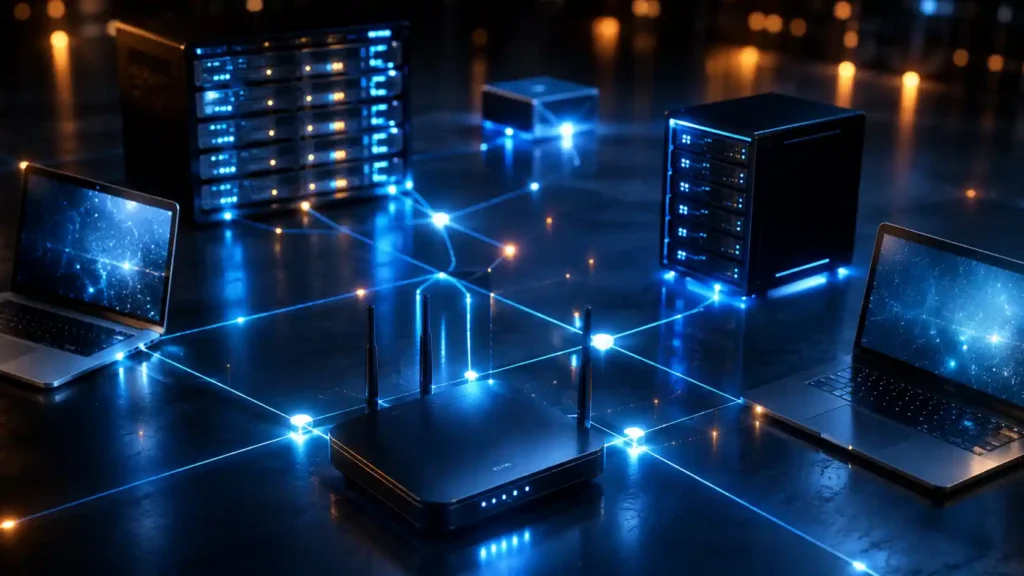
Right now, as you read these words, an invisible conversation is happening. Your device is talking to another computer somewhere in the world, requesting information, receiving it, and displaying it on your screen — all in the blink of an eye. This silent, constant chatter between machines is made possible by computer networks, one of the most important yet least understood technologies of our time.
We tend to take connectivity for granted. We expect our messages to send instantly, our videos to stream smoothly, and our devices to find each other without a fuss. But behind that seamless experience lies a beautifully organised system of rules, cables, and signals working together. In this guide, we will explore what a computer network really is, how data travels from one place to another, the different types of networks you rely on, and why all of this matters. No technical background needed — just a bit of curiosity about the connected world around you.
What Is a Computer Network?
At its simplest, a computer network is a group of two or more devices connected together so they can share information and resources. Those devices might be laptops, phones, servers, printers, or even smart home gadgets. Once they are linked, they can talk to each other, exchange files, and work together in ways a single isolated device never could.
Think of a network like a road system. Individual houses are like computers, and the roads connecting them let people and goods travel between them. Without roads, each house would be cut off and alone. With them, an entire community can share, trade, and communicate. A computer network does exactly the same thing for machines, creating pathways for data to flow freely between them.
The value of networking comes from sharing. Devices on a network can share an internet connection, access common files, use the same printer, and communicate instantly. This idea scales from a tiny setup in your home all the way up to the global internet, which is really just an enormous network of networks. Understanding this concept unlocks how so much of modern emerging technology actually works beneath the surface.
How Data Travels Across a Network
One of the most fascinating aspects of networking is how information actually moves from one device to another. When you send a message or load a web page, that data does not travel as one big lump. Instead, it is broken into small pieces called packets, each one carrying a portion of the information along with the address of where it needs to go.
These packets travel independently across the network, sometimes taking different routes, and are reassembled into the complete message when they arrive. It is a bit like sending a long letter by splitting it into many postcards, each addressed to the same destination. Even if some postcards take a scenic route, they all arrive and get put back in order. This clever approach makes networks fast, flexible, and resilient.
To make sure every device understands each other, networks follow agreed-upon sets of rules called protocols. These protocols are like a shared language, defining how data should be formatted, addressed, and delivered. Because everyone follows the same rules, a phone made by one company can happily communicate with a server on the other side of the planet built by another. This universal agreement is the quiet genius behind the whole system.
Types of Computer Networks
Not all networks are the same size or serve the same purpose. They come in several types, usually defined by how much area they cover. Understanding these categories helps you see how the small network in your home connects to the vast global internet. Here are the main types you will encounter:
- LAN (Local Area Network): A network covering a small area like a home, office, or school, connecting nearby devices together.
- WAN (Wide Area Network): A network spanning large distances, connecting devices across cities, countries, or the whole world. The internet is the biggest WAN of all.
- WLAN (Wireless LAN): A local network that uses Wi-Fi instead of cables, letting devices connect without wires.
- PAN (Personal Area Network): A tiny network around one person, like connecting your phone to your wireless earbuds.
You interact with several of these every day without noticing. The Wi-Fi in your home is a WLAN, your phone connecting to earbuds is a PAN, and whenever you browse the web, you are tapping into the enormous WAN we call the internet. Schools and offices often run a LAN to connect their computers, which is why a well-equipped computer lab can share files and printers so easily among many machines.
The Building Blocks of a Network
Every computer network, whether tiny or enormous, is built from a handful of key components working together. Getting to know these pieces makes the whole system far less mysterious. Think of them as the essential parts that turn a pile of separate devices into a connected team.
At the heart of most networks sits a router, the device that directs traffic and connects your local network to the wider internet. Alongside it, switches help connect multiple devices within the same network, passing data to exactly the right place. Cables or wireless signals form the actual pathways that data travels along. And of course, the devices themselves — computers, phones, servers — are the endpoints that send and receive information.
Servers deserve a special mention, because they play a huge role in networking. A server is a powerful computer that stores information or provides services to other devices, called clients. When you visit a website, your device is the client requesting a page from a server that holds it. This client-server relationship is one of the most common patterns in networking, powering everything from websites to email to online games. Much of this depends on fast storage like non volatile memory, which keeps data safe even when the power is switched off.
Wireless Networks and Mobile Computing
For most of computing history, networks meant cables. Today, however, wireless connections have transformed how we live and work. The rise of Wi-Fi, mobile data, and other wireless technologies has cut the cords and set us free to connect from almost anywhere. This shift has been nothing short of revolutionary.
This freedom is the foundation of mobile computing, the ability to use powerful connected devices on the move. Your smartphone is the perfect example. It connects to networks wirelessly, letting you browse, message, navigate, and stream wherever you happen to be. Laptops, tablets, and smartwatches all rely on the same wireless networking to keep you connected without being tied to a desk.
Wireless networking has opened up incredible possibilities, and it is deeply tied to the world of smart technology, where countless connected devices communicate without a single wire between them. It also connects to the satellites behind modern space technology, which help deliver internet and location services to even the most remote corners of the planet. As always, the specific speeds and standards of wireless technology keep advancing, so it is worth checking current details from official sources.
The Internet: The Ultimate Network
No discussion of computer networks would be complete without the star of the show: the internet. It is the largest and most influential network ever created, connecting billions of devices across every corner of the globe. Yet at its core, it follows the very same principles we have already explored, just on an almost unimaginable scale.
The internet is best understood as a network of networks. Countless smaller networks — in homes, offices, schools, and data centres — all link together through a shared set of rules, forming one gigantic web of connectivity. When you send an email across the world, your data hops through many of these networks, guided by routers and protocols, until it reaches its destination. The whole journey often takes less than a second.
What makes the internet so powerful is its openness and universality. Because everyone agrees to follow the same core rules, any connected device can, in principle, reach any other. This has enabled an explosion of communication, commerce, and creativity that has reshaped human society. It is arguably the greatest achievement of modern information technology, and it continues to grow and evolve every single day.
Keeping Networks Safe and Secure
With so much valuable information flowing across networks, keeping them secure is absolutely critical. An open pathway for data is also, unfortunately, a potential pathway for attackers. This is why network security has become such an important part of the picture, protecting the roads along which our data travels.
Networks use various tools to stay safe. Firewalls act as gatekeepers, checking incoming and outgoing traffic and blocking anything suspicious. Encryption scrambles data as it travels, so even if someone intercepts it, they cannot read it. Access controls make sure only authorised devices and users can join the network. Together, these defences form layers of protection around the flow of information.
For anyone using a network, a few simple habits go a long way. Securing your home Wi-Fi with a strong password, keeping devices updated, and being cautious on public networks all help enormously. This ties directly into the wider world of computer security, where protecting networks is a central concern. As threats evolve, network defences continue to advance, increasingly aided by artificial intelligence that can spot unusual activity in real time.
Networks in Everyday Life
It is worth pausing to appreciate just how much computer networks shape your daily routine. They are so woven into modern life that we rarely notice them, yet they quietly power an astonishing range of activities. Once you start looking, you will see them everywhere.
When you stream a film, a network delivers it to your screen. When you video call a friend abroad, networks carry your voice and image across continents in real time. When you pay with a card, a network confirms the transaction in seconds. When students share resources in a computer lab, a local network makes it seamless. From online shopping to remote work to social media, none of it would exist without the humble computer network doing its job faithfully in the background.
This deep integration is only growing as more devices come online. Homes, cars, factories, and cities are becoming ever more connected, each new device joining the vast web of networks that ties our world together. Understanding how it all works gives you a genuine appreciation for the invisible infrastructure that makes modern life possible.
The Future of Networking
Networking technology never stands still, and the years ahead promise exciting advances. Connection speeds keep climbing, letting us move ever larger amounts of data more quickly. Wireless technology continues to improve, reaching more places with greater reliability. And as the number of connected devices explodes, networks are becoming smarter about managing all that traffic efficiently.
One major trend is the push to connect everything, from tiny sensors to entire industrial systems, into unified networks. This vision relies on faster, more capable infrastructure and on advances in related fields like nanotechnology, which helps create the ever-smaller components that networks depend on. The result will be a world that is more connected, responsive, and intelligent than ever before.
For anyone curious about technology, networking is a fantastic field to understand and even pursue. It underpins nearly everything else in computing, and skilled networking professionals are in high demand across every industry. Whether you simply want to grasp how your world connects or you are considering a career path, the fundamentals you have learned here provide a solid foundation.
Frequently Asked Questions
What is the difference between the internet and a computer network? A computer network is any group of connected devices, big or small. The internet is the largest network of all, made up of countless smaller networks linked together across the globe.
Do I need cables to build a network? No. Many modern networks use wireless technology like Wi-Fi, letting devices connect without any cables. Wired connections still offer speed and reliability, but wireless has made networking far more convenient and flexible.
Why is my Wi-Fi sometimes slow? Many factors can affect speed, including distance from the router, interference, the number of connected devices, and your internet plan. Positioning your router well and limiting congestion often helps improve performance.
Final Thoughts
Computer networks are the invisible threads that stitch our digital world together. From the small network in your home to the vast global internet, they allow devices to share, communicate, and collaborate in ways that have transformed how we live. Understanding how data travels, how networks are built, and how they stay secure gives you a clearer view of the technology shaping every part of modern life.
The next time your message sends instantly or your video streams without a hitch, you will know the remarkable system making it happen. It is a beautiful piece of engineering, quietly connecting billions of people and devices every second. To keep exploring the technologies that power our connected world, browse more articles across the Technology section of our blog, and feel free to contact us with any questions. The connected world is at your fingertips, and now you understand how it all comes together.