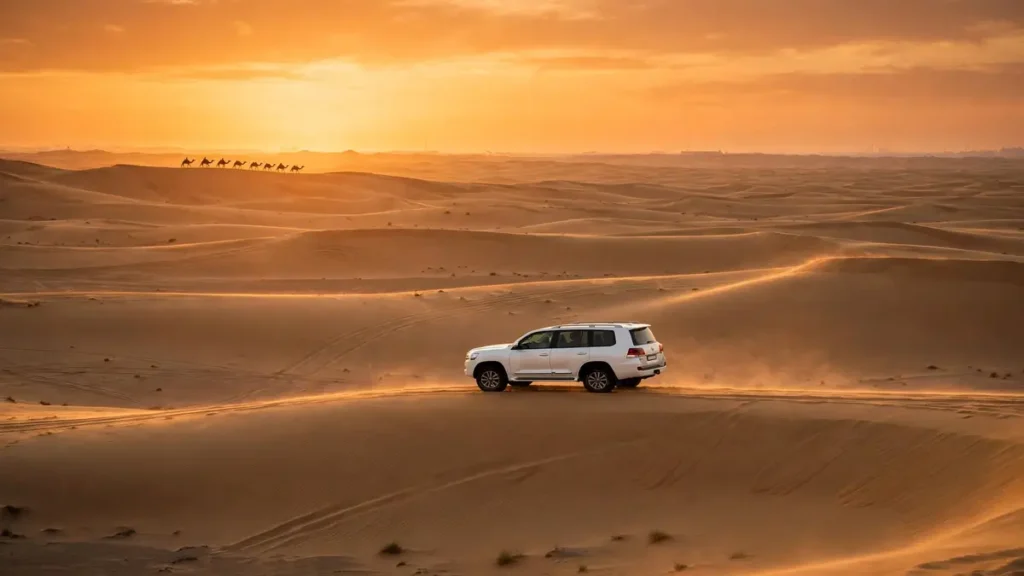
A Dubai desert safari is one of the most popular experiences you can book in the United Arab Emirates. It takes you out of the city and into open dunes, where the skyline gives way to sand, silence, and sunset light. For many first-time visitors, it becomes the highlight of the whole trip.
This guide explains the main safari types, what each one includes, approximate costs, the best season to go, what to wear, and how to stay safe. Prices change by operator and season, so treat every figure here as an approximate starting price and confirm the final price on the operator listing before you book.
What Is a Dubai Desert Safari?
A desert safari is a guided trip into the sand dunes outside Dubai, usually in a 4×4 vehicle with a licensed driver. Most trips combine dune driving with a desert camp, food, and live entertainment. Some focus on the drive itself, while others lean toward culture, food, and stargazing.
The desert around Dubai is not one single area. Operators use different dune fields, and some trips run inside the Dubai Desert Conservation Reserve. The reserve covers 225 square kilometres and is the UAE’s first protected national park. Gazelles, oryx, and Arabian tahr roam there, so the drive feels wilder and more natural than a trip near the city edge.
A safari is not a self-drive adventure for first-timers. Join a group tour unless you are experienced at desert driving. Stay on marked tracks, travel in a convoy rather than alone in remote areas, and let a licensed driver handle the dunes.
What Are the Main Types of Desert Safari?
Most operators sell four main formats. Each one suits a different kind of traveller, so pick the format that matches your time, budget, and energy.
What Happens on an Evening Desert Safari?
The evening safari is the most popular format. Pickup usually happens in the afternoon, followed by dune bashing, a sunset photo stop, and a desert camp with a BBQ dinner and live shows. Most trips return to the city around 9 to 9:30pm. It packs the full desert experience into one evening, which makes it the best choice for most first-timers.
What Does a Morning Desert Safari Include?
A morning safari is shorter, usually around four hours. It focuses on the dunes themselves, with dune bashing, sandboarding, a short camel ride, and refreshments. There is no camp dinner and no evening show, so it suits travellers who want the desert drive without a long evening out. It also works well if your evenings are already full.
What Makes an Overnight Desert Safari Different?
An overnight safari adds a night at a desert camp after the evening programme. You sleep in a tent under the stars, wake to a desert sunrise, and return to the city in the morning. It is the slowest and most immersive option, and it suits travellers who want quiet time in the dunes after the crowds leave.
What Is a Conservation Reserve Safari?
A conservation reserve safari runs inside the Dubai Desert Conservation Reserve with set routes and approved operators only. The focus is on nature, wildlife, and the desert landscape rather than high-speed dune driving. If you care about wildlife and want a calmer experience, this is the format to look for.
How Much Does a Dubai Desert Safari Cost?
Prices vary by operator, season, group size, and what is included, so treat the figures below as approximate starting prices only. Always confirm the final price on the operator listing before you book.
A morning safari starts from around AED 95 on many operator listings. An evening safari with BBQ dinner starts from around AED 120. An overnight safari starts from around AED 350. A hot air balloon flight over the desert starts from around AED 1,099. Private cars, premium camps, and peak-season dates cost more.
Quad bikes and dune buggies are usually paid extras, not part of the base price. Ask what is included before you pay, and check whether pickup from your hotel is covered. A cheap listing can turn expensive once extras are added, so compare the full package, not the headline price.
Private safaris cost more than shared ones, since you pay for the whole vehicle and a flexible schedule. They suit families and small groups who want privacy and their own pace. Premium camps with better food and seating also sit above the standard price, so decide what matters most before you compare listings.
When Is the Best Time to Go on a Desert Safari?
The best season runs from October or November to April, when daytime heat eases and desert evenings feel pleasant. This is also the busiest period, so book early if you travel in December or January.
Desert evenings cool sharply after sunset in winter, so bring layers even if the afternoon feels warm. A light jacket or shawl makes the camp dinner far more comfortable. For the wider trip, our guide to the best time to visit Dubai explains how the seasons shape the whole city, not just the desert.
Summer safaris still run, but the heat is intense and the experience is shorter and harder. If you visit in summer, pick a morning or evening trip, drink water through the day, and keep expectations realistic.
Weekends and public holidays book out first, so a weekday trip often costs less and feels calmer at the camp. If your dates are fixed, book as early as you can, and keep your pickup details ready so the operator can confirm your slot without delay.
What Is Included in a Typical Desert Safari?
Shared safaris usually include hotel pickup in a 4×4, dune bashing, sandboarding, a short camel ride, and soft drinks. Evening trips add a desert camp, a BBQ dinner, and live shows such as traditional dance and music.
The short camel ride is exactly that, a brief ride near the camp, not a long trek into the dunes. If you want a longer camel experience, ask the operator before booking, since it is often a separate activity.
Quad bikes and dune buggies are usually paid extras, booked at the camp or in advance. Some operators also offer falcon displays, henna painting, and traditional dress photo stops. Ask for a written list of inclusions so you know what your ticket covers.
What Should You Wear and Bring on a Desert Safari?
Wear light, loose clothing in summer and add layers in winter, when evenings cool fast after sunset. Closed shoes are recommended from November to April, since sand gets into open footwear and dune slopes are easier to walk in proper shoes.
Bring sunscreen, sunglasses, and a hat for the afternoon sun, plus a light jacket for the evening. A small bag is enough. Keep valuables light, since you will move between the vehicle, the dunes, and the camp.
A phone or camera is worth bringing for the sunset stop, which is often the best photo moment of the trip. Charge your device before pickup, and bring a power bank if you plan to film the shows.
Is Dune Bashing Safe and Who Should Skip It?
Dune bashing is a fast, bumpy drive over steep dunes in a 4×4 with a trained driver. It is the most thrilling part of the safari, and also the part that needs the most care. Operators use seat belts, trained drivers, and set routes to keep the risk low.
Skip dune bashing if you are pregnant, have back or neck problems, or suffer from motion sickness. Young children and older travellers should also sit it out or ask for a gentler transfer to the camp. Most operators offer a direct drive to the camp for guests who skip the dunes.
Tell your driver about any health concern before the drive starts. Stay seated, keep your seat belt fastened, and hold on during steep drops. If you feel unwell, say so at once. A good driver will slow down or stop.
How Do You Choose a Good Desert Safari Operator?
Start with recent reviews from real travellers, not just the operator’s own website. Look for clear inclusions, honest photos, and a named pickup time. A good operator answers questions before you pay.
Compare at least three operators on the same format, and read the fine print on cancellations and pickup areas. Some operators charge extra for pickup outside central Dubai, so confirm your hotel is covered.
Have your ID ready for the booking, and keep UAE Pass handy for digital services during your trip. Book through the operator’s own site or a trusted platform, and keep your confirmation until the trip ends.
Check whether the operator is licensed and whether the trip enters the conservation reserve, since only approved operators may run there. A licensed operator with clear safety rules is worth more than a slightly cheaper listing with vague details.
How Do You Get to the Desert and Back?
Most safaris include hotel pickup in a 4×4, so you do not need to drive yourself. The driver collects you in the afternoon and returns you to your hotel after the trip.
If you drive yourself to a meeting point, remember that Dubai has paid toll gates on major roads. Our guide to Salik toll gates in Dubai explains how the toll system works.
For getting around the city before your pickup, the Dubai Metro is a simple option, and the new Dubai Metro Blue Line trains add more coverage across the city. Plan your day so you are back at your hotel well before the pickup time.
Can Families With Children Enjoy a Desert Safari?
Families can enjoy a desert safari, and many operators welcome children at the camp. The camp dinner, shows, camel ride, and sandboarding suit children well, and the evening format gives everyone a full experience in one trip.
Keep dune bashing out of the plan for young children. Ask the operator for a direct transfer to the camp, and check the minimum age for the dune drive before you book. Bring snacks, water, and a layer for each child, since evenings cool fast.
An overnight safari suits older children who enjoy camping, but it is a long night for toddlers. For a first family trip, the evening safari is the safest choice, with the morning safari as a shorter alternative.
What Else Can You Do Around Your Desert Safari?
A desert safari pairs well with a day in the city. Our guide to things to do in Dubai covers the main attractions, from the waterfront to the old quarters, and helps you plan the days around your safari.
Where you stay shapes the trip, too. Our Dubai areas guide explains the main neighbourhoods, so you can pick a base with easy pickup access and short transfers.
If your stay is longer, a day trip adds variety. Our guide to things to do in Sharjah covers the emirate next door, with museums, markets, and a calmer pace than Dubai. And if you want retail therapy after the dunes, our Dubai shopping guide covers malls, souks, and outlet options.
What Do First-Timers Ask Most About a Dubai Desert Safari?
How Long Does a Desert Safari Last?
An evening safari usually lasts around six hours, from afternoon pickup to a return around 9 to 9:30pm. A morning safari is shorter, at around four hours. An overnight trip runs to the following morning.
Do You Need to Book a Desert Safari in Advance?
Booking in advance is wise, especially from November to April, when demand is high and popular dates sell out. It also locks in your pickup time and lets you compare inclusions calmly.
Is a Desert Safari Worth It for First-Timers?
For most first-timers, the evening safari is worth it, since it combines dune driving, sunset views, dinner, and shows in one trip. If you dislike bumpy rides, ask for a direct transfer to the camp.
What Happens If the Weather Turns Bad?
Operators may change the route or timing when the weather turns bad, and trips can be delayed or rescheduled. Check the forecast, keep your phone nearby, and read the cancellation terms before you book.
Can You Go on a Desert Safari in Summer?
Summer safaris still run, but the heat is intense, so morning and evening trips are the better choice. Drink water through the day, wear sun protection, and expect a shorter experience than in winter.
Do Desert Safari Prices Include Everything?
Base prices usually cover pickup, dune bashing, sandboarding, a short camel ride, soft drinks, and the camp dinner and shows on evening trips. Quad bikes and dune buggies are usually paid extras.
Explore more guides on Gulf Lights UAE.