
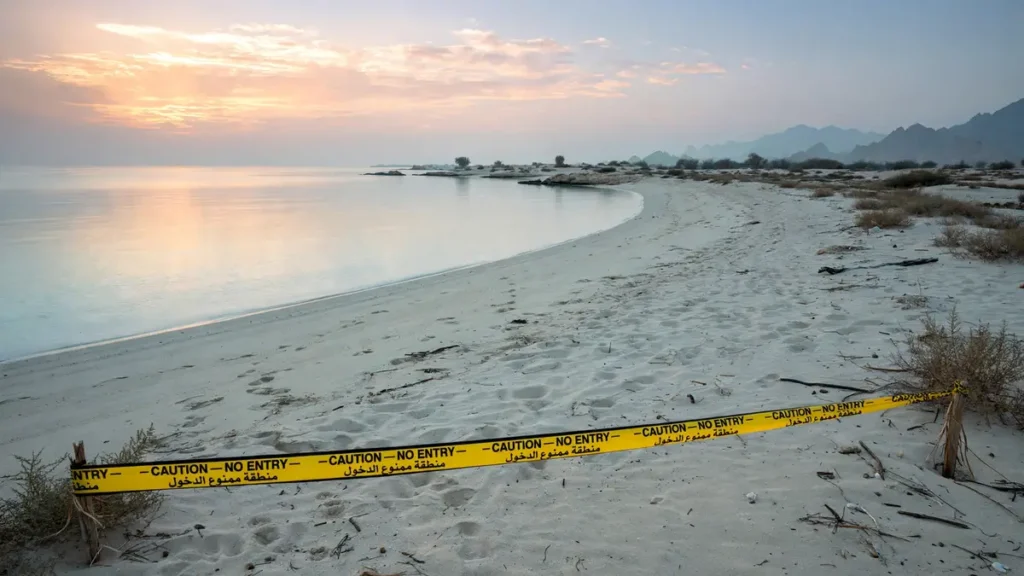
If you had planned a beach day in the northern Emirates this weekend, pause before you pack the car. As of Sunday, 25 October 2026, authorities have closed beaches in three emirates following an offshore oil spill. Ras Al Khaimah announced on Saturday that all of its beaches would stay closed until further notice. Umm Al Quwain had already closed all of its beaches and coastal areas. Sharjah closed Al Hamriyah Beach as a precaution. The closures now stretch along a significant part of the UAE’s northern coastline.
The story began earlier in the week. On Friday, 23 October, the UAE Ministry of Climate Change and Environment confirmed that response teams had detected a tanker oil spill offshore. Containment, cordoning, cleanup and remediation work started immediately, according to the ministry. Since then, the picture has widened. Residents in Sharjah, Ajman and Umm Al Quwain reported a strong fuel-like smell. The ministry linked that smell to the spill. At the same time, it said the odours posed no health risk. Meanwhile, field teams have continued working to contain the spill and limit its effect on marine life.
This guide brings together everything confirmed as of Sunday morning, 25 October 2026. It names exactly which beaches the closures cover and which announcements apply. It explains what the authorities have said about safety. In addition, it gives practical alternatives for a ruined beach plan. The situation is still developing. Therefore, treat this as your starting point. Then check the latest official announcements before you travel.
Which UAE beaches does the closure cover?
Three emirates have announced beach closures linked to the spill. Here is the position in each one, based on the official statements reported so far.
Ras Al Khaimah: all beaches closed until further notice
Ras Al Khaimah announced on Saturday, 24 October, that authorities would keep all beaches in the emirate shut until further notice. The announcement came from the emirate’s Public Services Department. Ras Al Khaimah Police General Headquarters shared it. Notably, the statement did not give a reason for the closures. However, the timing is clear. The announcement came one day after the offshore leak prompted closures in neighbouring Umm Al Quwain and Sharjah.
For visitors, the wording matters. “Until further notice” means there is no reopening date. Do not assume the beaches will reopen on Monday or next weekend. Instead, wait for a fresh announcement from the same authorities. Ras Al Khaimah draws visitors with its beaches and luxury resorts. Consequently, the closure affects a large number of weekend trips and hotel stays. If you have a booking at a beachfront resort in the emirate, contact the hotel directly. Ask what facilities remain open and what alternatives they are offering.
Umm Al Quwain: all beaches and coastal areas closed
Umm Al Quwain was the first emirate to act. Authorities temporarily closed all beaches and coastal areas around the city of Umm Al Quwain. According to the Ministry of Climate Change and Environment, the closures stay in place until technical teams complete their assessments. In other words, the beaches reopen only when the teams determine the necessary safety and marine protection measures.
The ministry has also urged fishermen and other sea users to avoid affected areas. Furthermore, it asked everyone to follow official instructions. Umm Al Quwain municipality has said fieldwork to contain the spill and limit its effect on marine life is continuing. Our earlier coverage explained how the spill was first confirmed; you can read what we know about the Umm Al Quwain oil spill for the background.
Sharjah: Al Hamriyah Beach closed as a precaution
Sharjah has temporarily closed Al Hamriyah Beach. The beach sits on the UAE’s northern coast, near the border with Umm Al Quwain. According to the Sharjah Government Media Bureau, the closure is a precaution. Its purpose is to prevent pollution from reaching the coast. So far, the sources checked mention no wider Sharjah beach closure. However, the situation could change. Therefore, check for updates before heading to any Sharjah beach.
What happened with the oil spill?
Here is the timeline as confirmed by the authorities and reported by multiple outlets. On Friday, 23 October, the Ministry of Climate Change and Environment confirmed that response teams had detected a tanker oil spill offshore. The ministry said response teams began containment, cordoning, cleanup and remediation as soon as teams detected the spill. In addition, the ministry began an environmental assessment of the affected area.
Before the confirmation, residents had noticed something odd. For three days, people in parts of the northern Emirates reported a strong fuel-like smell. Khaleej Times reported that residents noticed the smell before the authorities confirmed the spill. After the confirmation, the ministry linked the smell to the spill. At the same time, the ministry said the odours posed no health risk. Nevertheless, the smell remained pungent across Umm Al Quwain on Friday, according to residents quoted in the reporting.
What do we still not know about the spill?
One important gap remains. The UAE authorities have not officially identified the tanker involved. Similarly, they have not said what caused the leak. Some reporting has cited a maritime risk analyst who named a vessel and described an earlier incident involving it. However, that identification has not been confirmed by UAE authorities. Consequently, this guide does not present it as fact. The official position is simple: a tanker spill, confirmed; the vessel and the cause, not officially confirmed.
The wider context is worth understanding, though it does not explain this particular spill. Since the start of the US-Israeli war with Iran, attacks on commercial vessels in Gulf shipping lanes have heightened concerns about maritime security. In addition, those attacks have raised concerns about the environmental fallout of conflict at sea. However, no authority has linked this spill to any attack. Therefore, treat the wider conflict as background only. It is not an explanation for this incident.
Is it safe to visit the beach this weekend?
The short answer is straightforward. Stay away from the closed beaches. The closures are official instructions, not suggestions. The ministry has urged fishermen and sea users in Umm Al Quwain to avoid affected areas and follow official instructions. Ras Al Khaimah’s closure covers all beaches until further notice. Authorities closed Sharjah’s Al Hamriyah Beach as a precaution. Ignoring a closure risks a fine, and more importantly, it puts you in contact with contaminated water and sand.
What about the smell? The ministry has said the fuel-like odours reported in Sharjah, Ajman and Umm Al Quwain posed no health risk. That is reassuring for residents living near the coast. However, it is not a reason to swim in an affected area. The smell and the water are two different questions. The water quality assessments are still under way. Until the technical teams finish their work, the closures stand.
What about beaches in Dubai and Abu Dhabi? The closure announcements so far cover Umm Al Quwain, Al Hamriyah Beach in Sharjah, and all beaches in Ras Al Khaimah. The sources checked for this guide mention no closure of Dubai or Abu Dhabi beaches. However, conditions can change quickly. If you are heading to any beach this weekend, check the latest announcement first. The weather also matters for your plans. This week’s UAE weather outlook brings rain chances and gusty winds to northern and eastern areas, which may affect coastal trips as well.
What should you do if you must cancel a beach trip?
A cancelled beach day does not have to ruin the weekend. Here are practical alternatives, starting with the simplest.
First, check with your hotel or resort before you cancel anything. Many beachfront properties have pools, spas and indoor facilities that remain fully open. A resort may also offer activities that do not depend on the beach. Call ahead and ask. You may find the trip is still worth making.
Second, consider switching emirates rather than cancelling outright. Beaches in Dubai and Abu Dhabi do not appear in the closure announcements checked for this guide. However, always verify the latest position before travelling. A short drive could save the weekend. If you are driving, remember that Dubai has announced new speed limits on five major roads from 1 November. Allow extra time and drive carefully, since weekend traffic around popular leisure spots can be heavy.
Third, look at indoor options. Dubai and Abu Dhabi have water parks, malls, museums and indoor attractions that work in any weather. Families with children may find a water park a better substitute than a beach in any case. For visitors, it is worth checking how to check a UAE visa status by passport number if your trip dates change and you need to confirm your stay remains in order.
Fourth, keep the weekend flexible. The closures have no announced end date. If your trip can move to a later weekend, that may be the simplest option. The next public holiday in the UAE is a useful anchor for rebooking, since holiday weekends give you more days to play with. Travellers flying in for a beach holiday should also check today’s UAE flight updates, because several routes remain disrupted and schedules are still changing.
When will the beaches reopen?
Nobody has announced a reopening date. That is the honest position as of Sunday morning, 25 October 2026. Umm Al Quwain’s beaches reopen when technical teams complete their assessments and determine the necessary safety and marine protection measures. Ras Al Khaimah’s closure runs until further notice. Authorities keep Sharjah’s Al Hamriyah Beach shut as a precaution while the work continues.
Several factors will decide the timeline. First, teams have to stop the spill at source and clean it from the water. Second, coastal surveys and environmental assessments must show the water and sand are safe. Third, the authorities must be confident the pollution will not return with tides or currents. The Gulf’s semi-enclosed geography means pollutants can persist longer than in open seas. Consequently, swift containment matters, but so does patience. A rushed reopening would help nobody.
What should you watch for? Look for statements from the Ministry of Climate Change and Environment, which is leading the response. Watch for announcements from Umm Al Quwain municipality, the Sharjah Government Media Bureau, and Ras Al Khaimah’s Public Services Department. Those are the bodies that announced the closures. They will be the ones to lift them. Until then, assume the closures stand.
Frequently asked questions
Which UAE beaches fall under the closure today?
As of Sunday, 25 October 2026, authorities have closed all beaches in Ras Al Khaimah until further notice. Authorities have temporarily closed all beaches and coastal areas in Umm Al Quwain. Authorities have also closed Al Hamriyah Beach in Sharjah as a precaution. The sources checked for this guide mention no Dubai or Abu Dhabi beach closure.
Why did authorities close the beaches?
The closures follow a tanker oil spill detected offshore and confirmed by the UAE Ministry of Climate Change and Environment on 23 October 2026. Containment, cleanup and environmental assessment work is under way. The closures protect the public while teams assess water quality and marine safety.
Is the fuel smell dangerous?
The Ministry of Climate Change and Environment has said the fuel-like odours reported in Sharjah, Ajman and Umm Al Quwain posed no health risk. However, the ministry still urges people to avoid affected areas and follow official instructions. The smell being low-risk does not mean closed beaches are safe to use.
Can I swim at a beach in Dubai instead?
The sources checked for this guide mention no Dubai beach closure. However, conditions change quickly, so check the latest official announcement before you travel. Also check the weather forecast, since forecasters expect rain and gusty winds in northern and eastern areas this week.
Has the tanker responsible been identified?
No. UAE authorities have not officially identified the tanker involved, nor have they confirmed what caused the leak. Some reports have cited an analyst’s claim about a vessel, but UAE authorities have not confirmed that claim. This guide therefore treats the vessel’s identity as unconfirmed.
When will the beaches reopen?
Authorities have announced no reopening date. Umm Al Quwain’s beaches reopen when technical teams complete their assessments. Ras Al Khaimah’s beaches stay closed until further notice. Watch for fresh statements from the Ministry of Climate Change and Environment and the local authorities that announced the closures.
Sunday’s position is clear, even if the timeline is not. Three emirates have closed beaches, the cleanup is under way, and no reopening date exists yet. If your weekend involves the northern coastline, change the plan rather than testing the closure. Check the official announcements again before you set out. The beaches will reopen when the water is safe, and not before. That is exactly how it should be.