
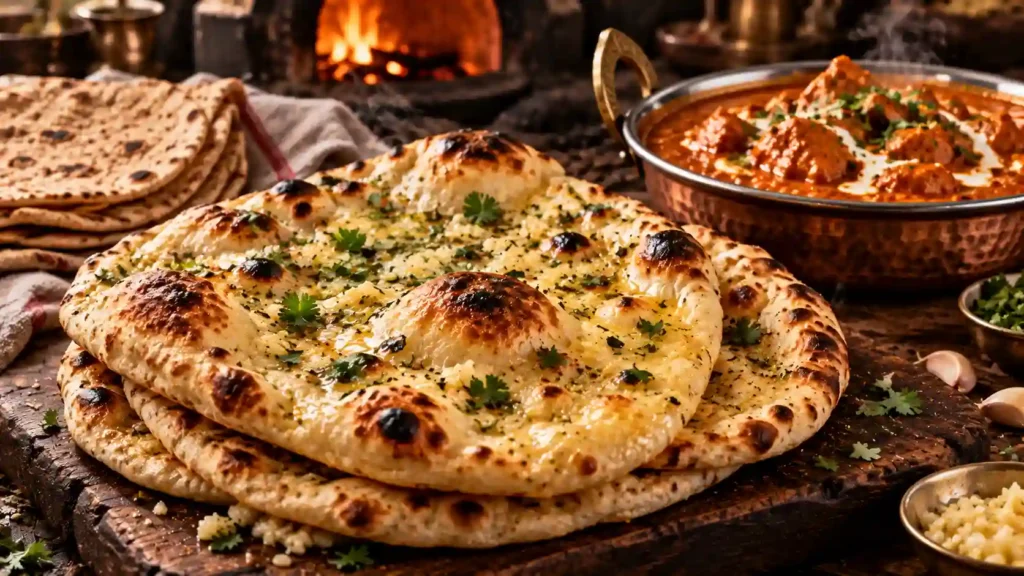
Baking a fresh, pillowy naan bread recipe from scratch is one of the most satisfying achievements in home cooking. Across South Asian dining culture, hot bread represents the true heartbeat of the communal table. Few sensory pleasures match tearing into an airy, blistered flatbread glistening with garlic butter and fresh herbs. The combination of smoky char, tender chew, and buttery softness elevates any meal into a royal banquet. At Gulf Lights, we deliver verified culinary guides to elevate everyday home dining across the United Arab Emirates and beyond.
Recreating authentic tandoori flatbreads does not require an expensive commercial clay oven. In fact, achieving restaurant-quality results depends on yeast fermentation chemistry, yogurt hydration, and clever skillet heat management. Furthermore, mastering fundamental breadmaking techniques allows you to prepare related daily staples like stone-ground roti and flaky parathas. Consequently, you can treat your loved ones to fresh, preservative-free artisanal breads affordably. Explore our complete culinary archive through our food category hub.
The Ancient Heritage of Flatbreads: From Harappa to Imperial Durbars
The cultural journey of leavened flatbreads reflects centuries of imperial trade, culinary refinement, and regional agricultural mastery. In ancient Persia, cooks baked flat disks of yeast dough on hot stone slabs called “nan.” Over centuries, Central Asian travelers introduced these baking customs to the Indian subcontinent.
During the sixteenth-century Mughal Empire, master bakers refined the dish inside imperial palace kitchens. Court records document that royals enjoyed fresh naan paired with spiced meats for breakfast banquets. You can review regional household grocery budgets and dining benchmarks in our guide to prices in dubai for food.
Moreover, similar flatbread traditions flourish across global food cultures. From Levantine pita breads to Arabian khubz, high-heat dough baking unites diverse civilizations across borders. You can explore traditional Gulf flatbread wraps and savory street meats in our guide to authentic shawarma in dubai. Fresh flatbread celebrates the timeless human joy of turning simple grain into nourishing comfort.
Yeast, Yogurt, and Ghee: The Food Chemistry of Leavened Dough
Creating sensational naan requires understanding the biological and chemical interactions of its core ingredients. Simple flour and water produce flatbreads, but true naan demands tenderness and volume.
First, active dry yeast acts as the living engine of your dough. As yeast cells consume natural flour sugars, they produce expanding carbon dioxide gas. This gas inflates pockets inside the gluten matrix, creating an airy crumb. Second, plain whole-milk yogurt introduces natural lactic acid.
Lactic acid relaxes tough gluten bonds, ensuring the baked bread stays remarkably tender rather than tough. Third, pure melted ghee or butter coats starch molecules, locking in moisture during high-heat baking. You can verify dairy baking measurements in our kitchen reference guide on 1 cup butter in grams. Understanding these biological dynamics transforms beginner home bakers into confident bread artisans.
Flour Selection: Maida vs Atta and Gluten Development
The final texture of your flatbread depends directly on the flour you select at the supermarket. Different wheat flours possess distinct protein concentrations and bran densities.
Traditional restaurant naan utilizes finely milled, refined white wheat flour known as maida. Maida contains roughly eleven percent protein, delivering significant elasticity and a pillowy, chewy crumb. Consequently, maida dough stretches effortlessly into signature teardrop shapes without tearing. You can compare European flour protein physics in our master guide to pizza dough recipe crusts.
In contrast, traditional daily flatbreads like roti and chapati require stone-ground whole wheat flour called atta. Atta contains the entire wheat grain, including the fibrous bran and nutrient-dense germ. The natural bran particles cut gluten strands, producing a softer, less elastic dough that rolls easily. Sourcing quality unbleached flours ensures your dough performs predictably under heat.
Replicating the Tandoor: The Cast-Iron Skillet and Water Inversion Technique
Commercial tandoor ovens reach scorching temperatures exceeding 480°C (900°F). Bakers slap raw dough directly against the vertical clay walls, where it clings tightly while baking in seconds.
Fortunately, you can replicate this clay oven magic using a simple cast-iron skillet and water. Roll your leavened dough into an oval shape, and brush the underside thoroughly with plain tap water. Place the wet side down into a smoking-hot cast-iron skillet. The water turns into steam instantly, creating a vacuum that glues the dough firmly to the hot iron.
As large bubbles inflate across the top, pick up the skillet by the handle and flip it completely upside down. Hold the skillet inverted directly over your open gas burner flame. The direct radiant heat blisters the top bubbles into dark, caramelized leopard spots while the bottom crisps against the iron. You can review corporate regulatory standards and safety practices in our legal and government services directory. This brilliant inversion technique duplicates authentic tandoor results indoors.
Mastering the Ultimate Garlic Naan Bread Recipe at Home
This master naan bread recipe delivers six pillowy, blistered flatbreads smothered in fragrant garlic butter in thirty minutes of active time. Follow these step-by-step instructions for guaranteed baking triumph.
- Activate the Yeast: In a mixing bowl, combine half a cup of lukewarm water (40°C / 105°F), one teaspoon of sugar, and one teaspoon of active dry yeast. Rest for five minutes until frothy.
- Mix the Wet Ingredients: Whisk in half a cup of plain whole-milk yogurt, two tablespoons of melted ghee, and one teaspoon of kosher salt.
- Form the Dough: Add two and a half cups of unbleached all-purpose flour. Mix with a wooden spoon until a soft, shaggy dough forms.
- Knead to Elasticity: Knead on a lightly floured countertop for eight minutes until the dough turns smooth, supple, and slightly tacky.
- Proof Until Doubled: Place the dough in an oiled bowl, cover tightly with a damp towel, and let rise for ninety minutes until doubled in size.
- Portion and Shape: Divide the dough into six equal balls. Roll each ball on a floured surface into a teardrop shape measuring five millimeters thick.
- Add Garlic and Herbs: Press one tablespoon of minced garlic and chopped fresh cilantro firmly into the top surface of the rolled dough using your rolling pin.
- The Water Baste: Flip the dough over and brush the back surface generously with cold water.
- Cook and Invert: Slap the wet side into a smoking-hot cast-iron skillet. Cook for one minute until large bubbles inflate. Invert the skillet directly over the open flame for forty seconds until bubbles char beautifully.
- Brush with Ghee: Flip the skillet upright, remove the naan with a spatula, and brush generously with melted garlic butter.
Stack warm breads inside a clean kitchen towel to keep them soft and pliable. Pair this comforting classic with royal North Indian curries from our butter chicken recipe collection.
Whole Wheat Simplicity: Authentic Roti Recipe and Chapati Recipe
While leavened naan represents festive indulgence, an authentic roti recipe serves as the wholesome daily fuel of millions. Roti, also known as chapati, requires only stone-ground atta flour, warm water, and a pinch of salt.
To master an authentic chapati recipe, knead the atta flour with warm water for at least five minutes until soft and pliable. The resting period (autolyse) is critical; letting the dough rest covered for twenty minutes allows wheat starches to hydrate fully. Divide into small golf-ball-sized portions and roll each portion into an ultra-thin, round disk using a wooden rolling pin.
Cook the rolled chapati on a dry heavy cast-iron tawa over medium-high heat for thirty seconds until tiny bubbles appear. Flip the bread, cook the reverse side for forty seconds, and then transfer it directly onto an open gas flame. The intense heat vaporizes internal trapped moisture into steam, causing the chapati to inflate into a magnificent, spherical balloon. Brush lightly with pure ghee before serving. If you love burger patties, explore our skillet techniques in our smash burger recipe guide. Simple whole-wheat roti delivers pure, wholesome domestic comfort.
Puffing Dynamics: The Food Science of the Direct-Flame Phulka
Watching a flat disc of dough inflate instantly over an open flame into a delicate phulka is one of cooking’s greatest spectacles. This rapid ballooning is governed by thermodynamic physics.
When you cook the first side of the roti on the hot tawa, a thin, flexible skin forms. Flipping the bread creates a second sealed skin on the reverse side. Crucially, raw moist dough remains trapped between these two cooked outer layers.
When the bread moves directly onto an open flame, the intense 1,000°C heat superheats that trapped internal water instantly into steam. Water expands over 1,600 times its liquid volume when converting into steam. Because the two outer skins form a sealed envelope, the expanding steam forces the layers apart, puffing the bread into a hollow sphere. The hot steam bakes the raw interior in seconds, leaving the bread feather-light and soft.
Flaky Layered Indulgence: Traditional Lachedar Paratha Recipe
When you crave crispy, rich textures alongside curries, a traditional paratha recipe delivers layered pastry luxury. Parathas utilize a lamination technique similar to European croissants.
To craft a magnificent lachha (layered) paratha, roll a ball of whole-wheat dough into a thin circle. Brush the entire surface generously with melted ghee and dust lightly with dry flour. The flour and fat layer creates a physical barrier between dough folds, preventing layers from fusing together during cooking.
Next, fold the dough accordion-style into alternating pleats, and roll the pleated strip into a tight coil like a cinnamon roll. Rest the coiled dough for ten minutes, then gently roll it flat once more. Pan-fry the paratha on a hot tawa with generous ghee, pressing the edges gently with a spatula. The ghee fries the dough into dozens of crispy, golden rings that flake apart when gently crushed between your palms. You can explore layered pasta bakes in our celebrated best lasagna recipe. Flaky parathas provide rich, decadent crunch.
Spiced Potato Stuffed Royalty: Authentic Aloo Paratha Recipe
Hailing from the rustic agricultural heartlands of Punjab, a comforting aloo paratha recipe represents the undisputed king of weekend breakfasts. This hearty flatbread features a spiced mashed potato filling sealed securely inside whole-wheat dough.
The secret to successful stuffed parathas lies in managing the moisture of your filling. Boil russet potatoes, peel, and cool completely before mashing. Wet, warm potatoes release steam that tears delicate dough during rolling. Mix the cold mashed potatoes with finely minced green chilies, grated ginger, fresh cilantro, cumin powder, amchur (dried mango powder), and garam masala.
Encase a generous ball of spiced potato filling inside your dough, pleating the edges tightly like a dumpling. Roll gently from the center outward, applying light, even pressure so the filling spreads uniformly to the very edges without bursting through. Fry on a hot tawa with generous butter until both sides display golden-brown blistered spots. Serve hot alongside cold plain yogurt, spicy mango pickle, and a knob of white butter. If you enjoy slow-simmered beef comfort, explore our homestyle beef stew recipe guide. Aloo paratha is the ultimate comforting breakfast feast.
Deep-Fried Golden Clouds: Crispy Bhatura Recipe for Chana
Alongside tandoori breads, deep-fried puffed bhatura recipe breads hold an honored place in Punjabi street food culture. Bhature are famous for their giant size, hollow interior, and delightfully crisp golden shell.
Bhatura dough incorporates all-purpose flour, fine semolina (sooji), yogurt, and a pinch of baking powder. Semolina is essential because it reinforces the dough’s cellular structure, ensuring the bread remains crisp and puffed long after leaving the oil. Knead the dough with warm water, and let it ferment at room temperature for two hours.
Roll the dough into thick ovals and slide them gently into screaming-hot 190°C (375°F) oil. Press down lightly on the center of the dough with a slotted spoon; the pressure forces hot oil over the surface, causing the bread to inflate into a golden balloon within ten seconds. Flip, fry for thirty seconds, and drain on paper towels. Serve immediately with spicy chickpea curry from our authentic chana masala recipe guide. Crispy bhatura delivers dramatic street dining luxury.
Kneading, Hydration, and Rest Periods: Preventing Tough Breads
The single most common mistake home cooks make when preparing flatbreads is working with stiff, under-hydrated dough. Understanding dough mechanics ensures your flatbreads remain soft and pliable.
Flatbread doughs require generous hydration, typically between sixty-five and seventy percent water relative to flour weight. If dough feels stiff and dry during kneading, your baked breads will turn dense and hard like cardboard. Add water gradually until the dough feels soft, supple, and slightly tacky to the touch.
Furthermore, never skip the mandatory resting period. As you knead dough, mechanical friction stretches gluten proteins into tight, rigid coils. If you try to roll dough immediately after kneading, it will spring back like an elastic band. Resting the dough covered for twenty to thirty minutes allows the gluten network to relax completely. Relaxed dough rolls out effortlessly into paper-thin circles without contracting.
Accompaniments and Pairings: Curries, Dals, and Smoky Kebabs
Because South Asian flatbreads are designed to act as edible utensils, thoughtful pairings complete the celebratory dining experience. Warm breads capture rich sauces and wrap spiced meats effortlessly.
Piping hot garlic naan is the natural partner for velvety curries and rich lentil stews. Pair your freshly baked breads with smoky appetizers from our authentic tandoori chicken recipe collection. In addition, serving warm roti alongside whole roasted poultry from our roast chicken recipe guide creates delightful fusion dining.
If you crave crisp greens, pair your feast with a romaine salad tossed with our zesty caesar salad recipe dressing. For festive royal feasts, explore our celebrated Hyderabadi dishes in our authentic biryani recipe guide. In addition, explore grand traditional meat stews in our comprehensive guide to the national dish of uae. Harmonious pairings turn everyday cooking into an unforgettable banquet.
Nutritional Balance: Whole Grains, Satiety, and Healthy Fats
Nutritionists celebrate traditional whole-wheat flatbreads as wholesome cornerstones of a balanced, fiber-rich lifestyle. Savoring well-prepared homemade breads delivers clean, sustained vitality.
Stone-ground whole-wheat rotis provide complex carbohydrates, dietary fiber, magnesium, and essential B vitamins. The soluble and insoluble fiber slows digestion, stabilizing blood sugar levels and promoting prolonged feelings of fullness. Furthermore, pure grass-fed ghee delivers fat-soluble vitamins A, D, and E alongside conjugated linoleic acid.
To keep everyday meals balanced, enjoy whole-wheat rotis as your daily staple while reserving rich white flour naans for celebratory weekends. Discover how whole-food lifestyle frameworks support lifelong vitality in our comprehensive guide to a balanced diet. In addition, discover nutrient-dense natural superfoods in our analysis of dates benefits. Mindful grain choices ensure bread dining supports long-term wellness.
Make-Ahead Dough, Freezing, and Reheating Instructions
Preparing flatbread dough in advance streamlines weeknight family meals. Fortunately, both leavened and unleavened doughs freeze with extraordinary structural integrity.
You can store kneaded roti or naan dough in an airtight container in the refrigerator for up to three days. Brush the surface lightly with oil to prevent a hard crust from forming. In addition, fully cooked naans and rotis freeze exceptionally well. Let cooked flatbreads cool completely, stack them with sheets of parchment paper in between, and seal inside heavy freezer bags for up to three months.
When reheating frozen flatbreads, never use a microwave without moisture, as dry microwave heat turns bread tough and rubbery. Instead, reheat frozen breads directly on a dry hot skillet for sixty seconds per side, or bake in a 190°C (375°F) oven for five minutes. Brush with a drop of fresh melted butter to restore original softness. If you enjoy slow-cooked shredded meats, check our classic pulled pork recipe. Reheating properly ensures make-ahead meals taste freshly baked.
Commercial Hospitality Careers in Bakery and Tandoor Stations
Mastering tandoor baking, artisanal dough hydration, and high-speed flatbread fabrication are elite culinary competencies evaluated across the global hospitality sector. In luxury international hotel chains, banquet halls, and specialized Indian restaurants, tandoor bread masters command immense respect.
Talented naan masters, line cooks, and kitchen managers enjoy robust recruitment demand across major gastronomic hubs like Dubai. If you are exploring professional vocational paths in gastronomy, review our comprehensive guide on hospitality tourism jobs. In addition, executive chefs and restaurant operations directors command prestigious compensation packages. Explore executive salary scales in our guide to the highest paying jobs.
Furthermore, restaurant networks rely on temperature-controlled warehousing to store artisanal flours, pure ghee, and dairy safely. Candidates interested in supply logistics can explore opportunities in our guide on dubai warehouse logistics jobs. Dedicated culinary staff can advance into corporate leadership roles through strategic career change growth. Many international culinary talents relocate using our guide to work abroad. You can study statutory labor standards in our analysis of the labour law uae.
Frequently Asked Questions About Naan Bread and Flatbreads
Can I make authentic naan bread using a non-stick skillet?
No, you cannot use a non-stick Teflon skillet for the water inversion technique. Wet dough will not stick to a non-stick coating, causing the bread to slide off into the flame when inverted. Always use an un-enameled cast-iron or heavy carbon-steel skillet.
Why is my homemade naan bread tough and chewy instead of soft?
Naan turns tough if the dough lacks moisture, if it is over-baked at low heat, or if yogurt is omitted. Ensure your dough is soft and well-hydrated, use full-fat yogurt, and cook over screaming-hot heat for under two minutes.
Can I make naan bread without yeast?
Yes, you can make instant no-yeast naan using baking powder, baking soda, and whole-milk yogurt. The acid in yogurt reacts with baking soda to produce carbon dioxide bubbles, although yeasted dough produces superior flavor and stretch.
How do I keep cooked flatbreads warm while cooking the rest of the batch?
Wrap freshly cooked breads inside a clean, dry cotton kitchen towel and place them inside an insulated tortilla warmer or covered container. The trapped ambient steam keeps the breads soft, warm, and pliable for thirty minutes.
Mastering this classic naan bread recipe gives you the culinary confidence to prepare fresh, pillowy, and restaurant-quality artisanal flatbreads right in your own kitchen. By understanding flour hydration, harnessing the skillet inversion technique, and brushing with fragrant garlic butter, you can create extraordinary culinary feasts that bring loved ones together. For additional culinary tutorials, kitchen advice, and verified lifestyle guides, connect with our specialist team via the Gulf Lights contact page. Discover more inspirational cooking articles on the Gulf Lights blog.