Nothing comforts the soul on a cool evening quite like an authentic, slow-simmered beef stew recipe. Across international culinary traditions, braising beef slowly in a rich, aromatic broth represents the pinnacle of home cooking. The gentle bubbling transforms tough butcher cuts into succulent, melt-in-your-mouth morsels. At Gulf Lights, we deliver verified culinary guides to help you create memorable dining triumphs in your home kitchen.
Cooking magnificent beef stews does not require professional culinary school training. In fact, achieving restaurant-worthy depth of flavor depends on simple meat science, caramelization, and patient heat regulation. Furthermore, slow braising stretches economical beef cuts into generous family banquets. Consequently, you can feed an entire household affordably while filling your home with mouthwatering aromas. Explore our complete gastronomic series through our food category hub.
The Science of Braising: Transforming Tough Cuts into Velvet
To cook extraordinary beef stews, you must first understand the biological structure of working beef muscles. Lean, tender cuts like tenderloin perform poorly in slow-cooked stews. Because tenderloin contains minimal connective tissue, prolonged simmering leaves it dry and stringy.
In contrast, hardworking muscle cuts contain dense webs of tough connective collagen. When cooked over gentle, low heat between 70°C and 85°C (160°F to 185°F), this rigid collagen undergoes a miraculous transformation. It slowly melts into luscious, liquid gelatin. This natural gelatin coats muscle fibers, keeping the beef exceptionally juicy and succulent.
Furthermore, dissolved gelatin thickens the surrounding braising liquid, creating a naturally glossy, velvety gravy. You can review regional household grocery budgets and dining benchmarks in our guide to prices in dubai for food. If you prefer high-heat skillet steaks on weekends, explore our classic steak recipes. However, for deep comfort, slow braising remains undefeated.
Selecting the Best Beef: Chuck Roast, Brisket, and Shank
The foundation of every memorable stew begins with thoughtful meat selection at the butcher counter. Selecting the correct cut guarantees tender, rich results every single time.
First, boneless beef chuck roast represents the undisputed king of stewing beef. Cut from the steer’s shoulder, chuck contains an ideal balance of intramuscular fat, collagen, and robust beef flavor. Avoid pre-cut “stew meat” packages in supermarkets, as these often contain scraps from different cuts that cook unevenly. Instead, purchase a whole chuck roast and dice it into uniform four-centimeter cubes at home.
Second, beef brisket provides bold, mineral-rich flavor and succulent shreddable fibers. Third, bone-in beef shanks or oxtails introduce gelatinous marrow bones that enrich the broth enormously. You can compare ground beef butchery dynamics in our guide to ground beef recipes. Sourcing quality chuck ensures every bite melts effortlessly on your tongue.
Mastering the Classic Old-Fashioned Beef Stew Recipe
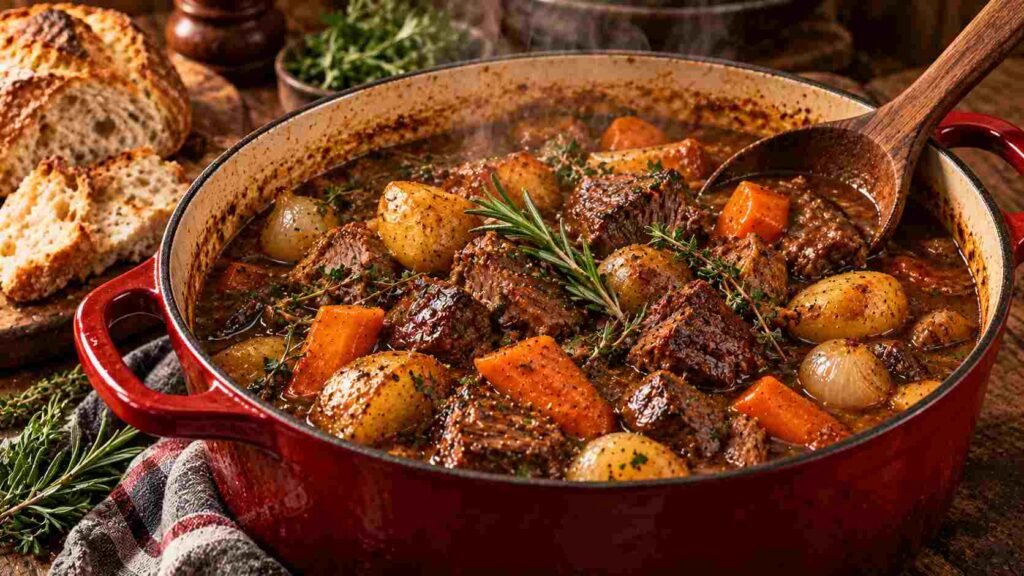
This master beef stew recipe delivers deeply caramelized beef, tender root vegetables, and a glossy, herb-scented gravy. Follow these detailed steps for guaranteed dining perfection.
- Prep and Dry the Meat: Pat 1.2 kilograms of chuck roast cubes thoroughly dry with paper towels. Season generously with kosher salt and freshly cracked black pepper.
- Sear in Batches: Heat two tablespoons of olive oil in a heavy Dutch oven over medium-high heat. Sear the beef cubes in uncrowded batches for three minutes per side until deeply browned. Transfer the seared beef to a plate.
- Sauté Aromatics: Add one chopped yellow onion and two sliced carrots to the rendered pan fat. Cook for five minutes until lightly caramelized. Add four minced garlic cloves and two tablespoons of tomato paste, cooking for two minutes.
- Deglaze the Fond: Pour in one cup of beef bone broth, scraping up all flavorful browned bits stuck to the bottom of the Dutch oven.
- Simmer Gently: Return the browned beef and resting juices to the pot. Add three cups of beef broth, two fresh thyme sprigs, two fresh rosemary sprigs, and two bay leaves.
- Braise in the Oven: Cover with a tight-fitting lid and transfer to a preheated oven at 160°C (325°F) for two hours.
- Add Root Vegetables: Stir in 500 grams of halved baby potatoes and two thick-cut carrots. Cover and braise for an additional forty-five minutes until vegetables and beef are fork-tender.
Discard the herb sprigs and bay leaves before serving. Pair this comforting classic with artisanal bread from our naan bread recipe collection.
The Power of the Fond: Browned Bits and Pan Deglazing
The secret to an intensely savory stew lies in the bottom of your searing pan. When beef sears over high heat, proteins caramelize and stick to the hot iron surface. French chefs call these crusty browned bits the “fond.”
Never wash away or burn this golden residue. The fond contains concentrated glutamates and savory flavor compounds generated by the Maillard reaction. Pouring liquid into the hot pan dissolves these caramelized proteins, lifting them into the braising liquid. Deglazing captures essential depth that water or plain stock alone cannot duplicate.
Furthermore, adding a spoonful of tomato paste before deglazing amplifies the savory umami punch. Cooking tomato paste until it turns brick-red caramelizes natural sugars, eliminating raw acidity. You can explore foundational Italian tomato reductions in our homemade spaghetti sauce guide. Proper pan deglazing turns a good stew into a culinary masterpiece.
Effortless Weeknight Comfort: Slow Cooker Beef Stew
Modern family schedules often prevent cooks from tending a stovetop pot for three hours. Fortunately, preparing a rich slow cooker beef stew allows you to achieve melting tenderness while you work.
The key to extraordinary slow cooker stew is taking ten minutes to sear the beef cubes in a hot skillet first. Raw beef added directly into a slow cooker will simmer without developing roasted flavor compounds. After searing, transfer the browned beef, aromatics, potatoes, carrots, and broth into your slow cooker vessel.
Set the slow cooker to Low for seven to eight hours, or High for four to five hours. The enclosed, low-temperature environment breaks down collagen gradually without evaporating liquid. When you return home, your kitchen will smell like an elite country bistro. Compare this hands-off approach with our rapid multicooker recipes in our guide to instant pot chicken recipes. Slow cookers bring gourmet braising into busy modern lives.
Sunday Dinner Royalty: The Ultimate Pot Roast Recipe
While beef stew features bite-sized cubes, a traditional pot roast recipe braises a large whole roast until it shreds with a fork. Serving a majestic pot roast surrounded by glazed vegetables represents the gold standard of Sunday family dinners.
Sear a whole two-kilogram boneless chuck roast on all sides until a dark mahogany crust forms. Nest the browned roast over a thick bed of halved onions, whole carrots, and celery stalks inside a roasting pan. Pour seasoned beef broth and Worcestershire sauce around the base of the meat, keeping the top crust exposed.
Cover tightly with heavy foil and roast at 150°C (300°F) for three and a half hours. The meat absorbs vegetable aromatics while rendering internal fat into the braising jus. Shred the tender meat with two forks and spoon the glistening pan gravy over the top. If you enjoy poultry comfort stews, explore our homestyle chicken and dumplings recipe. A classic pot roast brings warmth and joy to any weekend table.
Burgundian Luxury: Authentic Beef Bourguignon Recipe
Hailing from the historic wine regions of eastern France, classic beef bourguignon recipe elevates peasant stew into aristocratic dining. Popularized globally by legendary chefs, this iconic dish incorporates pearl onions, sautéed mushrooms, and fragrant herbs.
Begin by crisping diced beef bacon or cured beef strips in a heavy Dutch oven, then sear beef chuck cubes in the rendered fat. Sauté sliced shallots and garlic, then deglaze the pan with rich beef stock and non-alcoholic grape juice or broth. Braise gently in the oven for two hours until the meat yields to gentle pressure.
Meanwhile, sauté cremini mushrooms and sweet pearl onions separately in butter until deeply browned and caramelized. You can verify dairy baking measurements in our kitchen reference guide on 1 cup butter in grams. Fold the sautéed mushrooms and onions into the stew during the final twenty minutes of cooking. This two-stage cooking ensures the mushrooms stay firm and flavorful rather than dissolving into the sauce.
Fall-Off-the-Bone Elegance: Braised Beef Short Ribs Recipe
When cooking for an upscale dinner party, serving decadent braised short ribs creates an unforgettable impression. Beef short ribs contain rich layers of marbled meat wrapped around thick rib bones.
An exceptional beef short ribs recipe requires patient cooking. Sear the bone-in ribs over high heat until all sides crackle with brown crust. Next, braise the ribs in a rich broth infused with rosemary, thyme, garlic, and tomato purée for three hours at 150°C (300°F).
As the meat braises, the marrow melts from the bone, creating an extraordinarily rich, unctuous sauce. The tender meat pulls away from the bone with absolute ease. Serve a single bone-in rib over a cloud of creamy mashed potatoes or yellow polenta. If you enjoy quick weeknight chicken breasts, compare this slow indulgence with our zesty chicken breast recipes. Braised short ribs deliver true fine-dining grandeur at home.
Quick Skillet Comfort: Creamy Beef Stroganoff Recipe
Not all tender beef dishes require three hours of patient oven braising. Originating in nineteenth-century Tsarist Russia, a classic beef stroganoff recipe delivers luxurious, velvety comfort in just thirty minutes.
Stroganoff utilizes tender beef tenderloin or sirloin sliced into thin strips. Flash-sear the beef strips in hot butter for two minutes until browned, then immediately remove them to avoid overcooking. In the remaining pan butter, sauté sliced button mushrooms and minced shallots until golden.
Deglaze the skillet with beef broth, Dijon mustard, and Worcestershire sauce, simmering until slightly reduced. Remove from heat and stir in rich sour cream or Greek yogurt to create a tangy, creamy sauce. Return the seared beef strips to the sauce for one minute. Serve immediately over steaming egg noodles garnished with fresh dill. You can compare this quick sear with our smash patties in our smash burger recipe guide.
Irish Tradition: Tender Corned Beef and Cabbage
Celebrated during springtime festivities worldwide, traditional corned beef and cabbage represents the heart of Irish-American heritage cooking. This comforting boiled meal features cured beef brisket simmered with sweet cabbage wedges, carrots, and potatoes.
Corned beef gets its name from large salt grains (“corns”) historically used to cure the meat. Submerge the cured brisket in a large stockpot filled with water, a cinnamon stick, coriander seeds, mustard seeds, and bay leaves. Simmer gently over low heat for three hours until exceptionally tender.
During the final thirty minutes, add halved red potatoes, whole carrots, and thick green cabbage wedges. The vegetables simmer in the spiced beef broth, absorbing incredible flavor without turning mushy. Slice the corned beef across the grain and serve alongside whole-grain mustard. Explore grand Arabian meat traditions in our guide to the national dish of uae.
Gravy Science: How to Thicken Stew to Perfection
A watery, thin stew feels unsatisfying, while a gluey, pasty broth ruins delicate meat textures. Achieving the ideal glossy, spoon-coating consistency requires understanding starch thickening techniques.
The traditional method involves dusting the raw beef cubes with all-purpose flour before searing. The flour roasts in the hot pan fat, forming an integrated roux that thickens the broth naturally as it simmers. Alternatively, you can whisk a cornstarch slurry (equal parts cornstarch and cold water) into the simmering broth five minutes before serving.
Cornstarch yields a glossy, semi-translucent sheen favored in modern bistro kitchens. Another chef secret is mashing two cooked potato chunks directly into the gravy using a fork. The natural potato starches thicken the sauce smoothly without altering delicate flavors. If you enjoy crisp battered coatings, compare these starches with our double-dredged fried chicken recipe.
The Golden Rule: Why Beef Stew Tastes Better on Day Two
Experienced cooks know that beef stew is one of the rare culinary creations that tastes significantly better the following day. This improvement is not your imagination; it is verified food chemistry.
As hot stew cools in the refrigerator overnight, complex flavor molecules continue to interact and marry. Sharp acidity from tomatoes and garlic softens, while gelatinous broth penetrates deeper into the cooked meat fibers. Furthermore, starches from potatoes stabilize, creating an even more velvety texture upon reheating.
Equally beneficial, chilling stew allows rendered beef fat to rise to the surface and solidify into a firm white layer. You can effortlessly lift away this excess fat with a spoon before reheating, creating a cleaner, lighter dish. Always prepare your beef stew twenty-four hours in advance when entertaining guests. Reheat gently over medium-low heat on the stovetop for effortless dinner parties.
Wholesome Nutrition: Bioavailable Iron and Natural Collagen
Slow-braised beef dishes provide dense, wholesome nutrition that fuels athletic recovery and metabolic vitality. Savoring well-cooked beef stew delivers vital nutrients in their most absorbable forms.
Slow-simmered beef supplies bioavailable heme iron, zinc, and vitamin B12, supporting red blood cell formation and cognitive focus. Furthermore, melting connective tissue enriches the broth with natural collagen and gelatin. Dietary collagen supports joint health, gut integrity, and skin elasticity naturally.
Pairing beef stews with fiber-rich carrots, celery, and sweet root vegetables creates a nutritionally complete meal. Learn how whole-food lifestyle frameworks support lifelong vitality in our comprehensive guide to a balanced diet. In addition, discover nutrient-dense natural superfoods in our analysis of dates benefits. Wholesome ingredients ensure comfort dining aligns with long-term wellness.
Side Dish Symphony: Fluffy Mash, Polenta, and Fresh Salads
Because beef stew is rich and intensely savory, selecting complementary side dishes elevates the complete dining experience. Soft starches absorb rich gravy, while acidic greens refresh the palate.
Buttery Yukon Gold mashed potatoes remain the timeless partner for beef stew. Alternatively, creamy parmesan polenta or buttered egg noodles provide luxurious bases for braised short ribs. For a refreshing contrast, serve a crisp romaine salad dressed with our zesty caesar salad recipe dressing.
If you crave bread for dipping, warm sourdough or crusty baguettes capture every drop of velvety gravy. For royal rice pairings, explore our celebrated Indian rice dishes in our authentic biryani recipe guide. Thoughtful side pairings ensure your family feast satisfies every craving.
Commercial Hospitality Careers in Banquet and Hotel Kitchens
Mastering slow braising, volume stew production, and meat butchery are foundational competencies evaluated across the global hospitality sector. In luxury hotels, cruise ships, and banquet operations, culinary teams braise hundreds of portions simultaneously with strict temperature consistency.
Talented line cooks, sauce specialists, and kitchen supervisors enjoy strong recruitment demand across major gastronomic hubs. If you are exploring vocational culinary paths, review our comprehensive guide on hospitality tourism jobs. In addition, executive chefs and culinary directors command prestigious compensation packages. Explore executive salary scales in our guide to the highest paying jobs.
Furthermore, restaurant networks rely on temperature-controlled warehousing to store halal beef chuck and fresh produce safely. Candidates interested in supply logistics can explore opportunities in our guide on dubai warehouse logistics jobs. Dedicated culinary professionals can achieve corporate leadership roles through strategic career change growth. Many international culinary talents relocate using our guide to work abroad. You can study statutory labor standards in our analysis of the labour law uae.
Frequently Asked Questions About Beef Stew
Why is my stewing beef tough and chewy?
Stewing beef turns tough when it has not cooked long enough to melt its connective collagen, or when boiled at too high a temperature. Simmer gently over low heat (160°C / 325°F in the oven) for at least two to two and a half hours until fork-tender.
Should I brown the beef before adding it to the stew?
Yes, searing the beef in a hot Dutch oven triggers the Maillard reaction, developing deep savory crusts and fond that enrich the entire stew broth. Skipping searing produces pale, flavorless meat.
Can I freeze cooked beef stew?
Yes, beef stew freezes exceptionally well in airtight containers for up to three months. However, note that boiled potatoes can become slightly grainy upon thawing. You can freeze the stew without potatoes and add freshly cooked potatoes when reheating.
What is the best liquid to use for beef stew broth?
High-quality beef bone broth combined with a splash of tomato purée and Worcestershire sauce creates the richest base. Broth delivers deep gelatinous body that water cannot replicate.
Mastering this classic beef stew recipe empowers you to turn humble butcher cuts into rich, comforting feasts that bring loved ones together. By choosing well-marbled chuck, honoring the power of pan deglazing, and practicing patient low-heat braising, you can create culinary masterpieces right in your home kitchen. For additional culinary tutorials, kitchen advice, and verified lifestyle guides, connect with our specialist team via the Gulf Lights contact page. Discover more inspirational cooking articles on the Gulf Lights blog.