
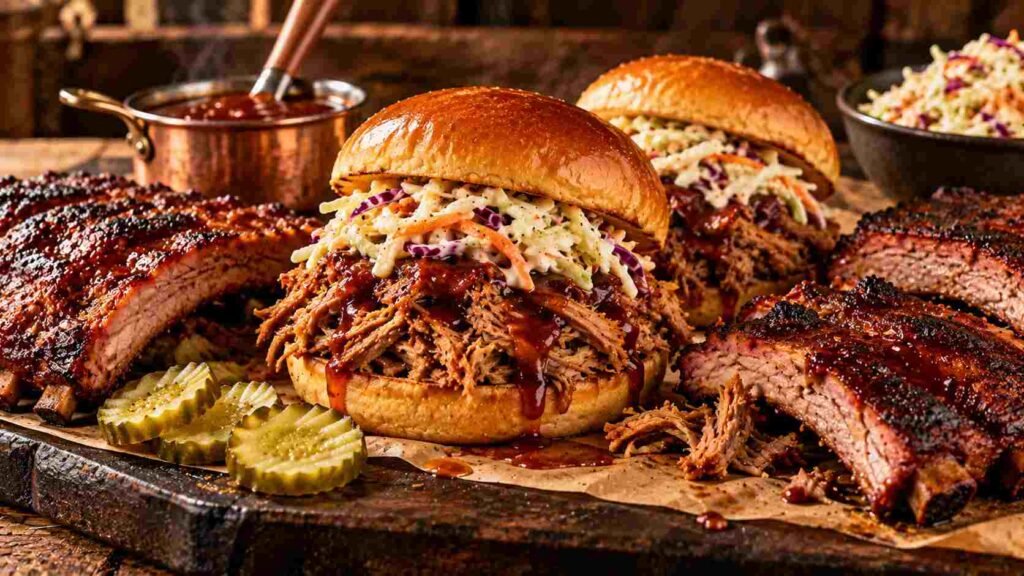
Few dishes command greater respect in outdoor barbecue traditions than a tender, succulent pulled pork recipe. Across regional smokehouse capitals, slow-cooked shredded meat represents the crown jewel of social gatherings. The contrast between sweet caramelized outer bark and meltingly soft internal meat creates pure culinary joy. At Gulf Lights, we deliver verified culinary guides to help you master authentic barbecue techniques in your own kitchen.
Mastering authentic barbecue does not require a commercial outdoor pit smoker. In fact, understanding meat anatomy, collagen breakdown, and low-temperature heat regulation guarantees extraordinary results indoors. Furthermore, slow-cooked barbecue feeds large crowds with remarkable ease and affordability. Consequently, you can host memorable weekend feasts without spending entire days standing over hot coals. Explore our complete culinary archive through our food category hub.
The Heritage of Low-and-Slow Barbecue Traditions
Barbecue is far more than an ordinary cooking technique. In reality, it represents a centuries-old cultural tradition of patience, community, and resourcefulness. Indigenous cooking methods combined with European curing customs to create modern pitmaster traditions.
Historically, cooks used smoke and slow heat to transform tough, fibrous cuts into tender feasts. Because working animal shoulders contain dense connective tissues, rapid high-heat grilling makes them tough and unpalatable. In contrast, gentle low heat slowly renders tough tissues into luscious gelatin over several hours. You can review regional household budget planning and grocery shopping tips in our guide to prices in dubai for food.
Moreover, similar low-and-slow traditions exist across global food cultures. From Mexican carnitas to slow-roasted Arabian lamb, patient braising unites food lovers worldwide. You can explore grand traditional meat preparations in our comprehensive guide to the national dish of uae. True barbecue celebrates the transformative power of time, seasoning, and gentle heat.
Anatomy of the Cut: Pork Butt vs Pork Shoulder
Before firing up your cooker, you must select the appropriate cut from the butcher counter. Navigating butcher terminology ensures you buy the ideal meat for shredding.
Despite its confusing name, the “Boston butt” does not come from the animal’s rear. Instead, it comes from the upper shoulder of the animal, surrounding the shoulder blade bone. Boston butt contains abundant intramuscular fat and collagen, making it the premier choice for tender pulled meat. In contrast, the “picnic roast” comes from the lower shoulder section closer to the leg.
The picnic cut contains more bone, tighter muscle grain, and a thick skin cap. While flavorful, it requires longer cooking to achieve comparable tenderness. Therefore, always choose a well-marbled, bone-in Boston butt weighing between three and four kilograms. If you enjoy whole muscle cuts with high-heat sears, check our classic steak recipes. However, for shreddable tenderness, the upper shoulder cut remains non-negotiable.
The Science of Low and Slow: Collagen, Bark, and Fat Rendering
Creating sensational barbecue relies on thermodynamic food science. When cooking dense shoulder meat, two critical transformations must occur simultaneously.
First, tough connective collagen begins melting into liquid gelatin once internal meat temperatures exceed 75°C (167°F). This natural gelatin coats muscle strands, keeping the meat juicy and allowing it to pull apart with a gentle tug. Second, surface seasonings interact with meat proteins and heat to form the prized exterior “bark.” Bark is the dark, chewy, deeply flavorful crust that barbecue fans cherish.
Furthermore, fat rendering provides continuous internal basting throughout the cooking cycle. As the fat cap melts slowly over low heat, it trickles through the meat fibers, carrying seasoning deep into the muscle. You can compare ground beef butchery dynamics in our guide to ground beef recipes. Understanding collagen conversion ensures your meat emerges exceptionally moist every time.
The Signature Dry Rub: Salt, Sugar, and Aromatic Spices
A great barbecue dish requires an assertive spice rub to build magnificent exterior bark. The dry rub provides flavor contrast against rich, savory meat.
A classic master barbecue rub combines brown sugar, kosher salt, smoked paprika, black pepper, garlic powder, onion powder, and ground cumin. Brown sugar is vital because it caramelizes slowly under gentle heat, creating the signature mahogany color. In addition, smoked paprika introduces wood-smoked aroma, while black pepper adds sharp, warm contrast. You can verify baking measurements in our kitchen reference guide on 1 cup butter in grams.
Always coat the meat in a thin layer of yellow mustard before applying the dry rub. Do not worry about tasting mustard later, as the vinegar evaporates during cooking. The mustard acts merely as a binder, helping the thick layer of spices adhere tightly to the meat. Generous seasoning creates an unforgettable, crunchy bark.
Mastering the Ultimate Pulled Pork Recipe at Home
This master recipe produces deeply seasoned, succulent shredded meat bathed in a tangy barbecue glaze. Follow these step-by-step instructions for guaranteed dining perfection.
- Trim and Season: Trim excess surface fat from a 3.5-kilogram bone-in shoulder, leaving a thin half-centimeter fat cap. Rub with two tablespoons of yellow mustard, then coat generously with your spice rub.
- Rest for Absorption: Let the seasoned meat rest at room temperature for forty-five minutes so the salt draws out surface moisture and dissolves the sugar.
- Preheat the Cooker: Set your oven or smoker to a steady 120°C (250°F). If using an oven, place the meat on a wire rack set inside a deep roasting pan.
- Cook Undisturbed: Roast uncovered for five to six hours until a dark, mahogany-brown bark forms across the entire surface.
- The Texas Crutch: Once the internal temperature reaches 74°C (165°F), wrap the meat tightly in two layers of heavy-duty aluminum foil with half a cup of apple cider vinegar.
- Finish Gently: Return the wrapped meat to the oven and cook for another three hours until an instant-read thermometer slides into the center with zero resistance, reading 95°C (203°F).
- Rest and Shred: Let the wrapped roast rest undisturbed inside a cooler or warm oven for one hour. Unwrap, remove the clean shoulder blade bone, and shred the tender meat with two forks.
Toss the shredded meat with warm pan juices and your favorite sauce. Pair this classic comfort staple with artisanal flatbreads from our naan bread recipe collection.
Effortless Weekday Magic: Slow Cooker Pulled Pork
When you need dinner ready after a long workday, a reliable slow cooker pulled pork delivers outstanding convenience. Multicookers and slow cookers trap moisture efficiently, making it virtually impossible to dry out the meat.
Place a seasoned shoulder roast directly into your slow cooker crock over a bed of sliced yellow onions. Pour in half a cup of apple cider vinegar, two tablespoons of Worcestershire sauce, and a splash of barbecue sauce. Set the appliance to Low for eight to ten hours. The gentle, enclosed environment slowly breaks down tough collagen while you attend to your daily tasks.
When cooking concludes, lift the meat onto a cutting board and shred it effortlessly. Skim excess fat from the liquid remaining in the crock, then stir the flavorful jus back into the warm shredded meat. Compare this convenient approach with our rapid multicooker recipes in our guide to instant pot chicken recipes. Slow cookers bring gourmet comfort into busy modern households.
Crafting Homemade BBQ Sauce Recipe: Sweet, Tangy, and Smoky
While tender meat is the foundation of barbecue, a homemade bbq sauce recipe provides the perfect sweet and tangy finishing touch. Commercial bottled sauces often rely on high-fructose corn syrup and artificial flavorings.
In contrast, crafting sauce at home gives you complete control over balance and sweetness. In a medium saucepan, combine two cups of tomato purée, half a cup of apple cider vinegar, a quarter cup of dark molasses, brown sugar, Worcestershire sauce, smoked paprika, and cayenne pepper. Simmer gently over low heat for twenty minutes until thick, glossy, and fragrant.
The acidity of cider vinegar cuts through rich meat fat, while dark molasses provides deep, roasted sweetness. Brush this glossy sauce over shredded meat right before serving, or serve it warm in a bowl on the side. If you enjoy crafting scratch sauces, explore our Italian herb reductions in our homemade spaghetti sauce guide.
Tender and Smoky: Finger-Licking Pork Ribs Recipe
Alongside shredded shoulder meat, slow-cooked ribs hold a legendary place in American barbecue culture. A classic pork ribs recipe delivers meat that pulls cleanly from the bone with a gentle bite.
Home cooks choose between two primary rib cuts: baby back ribs and St. Louis-style spare ribs. Baby back ribs are cut from the upper rib cage near the spine; they are leaner, smaller, and cook relatively quickly. In contrast, spare ribs come from the lower belly region, offering more meat, higher fat content, and richer flavor.
Always peel away the papery membrane (the silverskin) from the bone side of the ribs before cooking. Removing this membrane allows seasonings and smoke to penetrate the meat directly. Season with dry rub and bake or smoke using the famous 3-2-1 method: three hours uncovered, two hours wrapped in foil with butter and juice, and one final hour glazed with sauce. If you enjoy crispy battered poultry wings, explore our game-day fried chicken recipe. Tender ribs are the ultimate party centerpiece.
Ultra-Crispy Decadence: Oven-Roasted Pork Belly Recipe
For diners who crave exceptional richness and shatteringly crisp textures, a homestyle pork belly recipe delivers pure indulgence. Pork belly contains thick layers of succulent meat interleaved with luscious fat and topped with thick skin.
The secret to blistering, crackling skin lies in thorough surface dehydration. Score the skin in a fine diamond pattern with a sharp knife, taking care not to cut into the meat underneath. Rub coarse salt and baking powder across the skin, then refrigerate the meat uncovered for twenty-four hours to remove moisture.
Roast the belly at 160°C (320°F) for two hours to render internal fat and tenderize the meat. Finally, increase oven heat to 230°C (450°F) for twenty-five minutes. The intense heat causes the dry skin to blister into golden, airy crackling that shatters like glass. Compare these crispy skin techniques with our classic roast chicken recipe. Crispy belly delivers sensational textures for celebratory dining.
Juicy Weeknight Dinners: Skillet and Air Fryer Pork Chops
When you need dinner on the table in under twenty minutes, lean pork chop recipes provide quick, wholesome protein. However, because pork chops are very lean loin cuts, they dry out quickly if overcooked.
Always select thick-cut, bone-in chops measuring at least three centimeters. Soak the chops in a quick saltwater brine for thirty minutes before searing to lock in moisture. Next, sear in a hot cast-iron skillet with olive oil, butter, garlic, and fresh rosemary for four minutes per side. Pull the chops from heat as soon as an instant-read thermometer registers 63°C (145°F), allowing for a three-minute rest.
Furthermore, preparing air fryer pork chops produces crisp golden crusts with minimal oil in just twelve minutes. Circulating high heat browns the seasoned exterior while keeping the center tender and juicy. Explore our healthy poultry methods in our guide to air fryer chicken breast. Thick chops provide fast weeknight meals with zero culinary fuss.
Smoked European Sausages: Classic Brats and Kielbasa Recipes
Smoked sausages represent another cornerstone of outdoor grilling and hearty comfort dining. Both German brats (bratwurst) and Polish kielbasa recipes deliver robust seasoning and satisfying snap.
Traditional bratwurst combines coarsely ground meat seasoned with marjoram, nutmeg, caraway seeds, and white pepper. Simmer the raw sausages in a pan with sliced onions and non-alcoholic malt broth before charring them over hot grates. This two-step cooking guarantees juicy interiors without bursting delicate casings.
In contrast, Polish kielbasa is typically cured and hardwood-smoked, infused with rich garlic, cloves, and black pepper. Slice smoked kielbasa into coins and pan-sear them alongside caramelized onions and roasted cabbage. Serve these savory sausages with tangy sauerkraut and sharp stone-ground mustard. If you love burger patties, explore our skillet techniques in our smash burger recipe guide.
Sides That Steal the Show: Tangy Coleslaw, Baked Beans, and Mac
While smoky, savory meats are the undisputed stars of the table, classic barbecue side dishes provide essential balance. Rich, fatty meats demand acidity and crunch to refresh the palate.
A crisp vinegar-based coleslaw dressed with apple cider vinaigrette and celery seeds cuts through heavy barbecue effortlessly. In addition, slow-baked beans simmered with molasses, brown sugar, and smoked bacon provide comforting sweetness. Furthermore, baked four-cheese macaroni delivers creamy decadence that guests of all ages adore.
For fresh contrasts, serve a crisp romaine salad dressed with our zesty caesar salad recipe dressing. Warm skillet cornbread drizzled with clover honey is also an essential companion for soaking up savory pan juices. For sweet natural endings, explore nutrient-dense whole fruits in our guide on dates benefits. Balanced side pairings elevate casual cookouts into magnificent feasts.
Safe Food Handling, Resting, and Storing Barbecue
Handling large cuts of meat demands strict food hygiene and temperature management. Following professional kitchen standards protects your household from foodborne illness.
Always use a digital instant-read thermometer to verify doneness. While pork loin chops are safe and juicy at 63°C (145°F), large shoulder roasts must reach 95°C (203°F) so connective collagen melts completely. Never attempt to shred shoulder meat before it reaches this internal temperature, as the fibers will remain tough and chewy.
Furthermore, allow cooked roasts to rest wrapped in foil for at least forty-five minutes before shredding. Resting allows muscle fibers to relax, redistributing savory juices evenly throughout the meat. Store leftover shredded meat in airtight glass containers with pan juices for up to four days in the refrigerator, or freeze for up to three months. Review corporate regulatory standards and safety practices in our legal and government services directory.
Commercial Hospitality Careers in Smokehouse and BBQ Concepts
The global popularity of craft smokehouse concepts has generated vibrant career opportunities across the food and beverage industry. In cosmopolitan dining hubs, boutique barbecue joints recruit talented pitmasters, line cooks, and banquet supervisors.
Culinary professionals who master high-volume slow cooking and butchery enjoy steady recruitment demand. If you are exploring professional career pathways in food service, review our comprehensive guide on hospitality tourism jobs. In addition, executive chefs and restaurant operations directors command lucrative compensation packages. Explore executive salary scales in our guide to the highest paying jobs.
Furthermore, restaurant supply chains rely on temperature-controlled warehousing to store agricultural meats safely. Candidates interested in supply logistics can explore opportunities in our guide on dubai warehouse logistics jobs. Dedicated culinary staff can advance into corporate leadership roles through strategic career change growth. Many international culinary talents relocate using our guide to work abroad. You can study statutory labor standards in our analysis of the labour law uae.
Frequently Asked Questions About Pulled Pork and BBQ
Why is my pulled pork tough and difficult to shred?
Shoulder meat remains tough if it has not reached a high enough internal temperature to melt its connective collagen. Keep cooking the meat wrapped in foil until an instant-read thermometer reaches 95°C (203°F) and slides into the center with zero resistance.
What is the “stall” during barbecue cooking, and how do I beat it?
The stall occurs around 65°C to 74°C (150°F to 165°F), where evaporative cooling halts temperature rise for hours. You can overcome the stall by wrapping the meat tightly in aluminum foil or pink butcher paper (the Texas Crutch) to trap moisture and accelerate cooking.
Can I make pulled pork ahead of time for a party?
Yes, slow-cooked shredded meat is one of the easiest dishes to prepare ahead. Shred the meat, let it cool in its natural juices, and refrigerate. Reheat gently in a covered pan or slow cooker with warm barbecue sauce right before serving.
What is the best wood for smoking pork shoulder?
Fruitwoods like apple and cherry provide a gentle, sweet smoke that complements pork without overpowering it. For bolder, traditional smoke profiles, hickory and pecan woods deliver robust, savory depth.
Mastering this classic pulled pork recipe gives you the culinary confidence to prepare tender, smoky, and intensely flavorful barbecue banquets at home. By understanding cut anatomy, respecting the collagen-melting process, and pairing tender meat with vibrant homemade sauces, you can create extraordinary feasts that delight your loved ones. For additional culinary tutorials, kitchen advice, and verified lifestyle guides, connect with our specialist team via the Gulf Lights contact page. Discover more inspirational cooking articles on the Gulf Lights blog.