
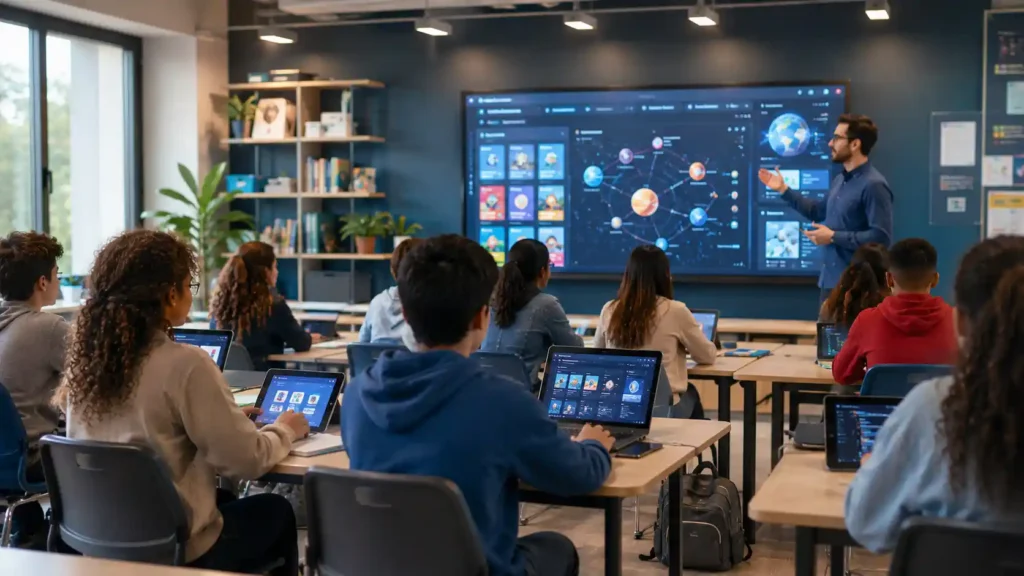
Think back to how you learned as a child. Perhaps it was chalk on a blackboard, heavy textbooks, and a teacher at the front of the room. Now look at classrooms today, filled with tablets, interactive screens, and online lessons that a student can access from anywhere. This remarkable transformation is being driven by educational technology, one of the most exciting and hopeful developments in how we teach and learn.
Educational technology, or edtech as it is often called, is reshaping education at every level, from primary schools to universities to the countless people learning new skills online. But what does it really involve, and is it genuinely making learning better? In this guide, we will explore what educational technology means, the tools transforming classrooms, the benefits and challenges it brings, and where this fast-moving field is heading. Whether you are a student, a parent, a teacher, or simply curious about the future of learning, you will come away with a clear and balanced understanding.
What Is Educational Technology?
Educational technology is the use of digital tools, software, and devices to improve teaching and learning. It covers everything from the tablet a young student uses to practise reading, to the online platform a university uses to deliver lectures, to the apps that help adults learn new languages in their spare time. At its heart, it is about using technology to make learning more effective, engaging, and accessible.
The term ed tech is used broadly, and it encompasses a huge range of tools and approaches. Some educational technology helps teachers deliver lessons more effectively. Some helps students learn at their own pace. Some connects learners with teachers and resources anywhere in the world. Whatever the specific form, the goal is always to enhance the learning experience and open up new possibilities that were not available before.
What makes edtech so powerful is its potential to reach people who might otherwise be left out. A student in a remote area can access world-class lessons online. Someone who learns differently can find tools tailored to their needs. A busy adult can study whenever they have a spare moment. This inclusive potential is a big part of why educational technology has become such an important thread in modern emerging technology.
The Tools Transforming Classrooms
Educational technology comes in many forms, and the variety is genuinely impressive. Understanding the main types helps you see just how broadly technology is reshaping education. Here are some of the key tools and approaches transforming how we learn:
- Learning platforms: Online systems where students access lessons, submit work, and track their progress, all in one place.
- Interactive whiteboards: Large touch screens that make lessons more visual and engaging than traditional boards.
- Educational apps: Programs for practising skills, from maths and languages to coding and science.
- Video lessons: Recorded lectures and tutorials that students can watch anytime and rewatch as needed.
- Virtual classrooms: Online spaces where teachers and students connect in real time, no matter where they are.
These tools work best when they support good teaching rather than replace it. The most successful educational technology gives teachers new ways to reach their students and gives learners new ways to engage with material. Many schools and universities combine several of these tools, creating rich digital learning environments. A well-equipped computer network often underpins all of this, connecting devices and delivering content smoothly throughout a school.
Lecture Capture and Tools Like Echo360
One particularly useful category of educational technology is lecture capture, which records lessons so students can watch or review them later. This has become especially popular in universities, where students benefit enormously from being able to revisit complex material at their own pace. It is a simple idea with a big impact on learning.
Platforms in this space, such as echo 360, are designed to record lectures and make them available to students online. Tools like echo360 allow learners to watch lessons again, pause to take notes, and study difficult sections as many times as they need. For students juggling busy schedules or those who simply learn better by reviewing, this flexibility is invaluable. It transforms a one-time lecture into a lasting resource.
The benefits extend to accessibility too. Students who miss a class due to illness can catch up, and those who need more time with the material can take it. If you are curious about specific features of any particular platform, it is always best to confirm the latest details directly from official sources, since tools and their capabilities change over time. What matters most is the underlying idea: making valuable teaching available whenever and wherever students need it.
The Modern Computer Lab
For many students, the first place they encounter educational technology is the computer lab. These dedicated spaces filled with computers have long been a staple of schools and universities, and they remain important today, even as personal devices become more common. The computer lab plays a special role in giving all students access to technology.
A well-run computer lab ensures that every student, regardless of what they have at home, can use computers for learning. Students use these spaces to research, write, practise coding, create projects, and develop the digital skills that are increasingly essential in modern life. For many, the computer lab is where they first learn to type, browse the internet safely, and use the different types of computer software that will serve them for years to come.
Beyond individual devices, the computer lab often serves as a hub for collaborative learning and specialised software that would be too expensive for every student to own. It connects to the wider world of information technology in schools, where reliable systems and networks make digital learning possible. As technology evolves, these spaces continue to adapt, but their core purpose of providing equal access to learning tools remains as vital as ever.
The Benefits of Educational Technology
Why has educational technology spread so widely? The answer lies in the real benefits it offers to students and teachers alike. When used thoughtfully, edtech can genuinely improve the learning experience in several meaningful ways. Let us look at the most significant advantages.
One of the biggest benefits is personalised learning. Technology can adapt to each student’s pace and needs, offering extra practice where they struggle and moving faster where they excel. This kind of tailored support is difficult to provide in a traditional classroom of many students. Another major benefit is accessibility, since online learning opens doors for people who cannot easily attend in person, whether due to location, schedule, or other circumstances.
Educational technology also makes learning more engaging. Interactive lessons, videos, and games can capture attention and make difficult concepts easier to grasp. It provides instant feedback too, letting students know right away how they are doing. And it equips learners with the digital skills they will need in a technology-driven world, from basic literacy to the foundations that lead toward careers like the machine learning engineer and the cloud engineer. Increasingly, tools powered by artificial intelligence can even tailor lessons automatically to each learner, making education more responsive than ever before.
The Challenges to Consider
For all its promise, educational technology is not without challenges, and a balanced view means acknowledging them honestly. Being aware of these issues helps schools, teachers, and families use technology more wisely and avoid its pitfalls. Let us look at the concerns that deserve attention.
One significant challenge is the digital divide, the gap between those who have access to technology and reliable internet and those who do not. If not addressed thoughtfully, edtech can unintentionally widen inequalities rather than reduce them. This is precisely why shared resources like the computer lab remain so important, helping ensure that all students have access regardless of their circumstances at home.
There are other concerns too. Too much screen time worries many parents and educators. Technology can sometimes distract rather than help if not used carefully. And there is the risk of relying too heavily on tools at the expense of fundamental skills and human connection. Good teachers remain irreplaceable, and technology works best as their partner rather than their replacement. Keeping student data safe is another priority, connecting to the important world of computer security. Being mindful of these challenges helps us harness the benefits while avoiding the downsides.
Educational Technology and the UAE
Many forward-looking regions have embraced educational technology as part of their vision for the future, and the UAE stands out as a strong example. The country has invested significantly in bringing modern technology into its schools and universities, recognising that a strong education system is the foundation of a thriving, innovative society.
This commitment fits naturally with the nation’s broader ambitions in technology and innovation, including its investment in artificial intelligence in the UAE. By equipping students with digital skills and modern learning tools, the country is preparing its young people for a future shaped by technology. It is an inspiring example of how educational technology can support national development and open opportunities for the next generation.
For students and families in such environments, this investment means access to some of the latest learning tools and approaches. It reflects a wider global trend, where nations increasingly see educational technology not as a luxury but as an essential part of building a capable, future-ready population. As always, specific programmes and initiatives evolve over time, so checking current details from official sources is wise.
The Future of Learning
Where is educational technology heading next? The future looks genuinely exciting, with new tools and approaches promising to make learning even more effective and engaging. Several trends are set to shape education in the years ahead, and they are worth knowing about.
Immersive technologies like augmented reality are beginning to transform how students experience lessons, letting them explore historical sites, examine the human body, or visualise complex ideas in vivid, interactive ways. Intelligent systems are making learning more personalised, adapting to each student automatically. And the growth of online learning continues to make education more flexible and accessible than ever before.
Perhaps most exciting is how these advances could work together to create learning experiences we can barely imagine today. A student might one day explore a virtual laboratory, receive instant personalised guidance, and connect with peers around the world, all from a single device. While no one can predict exactly how things will unfold, the direction is clear: education is becoming more flexible, personalised, and accessible, drawing on the same innovations powering fields from smart technology to space technology.
Making the Most of Educational Technology
Whether you are a student, parent, or teacher, there are ways to get the best out of educational technology. The key is to use it thoughtfully, as a tool that supports learning rather than an end in itself. A little intention goes a long way toward making technology truly helpful.
For students, the advice is to use these tools actively rather than passively. Engage with lessons, take notes, and use the ability to review material to deepen your understanding. For parents, staying involved and balancing screen time with other activities helps ensure technology serves your child well. For teachers, the most effective approach is to let technology enhance good teaching, using it where it genuinely adds value rather than for its own sake.
The goal, always, is better learning. When educational technology is used with this purpose in mind, it becomes a powerful ally. It can open doors, spark curiosity, and help learners of all ages reach their potential. Used well, it is one of the most hopeful tools we have for building a more educated and capable world.
Frequently Asked Questions
Does educational technology replace teachers? No. The best educational technology supports teachers rather than replacing them. Human teachers provide guidance, motivation, and connection that technology cannot match. Edtech works best as a partner that helps teachers do their job even better.
Is too much screen time a concern with edtech? It can be, which is why balance matters. Thoughtful use of educational technology, combined with other activities and offline learning, helps ensure screen time is productive. Quality and purpose matter more than simply the amount of time.
Can online learning be as good as in-person learning? It depends on how it is done. Well-designed online learning can be highly effective, especially for motivated learners. Many people also benefit from a blend of online and in-person approaches, combining the strengths of both.
Final Thoughts
Educational technology is transforming how we teach and learn, bringing new tools, greater flexibility, and exciting possibilities to classrooms and homes around the world. From learning platforms and lecture capture to the trusty computer lab, edtech is opening doors and making education more engaging and accessible than ever before.
Like any powerful tool, it works best when used thoughtfully, supporting good teaching and genuine learning rather than replacing them. As technology continues to advance, the future of education looks brighter and more inclusive. To keep exploring the technologies shaping our world, browse more articles across the Technology section of our blog, and feel free to contact us with any questions. The future of learning is being written right now, and it is full of promise.