
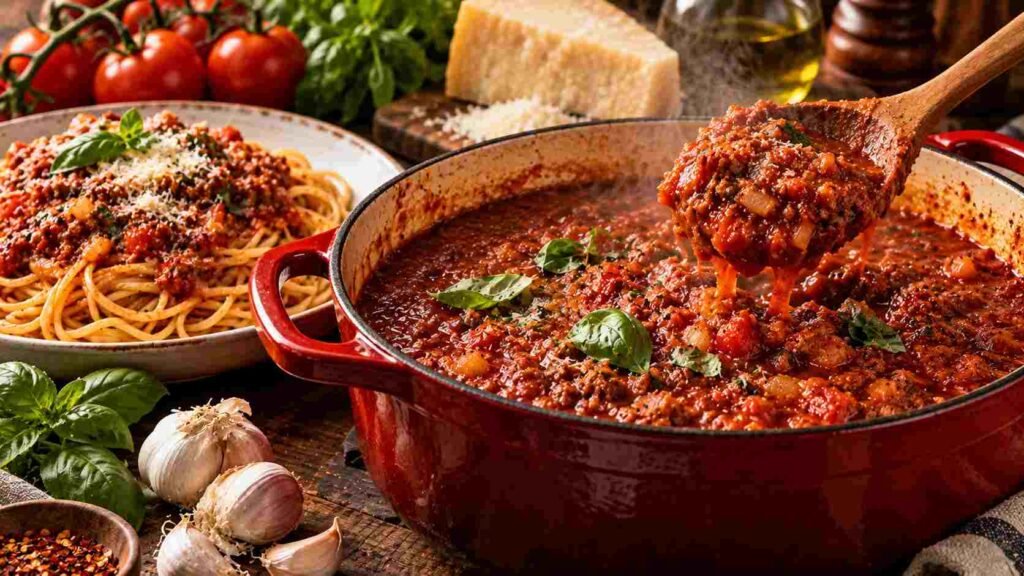
Simmering a fragrant pot of homemade spaghetti sauce fills the entire home with irresistible warmth and culinary nostalgia. Across Italian dining culture, preparing scratch sauces represents the very heart of domestic hospitality. Few sensory experiences rival sweet San Marzano tomatoes bubbling slowly with garlic, olive oil, and fresh herbs. The rich, velvety sauce clings to tender strands of pasta, turning simple dinners into celebratory banquets. At Gulf Lights, we deliver verified culinary guides to elevate everyday home dining across the United Arab Emirates and beyond.
Cooking exceptional Italian sauces does not require secret family recipes or imported commercial equipment. In fact, achieving restaurant-worthy depth depends on basic culinary chemistry, balanced acidity, and patient heat regulation. Furthermore, scratch sauces allow you to eliminate artificial preservatives, excessive sodium, and refined sugars commonly hidden in commercial jars. Consequently, you can nourish your family with wholesome ingredients while cutting your monthly grocery expenses. Explore our complete culinary archive through our food category hub.
Why Homemade Spaghetti Sauce Outperforms Commercial Store-Bought Jars
Supermarket shelves are lined with dozens of commercial pasta sauces promising authentic Italian flavor. However, mass-produced sauces almost always rely on high-fructose corn syrup, artificial thickeners, and dehydrated herbs to survive long shelf lives. As a result, commercial products often taste flat, overly sweet, and artificially acidic.
In contrast, preparing sauce at home allows real whole-food ingredients to shine. Fresh garlic, extra virgin olive oil, and slow-caramelized onions provide natural sweetness that balances tomato acidity without refined sugar. In addition, homemade sauce allows you to customize seasonings, textures, and spice levels to your exact family preferences. You can review regional household grocery budgets and dining benchmarks in our guide to prices in dubai for food.
Moreover, making large batches of scratch sauce delivers outstanding economic value. A single pot yields enough rich sauce for multiple family meals throughout the month. If you enjoy slow-cooked shredded meats on weekends, compare these gentle simmering methods with our classic pulled pork recipe. However, for everyday comfort, nothing beats a simmering pot of fresh tomato sauce.
The Foundation: Understanding Italian Tomatoes and San Marzanos
The ultimate flavor of any red pasta sauce depends entirely on the quality of your canned tomatoes. Understanding tomato varieties ensures you select the sweetest, richest base for your sauce.
San Marzano tomatoes grown in the volcanic soil near Mount Vesuvius represent the undisputed gold standard of Italian cookery. These plum tomatoes feature an elongated shape, thicker flesh, fewer seeds, and lower natural acidity than standard round tomatoes. Furthermore, their high pectin content creates a naturally thick, velvety sauce without requiring tomato paste thickeners. Look for the European “D.O.P.” certification seal on cans to guarantee genuine geographic origin.
If authentic San Marzanos are unavailable, choose high-quality canned whole peeled plum tomatoes packed in tomato purée. Avoid pre-diced canned tomatoes, as processors treat diced varieties with calcium chloride to keep them firm in the can. Consequently, diced tomatoes resist breaking down during simmering, leaving your sauce watery and chunky. Whole plum tomatoes crush smoothly with your hands, creating the ideal rustic texture.
Aromatics and Fats: The Sacred Trinity of Italian Flavor
While tomatoes provide the body, the cooking fat and aromatics provide the aromatic soul of your sauce. Skipping proper aromatic development results in a bland, uninspired dish.
First, always cook with premium extra virgin olive oil. Olive oil is not merely a cooking medium in Italian cuisine; it is a vital flavoring ingredient. Gently heating olive oil with thinly sliced garlic cloves infuses the oil with sweet, nutty essence. Be careful never to brown garlic aggressively, as burnt garlic turns bitterly unpleasant and ruins the entire pot.
Second, slow-cooking finely diced yellow onions until translucent releases natural fructose that softens tomato sharpness. In Southern Italian cooking, a pinch of dried red chili flakes blooms in the hot oil to introduce subtle background warmth. You can verify dairy baking measurements in our kitchen reference guide on 1 cup butter in grams. Cooking aromatics gently sets the stage for extraordinary depth of flavor.
Mastering the Classic 20-Minute Marinara Sauce Recipe
When you need dinner on the table in under half an hour, a vibrant marinara sauce recipe delivers bright, fresh Mediterranean comfort. Unlike heavy meat sauces, marinara celebrates clean, unmasked tomato flavor.
Heat a quarter cup of extra virgin olive oil in a wide skillet over medium heat. Add four thinly sliced garlic cloves and cook for ninety seconds until fragrant and soft. Pour in one large can of crushed whole plum tomatoes, a pinch of kosher salt, and freshly cracked black pepper. Simmer uncovered over medium heat for fifteen to twenty minutes until the oil emulsifies with the tomatoes.
Remove the skillet from the heat source and stir in a generous handful of hand-torn fresh basil leaves. The residual heat wilts the basil gently, releasing sweet floral oils without cooking away their delicate perfume. Toss this light sauce with al dente spaghetti or penne, or spoon it over crispy poultry cutlets. If you love crispy chicken breasts, explore our breaded cutlet techniques in our classic chicken breast recipes guide. Simple marinara proves that fast cooking can still be deeply sophisticated.
Rich Meaty Comfort: Authentic Spaghetti Bolognese Recipe
For celebratory weekend feasts, nothing commands greater table authority than an authentic spaghetti bolognese recipe. Hailing from Emilia-Romagna, classic Bolognese (ragù alla bolognese) is a slow-simmered meat sauce rather than a tomato-heavy puree.
Begin by finely mincing onions, carrots, and celery to form a traditional Italian soffritto. Sauté these vegetables in olive oil and butter until soft and sweet. Next, add equal parts ground beef chuck and minced veal or lamb, browning the meat gently. You can review ground beef butchery dynamics in our master guide to ground beef recipes.
Once browned, pour in a cup of whole milk and simmer until the liquid evaporates. The lactic acid in the milk tenderizes the meat fibers, ensuring a velvety texture. Add a cup of rich broth, two tablespoons of tomato paste, and crushed tomatoes. Simmer gently over the lowest heat setting for three hours, stirring occasionally. The resulting ragu is rich, thick, and profoundly savory. If you enjoy layered baked pastas, use this hearty meat sauce in our celebrated best lasagna recipe.
Silky Roman Decadence: Classic Alfredo Sauce Recipe from Scratch
Originating in early twentieth-century Rome, an authentic alfredo sauce recipe represents the ultimate expression of dairy luxury. True Italian Alfredo relies on the pure magic of butter, aged Parmigiano-Reggiano cheese, and hot starchy pasta water.
In American bistros, chefs frequently incorporate heavy cream and cream cheese to create a stable, velvety sauce. To make this restaurant-style variation, melt sixty grams of unsalted butter in a skillet over medium heat. Whisk in one cup of heavy cream and two minced garlic cloves, bringing the mixture to a gentle simmer for three minutes.
Remove the pan from the heat and whisk in freshly grated Parmigiano-Reggiano cheese until completely smooth and glossy. Season with a pinch of salt and freshly grated nutmeg. The nutmeg provides subtle herbal warmth that cuts through heavy dairy richness. Toss immediately with hot fettuccine noodles until every strand is coated in white velvet. Pair this rich pasta with seared seafood from our ten-minute shrimp recipes collection.
Modern Bistro Sensation: Creamy Penne alla Vodka Sauce Recipe
Few contemporary pasta sauces have achieved the cult following of a silky, pink vodka sauce recipe. Popularized in the 1980s, this sauce balances sweet caramelized tomato paste with luxurious heavy cream.
The magic of this recipe relies on food chemistry. Tomato paste contains flavorful compounds that are alcohol-soluble rather than water-soluble. Sauté shallots, garlic, and tomato paste in olive oil until the paste turns a deep brick-red color. Deglaze the pan with a splash of vodka or non-alcoholic fermented grape reduction, simmering until the alcohol aroma cooks off.
Pour in heavy cream, stirring continuously until the sauce turns a gorgeous pastel orange. Simmer for five minutes, then stir in grated parmesan and crushed red pepper flakes. The cream mellows tomato acidity, while the reduction extracts hidden aromatic compounds from the tomatoes. The resulting sauce is silky, sweet, and delightfully spicy. Compare these bold skillet sauces with our tender steaks in our master steak recipes guide.
Purist Perfection: Authentic Roman Pasta Carbonara Without Cream
Traditional Roman pasta carbonara is often misunderstood outside of Italy. Authentic carbonara never uses heavy cream, milk, peas, or garlic. Instead, it relies on four humble ingredients: cured pork jowl (guanciale), fresh egg yolks, Pecorino Romano cheese, and black pepper.
Crisp diced guanciale or cured beef strips in a dry skillet until the exterior crackles and fat renders out. In a separate bowl, whisk together four fresh egg yolks, one whole egg, and a generous cup of finely grated Pecorino Romano cheese. The mixture will form a thick, golden paste.
Boil spaghetti in salted water until firm al dente, then transfer the hot noodles directly into the pan with the rendered pork fat. Remove the skillet completely from the heat source. Pour the egg and cheese mixture over the pasta, tossing vigorously while adding splashes of hot starchy pasta water. The residual heat from the pasta gently cooks the eggs into a glossy, velvety custard without scrambling them. Finish with cracked black pepper. Carbonara represents Italian kitchen alchemy at its finest.
Vibrant Emerald Freshness: Authentic Pesto Pasta Recipe
Hailing from the coastal cliffs of Liguria, traditional pesto pasta recipe (Pesto alla Genovese) is an uncooked sauce celebrated for its electric green color and fragrant herbal aroma. It captures the pure essence of Mediterranean summer.
In a mortar and pestle or food processor, combine fresh Genovese sweet basil leaves, toasted pine nuts, raw garlic cloves, and coarse sea salt. Grind until a coarse paste forms. Next, fold in freshly grated Parmigiano-Reggiano and Pecorino Fiore Sardo cheeses.
Slowly drizzle in premium extra virgin olive oil while pulsing gently until the sauce turns creamy yet slightly textured. Never heat pesto over a stove, as heat blackens the basil and destroys its fresh floral aromatics. Instead, toss cold pesto with hot pasta and two tablespoons of starchy pasta water in a serving bowl. The warm pasta melts the cheese, creating a vibrant herbal coating. If you love fresh green salads, explore our dressing foundations in our authentic caesar salad recipe.
Fiery Roman Passion: Authentic Penne Arrabiata
For diners who crave spicy heat, classic penne arrabiata delivers bold, exhilarating flavor. In Italian, “arrabbiata” translates to “angry,” referring to the fiery red chili kick of the sauce.
Sauté plenty of minced garlic and crushed dried red pepper flakes in extra virgin olive oil over medium heat. As the chili flakes fry in the hot oil, they release capsaicin, tinting the oil a vibrant orange. Add crushed San Marzano tomatoes and a pinch of salt, simmering vigorously for fifteen minutes until thick.
Toss the spicy sauce with ridged penne rigate noodles. The ridges and hollow tubes trap the spicy tomato oil, ensuring every single bite delivers fiery warmth. Finish with fresh chopped flat-leaf parsley and a light dusting of Pecorino Romano cheese. You can compare spicy street foods with our flavorful wraps in our guide to shawarma in dubai. Arrabiata proves that simple pantry staples can pack an unforgettable punch.
Neapolitan Coastal Punch: Classic Pasta Puttanesca
Originating along the vibrant coast of Naples, traditional pasta puttanesca is famous for its bold, pungent, and briny ingredients. This intensely savory sauce relies entirely on long-lasting pantry staples.
Heat olive oil in a skillet and add minced garlic, crushed chili flakes, and three anchovy fillets. Stir the anchovies with a wooden spoon over medium heat until they melt completely into the oil. Do not fear fishiness; dissolved anchovies provide rich umami depth rather than seafood taste.
Stir in crushed tomatoes, briny Kalamata olives, salted capers, and dried oregano. Simmer for fifteen minutes until the sauce reduces and thickens. The combination of salty capers, rich olives, and umami-rich anchovies creates an explosive Mediterranean flavor profile. Toss with spaghetti or linguine for a rapid, satisfying weeknight feast. If you love fresh ocean fish, explore our comprehensive guide on tender fish recipes.
The Golden Secret: The Science of Starchy Pasta Water
Professional Italian chefs never pour pasta cooking water down the drain. In fact, starchy cooking liquid is the most crucial seasoning and binding ingredient in your kitchen.
As dry pasta boils, it sheds microscopic amylose starch molecules into the cooking water. When you finish pasta in a skillet, adding half a cup of this cloudy liquid triggers a process called “mantecatura.” The dissolved starches act as a natural emulsifier, binding the cooking fats and tomato liquids together into a glossy, coherent sauce.
Consequently, the sauce clings tightly to the noodles rather than pooling in a watery puddle at the bottom of the bowl. Furthermore, never rinse cooked pasta under cold tap water. Rinsing washes away this protective starch coating, leaving noodles slick and unable to hold sauce. Always transfer pasta directly from the boiling pot into your simmering sauce using tongs or a spider strainer.
Mastering the Ultimate Homemade Spaghetti Sauce at Home
This master family recipe balances slow-cooked aromatics, crushed plum tomatoes, and fragrant herbs into a rich, comforting sauce. Follow these step-by-step instructions for guaranteed dining triumph.
- Warm the Oil and Aromatics: Heat three tablespoons of extra virgin olive oil in a heavy Dutch oven over medium heat. Add one finely chopped yellow onion and cook for six minutes until soft and translucent.
- Bloom the Garlic and Herbs: Add four minced garlic cloves, one teaspoon of dried oregano, half a teaspoon of dried basil, and a pinch of red pepper flakes. Cook for one minute until fragrant.
- Add Tomato Paste: Stir in two tablespoons of double-concentrated tomato paste. Cook for two minutes while stirring continuously until the paste darkens to a brick-red hue.
- Crush the Whole Tomatoes: Pour in two 800-gram cans of whole San Marzano plum tomatoes. Crush the whole tomatoes directly in the pot using a wooden spoon or potato masher.
- Season and Simmer: Add one teaspoon of kosher salt, half a teaspoon of black pepper, and two fresh bay leaves. Bring to a boil, then reduce heat to low. Cover partially and simmer gently for forty-five minutes, stirring occasionally.
- Incorporate Fresh Basil: Remove from heat and discard the bay leaves. Tear a cup of fresh basil leaves and stir them into the hot sauce. Let rest for five minutes.
Toss with hot al dente pasta and top with freshly grated Parmigiano-Reggiano cheese. Pair this comforting Italian classic with artisanal flatbreads from our naan bread recipe collection.
Freezing, Canning, and Safe Storage Guidelines
Preparing large batches of homemade sauce streamlines weeknight meal preparation throughout the month. However, proper storage protocols are essential to preserve flavor and prevent bacterial growth.
Allow cooked sauce to cool completely at room temperature within two hours of cooking. Transfer the sauce into airtight glass jars or food-safe storage containers and refrigerate for up to five days. If you plan to store sauce longer, freezing is the safest method. Pour cooled sauce into heavy-duty freezer bags, lay them flat on a baking sheet to freeze, and stack them neatly for up to six months.
When reheating frozen sauce, thaw it overnight in the refrigerator or warm it gently in a saucepan over medium-low heat with a splash of water. If you enjoy baking fresh pizza crusts, use this concentrated sauce as the base for our homemade pizza dough recipe. You can review corporate regulatory standards and commercial food safety practices through our legal and government services directory.
Nutritional Power: Lycopene and Heart-Healthy Fats
Nutritionists universally celebrate cooked tomato sauces as a potent dietary source of antioxidants and essential vitamins. Savoring well-prepared pasta sauces delivers exceptional health benefits.
Tomatoes are packed with lycopene, a powerful carotenoid antioxidant that reduces systemic inflammation and supports cardiovascular health. Crucially, simmering tomatoes with extra virgin olive oil dramatically increases lycopene bioavailability. The dietary fat allows your body to absorb and utilize lycopene far more efficiently than from raw tomatoes alone.
Pairing whole-grain or legume pastas with rich vegetable sauces supplies sustained complex carbohydrates and dietary fiber. Fiber promotes healthy digestion and stabilizes blood sugar levels. Discover how whole-food lifestyle frameworks support lifelong vitality in our comprehensive guide to a balanced diet. In addition, discover nutrient-dense natural superfoods in our analysis of dates benefits.
Commercial Hospitality Careers in Italian Dining and Pasta Production
Mastering sauce chemistry, high-speed sauté line execution, and fresh pasta fabrication are core culinary competencies evaluated across the global hospitality sector. In Italian trattorias, luxury hotel lounges, and upscale catering operations, chefs prepare dozens of sauce variations daily.
Talented line cooks, sauce station masters, and kitchen supervisors enjoy strong recruitment demand across major gastronomic hubs like Dubai. If you are exploring vocational culinary paths, review our comprehensive guide on hospitality tourism jobs. In addition, executive chefs and restaurant operations directors command prestigious compensation packages. Explore executive salary scales in our guide to the highest paying jobs.
Furthermore, restaurant networks rely on temperature-controlled warehousing to store artisanal pasta, canned tomatoes, and cheeses safely. Candidates interested in supply logistics can explore opportunities in our guide on dubai warehouse logistics jobs. Dedicated culinary staff can advance into corporate leadership roles through strategic career change growth. Many international culinary talents relocate using our guide to work abroad. You can study statutory labor standards in our analysis of the labour law uae.
Frequently Asked Questions About Homemade Spaghetti Sauce
Should I add sugar to my homemade spaghetti sauce?
In most cases, you do not need refined sugar if you use high-quality canned San Marzano plum tomatoes and slow-cook sweet yellow onions. However, if your tomatoes taste overly acidic, adding half a teaspoon of brown sugar or finely grated carrot neutralizes the sharpness naturally.
Can I use fresh tomatoes instead of canned tomatoes for sauce?
Yes, but fresh tomatoes require peeling, seeding, and longer simmering to evaporate excess water. During winter months, canned whole plum tomatoes almost always yield superior flavor and thickness compared to out-of-season fresh grocery store tomatoes.
How do I fix a spaghetti sauce that turned out too thin?
Simmer the sauce uncovered over medium-low heat to allow excess water to evaporate naturally. Alternatively, stir in two tablespoons of tomato paste, or finish the pasta with hot starchy pasta water to bind and thicken the sauce.
What is the best way to keep fresh basil from turning black in sauce?
Add delicate fresh basil leaves only during the final two minutes of cooking or immediately after taking the pot off the heat. Excessive heat oxidizes fresh herbs, destroying their bright green color and floral aroma.
Mastering this timeless homemade spaghetti sauce empowers you to create comforting, restaurant-quality Italian feasts right in your own kitchen. By choosing quality plum tomatoes, respecting aromatic foundations, and utilizing the magic of starchy pasta water, you can prepare extraordinary meals that bring loved ones together. For additional culinary tutorials, kitchen advice, and verified lifestyle guides, connect with our specialist team via the Gulf Lights contact page. Discover more inspirational cooking articles on the Gulf Lights blog.