
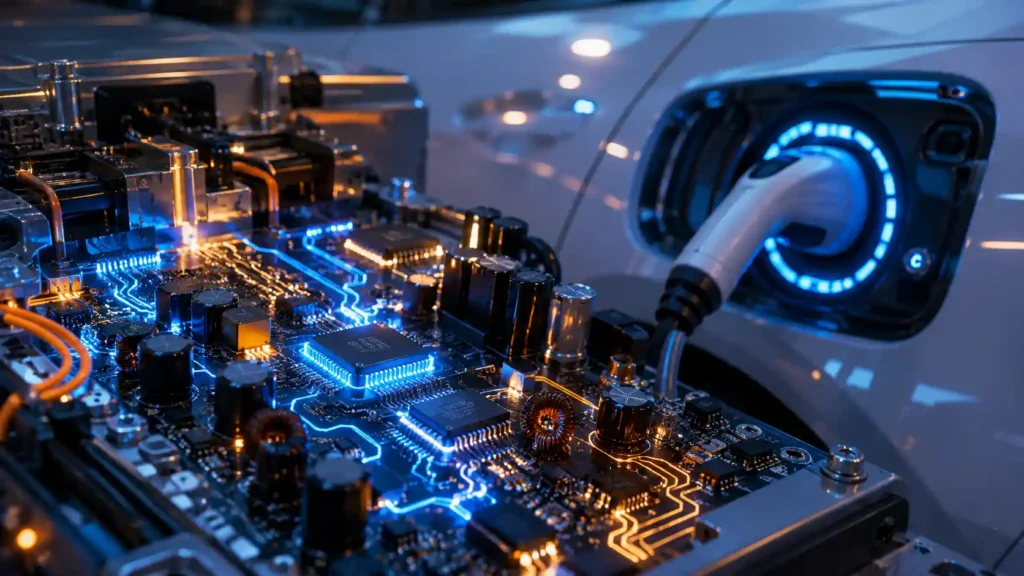
Look around you and count how many things run on electricity. Your phone, your laptop, the lights overhead, the charger on your desk, perhaps an electric car outside. Now here is something you might not have considered: none of these would work properly without a hidden field of engineering quietly managing all that electrical power. That field is power electronics, and it is one of the most important yet least celebrated technologies of the modern age.
Electricity, in its raw form, is not always ready to use. Different devices need it in different forms, at different voltages, and delivered in precise ways. Power electronics is the art and science of controlling and converting electrical energy so it can do exactly what we need. In this guide, we will explore what power electronics really is, how it works, where you encounter it every day, and why it has become so vital to our increasingly electric world. No engineering degree required, just a bit of curiosity about the invisible technology powering your life.
What Is Power Electronics?
Power electronics is the branch of engineering that deals with converting and controlling electrical power using electronic devices. In simple terms, it takes electricity in one form and changes it into another form that a particular device can use. It is the reason your laptop charger can take the power from a wall socket and turn it into exactly the gentle current your battery needs.
To understand why this matters, it helps to know that electricity comes in different types. The power from a wall socket is one kind, while the power stored in a battery is another. Devices often need their electricity converted, adjusted, or carefully controlled to work safely and efficiently. Power electronics handles all of this, acting as a translator and manager for electrical energy as it moves between sources and devices.
Think of power electronics as a skilled traffic controller for electricity. It directs the flow, adjusts the levels, and makes sure power arrives where it needs to go in the right form and amount. Without it, our modern devices simply could not function. This makes it a foundational part of modern computer technology and the wider world of emerging technology, quietly enabling nearly everything electronic we rely on.
How Power Electronics Works
At the heart of power electronics are special components called switches. These are not the light switches on your wall, but tiny electronic devices that can turn the flow of electricity on and off incredibly fast, thousands or even millions of times per second. By switching power on and off in precise patterns, these devices can shape and control electrical energy with remarkable accuracy.
This rapid switching is the secret behind everything power electronics does. By controlling exactly when and how power flows, engineers can convert one type of electricity into another, raise or lower voltage, and deliver precisely the right amount of power to a device. It sounds simple, but the precision involved is extraordinary, and it happens far faster than any human could ever manage.
There are a few main jobs that power electronics performs, and understanding them makes the whole field clearer. Here are the key functions:
- Converting AC to DC: Changing the alternating current from a wall socket into the direct current that devices and batteries use.
- Converting DC to AC: Doing the reverse, useful for things like turning battery power into the type needed to run household appliances.
- Changing voltage levels: Raising or lowering voltage to match what a device requires.
- Controlling power flow: Managing exactly how much power goes where, and when.
Each of these functions solves a real problem. Together, they let us move electrical energy between different sources and devices smoothly and efficiently, which is exactly what our device-filled lives demand.
Where You Encounter Power Electronics Every Day
You might be surprised just how often power electronics touches your daily life. It is hidden inside so many of the devices and systems you use that you have almost certainly relied on it dozens of times today already. Once you know where to look, you will spot it everywhere.
Every charger you own contains power electronics, carefully converting wall power into the exact form your device needs. Your laptop, phone, and tablet all depend on it. Home appliances like washing machines, air conditioners, and microwaves use it to control their motors and heating elements efficiently. Even the LED lights in your home rely on power electronics to run smoothly and save energy. Behind the scenes, the different types of computer software in smart devices work hand in hand with this power management.
Beyond the home, power electronics is essential in larger systems too. It manages the power in data centres full of computers, controls industrial machinery in factories, and keeps the electrical grid stable. It is deeply woven into the fabric of smart technology, where efficient power management is crucial for the countless connected devices around us. This quiet, constant presence is what makes it so important, even if we rarely give it a second thought.
Power Electronics and Electric Vehicles
One of the most exciting areas where power electronics shines is in electric vehicles. As the world moves toward cleaner transport, electric cars have surged in popularity, and power electronics sits right at the heart of what makes them work. Without it, the modern electric vehicle simply would not be possible.
Consider everything an electric car needs to manage. It must convert the power stored in its battery into the form that drives the electric motor. It must handle charging, converting power from a charging station into the right form for the battery. It must manage energy carefully to maximise range, and even recover energy when braking. Every one of these tasks relies on sophisticated power electronics working seamlessly together.
The efficiency of these systems directly affects how far an electric car can travel and how quickly it charges. This is why so much research focuses on making power electronics ever more efficient and compact. Advances here ripple outward, improving not just cars but the entire push toward cleaner energy. It is a field where progress genuinely helps the planet, and it connects to the innovation happening across the UAE and its broader vision for artificial intelligence in the UAE and sustainable technology.
Enabling Renewable Energy
Speaking of a cleaner planet, power electronics plays a starring role in renewable energy, and this may be one of its most important contributions of all. As we shift toward solar, wind, and other clean sources, power electronics is the essential technology making it practical to use them.
Here is the challenge. Solar panels and wind turbines generate electricity, but not in a form that can be used directly by our homes or fed into the grid. Their output varies with the weather and needs to be converted and conditioned before it is useful. Power electronics handles exactly this, transforming the raw energy from renewable sources into stable, usable power. Without it, harnessing solar and wind energy at scale would be enormously difficult.
This role is only growing more important as the world invests in clean energy. Power electronics helps store energy in batteries, feed it into the grid, and balance supply and demand. It is a quiet hero of the renewable revolution, enabling a future powered by cleaner sources. This ties into the broader story of space technology too, where efficient solar power and energy management are absolutely critical for satellites and missions far from Earth.
The Link to Computers and Memory
Power electronics does not work alone. It is closely tied to the broader world of computing, where managing power efficiently is a constant priority. Every computer, from the smallest phone to the largest data centre, depends on carefully controlled power to function reliably and avoid overheating.
This connection becomes especially interesting when we consider how computers store information. Modern devices rely heavily on non volatile memory, a type of storage that keeps data safe even when the power is switched off. Unlike the temporary memory that clears when a device powers down, non-volatile memory holds onto your files, photos, and apps permanently. Power electronics helps manage the energy these memory systems use, ensuring they operate efficiently and reliably.
The relationship goes deeper still. As computers become more powerful, they demand more sophisticated power management to run efficiently without wasting energy or generating excess heat. This is a growing challenge in the world of computer networks and data centres, where thousands of machines run around the clock. Efficient power electronics is what keeps these systems humming along, quietly supporting the digital services and information technology we depend on every day, all protected by strong computer security.
Why Efficiency Matters So Much?
If there is one theme that runs through all of power electronics, it is efficiency. Whenever electrical power is converted or controlled, some energy is inevitably lost, usually as heat. The goal of good power electronics design is to minimise these losses, and this pursuit of efficiency has enormous consequences.
Think about it this way. More efficient power electronics means devices that run cooler, batteries that last longer, and less energy wasted overall. On a small scale, this means your phone lasts longer between charges. On a large scale, it means significant energy savings across millions of devices, which adds up to a real environmental benefit. In a world increasingly concerned with energy use and sustainability, these gains matter enormously.
This is why engineers constantly work to improve power electronics, developing new materials and designs that waste less energy. Every improvement, however small it seems, multiplies across countless devices to make a meaningful difference. It is a field where the pursuit of efficiency directly benefits both our wallets and our planet, and where advances in areas like nanotechnology are helping create ever better components.
The Future of Power Electronics
Power electronics is a field on the move, and its future looks bright. As our world becomes ever more electric and connected, the demand for better, smaller, and more efficient power management keeps growing. Several exciting trends are shaping where the field is headed.
New materials are allowing power electronic devices to handle more power while wasting less energy and taking up less space. This means smaller chargers, more efficient electric vehicles, and better renewable energy systems. At the same time, power electronics is becoming smarter, working together with intelligent systems to manage energy in more sophisticated ways. The link between artificial intelligence and power management is deepening, allowing systems to optimise energy use automatically. Even the software side, built on a well-chosen tech stack, plays a part in squeezing out extra efficiency, while immersive tools like augmented reality help engineers design and test power systems.
As electric vehicles, renewable energy, and connected devices continue to expand, power electronics will only grow in importance. It is a field with a genuinely meaningful mission: helping us use electricity more efficiently and sustainably. For students and professionals interested in engineering that makes a real difference, it offers a rewarding path. As always with fast-moving technology, it is wise to confirm the latest developments from official and expert sources, since the field advances quickly.
Frequently Asked Questions
What is the difference between power electronics and regular electronics? Regular electronics usually deals with processing information and signals, like in a computer chip. Power electronics focuses specifically on converting and controlling electrical power itself, handling much larger amounts of energy to run and charge devices.
Why does my phone charger get warm? That warmth is energy lost as heat during the power conversion process. Better power electronics designs aim to reduce this waste, which is why modern chargers tend to be more efficient and can even be smaller than older ones.
Is power electronics important for clean energy? Absolutely. It is essential for converting the electricity from solar panels and wind turbines into usable, stable power. Without power electronics, using renewable energy on a large scale would be far more difficult.
Final Thoughts
Power electronics is the invisible technology that manages the electricity flowing through our modern lives. From the charger on your desk to the electric car on the road, from renewable energy systems to the data centres powering the internet, it quietly converts and controls electrical energy so everything works as it should. It is a foundational field that touches nearly everything electronic we use.
As our world grows more electric and more focused on sustainability, power electronics will only become more important. Understanding it gives you a deeper appreciation for the clever engineering behind your everyday devices and the cleaner future it helps make possible. To keep exploring the technologies shaping our world, browse more articles across the Technology section of our blog, and feel free to contact us with any questions. The power behind our devices is remarkable, and now you understand how it all flows together.