
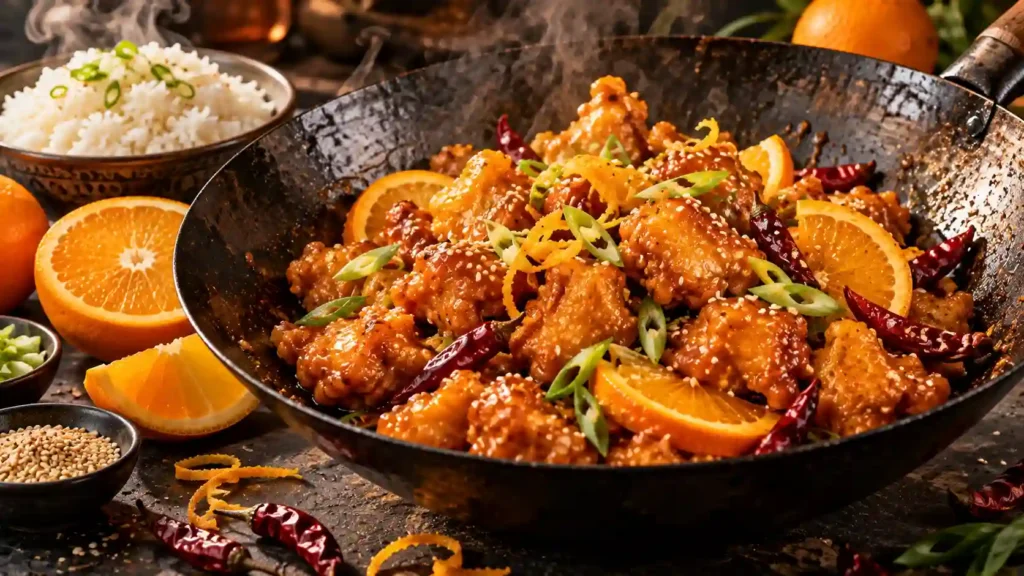
Cooking an authentic orange chicken recipe from scratch is one of the most exciting adventures in modern home cooking. Across international dining capitals, crispy battered chicken tossed in a glossy citrus glaze represents the gold standard of Chinese-American comfort. The contrast between a shatteringly crisp exterior crust and succulent, tender chicken creates pure culinary magic. At Gulf Lights, we deliver verified culinary guides to elevate everyday home dining across the United Arab Emirates and beyond.
Mastering takeout classics at home does not require industrial restaurant jet burners. In fact, achieving restaurant-worthy crunch depends on cornstarch dredge science, double-frying techniques, and balanced citrus reduction. Furthermore, cooking stir-fry dishes at home allows you to eliminate excessive sodium, refined sugars, and artificial flavor enhancers. Consequently, you can treat your family to vibrant, gourmet takeout banquets in under thirty minutes. Explore our complete culinary archive through our food category hub.
The Cultural Origins of Chinese-American Takeout Classics
The history of Chinese-American takeout represents a fascinating story of cross-cultural adaptation and culinary creativity. During the late nineteenth and twentieth centuries, Chinese immigrant cooks opened modest chop suey houses across North America. To appeal to local diners, these talented chefs adapted traditional regional recipes using local ingredients.
In particular, orange chicken evolved from traditional Hunan citrus poultry dishes, known historically as Chenpi Ji (tangerine peel chicken). Traditional Hunan recipes utilized bitter, sun-dried tangerine peels and fiery red chilis. However, in 1987, executive chef Andy Kao of Panda Express created the modern sweet-savory variation. He combined fresh orange juice, brown sugar, garlic, and vinegar to produce an irresistible sticky glaze. You can review regional dining benchmarks and grocery expenses in our guide to prices in dubai for food.
Over subsequent decades, this sweet citrus dish became a global fast-casual sensation. Moreover, similar sweet-and-savory meat traditions flourish across Middle Eastern and Arabian culinary history. You can explore traditional Arabian spiced rice and slow-cooked meat stews in our comprehensive guide to the national dish of uae. Orange chicken represents the brilliant evolution of ancestral wok cooking into modern comfort food.
The Food Science of the Starch Dredge: Cornstarch vs Flour
Achieving that legendary, glass-like crunch on fried chicken bites requires understanding starch chemistry. Standard all-purpose wheat flour contains gluten proteins that become chewy and dense when mixed with moisture.
In contrast, pure cornstarch contains no gluten whatsoever. Cornstarch consists primarily of amylose molecules, which absorb surface moisture rapidly. When submerged in hot frying oil, these starch granules expand and fuse into rigid, microscopic crystalline structures. This transformation creates an ultra-thin, brittle shell that shatters with every bite. If you love crispy bone-in poultry, explore our Southern double-dredged fried chicken recipe guide.
Furthermore, adding an egg white and a splash of soy sauce to the raw chicken before dredging creates a light slurry. The egg proteins bind the dry cornstarch firmly to the meat fibers. Consequently, the crispy crust adheres tightly to the chicken rather than separating when tossed in warm sauce. Understanding starch properties ensures your chicken stays crunchy long after leaving the skillet.
The Magic of the Double Fry: Vaporizing Escaping Moisture
Professional Cantonese banquet chefs rely on an ancient frying secret to guarantee lasting crispness: the double-fry technique. Frying poultry only once in hot oil almost always results in a soggy crust within minutes.
During the initial fry, meat cooks through gently at a moderate oil temperature of 165°C (330°F). However, as the chicken cooks, internal water heats into steam. This trapped steam migrates outward toward the surface, softening the newly formed crust. If you pull the chicken out and sauce it immediately, that escaping moisture destroys all crispness.
Therefore, resting the par-cooked chicken on a wire cooling rack for five minutes allows interior steam to escape completely. Next, cooks submerge the chicken in hotter oil at 190°C (375°F) for just ninety seconds. This second flash-fry instantly vaporizes remaining surface moisture, turning the starch coating into a rock-hard, golden armor. You can review corporate regulatory standards and commercial food safety rules through our legal and government services directory. Double-frying guarantees incredible crunch under sticky glazes.
Citrus Glaze Chemistry: Balancing Zest, Sugar, and Vinegar
The soul of any memorable orange chicken dish lies in the harmony of its glossy glaze. A sauce that relies solely on bottled orange juice tastes overwhelmingly sweet and artificial.
First, fresh orange zest provides essential citrus aroma. The colorful outer peel contains microscopic oil pockets packed with limonene, an intensely fragrant hydrocarbon compound. Whisking fresh orange zest into the sauce introduces floral citrus perfume that juice alone cannot duplicate. Second, freshly squeezed orange juice provides natural sweetness and gentle acidity.
Third, balancing the sauce requires equal parts dark brown sugar, savory soy sauce, and tangy rice vinegar. Rice vinegar introduces clean acetic acid that cuts through rich fried coatings effortlessly. Finally, mincing fresh ginger and garlic releases pungent aromatics that ground the sweet sauce. You can verify dairy baking measurements in our kitchen reference guide on 1 cup butter in grams. A well-balanced glaze clings to crispy chicken without drowning its crunch.
Mastering the Ultimate Orange Chicken Recipe at Home
This master orange chicken recipe delivers shatteringly crisp chicken bites coated in a sticky, sweet-tangy citrus glaze in thirty-five minutes. Follow these step-by-step instructions for guaranteed dining triumph.
- Cut and Marinate: Cut 700 grams of boneless chicken thighs or breasts into bite-sized three-centimeter cubes. Toss with one egg white, one tablespoon of soy sauce, one tablespoon of Shaoxing rice wine or chicken broth, and a pinch of white pepper. Rest for fifteen minutes.
- Dredge in Cornstarch: Dredge each chicken piece thoroughly in one cup of cornstarch, pressing firmly so the powder coats all crevices. Shake off excess starch and place on a wire rack.
- First Fry (Cook Through): Heat peanut or canola oil in a Dutch oven to 165°C (330°F). Fry the chicken in uncrowded batches for four minutes until pale golden. Drain on a wire rack for five minutes.
- Second Fry (Crisp Up): Increase oil temperature to 190°C (375°F). Flash-fry the chicken in batches for ninety seconds until deeply golden and shatteringly crisp. Drain on a clean wire rack.
- Prepare the Citrus Sauce: In a bowl, whisk half a cup of fresh orange juice, one tablespoon of orange zest, a quarter cup of brown sugar, two tablespoons of soy sauce, two tablespoons of rice vinegar, and one tablespoon of cornstarch.
- Aromatics in the Wok: Heat one tablespoon of oil in a wok over medium heat. Sauté three minced garlic cloves, one tablespoon of minced ginger, and dried red chilis for thirty seconds until fragrant.
- Thicken the Glaze: Pour the sauce mixture into the hot wok. Bring to a rapid boil, stirring continuously for two minutes until the glaze turns clear, thick, and glossy.
- Toss and Coat: Dump the piping hot double-fried chicken directly into the bubbling glaze. Toss vigorously for twenty seconds so every piece is lacquered in sauce.
- Garnish and Serve: Remove from heat immediately. Scatter toasted sesame seeds and thinly sliced green onions over the top.
Serve immediately over steaming jasmine rice. Pair this comforting classic with artisanal flatbreads from our naan bread recipe collection for creative fusion dining.
Cantonese Heritage: Classic Sweet and Sour Chicken Recipe
Alongside orange chicken, an authentic sweet and sour chicken recipe represents an undisputed pillar of Cantonese culinary tradition. Originating in Guangzhou, traditional sweet and sour (Gu Lao Rou) balances fruity sweetness with crisp produce.
Unlike orange chicken, Cantonese sweet and sour features colorful chunks of fresh pineapple, green bell peppers, and yellow onions tossed with the fried meat. The natural bromelain enzymes in fresh pineapple provide refreshing, tropical brightness. In addition, the classic red sauce blends rice vinegar, tomato paste, plum sauce, and sugar.
Tossing crispy chicken bites with tender-crisp peppers and juicy pineapple chunks provides wonderful textural variety. The vibrant red sauce coats each ingredient smoothly without overpowering its natural flavor. If you enjoy quick weeknight poultry cuts, compare these speedy techniques with our versatile chicken breast recipes. Sweet and sour chicken delivers timeless family comfort.
The Fiery Icon: Authentic General Tso Chicken Recipe
Named in honor of nineteenth-century Qing dynasty military leader Zuo Zongtang, the legendary general tso chicken recipe is beloved for its bold, spicy profile. Invented by Taiwanese chef Peng Chang-kuei in the 1950s, this dish represents Hunan cuisine’s assertive soul.
General Tso chicken differs from orange chicken by prioritizing dried red chilis, savory garlic, and dark soy sauce over sweet citrus. Sauté whole Sichuan dried chilis in smoking oil until they darken and release pungent, spicy aromas into the wok. Next, stir in a savory sauce made from chicken broth, dark soy sauce, rice vinegar, ginger, and sugar.
Toss double-fried chicken bites into the spicy dark mahogany sauce until evenly coated. The fiery heat of toasted chilis cuts through rich fried chicken, creating an addictive, savory warmth. Serve alongside steamed broccoli florets to capture the spicy sauce. If you love burger patties, explore our skillet techniques in our smash burger recipe guide. General Tso chicken provides bold, spicy takeout indulgence.
Golden Nutty Elegance: Crispy Sesame Chicken Recipe
For diners who crave sweet, nutty richness without citrus acidity, a classic sesame chicken recipe delivers pure culinary comfort. This takeout favorite features tender fried chicken coated in a golden honey-soy glaze.
The secret to unforgettable sesame chicken lies in incorporating both toasted sesame oil and whole toasted sesame seeds. Whisk clover honey, light soy sauce, brown sugar, garlic, and toasted sesame oil in a saucepan, simmering until thick and syrupy. The toasted sesame oil introduces an unmistakable nutty aroma that warms the entire dish.
Toss double-fried chicken cubes in the honey glaze, then shower the dish generously with toasted white sesame seeds. The tiny seeds stick to the sticky glaze, providing delightful crunchy pops with every bite. If you enjoy slow-simmered beef comfort, explore our homestyle beef stew recipe guide. Crispy sesame chicken is a universally adored crowd-pleaser.
Sichuan Fire and Peanuts: Authentic Kung Pao Chicken Recipe
Hailing from the southwestern Sichuan province of China, traditional kung pao chicken recipe (Gong Bao Ji Ding) represents master-level stir-fry balance. Named after Ding Baozhen, a Qing dynasty governor, this dish delivers the famous “mala” tingling spice.
Unlike battered takeout chicken, authentic Kung Pao uses unbattered diced chicken thighs marinated in soy sauce and rice wine. Flash-sear the chicken in a smoking wok with fragrant Sichuan peppercorns, dried red chilis, and scallions. Sichuan peppercorns contain hydroxy-alpha-sanshool, a bioactive molecule that produces a unique tingling numbness on the tongue.
Next, add crunchy roasted peanuts and a savory-sour sauce crafted from aged black Chinkiang vinegar, soy sauce, and sugar. The contrast between tender chicken, numbing peppercorns, and crunchy peanuts creates sensory perfection. If you enjoy royal layered rice dishes, explore our authentic biryani recipe. Kung Pao chicken showcases the thrilling complexity of genuine Sichuan cookery.
Savory Beef Perfection: Crispy Mongolian Beef Recipe
Expanding your takeout repertoire beyond poultry, an authentic mongolian beef recipe delivers meltingly tender beef enveloped in a rich, savory glaze. Popularized in Taiwanese stir-fry stalls, this dish has become an international takeout favorite.
Always select flank steak or sirloin, slicing the meat into thin ribbons across the natural muscle grain. Toss the sliced beef in cornstarch, which creates a thin, crispy crust when flash-fried in hot oil for sixty seconds. In the wok, sauté thick ribbons of scallions (green onions) and minced garlic in oil.
Deglaze with dark brown sugar, soy sauce, and water, simmering until the sauce turns glossy and thick. Toss the crispy beef ribbons into the sauce for fifteen seconds, ensuring every strand is coated. The natural starches from the beef thicken the glaze instantly. If you enjoy whole muscle cuts with high-heat sears, check our classic steak recipes. Crispy Mongolian beef brings steakhouse luxury to weeknight wok cooking.
The Chinese Velveting Technique: The Secret to Meltingly Tender Meat
Have you ever wondered why restaurant stir-fry meats are impossibly tender and succulent? Professional Chinese chefs rely on an essential preparation technique called “velveting.”
Velveting involves marinating thinly sliced raw meat in a mixture of egg white, cornstarch, rice wine, and salt for thirty minutes. The cornstarch and egg white form a thin protective sheath around every meat fiber. Next, the meat is briefly passed through warm oil (135°C / 275°F) or simmering water for forty-five seconds before stir-frying.
This rapid blanching locks natural moisture and juices inside the muscle fibers. When the meat is subsequently tossed over high wok heat, the protective coating prevents muscle fibers from seizing or drying out. As a result, even lean chicken breast emerges soft, silky, and tender like velvet. Compare delicate seafood cooking physics in our guide to shrimp recipes. Velveting transforms ordinary poultry into luxury restaurant dining.
The Breath of the Wok: Recreating Wok Hei at Home
The defining hallmark of master Asian stir-fry cookery is “wok hei,” translating poetically to the “breath of the wok.” Wok hei is that elusive, smoky, complex flavor found only in high-end restaurant stir-fries.
Wok hei occurs when microscopic oil droplets vaporize as food is tossed into the air above an open flame. As the aerosolized oil droplets combust, they impart a delicate charred aroma to the ingredients. Furthermore, the intense radiant heat of seasoned carbon steel caramelizes sugars and soy sauces instantly.
To replicate wok hei at home, use a seasoned 14-inch carbon-steel or cast-iron wok. Preheat the dry wok over your hottest stove burner until wisps of smoke appear before adding oil. Cook in small batches so the pan retains maximum heat without dropping in temperature. You can compare high-heat skillet searing in our master guide to tandoori chicken recipe skewers. Mastering high-heat wok tossing brings authentic smoky depth to your kitchen.
Fluffy Grains and Greens: Jasmine Rice and Steamed Broccoli
Because crispy orange chicken delivers bold, sweet, and tangy flavors, thoughtful side dish pairings complete the dining experience. Simple starches and steamed greens balance the richness of fried poultry.
Fragrant steamed jasmine rice serves as the ideal neutral canvas, soaking up sweet orange glaze effortlessly. In addition, lightly steamed broccoli florets tossed with garlic and sesame oil provide refreshing crunch and vibrant color. If you crave crisp greens, pair your meal with a romaine salad tossed with our zesty caesar salad recipe dressing.
Furthermore, quick egg fried rice or vegetable chow mein noodles turn a simple dinner into a celebratory multi-course feast. For delicate ocean seafood variations, explore our comprehensive guide on tender fish recipes. Savoring sweet chicken alongside savory sides delights adults and children alike. Harmonious pairings elevate casual takeout into a memorable banquet.
Nutritional Balance and Mindful Takeout Cooking
While restaurant takeout often carries high sodium, refined sugars, and hydrogenated trans fats, scratch-made orange chicken offers wholesome, clean nutrition. Cooking at home gives you complete control over every ingredient.
First, frying in fresh, unhydrogenated peanut oil or avocado oil eliminates harmful trans fats completely. Second, using fresh orange juice and reducing brown sugar by thirty percent creates a lighter glaze that still delivers vibrant citrus flavor. Furthermore, using skinless chicken breasts supplies lean, complete dietary protein to support athletic muscle recovery.
In addition, pairing your meal with abundant steamed vegetables like broccoli, snap peas, and bell peppers boosts dietary fiber, vitamins, and antioxidants. Discover how whole-food lifestyle frameworks support lifelong vitality in our comprehensive guide to a balanced diet. You can also explore nutrient-dense natural superfoods in our analysis of dates benefits. Mindful cooking allows you to enjoy comforting takeout classics guilt-free.
Meal Prep, Air Fryer Adaptations, and Storage Guidelines
Preparing Chinese takeout favorites in advance streamlines hectic weeknight schedules. However, proper storage protocols are essential to prevent crispy coatings from turning soggy.
If meal prepping, store the double-fried crispy chicken and the orange glaze in separate airtight glass containers in the refrigerator for up to four days. When ready to eat, reheat the chicken on a wire rack inside a 200°C (400°F) oven or air fryer for five minutes until crackling hot. Warm the sauce in a skillet, toss the hot chicken into the glaze, and serve immediately.
Furthermore, you can prepare orange chicken in an air fryer with minimal oil. Toss the cornstarch-coated chicken cubes with two tablespoons of oil, and air-fry at 200°C (400°F) for twelve minutes, shaking the basket halfway through. The circulating convection heat produces delightfully crisp chicken bites with eighty percent less oil. If you enjoy slow-simmered vegetarian curries, explore our homestyle chana masala recipe guide. Smart kitchen tech makes crispy chicken accessible any night of the week.
Commercial Hospitality Careers in Asian Dining and Wok Stations
Mastering wok execution, high-temperature sauce reduction, and poultry butchery are core culinary competencies evaluated across the global hospitality sector. In modern Pan-Asian bistros, luxury hotel dining rooms, and high-volume casual chains, wok chefs command immense respect.
Talented wok masters, line cooks, and kitchen managers enjoy robust recruitment demand across major gastronomic hubs like Dubai. If you are exploring professional vocational paths in gastronomy, review our comprehensive guide on hospitality tourism jobs. In addition, executive chefs and restaurant operations directors command prestigious compensation packages. Explore executive salary scales in our guide to the highest paying jobs.
Furthermore, restaurant networks rely on temperature-controlled warehousing to store fresh poultry, produce, and Asian sauces safely. Candidates interested in supply logistics can explore opportunities in our guide on dubai warehouse logistics jobs. Dedicated culinary staff can advance into corporate leadership roles through strategic career change growth. Many international culinary talents relocate using our guide to work abroad. You can study statutory labor standards in our analysis of the labour law uae.
Frequently Asked Questions About Orange Chicken
Why did my orange chicken turn soggy after saucing?
Orange chicken turns soggy if the chicken is fried only once, or if it sits in the warm sauce for too long before serving. Always double-fry the chicken for lasting crispness, toss in the glaze for only twenty seconds, and serve immediately.
Can I use chicken breast instead of chicken thighs for orange chicken?
Yes, boneless chicken breast works wonderfully. However, because chicken breast is very lean, velvet the meat in egg white and cornstarch first to prevent it from drying out during frying.
Can I use bottled orange juice instead of fresh oranges?
While bottled orange juice works in a pinch, fresh oranges are strongly recommended because fresh orange zest contains essential oils that provide authentic citrus aroma that bottled juice lacks.
What is the best cooking oil for deep-frying orange chicken?
Peanut oil, canola oil, and vegetable oil are the best choices because of their high smoke points (above 200°C / 400°F) and neutral flavors. They allow the sweet citrus sauce to shine without leaving greasy aftertastes.
Mastering this classic orange chicken recipe gives you the culinary confidence to prepare shatteringly crisp, vibrant, and restaurant-quality Chinese takeout feasts right in your own kitchen. By understanding cornstarch starch dynamics, respecting the power of the double fry, and balancing fresh citrus zest with savory aromatics, you can create extraordinary culinary feasts that bring loved ones together. For additional culinary tutorials, kitchen advice, and verified lifestyle guides, connect with our specialist team via the Gulf Lights contact page. Discover more inspirational cooking articles on the Gulf Lights blog.