
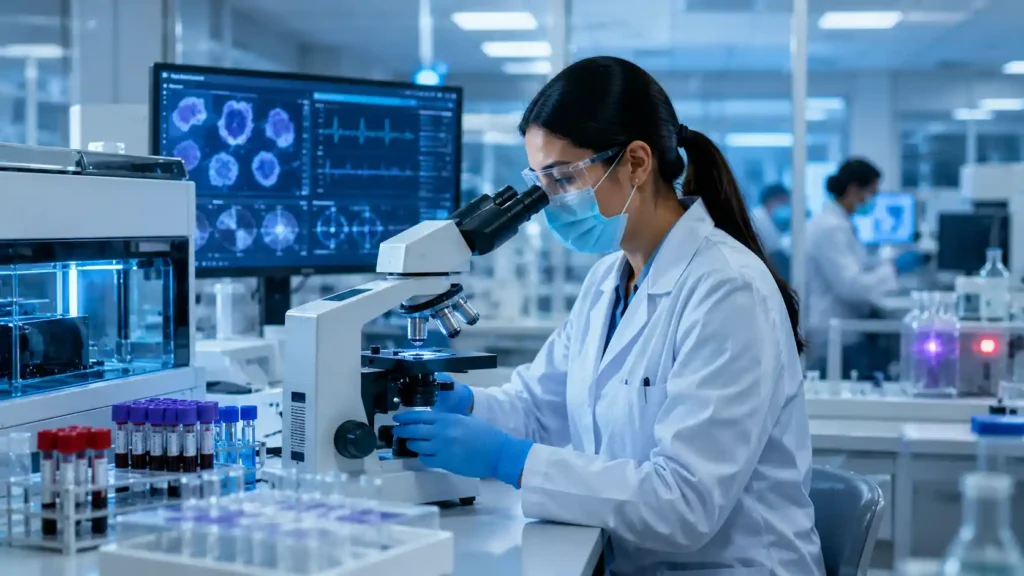
Not so long ago, a simple infection could be life-threatening, diagnoses relied largely on guesswork, and many conditions we now treat routinely were untreatable. The remarkable improvement in human health over the past century owes a great deal to one powerful force: medical technology. From the machines that let doctors see inside the body to the laboratory tests that catch disease early, technology has transformed healthcare in ways that save and improve millions of lives every single day.
Medical technology is a vast and inspiring field, blending science, engineering, and compassion to help people live longer, healthier lives. But what does it actually involve, and how is it changing the care we receive? In this guide, we will explore what medical technology means, how it improves diagnosis and treatment, the vital people who work behind the scenes, and where this life-changing field is heading. Whether you are curious about your own healthcare, considering a career, or simply interested in how technology helps us, you will come away with a genuine appreciation for this remarkable field.
What Is Medical Technology?
Medical technology is the application of science and engineering to improve healthcare, covering the tools, devices, systems, and processes used to diagnose, treat, monitor, and prevent illness. It ranges from simple everyday items like thermometers to the most sophisticated scanning machines and surgical robots. Anything that uses technology to improve health and medical care falls under this broad and important field.
The scope of medical technology is enormous. It includes diagnostic equipment that helps identify what is wrong, treatment devices that help make patients better, monitoring systems that track health over time, and the laboratory technology that analyses samples to reveal what is happening inside the body. Each of these plays a crucial role in modern healthcare, working together to give patients the best possible care.
What makes this field so special is its direct impact on human wellbeing. Medical technology helps doctors make accurate diagnoses, enables treatments that were once impossible, and improves the quality of life for countless people. It is one of the most meaningful areas of modern emerging technology, where innovation translates directly into healthier, longer lives. This human impact is what draws so many dedicated people to work in the field.
How Technology Improves Diagnosis?
Getting the diagnosis right is one of the most important steps in healthcare, and medical technology has revolutionised how doctors identify illness. In the past, diagnosis relied heavily on observation and educated guesses. Today, a wealth of technology helps doctors see exactly what is happening inside the body, often catching problems early when they are most treatable.
Here are some of the key ways technology helps with diagnosis:
- Medical imaging: Machines that let doctors see inside the body without surgery, revealing bones, organs, and tissues in detail.
- Laboratory tests: Analysis of blood, tissue, and other samples to detect disease, infection, and other conditions.
- Monitoring devices: Tools that track vital signs and health indicators, sometimes continuously.
- Genetic testing: Advanced analysis that can reveal risks and guide personalised treatment.
These technologies allow doctors to detect problems earlier and more accurately than ever before. Early detection often makes an enormous difference, turning a serious condition into a manageable one. Behind many of these diagnostic tools lies sophisticated computing, and increasingly, systems built by a machine learning engineer help analyse medical images and data, spotting subtle signs that might otherwise be missed. It is a powerful partnership between human expertise and technological capability.
The Vital Role of Laboratory Professionals
Behind many medical diagnoses are dedicated professionals working in laboratories, and their contribution is enormous even if patients rarely see them. When a doctor orders a blood test or examines a tissue sample, it is often a skilled laboratory professional who carries out the analysis that provides crucial answers.
A medical laboratory technologist is a highly trained professional who performs complex tests on samples like blood, tissue, and other bodily fluids. They analyse these samples to detect diseases, monitor conditions, and provide the information doctors need to make good decisions. Working alongside them, a medical laboratory technician carries out important testing and supports the laboratory’s work. Together, these professionals form the backbone of diagnostic medicine.
The field they work in, often called science laboratory technology, requires precision, scientific knowledge, and great attention to detail. A tiny error could affect a diagnosis, so these professionals work carefully and follow strict procedures. For those interested in science and healthcare who prefer working behind the scenes, careers as a medical laboratory technologist or medical laboratory technician offer meaningful, stable, and rewarding paths. Their work connects to the broader world of information technology, since managing and analysing test data is increasingly central to the job.
Technology in Treatment and Surgery
Medical technology does not stop at diagnosis. It plays an equally vital role in treatment, helping doctors heal patients in ways that were once unimaginable. From advanced surgical tools to sophisticated devices that support the body, technology has transformed what medicine can achieve.
Modern surgery has been revolutionised by technology. Minimally invasive techniques allow surgeons to operate through tiny incisions, reducing pain and speeding recovery. Surgical robots give surgeons enhanced precision and control, letting them perform delicate procedures with remarkable accuracy. These advances mean many operations are now safer and less traumatic than they used to be, with patients recovering faster and more comfortably.
Beyond surgery, technology helps treat and manage countless conditions. Devices can support or replace failing organs, deliver medication precisely, and help people manage chronic conditions at home. Some of these depend on advanced power management from the field of power electronics, since medical devices must operate reliably and efficiently. Each of these innovations represents years of research aimed at improving and extending human life, a genuinely inspiring pursuit.
Connected Health and Monitoring
One of the most exciting developments in medical technology is the rise of connected health devices. These tools let people monitor their health continuously and share information with their doctors, bringing healthcare out of the hospital and into everyday life. It is a shift that empowers patients and improves care.
Wearable devices can now track heart rate, activity, sleep, and other health indicators around the clock. Some medical devices can transmit data directly to healthcare providers, alerting them to problems before they become serious. This continuous monitoring, delivered across a reliable computer network, helps catch issues early and allows for more personalised care. It places healthcare firmly within the world of smart technology, where connected devices work together to improve our lives.
This connectivity brings great benefits, but it also makes protecting sensitive health information essential. Medical data is deeply personal, so keeping it secure is a serious priority. This connects to the important field of computer security, which plays a growing role in healthcare. As health devices become more connected, safeguarding patient privacy and data remains a crucial focus for the whole industry.
The benefits of connected health reach beyond individuals to whole communities. When health data can be gathered and analysed responsibly, doctors and researchers gain a clearer picture of how diseases spread and how treatments perform across populations. This can guide better public health decisions and help spot emerging problems early. Of course, all of this depends on handling data ethically and securely, which is why strong safeguards matter so much. Used well, connected health has the potential to make care more proactive, catching problems before they become serious rather than simply reacting once someone falls ill.
How AI Is Transforming Healthcare?
Perhaps no development in medical technology is generating more excitement than the growing role of intelligent systems. Artificial intelligence is beginning to transform many aspects of healthcare, from diagnosis to treatment planning to drug discovery. Its potential to improve care is genuinely remarkable.
Intelligent systems can analyse medical images with impressive accuracy, helping doctors spot signs of disease. They can sift through vast amounts of medical data to identify patterns and support decisions. They are even helping researchers discover new treatments faster than ever before. This partnership between medical expertise and artificial intelligence holds enormous promise for the future of healthcare, supporting doctors rather than replacing them.
Importantly, these tools work best as aids to skilled human professionals. A doctor’s judgement, experience, and human connection with patients remain irreplaceable. Technology provides powerful support, but healthcare is ultimately about caring for people. As these systems develop, careful testing and oversight are essential, and it is always wise to rely on qualified medical professionals and official sources for health decisions rather than technology alone. The combination of human care and technological capability is what makes modern medicine so powerful.
Medical Technology and the Future of Healthcare
The future of medical technology is filled with hope and possibility. Researchers and innovators around the world are working on advances that could transform healthcare in the coming years, making it more effective, personalised, and accessible. Several exciting trends are shaping what lies ahead.
Personalised medicine, tailored to each individual’s unique biology, promises more effective treatments with fewer side effects. Advances in tiny-scale engineering from fields like nanotechnology could lead to targeted therapies and better diagnostic tools. Telemedicine is making healthcare more accessible, connecting patients with doctors remotely. And ongoing research continues to develop new devices, treatments, and techniques that will help people live healthier lives, sometimes drawing on unexpected fields such as space technology, where research into keeping astronauts healthy leads to advances used back on Earth. Immersive tools like augmented reality are even helping train surgeons and plan complex operations.
These advances are also connected to broader visions for healthcare and society. In forward-looking regions such as the UAE, investment in healthcare technology aligns with wider ambitions in innovation and artificial intelligence in the UAE. While the future will unfold gradually and requires careful research, the direction is clear and encouraging: medical technology will continue to help us live longer, healthier, and better lives.
Careers in Medical Technology
The field of medical technology offers a wonderful range of career opportunities for people who want to combine an interest in science and technology with the desire to help others. As healthcare grows more technological, demand for skilled professionals in this area continues to rise, making it a promising and meaningful career choice.
The opportunities are diverse. There are laboratory roles like the medical laboratory technologist and medical laboratory technician, who provide the crucial testing behind diagnoses. There are roles in operating and maintaining medical equipment, ensuring that vital machines work reliably. There are positions developing and improving medical devices, blending engineering with healthcare. And there are growing opportunities in health data and informatics, managing the information that modern medicine depends on.
What unites these careers is their meaningful impact. Working in medical technology means contributing directly to people’s health and wellbeing, which many find deeply fulfilling. The field also offers stability and growth, since healthcare will always be essential. For those drawn to a career that combines technology, science, and genuine human benefit, medical technology offers some of the most rewarding paths available, connecting to broader fields like computer software and data management that increasingly support modern healthcare.
Frequently Asked Questions
What does a medical laboratory technologist do? A medical laboratory technologist performs complex tests on samples like blood and tissue to help diagnose and monitor disease. Their careful analysis provides doctors with crucial information for making treatment decisions, making them an essential part of healthcare.
Is medical technology replacing doctors? No. Medical technology supports doctors and healthcare professionals rather than replacing them. It provides powerful tools for diagnosis and treatment, but human judgement, experience, and care remain central to medicine. Technology works best as an aid to skilled professionals.
How does medical technology improve patient care? It helps in many ways, including earlier and more accurate diagnosis, less invasive treatments, better monitoring, and more personalised care. Together, these advances help patients receive better treatment, recover faster, and enjoy improved quality of life.
Final Thoughts
Medical technology stands as one of humanity’s greatest achievements, transforming healthcare and improving countless lives every day. From the imaging and laboratory tests that reveal disease, to the dedicated professionals who carry out vital analysis, to the advanced treatments that heal and support patients, this remarkable field blends science and compassion in the service of human health.
As innovation continues, from intelligent systems to personalised medicine, the future of healthcare looks brighter than ever. Understanding medical technology gives you a deeper appreciation for the care you receive and the people and tools that make it possible. To keep exploring the technologies shaping our world, browse more articles across the Technology section of our blog, and feel free to contact us with any questions. The science of healing keeps advancing, and it holds wonderful promise for us all.