
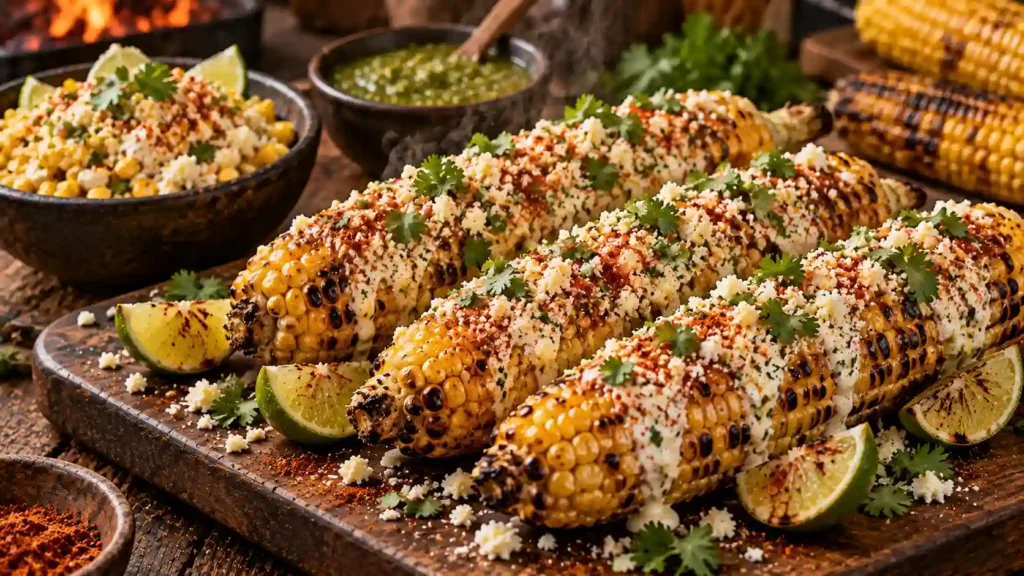
Cooking an authentic mexican street corn recipe brings the smoky, festive soul of Latin open-air markets straight into your home. Known traditionally as elotes, this humble street snack has achieved legendary status among international food lovers. In fact, few culinary creations balance sweet, smoky, creamy, and tangy flavors with such effortless perfection. The contrast of blistered sweet corn, velvety garlic crema, salty cotija cheese, and fiery chile powder creates pure dining bliss. At Gulf Lights, we deliver verified culinary guides to elevate everyday dining across the United Arab Emirates and beyond.
Recreating authentic Mexican street snacks does not require specialized outdoor carts or hard-to-find ingredients. In fact, achieving restaurant-worthy results depends on high-heat charring, proper dairy emulsions, and balanced citrus acidity. Furthermore, mastering vibrant side dishes like guacamole, salsa verde, and refried beans transforms simple weeknight meals into festive banquets. Consequently, you can host memorable gatherings with remarkable ease and affordability. Explore our complete culinary archive through our food category hub.
The Cultural Heritage of the Mexican Street Corn Vendor
Street corn represents an integral pillar of everyday social life across Mexican towns and cities. In historic plazas from Mexico City to Oaxaca, street vendors known as “eloteros” push wheeled carts equipped with steaming cauldrons and charcoal grills. Locals congregate around these carts every evening to enjoy warm corn snacks.
Historically, corn formed the sacred spiritual and agricultural foundation of Mesoamerican civilizations. Indigenous populations revered maize as the source of all human vitality. Over centuries, street vendors developed ingenious methods to dress grilled cobs with rich condiments. Today, this handheld delicacy is celebrated worldwide for its irresistible balance of contrasting textures. You can review regional household grocery budgets and dining benchmarks in our guide to prices in dubai for food.
Moreover, similar street snacking traditions flourish across international food cultures. From roasted corn stalls in South Asia to spiced street wraps in the Arabian Gulf, open-air snacks unite diverse communities. You can explore traditional Gulf street foods and savory wraps in our guide to authentic shawarma in dubai. Mexican street corn celebrates the timeless magic of transforming humble harvest vegetables into gourmet street feasts.
The Anatomy of Authentic Elotes: Corn, Crema, and Cotija
Understanding the essential components of classic elotes ensures your homemade version matches authentic street cart standards. Each ingredient performs a specific sensory role that balances the overall dish.
First, fresh sweet corn provides the juicy, sugary foundation. As natural corn sugars hit blazing heat, they caramelize into sweet, nutty flavors. Second, the creamy binder traditionally blends Mexican crema with rich mayonnaise. Mexican crema provides subtle tanginess similar to French crème fraîche, while mayonnaise ensures the coating adheres tightly to warm corn kernels.
Third, authentic crumbly cotija cheese delivers savory, salty contrast. In addition, freshly squeezed lime juice introduces refreshing citric acidity that cuts through heavy dairy richness. Finally, a dusting of Mexican chili powder or Tajín seasoning adds vibrant color and gentle warmth. You can compare street taco seasoning blends in our master taco recipe guide. Balancing these four elements guarantees unforgettable street flavor.
The Science of Charring: Unlocking Sweet Caramelization
The defining characteristic of great street corn is its blistered, smoky exterior. Boiling corn alone yields tender kernels, but it lacks the savory complexity produced by direct fire.
When sweet corn encounters intense dry heat above 160°C (320°F), two chemical transformations occur simultaneously. First, caramelization breaks down sucrose sugars in the corn, turning yellow kernels into nutty, browned jewels. Second, the Maillard reaction between natural amino acids and sugars creates hundreds of new savory flavor compounds. If you enjoy deep sears on whole muscle steaks, check our classic steak recipes.
Furthermore, allowing kernels to blister and pop creates charred black spots that introduce pleasant bitterness. This slight bitterness is essential because it cuts through the intense natural sweetness of ripe corn. Whether using an outdoor charcoal grill or a heavy indoor cast-iron skillet, intense dry heat is mandatory. You can review corporate regulatory standards and safety practices in our legal and government services directory. High heat transforms ordinary corn into an extraordinary culinary canvas.
Mastering the Ultimate Mexican Street Corn Recipe at Home
This master mexican street corn recipe delivers four charred cobs coated in luscious lime crema, salty cotija cheese, and smoky chili powder in twenty minutes. Follow these step-by-step instructions for guaranteed dining triumph.
- Preheat the Grill: Heat an outdoor grill or indoor cast-iron grill pan over high heat until smoking hot.
- Prep the Corn: Pull back the husks from four fresh ears of sweet corn, remove the silk threads, and tie the husks back to form handles. Brush the kernels lightly with melted butter or oil.
- Whisk the Crema Glaze: In a shallow bowl, whisk a quarter cup of mayonnaise, a quarter cup of Mexican crema, one minced garlic clove, the zest of one lime, and a pinch of salt.
- Grill to Blistered Perfection: Place the corn directly onto the hot grates. Grill for ten to twelve minutes, turning every two minutes, until kernels are tender and deeply charred in spots.
- Brush with Crema: Remove hot corn from the heat. Immediately brush each cob generously on all sides with the creamy sauce mixture.
- Coat with Cotija: Roll the coated corn in one cup of finely crumbled cotija cheese, pressing gently so the cheese adheres to the sauce.
- Season and Garnish: Dust generously with ancho chili powder or Tajín seasoning, and sprinkle with fresh chopped cilantro.
Serve immediately with charred lime wedges for squeezing over the top. Pair this comforting street classic with artisanal flatbreads from our naan bread recipe collection.
Street Corn in a Cup: The Comfort of Authentic Esquites
While eating corn on the cob is visually spectacular, enjoying corn in a cup offers effortless convenience. Known throughout Mexico as esquite (or elote en vaso), this off-the-cob snack eliminates messy fingers completely.
To prepare esquites, slice sweet corn kernels cleanly off the cob using a sharp chef’s knife. Sauté the kernels in a hot cast-iron skillet with butter and neutral oil for eight minutes until blistered and browned. You can verify dairy baking measurements in our kitchen reference guide on 1 cup butter in grams.
Next, toss the hot charred corn with epazote leaves, minced garlic, and jalapeños. Spoon the steaming corn into cups, layering it with spoonfuls of lime crema, melted butter, crumbled cotija cheese, and chili powder. Guests can eat esquites comfortably with a spoon while mingling at casual parties. If you love burger patties, explore our skillet techniques in our smash burger recipe guide. Esquites bring portable street luxury to any gathering.
Creamy Velvet Luxury: Authentic Homemade Guacamole Recipe
No Mexican street feast is complete without a freshly mashed bowl of authentic guacamole recipe. True Mexican guacamole celebrates the pure, rich flavor of ripe avocados without unnecessary filler ingredients.
Begin by selecting perfectly ripe Hass avocados that yield gently to thumb pressure. In a traditional volcanic stone mortar (molcajete), crush finely minced white onions, serrano chiles, fresh cilantro, and coarse sea salt into an aromatic paste. Crushing aromatics releases flavorful essential oils that disperse evenly through the dish.
Add the avocado flesh and mash coarsely with a pestle or fork, leaving pleasant chunks for texture. Stir in fresh lime juice to taste. The lime juice provides bright acidity while preventing the avocado from oxidizing and turning brown. Never add sour cream, mayonnaise, or garlic powder to authentic guacamole. If you love fresh green salads, explore our dressing foundations in our authentic caesar salad recipe. Pure avocado guacamole provides clean, velvety comfort.
Tangy Emerald Heat: Traditional Roasted Salsa Verde Recipe
Alongside creamy dips, a vibrant homemade salsa verde recipe provides bright, refreshing acidity that cuts through rich street meats. Authentic green salsa relies on fresh tomatillos rather than unripe green tomatoes.
Husk and rinse six fresh tomatillos to remove their natural sticky resin. Place the tomatillos, two serrano chiles, half a white onion, and two unpeeled garlic cloves on a baking sheet. Broil under high oven heat for eight minutes until skins blister and turn black in spots.
Peel the roasted garlic and transfer all ingredients into a blender with fresh cilantro and sea salt. Pulse coarsely until an emerald-green sauce forms. The natural pectin in roasted tomatillos thickens the salsa into a velvety emulsion that clings to warm chips and meats. Explore foundational Italian tomato reductions in our specialized homemade spaghetti sauce guide. Salsa verde delivers an exhilarating citrus kick.
Fresh Garden Crispness: Classic Pico de Gallo
When you crave refreshing crunch and clean flavors, a vibrant bowl of fresh pico de gallo (salsa fresca) is the ultimate accompaniment. This uncooked salsa showcases raw garden vegetables at their peak.
Finely dice ripe Roma tomatoes, crisp white onions, seeded jalapeño peppers, and fresh flat-leaf cilantro. Toss the diced vegetables in a glass bowl with freshly squeezed lime juice and kosher salt. Let the mixture sit at room temperature for fifteen minutes before serving.
During this resting window, the salt draws out excess tomato water, concentrating natural sweetness while softening sharp raw onion edges. Spoon fresh pico de gallo generously over grilled meats, seafood, or warm street corn. If you love crispy chicken breasts, explore our breaded cutlet techniques in our classic chicken breast recipes guide. Crisp pico de gallo adds color and vitality to every plate.
Wholesome Comfort: Authentic Homemade Refried Beans Recipe
Creamy, slow-simmered beans represent the comforting backbone of everyday Mexican family dining. Making an authentic refried beans recipe from scratch yields flavor that commercial canned beans simply cannot duplicate.
Simmer dry pinto beans in water with halved onions, garlic cloves, and a bay leaf for two hours until exceptionally soft. In a separate wide skillet, melt two tablespoons of traditional lard, butter, or olive oil over medium heat. Sauté finely minced onions until sweet and golden.
Add the cooked pinto beans along with half a cup of their starchy cooking broth. Mash the beans vigorously with a potato masher while simmering, creating a smooth, velvety paste. Season with ground cumin, salt, and black pepper. The starch from the bean broth emulsifies with the cooking fat into a luscious, comforting purée. Review ground beef butchery dynamics in our master guide to ground beef recipes. Wholesome refried beans complete any Latin dinner spread.
Fluffy Golden Grains: Authentic Spanish Rice Recipe
Known across Mexico as arroz rojo, fragrant spanish rice recipe provides fluffy, savory starch that ties festive meals together. The secret to separate, fluffy grains lies in toasting the raw rice first.
Heat vegetable oil in a heavy saucepan and add long-grain white rice. Toast the dry rice over medium heat for five minutes while stirring continuously until grains turn opaque and golden brown. Toasting coats each starch granule in oil, preventing grains from sticking together into mush later.
Blend ripe tomatoes, white onions, garlic, and chicken broth in a blender until smooth. Pour this red liquid over the toasted rice, bring to a rolling boil, then cover with a tight-fitting lid. Reduce heat to low and simmer undisturbed for twenty minutes. Remove from heat and let rest covered for ten minutes before fluffing with a fork. If you enjoy slow-cooked shredded meats, check our classic pulled pork recipe. Fluffy red rice is the essential companion to Mexican street snacks.
Fiery Summer Salad: Zesty Cowboy Caviar Recipe
Originating as a Texas social favorite, refreshing cowboy caviar recipe has become an international party sensation. This vibrant dip combines sweet corn, black beans, black-eyed peas, and colorful peppers in a zesty vinaigrette.
Combine cooked sweet corn, rinsed black beans, diced red bell peppers, avocado chunks, and minced red onions in a large bowl. Whisk a zesty dressing of olive oil, red wine vinegar, fresh lime juice, honey, cumin, and chili powder. Pour the dressing over the bean mixture and toss gently to coat.
Chill in the refrigerator for at least thirty minutes before serving. As the salad rests, the beans absorb the tangy dressing, creating an explosive party dip that guests can scoop with crispy tortilla chips. If you love layered baked casseroles, compare this cold salad with our bubbling chicken enchilada recipe. Cowboy caviar delivers refreshing crunch with zero cooking required.
Cheese Selection: Cotija vs Queso Fresco vs Greek Feta
Selecting the appropriate cheese ensures your Mexican street corn delivers authentic savory punch. Different crumbly cheeses contribute distinct textures and moisture levels.
First, authentic Mexican cotija cheese is a dry, aged cow’s milk cheese often called the “Parmesan of Mexico.” It does not melt under heat; instead, it provides a firm, salty crumb that clings to creamy sauces. Second, queso fresco is a soft, moist, unaged curd cheese. While delicious, its higher moisture content makes it slightly heavier on grilled corn.
If authentic cotija is unavailable in your regional market, mild Greek feta cheese serves as an outstanding substitute. Feta shares cotija’s briny salinity and crumbly texture. Simply rinse the feta briefly under cold water to remove excess surface brine, dry thoroughly, and crumble finely with a fork. You can explore grand Arabian cheese traditions in our guide to the national dish of uae. Choosing the right crumbly cheese guarantees savory balance.
Safe Corn Prep, Shucking, and Storage Guidelines
Handling fresh sweet corn properly preserves its natural moisture and prevents premature starch conversion. Following proper storage protocols keeps corn sweet and tender.
Sweet corn begins converting its natural sugars into starches the moment it is harvested. Therefore, always cook corn as close to purchase as possible. Store un-shucked corn in the crisper drawer of your refrigerator for up to three days. Keep husks intact until ready to grill, as the outer leaves protect delicate kernels from drying out.
To freeze sweet corn for future esquites, blanch whole shucked cobs in boiling water for four minutes, then shock immediately in ice water. Slice the kernels off the cob and seal them inside airtight freezer bags for up to eight months. Defrost frozen kernels in a hot skillet for quick weeknight cooking. If you enjoy slow-simmered beef comfort, explore our homestyle beef stew recipe guide.
Nutritional Power: Fiber, Carotenoids, and Healthy Fats
Nutritionists celebrate sweet corn, avocados, and legumes as wholesome cornerstones of a plant-forward lifestyle. Savoring well-prepared Mexican vegetable sides delivers exceptional vitality.
Sweet corn supplies abundant dietary fiber, B-complex vitamins, and powerful carotenoid antioxidants like lutein and zeaxanthin. These carotenoids protect retinal tissue and support long-term ocular health. Furthermore, fresh avocados supply heart-healthy monounsaturated fatty acids that lower harmful LDL cholesterol.
In addition, combining beans and corn creates a complete vegetarian protein profile containing all essential amino acids. Discover how whole-food lifestyle frameworks support lifelong vitality in our comprehensive guide to a balanced diet. In addition, discover nutrient-dense natural superfoods in our analysis of dates benefits. Mindful ingredient choices ensure festive Mexican dining aligns with health goals.
Side Dish Symphony: Pairing Mexican Street Corn with Main Feasts
Because Mexican street corn delivers bold savory, creamy, and smoky notes, it acts as the perfect partner for diverse grilled mains. Thoughtful pairings create an unforgettable banquet.
Serve charred elotes alongside sizzling chicken or beef fajitas, crispy fish tacos, or slow-braised birria. In addition, serving warm corn with crisp romaine greens tossed with our zesty caesar salad recipe dressing creates wonderful textural harmony. For festive rice feasts, explore our celebrated Indian rice dishes in our authentic biryani recipe guide.
Furthermore, pair sweet corn with crispy battered poultry from our double-dredged fried chicken recipe collection. Savoring sweet corn alongside smoky mains delights adults and children alike. Harmonious pairings turn everyday cooking into a joyous fiesta.
Commercial Hospitality Careers in Latin Dining and Street Concepts
The explosive global popularity of Mexican street food and upscale cantinas has generated vibrant career opportunities across the food service industry. In cosmopolitan dining hubs like Dubai, modern Latin lounges and boutique food halls recruit talented grill masters, prep supervisors, and kitchen managers.
Culinary professionals who master high-speed line execution and authentic scratch sauces enjoy steady recruitment demand. If you are exploring professional vocational paths in gastronomy, review our comprehensive guide on hospitality tourism jobs. In addition, executive chefs and restaurant operations directors command prestigious compensation packages. Explore executive salary scales in our guide to the highest paying jobs.
Furthermore, restaurant networks rely on temperature-controlled warehousing to store fresh produce, dairy, and imported chiles safely. Candidates interested in supply logistics can explore opportunities in our guide on dubai warehouse logistics jobs. Dedicated culinary staff can advance into corporate leadership roles through strategic career change growth. Many international culinary talents relocate using our guide to work abroad. You can study statutory labor standards in our analysis of the labour law uae.
Frequently Asked Questions About Mexican Street Corn
Can I make Mexican street corn using canned or frozen corn?
Yes, you can make delicious esquites (corn in a cup) using drained canned corn or thawed frozen corn. Sauté the kernels in a hot dry cast-iron skillet for eight minutes until charred and blistered before tossing with crema, cotija, and spices.
What is the best substitute for cotija cheese?
Finely crumbled mild Greek feta cheese is the closest substitute for cotija. It offers similar salinity and crumbly texture. Alternatively, finely grated Parmigiano-Reggiano or Pecorino Romano provides delicious salty depth.
How do I keep corn warm when serving a crowd?
If serving on the cob, wrap freshly grilled cobs in aluminum foil and store them inside an insulated cooler box until serving. If making esquites, keep the seasoned corn warm in a slow cooker set to the Warm setting.
Is Mexican street corn served hot or cold?
Authentic elotes and esquites are strictly served steaming hot straight from the grill or skillet. The heat softens the cotija cheese slightly and warms the crema glaze, creating an unctuous, comforting mouthfeel.
Mastering this classic Mexican street corn recipe empowers you to prepare smoky, creamy, and restaurant-quality Latin street feasts right in your own kitchen. By mastering high-heat charring, whisking balanced lime crema, and pairing blistered corn with scratch salsas and guacamole, you can create extraordinary culinary feasts that bring loved ones together. For additional culinary tutorials, kitchen advice, and verified lifestyle guides, connect with our specialist team via the Gulf Lights contact page. Discover more inspirational cooking articles on the Gulf Lights blog.