Cooking an authentic pad thai recipe from scratch is one of the most thrilling culinary achievements in Asian street cooking. Across bustling night markets in Bangkok and upscale metropolitan dining rooms worldwide, stir-fried rice noodles represent absolute comfort. The harmony of sweet palm sugar, tangy tamarind pulp, salty fish sauce, and fiery chilis creates unforgettable dining joy. At Gulf Lights, we deliver verified culinary guides to elevate everyday dining across the United Arab Emirates and beyond.
Mastering Asian noodle dishes does not require commercial street cart equipment. In fact, achieving restaurant-worthy noodle texture depends on noodle hydration science, balanced sauce chemistry, and rapid wok technique. Furthermore, learning stir-fry fundamentals unlocks iconic regional favorites like Cantonese beef chow fun, chicken lo mein, and Japanese yakisoba. Consequently, you can prepare vibrant, authentic noodle feasts in under twenty-five minutes. Explore our complete culinary archive through our food category hub.
The Cultural Heritage of Pad Thai: Nation-Building Through Street Food
Unlike ancient ancestral curries, Pad Thai has a fascinating modern political history. During the late 1930s, Prime Minister Plaek Phibunsongkhram launched a national campaign to modernize Thailand and foster cultural unity. Facing severe rice shortages following World War II, the government promoted rice noodles to preserve whole grain supplies.
Furthermore, officials distributed standardized noodle recipes to street cart vendors throughout the kingdom. The government named the dish “Kway Teow Pad Thai,” meaning stir-fried noodles in the Thai style. The dish combined Chinese wok techniques with indigenous Thai seasonings like tamarind, palm sugar, and dried shrimp. You can review regional dining benchmarks and grocery expenses in our guide to prices in dubai for food.
Within a single generation, Pad Thai transformed from a government initiative into a globally beloved street sensation. Moreover, similar comforting starch traditions unite cultures across the Arabian Peninsula and South Asia. You can explore traditional Arabian spiced rice and slow-cooked meat stews in our comprehensive guide to the national dish of uae. Pad Thai celebrates the brilliant harmony of diverse textures and complex flavors.
The Sacred Balance of Flavors: Sweet, Sour, Salty, and Umami
Traditional Thai gastronomy revolves around a sacred sensory principle known as the four-pillar flavor balance. Every world-class Thai dish must stimulate sweet, sour, salty, and spicy taste receptors simultaneously.
First, sourness provides essential brightness, derived exclusively from natural tamarind fruit pulp. Second, sweetness balances the sharp acid, provided by unrefined palm sugar. Palm sugar delivers rich caramel undertones that refined white table sugar simply cannot replicate. Third, premium fermented fish sauce (nam pla) delivers profound marine salinity and savory glutamates.
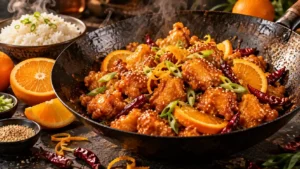
Finally, dried red chili flakes introduce customizable heat that warms the palate. When tossed over blazing wok heat, these four elements caramelize into a glossy glaze. The glaze coats every rice noodle strand without turning heavy or greasy. If you enjoy crispy battered poultry, compare this balance with our sweet citrus glaze in our classic orange chicken recipe guide. True Pad Thai is defined by this delicate equilibrium.
The Essential Tamarind Base: Why Ketchup Never Belongs in Pad Thai
A tragic mistake made by Western restaurants is using tomato ketchup or peanut butter in Pad Thai sauce. Ketchup produces a sugary, neon-pink noodle dish that tastes flat and artificially sweet.
Authentic Pad Thai derives its signature amber hue and fruity tartness entirely from pure tamarind paste. Tamarind fruit pods contain tartaric acid, which delivers a mellow, complex tang with dried fruit notes. To prepare fresh tamarind water, soak a block of seedless tamarind pulp in warm water for fifteen minutes. Squeeze the softened pulp with your fingers, and strain the rich liquid through a fine-mesh sieve.
Whisk equal parts tamarind concentrate, grated palm sugar, and pure fish sauce in a small saucepan. Simmer gently over low heat for five minutes until the palm sugar dissolves completely. This master sauce stores in an airtight glass jar for up to one month. You can verify dairy baking measurements in our kitchen reference guide on 1 cup butter in grams. Real tamarind sauce guarantees authentic street-cart depth.
Mastering Rice Noodles: Soaking vs Boiling Science
The single most common pitfall when cooking Asian noodles is ending up with a mushy, broken clump in the pan. Rice noodles behave very differently from wheat-based Italian pasta.
Italian pasta requires rolling boiling water to gelatinize wheat gluten. In contrast, flat rice noodles (sen lek) contain pure rice starch and zero gluten. If you boil rice noodles in hot water before stir-frying, they absorb too much water. When dumped into a hot wok, the waterlogged noodles break into small mushy fragments instantly.
Therefore, professional street vendors never boil their rice noodles. Instead, submerge dry rice noodles in lukewarm water for forty to fifty minutes until pliable but firm (al dente). The noodles should bend effortlessly around your fingers while still feeling slightly stiff in the core. When tossed into the hot wok, the par-hydrated noodles absorb the liquid tamarind sauce directly. This technique ensures noodles stay toothsome, chewy, and completely intact. You can review corporate regulatory standards and safety practices in our legal and government services directory.
Mastering the Ultimate Authentic Pad Thai Recipe at Home
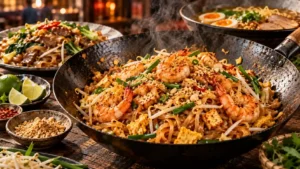
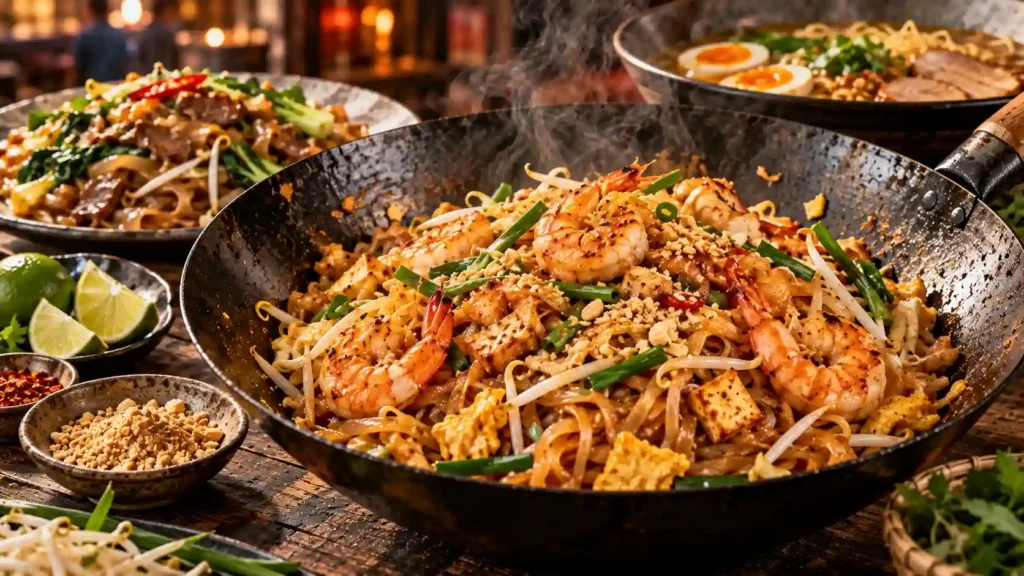
This master pad thai recipe delivers chewy rice noodles, succulent prawns, golden tofu, and crunchy peanuts in fifteen minutes of active cooking. Follow these step-by-step instructions for guaranteed dining triumph.
- Soak the Noodles: Submerge 200 grams of medium flat rice noodles in lukewarm water for forty-five minutes until flexible. Drain thoroughly and set aside.
- Whisk the Master Sauce: Combine three tablespoons of tamarind concentrate, three tablespoons of palm sugar, and two and a half tablespoons of fish sauce. Stir until smooth.
- Prep the Aromatics: Finely mince two shallots, three garlic cloves, and two tablespoons of sweet preserved radish. Cut 100 grams of firm pressed tofu into small matchsticks.
- Sear the Seafood: Heat two tablespoons of neutral oil in a large wok over high heat. Sear eight peeled jumbo prawns for ninety seconds per side until pink. Transfer prawns to a side plate. Explore rapid shellfish techniques in our guide to shrimp recipes.
- Sauté Aromatics and Tofu: Add one tablespoon of oil to the wok. Fry the tofu cubes, minced shallots, garlic, and preserved radish for two minutes until golden.
- Add Noodles and Sauce: Add the drained rice noodles directly into the wok. Pour in the tamarind sauce and two tablespoons of water. Toss continuously for two minutes over high heat until the noodles absorb the sauce and turn glossy.
- Scramble the Eggs: Push the noodles to one side of the wok. Crack two eggs into the cleared space, scramble lightly until softly set, and fold them into the noodles.
- Fold in Fresh Crunch: Return the cooked prawns to the wok. Add two cups of fresh bean sprouts and half a cup of sliced garlic chives. Toss vigorously for thirty seconds.
- Garnish and Serve: Plate immediately. Garnish with crushed roasted peanuts, fresh lime wedges, and dried red chili flakes.
Squeeze fresh lime juice over the noodles right before taking your first bite. Pair this street food classic with artisanal flatbreads from our naan bread recipe collection for creative fusion dining.
Wok Hei and High-Heat Thermodynamics: Preventing Soggy Clumps
The defining hallmark of authentic wok cookery is “wok hei,” translating to the “breath of the wok.” This elusive, smoky flavor distinguishes restaurant noodles from bland home attempts.
Wok hei occurs when aerosolized oil droplets vaporize as food is tossed into the air above high heat. The combusting oil mist imparts a delicate charred perfume to the noodles. Furthermore, intense heat caramelizes natural sugars on the surface of carbon steel instantly. If you enjoy high-heat sears on thick beef cuts, check our classic steak recipes.
To capture wok hei at home, cook only one or two portions at a time. Overcrowding a residential wok drops pan temperatures rapidly. When the wok cools down, ingredients steam in their own juices rather than searing. Searing in small batches ensures intense caramelization and smoky depth.
Cantonese Street Legend: Authentic Beef Chow Fun
Hailing from bustling Guangzhou street stalls, authentic beef chow fun represents the supreme test of a wok chef’s skill. This iconic Cantonese dish features wide flat rice noodles (ho fun) and tender beef.
Wide fresh rice noodles require gentle handling so the delicate sheets do not tear. Marinate thinly sliced flank steak in soy sauce, rice wine, and cornstarch using the traditional velveting method. Flash-sear the beef in a smoking wok for sixty seconds, then remove it to a plate. In the same wok, toss the wide noodles with dark soy sauce, light soy sauce, and scallions.
Dark soy sauce imparts rich mahogany color, while light soy sauce introduces savory salinity. Return the beef along with crisp yellow chives and bean sprouts, tossing for one final minute over high heat. Savoring charred, silky beef ribbons wrapped in chewy rice noodles is pure bliss. If you prefer lean white poultry on busy weeknights, explore our tender chicken breast recipes. Beef chow fun is the ultimate Cantonese comfort staple.
Crispy vs Saucy: Classic Chow Mein Recipe vs Lo Mein Recipe
Western diners frequently confuse two beloved Chinese noodle preparations: chow mein and lo mein. While both utilize wheat-and-egg noodles, their cooking methods produce entirely different textures.
First, an authentic chow mein recipe focuses on crispy, pan-fried noodles. Chefs parboil thin egg noodles, drain them, and press them into a hot oiled wok to form a golden noodle cake. The noodles fry until shatteringly crisp on the exterior while remaining soft inside. A savory meat and vegetable stir-fry is spooned over the top, softening the crunchy noodles slightly as you eat.
In contrast, a classic lo mein recipe translates literally to “tossed noodles.” Cooks use thicker, round egg noodles that are boiled until tender and drained. Next, the soft noodles are tossed directly into a bubbling wok with a rich, velvety oyster sauce glaze. The thick noodles absorb the savory sauce, resulting in a soft, slurpable, and comforting dish. Both styles deliver delicious takeout satisfaction.
Weeknight Takeout Favorite: Chicken Lo Mein Recipe
When you need dinner on the table in under twenty minutes, a savory chicken lo mein recipe delivers incredible convenience. It transforms simple pantry ingredients into a balanced, protein-packed meal.
Toss thinly sliced chicken breast with soy sauce, cornstarch, and sesame oil. In a separate bowl, whisk oyster sauce, soy sauce, chicken broth, and a pinch of sugar. Sauté the chicken in a hot wok for three minutes, then toss with sliced carrots, snap peas, and cabbage ribbons.
Add boiled egg noodles and the savory sauce mixture, tossing vigorously over high heat until every noodle is glossy and coated. The sweet cabbage and crisp carrots provide wonderful textural contrast against tender noodles and juicy chicken. If you love burger patties, explore our skillet techniques in our smash burger recipe guide. Chicken lo mein makes weeknight family dinners effortless and joyful.
Fiery Sichuan Heritage: Authentic Dan Dan Noodles
Originating as a portable street vendor meal in Chengdu, authentic dan dan noodles (Dan Dan Mian) represent Sichuan culinary complexity. The dish was named after the bamboo shoulder pole (“dan dan”) that walking vendors carried through city streets.
Dan Dan noodles feature wheat noodles served over a fiery, complex sauce resting at the bottom of the bowl. The sauce combines spicy roasted chili oil, Sichuan pepper oil, dark soy sauce, black Chinkiang vinegar, and nutty sesame paste. In addition, the noodles are topped with crispy minced pork cooked with sweet fermented flour paste and Sui Mi Ya Cai (preserved mustard greens).
When diners receive their bowl, they toss the noodles thoroughly, coating every strand in the spicy, numbing sauce. Sichuan peppercorns produce the famous “mala” tingling sensation that stimulates the senses. If you enjoy slow-simmered beef comfort, explore our homestyle beef stew recipe guide. Dan Dan noodles deliver an unforgettable explosion of heat, crunch, and acid.
Japanese Street Stall Magic: Savory Yakisoba
During summer festival season across Japan, food stalls (yatai) fill the air with the savory aroma of sizzling yakisoba. Despite containing “soba” in its name, yakisoba uses wheat-flour ramen-style noodles rather than buckwheat.
Yakisoba is cooked on a massive flat iron griddle (teppan). Chefs fry sliced beef or pork with shredded cabbage, carrots, and onions before adding the noodles. The dish is seasoned with a tangy Worcestershire-style sauce blended with oyster sauce, ketchup, and soy sauce.
Toss the noodles vigorously until the sweet-savory sauce caramelizes on the hot iron. Serve garnished with powdered green seaweed (aonori), pickled red ginger (beni shoga), and dancing bonito flakes (katsuobushi). If you love crispy chicken breasts, explore our breaded cutlet techniques in our classic fried chicken recipe guide. Yakisoba delivers comforting Japanese street dining at its finest.
Broth and Slurp Culture: Authentic Ramen Noodles Recipe
No discussion of Asian noodles is complete without honoring Japanese ramen culture. An authentic ramen noodles recipe represents a meditative culinary discipline centered on deep, rich broths and springy alkaline noodles.
Ramen noodles are distinguished by “kansui,” an alkaline mineral water containing potassium and sodium carbonate. The alkaline environment gives ramen noodles their signature yellow color, earthy aroma, and springy, chewable texture that resists softening in hot soup. Combine high-collagen bone broth with a savory seasoning base (tare), such as soy sauce, miso, or sea salt.
Ladle piping hot broth over freshly boiled noodles, and crown the bowl with braised chashu beef, a soft-boiled marinated egg, bamboo shoots, and nori seaweed. Slurping the hot noodles aerates the broth, intensifying its complex aromatic profile on the palate. If you enjoy royal layered rice dishes, explore our authentic biryani recipe. Ramen represents comforting craftsmanship in a bowl.
Protein and Texture Play: Firm Tofu, Dried Shrimp, and Crushed Peanuts
The beauty of Asian noodle cooking lies in contrasting textures within every bite. Incorporating traditional proteins elevates home cooking into an artisanal craft.
First, extra-firm yellow pressed tofu provides hearty chew and absorbs savory sauces effortlessly. Pat tofu thoroughly dry and pan-fry in hot oil until a golden skin forms. Second, tiny sun-dried shrimp provide concentrated ocean salinity and umami pops. Dried shrimp soften slightly in the hot wok, releasing savory depth throughout the noodles.
Third, freshly toasted crushed peanuts provide essential fatty crunch that balances sour tamarind and sweet palm sugar. Always roast raw peanuts in a dry skillet before crushing them coarsely with a mortar and pestle. Pre-packaged roasted nuts often contain stale oils that dull delicate flavors. Freshly roasted peanuts introduce irresistible aroma and crunch.
Nutritional Balance: Whole Ingredients, Vegetables, and Mindful Eating
While takeout noodles are often viewed as carb-heavy indulgences, homemade noodle dishes provide balanced, wholesome nutrition. Cooking from scratch gives you complete control over ingredient ratios.
First, rice noodles are naturally gluten-free and gentle on sensitive digestive tracts. Second, incorporating generous amounts of raw bean sprouts, shredded cabbage, carrots, and garlic chives introduces abundant dietary fiber. Dietary fiber slows carbohydrate absorption, stabilizing blood sugar levels and promoting long-lasting satiety.
Furthermore, lean proteins like jumbo shrimp, chicken breast, and firm tofu deliver complete dietary protein to support cellular repair. Discover how whole-food lifestyle frameworks support lifelong vitality in our comprehensive guide to a balanced diet. You can also explore nutrient-dense natural superfoods in our analysis of dates benefits. Mindful cooking allows you to enjoy noodles as part of a wholesome lifestyle.
Side Dish Symphony: Fresh Greens, Dumplings, and Broths
Because stir-fried noodles are intensely flavorful, thoughtful side dish pairings complete the celebratory dining experience. Fresh salads and light broths provide essential balance.
A crisp romaine salad tossed with our zesty caesar salad recipe dressing cuts through rich wok oils effortlessly. In addition, serving a light bowl of clear chicken broth garnished with scallions refreshes the palate between savory bites. If you enjoy slow-simmered vegetarian curries, explore our homestyle chana masala recipe guide.
Furthermore, pair stir-fried noodles with royal tandoori appetizers from our authentic tandoori chicken recipe collection for vibrant Asian fusion dining. For delicate ocean seafood variations, explore our comprehensive guide on tender fish recipes. Harmonious accompaniments elevate casual noodle cooking into a memorable banquet.
Meal Prep, Storing, and Reheating Asian Noodles
Preparing noodle elements in advance streamlines busy weeknight family dinners. However, proper storage protocols are essential to prevent cooked noodles from turning soggy.
Store leftover Pad Thai or lo mein in an airtight glass container in the refrigerator for up to three days. Over time, cooked rice noodles absorb residual moisture and become slightly firm. Never reheat stir-fried noodles in a dry microwave, as high microwave heat makes rice starch rubbery and brittle.
Instead, reheat noodles in a hot skillet or wok over medium heat with two tablespoons of water or chicken broth. Cover with a lid for sixty seconds to generate steam, then toss gently with chopsticks until hot and pliable. The steam revives the starches, restoring original chew and tenderness. If you enjoy slow-cooked shredded meats, check our classic pulled pork recipe. Reheating properly ensures leftover noodles taste freshly made.
Commercial Hospitality Careers in Asian Noodle Bars and Wok Lines
Mastering high-speed wok stations, noodle hydration, and Asian sauce balancing are elite culinary competencies evaluated across the global hospitality sector. In modern Pan-Asian bistros, luxury hotel dining rooms, and high-volume noodle bars, wok chefs command immense respect.
Talented wok line cooks, prep supervisors, and kitchen managers enjoy robust recruitment demand across major gastronomic hubs like Dubai. If you are exploring professional vocational paths in gastronomy, review our comprehensive guide on hospitality tourism jobs. In addition, executive chefs and restaurant operations directors command prestigious compensation packages. Explore executive salary scales in our guide to the highest paying jobs.
Furthermore, restaurant networks rely on temperature-controlled warehousing to store fresh rice noodles, seafood, and Asian sauces safely. Candidates interested in supply logistics can explore opportunities in our guide on dubai warehouse logistics jobs. Dedicated culinary staff can advance into corporate leadership roles through strategic career change growth. Many international culinary talents relocate using our guide to work abroad. You can study statutory labor standards in our analysis of the labour law uae.
Frequently Asked Questions About Pad Thai and Asian Noodles
Can I use lime juice instead of tamarind paste in Pad Thai?
While fresh lime juice provides acidity, it cannot replicate the complex fruity tartness of tamarind paste. Lime juice is an accent garnish, whereas tamarind provides the essential body of authentic Pad Thai sauce.
Why do my rice noodles stick together in the wok?
Noodles stick together when boiled in hot water beforehand, or when the wok is not hot enough. Always soak dried rice noodles in lukewarm water until pliable, and toss over high wok heat with oil.
Can I make Pad Thai vegetarian or vegan?
Yes, replace fish sauce with high-grade vegetarian mushroom stir-fry sauce or light soy sauce, omit dried shrimp, and use extra firm tofu and mushrooms for a completely plant-based feast.
What is the best way to keep bean sprouts crunchy in Pad Thai?
Add fresh bean sprouts during the final thirty seconds of wok cooking, or serve half of them raw on the side. Excessive heat wilts bean sprouts quickly, turning them soft and watery.
Mastering this classic pad thai recipe gives you the culinary confidence to prepare fresh, vibrant, and restaurant-quality Asian street feasts right in your own kitchen. By understanding rice noodle soaking science, balancing real tamarind with palm sugar, and mastering high-heat wok tossing, you can create extraordinary culinary feasts that bring loved ones together. For additional culinary tutorials, kitchen advice, and verified lifestyle guides, connect with our specialist team via the Gulf Lights contact page. Discover more inspirational cooking articles on the Gulf Lights blog.