Learning versatile and reliable salmon recipes is one of the most valuable investments any home cook can make. Salmon is universally celebrated as the crown jewel of modern seafood dining. It combines rich, buttery flavor with exceptional nutritional benefits and rapid cooking speed. Whether you crave a shatteringly crisp pan-seared fillet, a comforting oven bake, or sweet teriyaki glazes, salmon delivers effortless elegance. At Gulf Lights, we deliver verified culinary guides to help you create memorable gastronomic feasts in your kitchen.
Cooking seafood intimidates many home cooks who fear dry, fishy, or rubbery results. In fact, salmon is one of the most forgiving and versatile proteins available. Furthermore, understanding basic heat regulation, moisture control, and internal temperatures guarantees restaurant-quality results every time. Consequently, you can prepare gourmet seafood banquets in under twenty minutes after a demanding workday. Explore our complete culinary archive through our food category hub.
Why Cooking Salmon at Home Is a Culinary Superpower
Preparing fresh fish at home gives you complete control over ingredient quality and cooking precision. In upscale restaurants, seafood entrees frequently carry substantial price markups. In contrast, purchasing fresh fillets from reputable fishmongers cuts dining costs dramatically. You can review regional household budget planning and seafood market benchmarks in our guide to prices in dubai for food.
Moreover, salmon cooks significantly faster than poultry or beef. A tender fillet cooks through in less than ten minutes on a hot stovetop. In addition, its natural richness pairs harmoniously with virtually every global flavor profile, from Mediterranean garlic herbs to sweet Asian glazes. If you enjoy quick weeknight poultry cuts, compare these speedy techniques with our versatile chicken breast recipes. However, for sheer heart-healthy luxury, fresh salmon remains unmatched.
Understanding Salmon Varieties: Atlantic, King, Sockeye, and Coho
The success of all seafood dishes begins with selecting the correct fish variety for your cooking method. Not all salmon species perform identically under heat, as fat concentrations vary widely.
First, Atlantic salmon represents the most widely available species in supermarkets. It features mild flavor, thick flakes, and a high fat content that protects the flesh from drying out. Consequently, Atlantic salmon is ideal for beginner cooks experimenting with pan-searing or baking. Second, King salmon, also known as Chinook, is the most luxurious wild variety. It boasts deep red flesh, abundant healthy oils, and an unctuous, velvety texture.
Third, Sockeye salmon offers bold, mineral-rich flavor and a vibrant crimson color. Because Sockeye is leaner than Atlantic salmon, it requires gentle heat and shorter cooking times to prevent overcooking. Finally, Coho salmon provides a delicate, subtle flavor with medium fat density. If you enjoy whole muscle red meat with high-heat sears, check our classic steak recipes. Selecting the right species ensures your culinary expectations match the finished dish.
Wild-Caught vs Farmed Salmon: Flavor, Fat, and Sustainability
Shoppers frequently encounter choices between wild-caught ocean salmon and responsibly farmed aquaculture fish. Understanding these differences helps you make informed choices at the seafood counter.
Wild salmon swim against powerful river currents, feeding on natural krill, shrimp, and marine life. As a result, wild fish develop leaner muscle tone, firmer texture, and distinct earthy flavors. In contrast, farmed salmon live in controlled ocean pens and consume nutrient-dense feed. Consequently, farmed fillets contain higher intramuscular fat levels, yielding a milder flavor and exceptionally moist flakes.
Furthermore, modern certified aquaculture facilities adhere to rigorous environmental and health standards. Look for certifications like the Marine Stewardship Council or Aquaculture Stewardship Council when shopping. You can review corporate regulatory standards and commercial licensing frameworks through our legal and government services directory. Both wild and responsibly farmed varieties deliver outstanding culinary results when handled properly.
The Science of Cooking Fish: Preventing White Albumin
Have you ever cooked a salmon fillet only to see white, curd-like substance bubble out of the flesh? That white material is albumin, a liquid protein naturally present inside fish muscle fibers.
Albumin is entirely harmless to eat, but it indicates aggressive overcooking. When raw fish encounters intense heat too rapidly, delicate muscle fibers contract violently. This contraction squeezes internal liquid albumin to the surface, where it coagulates into white clumps. Furthermore, expelling this protein robs the fillet of its natural moisture, leaving it dry and chalky.
Fortunately, preventing albumin leakage is simple. First, avoid cooking cold fish straight from the refrigerator; let it rest at room temperature for ten minutes. Second, cook over moderate heat rather than scorching flames. Third, soak fillets in a mild ten-percent saltwater brine for ten minutes before cooking. The salt dissolves surface muscle proteins, preventing them from squeezing out internal liquids. Understanding these food physics ensures your fish emerges glossy and succulent.
Crispy Skin Pan-Seared Salmon: The Cast-Iron Technique
Achieving glass-like, crackling skin alongside a tender, flaky interior represents the ultimate achievement in seafood cookery. The skin contains concentrated healthy oils and provides a delightful textural contrast to delicate meat.
First, moisture is the sworn enemy of crispy skin. Use a sharp chef’s knife to scrape residual moisture from the fish skin, then pat it thoroughly dry with paper towels. Season the skin generously with fine sea salt. Preheat a heavy stainless steel or cast-iron skillet over medium-high heat with one tablespoon of neutral avocado oil until shimmering.
Second, lay the fillet into the pan skin-side down, laying it away from you to prevent hot oil splatters. Immediately press the fillet down firmly with a flexible metal fish spatula for twenty seconds. Fish skin tends to buckle and curl when hitting hot oil; pressing it flat ensures uniform contact across the pan. Lower heat to medium and cook undisturbed for six minutes until the skin turns golden and releases naturally. Flip the fillet and cook for just two minutes on the flesh side to finish gently.
Mastering Timeless Salmon Recipes at Home
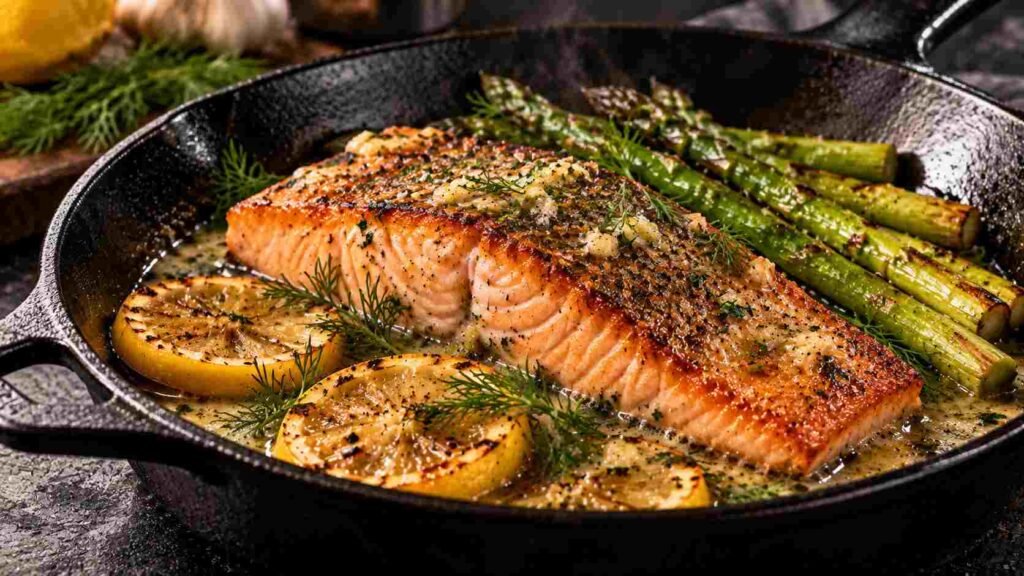
This master preparation combines crispy pan-searing with a luxurious lemon-dill pan baste. Follow these step-by-step instructions for guaranteed dining triumph.
- Prep and Dry: Pat four skin-on Atlantic salmon fillets thoroughly dry with paper towels. Score the skin lightly with three shallow cuts to prevent curling.
- Season the Fish: Season both sides with coarse kosher salt, freshly cracked black pepper, and garlic powder.
- Preheat the Skillet: Heat one tablespoon of high-smoke-point oil in a cast-iron skillet over medium-high heat until wisps of smoke appear.
- Sear the Skin: Place fillets skin-side down in the hot skillet. Press each fillet with a spatula for fifteen seconds. Cook undisturbed for six minutes.
- Add the Baste: Flip fillets to the flesh side. Reduce heat to medium-low and add forty grams of unsalted butter, two smashed garlic cloves, and fresh dill sprigs to the pan.
- Baste Continuously: Tilt the skillet slightly. Spoon the foaming herb butter continuously over the fillets for two minutes.
- Rest and Serve: Remove fillets when an instant-read thermometer registers 52°C (125°F) for medium doneness. Let the fish rest on a warm plate for three minutes before serving.
Drizzle remaining pan butter over the fillets and serve immediately with fresh lemon wedges. Pair this comforting seafood classic with artisanal bread from our naan bread recipe collection.
Effortless Sheet Pan Dinner: The Ultimate Baked Salmon Recipe
When cooking for an entire family on a hectic weeknight, a reliable baked salmon recipe delivers outstanding convenience. Baking fillets on a sheet pan requires minimal cleanup and eliminates oil splatters entirely.
Line a rimmed baking sheet with parchment paper or aluminum foil. Arrange salmon fillets skin-side down, leaving two centimeters of space between them. Brush the tops generously with extra virgin olive oil, Dijon mustard, minced garlic, and fresh lemon juice. Scatter fresh asparagus spears and cherry tomatoes around the fish to create a complete one-pan dinner.
Bake in a preheated oven at 200°C (400°F) for twelve to fifteen minutes, depending on fillet thickness. The gentle, circulating oven heat cooks the fish evenly while roasting the vegetables to sweet perfection. You can verify proper dairy baking measurements in our kitchen reference guide on 1 cup butter in grams. Sheet pan baking allows you to serve wholesome meals with virtually zero kitchen stress.
Sweet and Savory Japanese Glaze: Authentic Teriyaki Salmon
For diners who love bold Asian flavor profiles, homemade teriyaki salmon provides the perfect harmony of savory umami and sweet glaze. Commercial bottled sauces often rely on corn syrup and artificial thickeners.
In contrast, crafting an authentic Japanese glaze requires only four pantry staples: soy sauce, mirin, sake, and brown sugar. Simmer these ingredients gently in a small saucepan for eight minutes until the sauce reduces into a glossy syrup. Sear salmon fillets in a skillet until ninety percent cooked through, then pour the warm glaze directly into the pan.
Baste the fish continuously as the sauce bubbles and caramelizes, clinging tightly to the salmon flakes. Garnish with toasted sesame seeds and thinly sliced scallions. Serve over steaming jasmine rice or alongside stir-fried greens. If you enjoy Asian wok flavors, explore our popular Chinese takeout orange chicken recipe. Homemade teriyaki glaze turns humble seafood into an extraordinary feast.
Smoky Outdoor Char: The Art of Perfectly Grilled Salmon
Grilling fish outdoors over natural wood charcoal introduces unforgettable smoky aromas. However, delicate fish flesh can easily stick to outdoor grill grates if not handled properly. Mastering a few pitmaster secrets ensures your grilled salmon releases effortlessly.
First, clean your grill grates thoroughly with a wire brush. Next, saturate a folded paper towel with vegetable oil and rub it across the hot grates using grill tongs. This seasoning creates a slick, non-stick patina on the metal bars. Second, keep the skin on your fillets, as the skin acts as a protective shield against intense direct embers.
Lay the salmon skin-side down over medium direct heat (190°C / 375°F). Close the grill lid and cook undisturbed for eight minutes. The heat from the closed lid cooks the top of the fish while the skin chars into crisp protection. You can also grill fillets over soaked cedar planks to impart fragrant wood-smoked sweetness. Compare outdoor grilling methods with our slow-smoked favorites in our pulled pork recipe guide.
Transforming Leftovers: Crispy Salmon Patties and Croquettes
Leftover cooked fish or pantry canned salmon can be transformed into delicious, golden salmon patties in just fifteen minutes. These crispy fish cakes provide a thrifty, high-protein lunch that the entire family will love.
In a mixing bowl, flake 400 grams of cooked salmon using a fork. Combine with finely minced red bell peppers, green onions, fresh dill, dijon mustard, one beaten egg, and half a cup of crushed buttery crackers or breadcrumbs. The crackers absorb excess moisture while binding the delicate fish flakes together.
Shape the mixture into four thick patties and chill in the refrigerator for twenty minutes to firm up. Next, pan-fry these savory salmon croquettes in two tablespoons of olive oil over medium heat for four minutes per side until golden brown and crisp. Serve warm alongside lemon wedges and homemade tartar sauce. If you love crispy pan-fried cutlets, compare this with our classic fried chicken recipe.
Scandinavian Elegance: Cured Herb Gravlax from Scratch
Originating in Northern European coastal communities, traditional cured gravlax represents the height of culinary sophistication. Unlike cooked fish, gravlax is cured through the ancient preservation power of salt, sugar, and fresh herbs.
Begin with a pristine, sushi-grade salmon fillet with the skin intact. Combine equal parts kosher salt and granulated white sugar with freshly cracked white peppercorns. Coat the flesh side of the fish generously with this curing mixture, then cover it completely under a thick forest of fresh dill fronds.
Wrap the fish tightly in plastic wrap and place a weighted baking dish on top to press the fillet gently. Refrigerate for forty-eight to seventy-two hours, turning the fish twice daily. The salt and sugar extract water while firming the flesh into translucent, ruby-colored ribbons. Shave the cured fish into paper-thin slices and serve over dark rye bread with sweet mustard dill sauce. Explore grand Arabian meat traditions in our guide to the national dish of uae.
Artisanal Luxury: Hot-Smoked and Cold-Smoked Salmon Recipes
Smoked fish represents another beloved global culinary delicacy. Home cooks distinguish between two primary styles of smoked salmon recipes: cold-smoked and hot-smoked preparations.
Cold-smoking occurs at low temperatures below 30°C (85°F). The fish is cured in brine and exposed to gentle wood smoke without cooking the flesh. This yields the silky, translucent texture familiar from breakfast bagels and brunch platters. In contrast, hot-smoking occurs between 75°C and 105°C (165°F to 225°F).
Hot-smoking cures and cooks the fish simultaneously over several hours. The resulting meat is firm, flaky, and intensely infused with aromatic hardwood essences. Flake hot-smoked salmon into creamy pasta sauces, scrambled eggs, or fresh salads. If you love rich pasta comfort dishes, explore our homestyle chicken and dumplings recipe. Smoked fish delivers artisanal luxury that elevates any morning brunch.
Zesty Pan Sauces and Herb Compound Butters
While fresh salmon stands proudly on its own, vibrant sauces elevate home dining into a celebratory banquet. Crafting quick pan sauces directly in your searing skillet captures precious seafood juices.
First, an authentic lemon caper butter sauce provides bright, refreshing acidity that cuts through rich fish oils. After removing the cooked fillets, deglaze the skillet with non-alcoholic white grape juice or chicken broth. Whisk in cold butter cubes, briny capers, and fresh lemon juice until a silky emulsion forms. Pour this glossy sauce generously over the crispy fish.
Second, preparing a chilled garlic-herb compound butter in advance simplifies weeknight entertaining. Roll softened butter with minced garlic, fresh chives, dill, and lemon zest into a parchment log and freeze. Slice cold butter coins directly onto piping hot fillets right before serving; the melting herb butter bastes the fish luxuriously. Compare these rich emulsions with our savory gravies in our ground beef recipes guide.
Safe Internal Temperatures and Resting Guidelines
Cooking fish safely without sacrificing tenderness requires strict adherence to internal temperature benchmarks. Overcooked fish dries out rapidly, turning chalky and unpleasant.
While international food safety guidelines recommend cooking seafood to 63°C (145°F), most culinary professionals agree that salmon is far juicier when cooked to medium doneness at 52°C to 54°C (125°F to 130°F). At this temperature, the flakes separate effortlessly, and the center retains a translucent coral blush.
Always insert an instant-read digital thermometer horizontally into the thickest center part of the fillet. Remove the fish from the pan two to three degrees before your target temperature, as carryover heat will finish cooking during resting. Let the fish rest for three minutes before serving. You can review corporate regulatory standards and safety practices through our legal and government services directory.
Nutritional Powerhouse: Omega-3s and Cardiovascular Health
Dietitians and cardiologists universally rank oily fish among the healthiest foods on earth. Incorporating fresh salmon into your regular diet delivers profound wellness benefits.
Salmon is exceptionally rich in long-chain omega-3 fatty acids, specifically EPA and DHA. These essential fatty acids reduce arterial inflammation, lower blood pressure, and support cognitive brain function. Furthermore, a single 150-gram fillet delivers over thirty grams of high-quality complete protein alongside abundant vitamin D, selenium, and B-complex vitamins.
To maximize wellness benefits, pair your seafood with vibrant leafy salads, steamed greens, or wholesome whole grains. Explore whole-food lifestyle frameworks in our comprehensive guide to a balanced diet. In addition, discover nutrient-dense natural superfoods in our analysis of dates benefits. Wholesome ingredients ensure seafood dining aligns with lifelong health goals.
Side Dish Pairings: Grains, Greens, and Fresh Salads
Because salmon is naturally rich and savory, thoughtful side dish pairings create a balanced, satisfying meal. Bright acidic greens and light starches complement buttery seafood perfectly.
A crisp romaine salad tossed with a tangy lemon-garlic dressing cuts through rich fish oils effortlessly. Explore restaurant salad foundations in our authentic caesar salad recipe. In addition, nutty steamed quinoa, roasted baby potatoes, or wild rice pilaf provide comforting, wholesome starch foundations.
For vibrant color, serve roasted asparagus, garlic sautéed green beans, or charred broccolini drizzled with extra virgin olive oil. If you enjoy diverse seafood delicacies, explore our upcoming guides on succulent shrimp recipes and versatile fish recipes. Harmonious side pairings turn a simple fillet into a memorable dining feast.
Hospitality Careers in Seafood Fabrication and Fine Dining
Mastering fish butchery, delicate pan-searing, and raw seafood handling are elite culinary competencies evaluated across the global hospitality sector. In luxury waterfront resorts and Michelin-starred restaurants, seafood chefs manage valuable inventory under strict hygiene standards.
Talented line cooks, fish station chefs, and kitchen supervisors enjoy strong recruitment demand across major gastronomic hubs like Dubai. If you are exploring vocational culinary paths, review our comprehensive guide on hospitality tourism jobs. In addition, executive chefs and restaurant operations directors command prestigious compensation packages. Explore executive salary scales in our guide to the highest paying jobs.
Furthermore, restaurant networks rely on refrigerated logistics and cold-chain warehousing to distribute fresh seafood safely from ports. Candidates interested in supply logistics can explore opportunities in our guide on dubai warehouse logistics jobs. Dedicated culinary staff can advance into corporate leadership roles through strategic career change growth. Many international culinary talents relocate using our guide to work abroad. You can study statutory labor standards in our analysis of the labour law uae.
Frequently Asked Questions About Salmon Recipes
How can I tell when salmon is done cooking without a thermometer?
Press the top of the fillet gently with your finger or a fork. If the fish flakes easily along its natural white fat lines and feels slightly firm, it is ready. If it feels squishy and soft, it requires additional cooking time.
Should I wash fresh salmon before cooking it?
No, never wash raw fish or meat in your kitchen sink. Splashing water aerosolizes bacteria across countertops and nearby cooking utensils. Instead, simply pat the fillets thoroughly dry with clean paper towels before seasoning.
Can I cook salmon in an air fryer?
Yes, air fryers cook salmon exceptionally well in just eight minutes at 200°C (400°F). Circulating convection heat creates a delightfully crisp exterior while keeping the center flaky and moist. Learn healthy convection techniques in our guide to air fryer chicken breast.
Why does my salmon stick to the skillet when pan-searing?
Salmon sticks when the pan is not hot enough, when the fish skin has excess surface water, or when the cook tries to flip it too early. Ensure your skillet is smoking hot, pat the skin dry, and wait until the skin releases naturally from the pan before flipping.
Mastering these classic salmon recipes empowers you to prepare fresh, succulent, and heart-healthy seafood banquets with complete culinary confidence. By drying fillets thoroughly, respecting the power of hot cast iron, and cooking to gentle medium doneness, you can create restaurant-caliber dining right at your own dinner table. For additional culinary tutorials, kitchen advice, and verified lifestyle guides, connect with our specialist team via the Gulf Lights contact page. Discover more inspirational cooking articles on the Gulf Lights blog.