
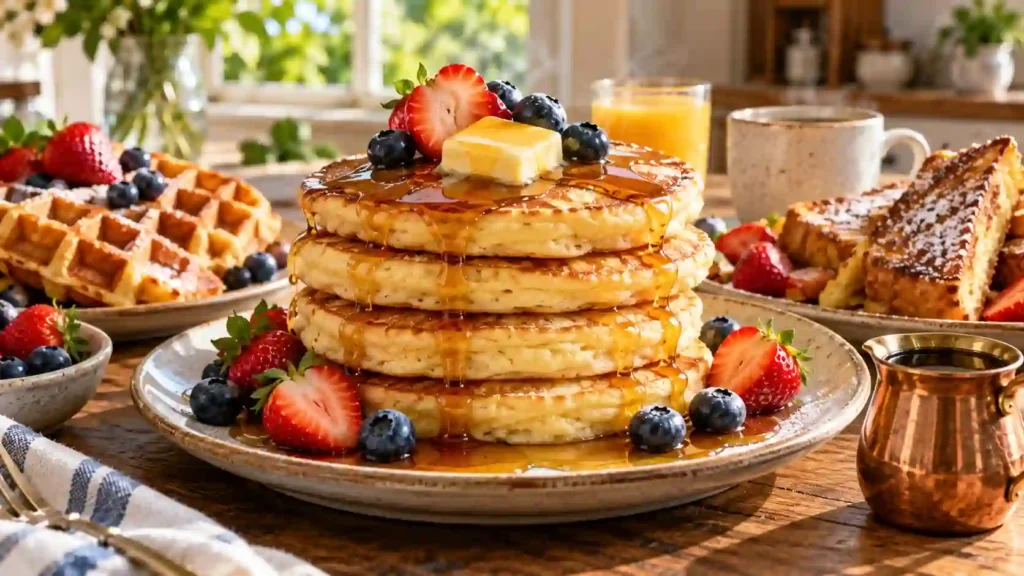
Baking a soaring, golden pancake recipe from scratch is one of the most delightful rituals in home cooking. Across global breakfast tables, few morning dishes inspire as much comfort, nostalgia, and pure joy as a steaming stack of griddle cakes. The contrast of crisp golden edges, cloud-like tender interiors, and rich melting butter creates pure dining happiness. At Gulf Lights, we deliver verified culinary guides to elevate everyday home dining across the United Arab Emirates and beyond.
Mastering morning griddle favorites does not require complicated equipment or industrial griddles. In fact, achieving towering, tender pancakes depends on basic leavening chemistry, minimal gluten development, and steady pan thermodynamics. Furthermore, mastering these simple batter fundamentals allows you to conquer related brunch centerpieces like Belgian waffles, custard French toast, and delicate crepes. Consequently, you can treat your family to luxurious weekend breakfasts with remarkable ease and affordability. Explore our complete culinary archive through our food category hub.
The Ancient History of Breakfast Griddle Cakes and Morning Feasts
The cultural journey of cooked flat batters stretches back thousands of years to the dawn of human agriculture. Archaeological excavations reveal that Stone Age humans ground wild grains into coarse flour, mixed them with water, and baked them on heated greased stones. In ancient Greece and Rome, poets wrote celebratory verses about “tagenites,” describing warm wheat cakes sweetened with wild honey.
Over centuries, European societies linked griddle cakes with seasonal celebrations like Shrove Tuesday (Pancake Day). Families used up rich eggs, milk, and animal fats before the fasting season of Lent began. In North America, indigenous populations blended cornmeal and maple sap, creating the prototype for modern flapjacks. You can review regional household grocery budgets and dining benchmarks in our guide to prices in dubai for food.
Moreover, similar grain and skillet traditions flourish across diverse culinary cultures worldwide. From Arabian chebab flatbreads infused with cardamom to South Asian sweet pancakes, griddled batters unite humanity across borders. You can explore traditional Gulf grain and meat stews in our comprehensive guide to the national dish of uae. Pancakes celebrate the timeless art of turning humble pantry staples into joyful morning feasts.
The Science of Leavening: Baking Powder, Baking Soda, and Air
Creating sensational, soaring fluffy pancakes is fundamentally an exercise in biological and chemical food science. Dense, rubbery pancakes occur when leavening agents fail to generate sufficient gas lift.
First, double-acting baking powder provides two separate bursts of carbon dioxide gas. The first reaction happens immediately when the dry powder encounters wet liquids in the mixing bowl. The second, more powerful reaction occurs when the batter hits the hot skillet. As heat increases, the leavener releases millions of expanding microscopic gas bubbles throughout the batter.
Second, baking soda (sodium bicarbonate) requires an acidic partner, such as buttermilk or yogurt, to activate. The acid-base reaction produces immediate carbon dioxide while neutralizing sharp sour flavors. In addition, baking soda raises the batter’s pH level slightly. This alkaline shift accelerates the Maillard reaction, producing signature golden-brown color and sweet roasted aromas. If you enjoy deep skillet sears on thick beef cuts, check our classic steak recipes. Understanding leavening chemistry guarantees tall, pillowy pancakes every single time.
Gluten Control: The Secret of the Lumpy Batter
The single most common mistake home cooks make when preparing pancake batter is overmixing. Whisking batter until it is silky smooth is the fastest way to ruin your morning breakfast.
Wheat flour contains two primary proteins called gliadin and glutenin. When exposed to liquid and stirred vigorously, these proteins bond together to form an elastic network called gluten. In artisanal breads and pizza crusts, strong gluten is necessary to create a chewy crumb. You can explore bread dough elasticity in our master guide to pizza dough recipe crusts.
However, in tender pancakes and breakfast pastries, gluten is your sworn enemy. Excessive mixing develops a tight, rubbery gluten mesh that traps moisture, turning pancakes tough, flat, and chewy. Therefore, professional bakers always mix pancake batter gently with a wooden spoon or fork. Stop stirring the moment dry flour streaks disappear, leaving plenty of small flour lumps intact. Those small lumps hydrate naturally during resting, ensuring a feather-light, melt-in-your-mouth crumb.
The Magic of Buttermilk: Lactic Acid and Tender Crumb
While ordinary whole milk produces acceptable griddle cakes, authentic buttermilk pancakes represent the gold standard of diner luxury. The secret lies in buttermilk’s natural lactic acid content.
Lactic acid weakens tough gluten bonds gently, creating an exceptionally delicate and tender crumb structure. In addition, the acidity reacts vigorously with baking soda, generating far more carbon dioxide gas than milk alone can produce. This vigorous bubbling causes the batter to puff dramatically on the griddle.
Furthermore, buttermilk imparts a subtle, pleasant tanginess that cuts through rich butter and sweet maple syrup. If you do not have fresh buttermilk in your refrigerator, you can easily create an effective substitute at home. Simply stir one tablespoon of fresh lemon juice or white vinegar into one cup of whole milk, letting it stand for ten minutes until slightly curdled. You can verify dairy baking measurements in our kitchen reference guide on 1 cup butter in grams. Real buttermilk delivers unmatched height and tenderness.
Mastering the Ultimate Fluffy Pancake Recipe at Home
This master pancake recipe produces eight towering, cloud-like buttermilk pancakes with golden edges in twenty minutes. Follow these step-by-step instructions for guaranteed breakfast triumph.
- Whisk the Dry Ingredients: In a large mixing bowl, whisk two cups of all-purpose flour, two tablespoons of granulated sugar, two teaspoons of baking powder, half a teaspoon of baking soda, and half a teaspoon of fine sea salt.
- Whisk the Wet Ingredients: In a separate bowl, whisk two cups of whole buttermilk, two large eggs, one teaspoon of pure vanilla extract, and fifty grams of melted unsalted butter.
- Combine with Care: Pour the wet ingredients into the dry bowl. Stir gently with a fork for fifteen seconds until just combined. Leave small lumps in the batter; do not overmix.
- Rest the Batter: Let the batter rest undisturbed on the counter for ten minutes. This resting window allows the flour to hydrate fully and gives the leaveners time to generate airy bubbles.
- Heat the Pan: Heat a heavy cast-iron skillet or non-stick griddle over medium heat until a drop of water sizzles and dances across the surface (180°C / 350°F).
- Lightly Grease: Brush the pan lightly with a paper towel dipped in neutral oil or clarified butter. Avoid pooling oil, which causes uneven browning.
- Pour and Watch: Pour a quarter cup of batter per pancake onto the hot griddle. Cook for two to three minutes until edges look set and popped bubbles leave open holes on top.
- The Golden Flip: Slide a thin spatula underneath and flip gently in one smooth motion. Cook the reverse side for sixty to ninety seconds until puffed and golden brown.
- Stack and Serve: Transfer to a warm plate immediately. Top with a knob of butter and warm maple syrup.
Serve immediately while piping hot. Pair this morning classic with artisanal flatbreads from our naan bread recipe collection for creative fusion brunches.
Naturally Sweet: Wholesome Banana Pancakes Recipe
For mornings when you crave natural fruit sweetness and moist texture, a vibrant banana pancakes recipe delivers wholesome satisfaction. Overripe bananas with spotted skins provide incredible natural sweetness.
Mash two ripe bananas thoroughly in a bowl with a fork until a smooth purée forms. Stir the mashed banana directly into your wet pancake ingredients along with a pinch of ground cinnamon and nutmeg. The natural pectin and starches in ripe bananas keep the finished cakes remarkably moist throughout.
Cook the banana cakes over medium-low heat, as the extra fruit sugars caramelize faster than standard batter. Serve topped with toasted pecan halves, sliced fresh bananas, and a drizzle of warm honey. If you enjoy wholesome baked fruit loaves, compare this morning treat with our celebrated banana bread recipe. Sweet banana cakes deliver sustained morning energy with zero refined sugar.
Crisp and Deep-Pocketed: Authentic Waffle Recipe and Belgian Waffles
While pancakes celebrate cloud-like softness, a traditional waffle recipe delivers an irresistible contrast between a shatteringly crisp exterior and a tender interior. Deep waffle pockets hold generous pools of melted butter and syrup.
To craft authentic belgian waffles, separate your egg whites from the yolks. Whisk the egg yolks with milk, flour, and melted butter. In a clean bowl, whip the egg whites until stiff, glossy peaks form. Gently fold the whipped egg whites into the batter right before cooking.
The trapped air in the whipped egg whites expands in the hot waffle iron, creating an ultra-light, airy interior. Furthermore, waffle batters contain slightly higher butter and sugar ratios than pancake batters. The extra fat fries against the hot iron grids, producing a caramelized, crunchy crust that never turns limp. You can review corporate regulatory standards and safety practices in our legal and government services directory. Crisp Belgian waffles bring luxurious hotel dining to weekend mornings.
Custard-Soaked Golden Slices: Classic French Toast Recipe
Alongside griddle cakes, an authentic french toast recipe (pain perdu) transforms humble stale bread into an opulent culinary masterpiece. The French name translates literally to “lost bread,” celebrating the art of rescuing dry bread.
Always select thick-cut, rich artisanal breads like brioche, challah, or Texas toast. Thin supermarket sandwich bread turns soggy and collapses under liquid. Whisk together whole eggs, heavy cream, whole milk, brown sugar, cinnamon, and pure vanilla extract into a rich custard bath. Soak bread slices for thirty seconds per side so the custard penetrates into the crumb core.
Sear the soaked bread in a buttered skillet over medium heat for three minutes per side until golden brown and puffed. The eggs cook into a delicate, silky custard inside the bread, while exterior sugars caramelize into a crisp golden crust. Dust with powdered sugar and serve alongside fresh berries. If you love burger patties, explore our skillet techniques in our smash burger recipe guide. Custard French toast is the ultimate crowd-pleasing brunch treat.
Paper-Thin Parisian Elegance: Delicate French Crepe Recipe
Hailing from the sun-drenched coastal villages of Brittany, a classic crepe recipe represents the height of French culinary minimalism. Unlike thick pancakes, crepes contain zero leavening agents.
Crepe batter is exceptionally thin and liquid, resembling heavy cream. Blend all-purpose flour, eggs, whole milk, melted butter, and a pinch of salt in a blender until completely smooth. Crucially, let the batter rest in the refrigerator for at least one hour before cooking. Chilling allows flour starches to expand while relaxing gluten, ensuring the crepes turn out paper-thin and supple without tearing.
Pour a small ladle of batter into a hot, buttered non-stick skillet, swirling the pan immediately to spread a translucent layer. Cook for sixty seconds, flip gently, and cook for twenty seconds on the reverse side. Fill with sweet hazelnut spread, fresh strawberries, or savory Gruyere cheese and eggs. If you enjoy thin flatbread wraps, compare this with our Middle Eastern street specialties in our guide to shawarma in dubai. Crepes provide versatile elegance for breakfast or dinner.
Heat Dynamics: Butter vs Oil on the Griddle
Achieving a uniform, golden-brown crust without scorched black spots requires careful pan temperature management. Understanding cooking fats prevents burnt breakfast disasters.
Whole butter contains roughly sixteen percent water and four percent dairy milk solids. When whole butter hits a hot skillet, those delicate milk solids brown rapidly. If your pan is slightly too hot, butter solids burn into bitter black specks on your pancakes. Therefore, professional short-order cooks use clarified butter (ghee) or neutral vegetable oil for griddling.
Clarified butter has had its milk solids and water removed, giving it a high smoke point of 250°C (482°F) while retaining rich buttery flavor. Alternatively, wipe the skillet with a paper towel dipped in neutral canola oil. A nearly dry, greased pan ensures continuous contact, producing smooth, mahogany browning across the entire surface. If you enjoy high-heat poultry frying, explore our Southern double-dredged fried chicken recipe guide.
Topping Symphony: Pure Maple Syrup, Compotes, and Whipped Creams
While an exceptional pancake stands proudly on its own merits, thoughtful toppings elevate morning meals into a celebratory feast. Balancing rich butter with sweet fruit and acid satisfies every craving.
Always choose genuine Grade A pure maple syrup over commercial pancake syrups. Commercial table syrups consist almost entirely of high-fructose corn syrup, artificial caramel coloring, and chemical maple flavoring. In contrast, pure maple syrup is harvested from wild maple sap, delivering complex woodsy notes, vanilla undertones, and natural minerals. Warm the maple syrup gently in a small saucepan before pouring.
Furthermore, simmering fresh berries with a splash of lemon juice and sugar for five minutes creates a vibrant warm fruit compote. The fruit acidity cuts through rich pancakes and whipped creams effortlessly. If you enjoy slow-simmered beef comfort, explore our homestyle beef stew recipe guide. Homemade fruit toppings add color, vitality, and fresh flavor to the table.
Meal Prep, Batch Freezing, and Toaster Reheating Instructions
Pancakes and waffles represent the ultimate make-ahead freezer breakfast for busy school and work mornings. Batch-cooking on weekends saves precious time throughout the week.
Cook a double batch of pancakes, and let them cool completely on a wire cooling rack. Arrange the cooled pancakes in a single layer on a parchment-lined baking sheet, and place in the freezer for two hours until frozen solid. Transfer the frozen pancakes into a zip-top freezer bag. Flash-freezing individually prevents the cakes from freezing into an inseparable block.
When ready to eat on busy mornings, do not use a microwave, which turns pancakes rubbery and soggy. Instead, drop frozen pancakes or waffles directly into your standard kitchen toaster on medium heat. The toaster heats the center through while restoring crisp, golden edges within two minutes. If you enjoy slow-cooked shredded meats, check our classic pulled pork recipe guide. Toaster reheating delivers freshly made texture in minutes.
Nutritional Balance: Whole Grains, Proteins, and Mindful Mornings
While traditional pancakes are celebrated as weekend treats, thoughtful ingredient swaps transform them into wholesome daily fuel. Balancing carbohydrates with dietary fiber and protein supports sustained morning focus.
First, replace half of the all-purpose flour with whole-wheat flour or finely ground oat flour. Whole grains supply complex carbohydrates, B-complex vitamins, and soluble dietary fiber that stabilizes blood glucose levels throughout the morning. Second, fold plain Greek yogurt or a scoop of unflavored whey protein powder into the wet batter to boost complete dietary protein.
Furthermore, sweet natural fruits like dates provide exceptional potassium, magnesium, and dietary fiber for clean morning sweetness. Discover nutrient-dense natural superfoods in our analysis of dates benefits. Discover how whole-food lifestyle frameworks support lifelong vitality in our comprehensive guide to a balanced diet. Mindful choices ensure breakfast dining supports sustained wellness.
Side Dish Symphony: Crispy Bacon, Fresh Greens, and Citrus
Because pancakes and waffles are rich and sweet, thoughtful savory side dish pairings complete the brunch experience. Balancing sweet griddle cakes with savory proteins creates a memorable meal.
Crispy beef bacon strips or savory chicken breakfast sausages provide salty contrast that enhances sweet maple syrup. If you prefer lean white poultry on busy weeknights, explore our tender chicken breast recipes. In addition, serving fresh grapefruit halves, sliced oranges, or a crisp fruit salad refreshes the palate.
If you crave crisp greens alongside savory brunch eggs, pair your feast with a romaine salad tossed with our zesty caesar salad recipe dressing. For festive royal feasts, explore our celebrated Hyderabadi dishes in our authentic biryani recipe guide. Harmonious pairings elevate morning dining into an unforgettable culinary celebration.
Commercial Hospitality Careers in Breakfast Dining and Brunch Bistros
The global explosion of weekend brunch culture and luxury hotel breakfast buffets has generated dynamic career opportunities across the food service industry. In cosmopolitan hospitality hubs like Dubai, premier resort dining rooms and boutique cafes recruit talented short-order cooks, pastry chefs, and breakfast station masters.
Culinary professionals who master high-speed griddle execution, batter chemistry, and banquet service enjoy robust recruitment demand. If you are exploring professional vocational paths in gastronomy, review our comprehensive guide on hospitality tourism jobs. In addition, executive chefs and restaurant operations directors command prestigious compensation packages. Explore executive salary scales in our guide to the highest paying jobs.
Furthermore, restaurant networks rely on temperature-controlled warehousing to store fresh dairy, eggs, and artisanal flours safely. Candidates interested in supply logistics can explore opportunities in our guide on dubai warehouse logistics jobs. Dedicated culinary staff can advance into corporate leadership roles through strategic career change growth. Many international culinary talents relocate using our guide to work abroad. You can study statutory labor standards in our analysis of the labour law uae.
Frequently Asked Questions About Pancakes and Waffles
Why are my pancakes flat and rubbery instead of fluffy?
Pancakes turn flat and rubbery if the batter is overmixed, or if your baking powder is expired. Overmixing develops tight gluten networks that prevent rising. Stir the batter until just combined, leaving small lumps intact, and verify that your baking powder is fresh.
When is the exact right time to flip a pancake?
Flip your pancake when bubbles form across the surface and pop, leaving small open holes that do not fill back in with wet batter. In addition, the outer edges should look matte and firm rather than glossy and wet.
Can I use pancake batter to make waffles in a waffle iron?
While pancake batter will cook in a waffle iron, it will yield soft, limp waffles. True waffle batter requires extra melted butter and sugar to create a crisp exterior, along with whipped egg whites for an airy interior.
Why is the first pancake always the worst one?
The first pancake is often pale or uneven because the skillet has not reached uniform thermal equilibrium across its entire surface. By the second batch, the pan heat stabilizes, producing gorgeous, evenly browned cakes.
Mastering this classic pancake recipe gives you the culinary confidence to prepare soaring, cloud-like, and restaurant-quality breakfast feasts right in your own kitchen. By respecting leavening chemistry, keeping batter lumpy, and cooking over steady medium heat, you can create extraordinary morning feasts that bring loved ones together. For additional culinary tutorials, kitchen advice, and verified lifestyle guides, connect with our specialist team via the Gulf Lights contact page. Discover more inspirational cooking articles on the Gulf Lights blog.