Baking a fragrant, golden banana bread recipe from scratch is one of the most comforting rituals in home baking. Across international kitchens, few baked treats evoke as much warmth, domestic joy, and sweet nostalgia. The intoxicating aroma of sweet bananas, toasted nuts, browned butter, and warm cinnamon fills the entire house. Slicing into a warm, tender loaf reveals an ultra-moist crumb that melts on your tongue. At Gulf Lights, we deliver verified culinary guides to elevate everyday home dining across the United Arab Emirates and beyond.
Mastering quick breads does not require commercial mixers or proofing cabinets. In fact, achieving bakery-quality loaves depends on starch gelatinization, fruit enzyme chemistry, and gentle mixing physics. Furthermore, understanding the foundational quick-bread method unlocks beloved teatime classics like bakery blueberry muffins, spiced pumpkin bread, and flaky scones. Consequently, you can transform humble overripe fruit into gourmet pantry triumphs with remarkable ease. Explore our complete culinary archive through our food category hub.
The Great Depression Origins of Quick Breads and Banana Bread
The cultural journey of banana bread represents a brilliant historical example of thrift, resourcefulness, and domestic resilience. During the Great Depression of the 1930s, households faced severe financial hardship and food scarcity. Resourceful home cooks could never afford to discard perishable ingredients like overripe bananas.
Furthermore, the simultaneous mass commercialization of baking powder and baking soda revolutionized domestic kitchens. Before chemical leaveners, all breads required lengthy biological yeast fermentation. Chemical leaveners allowed cooks to bake sweet batters immediately without waiting hours for dough to rise. You can review regional household grocery budgets and dining benchmarks in our guide to prices in dubai for food.
Consequently, corporate milling companies and banana distributors began printing quick bread recipes on flour bags to promote sales. Over subsequent decades, this practical bake became a beloved global comfort staple. Moreover, similar comforting grain and fruit traditions unite diverse cultures worldwide. You can explore traditional Gulf grain and meat stews in our comprehensive guide to the national dish of uae. Banana bread celebrates the timeless art of turning humble ingredients into joyful family treats.
The Chemistry of Ripeness: Enzymatic Amylase and Sugar Conversion
The single most critical factor in baking exceptional banana bread is the ripeness of your fruit. Baking with firm, yellow grocery store bananas produces a dry, pale, and flavorless loaf.
As green bananas mature on the counter, natural plant enzymes called amylases activate. These active enzymes break down complex, tasteless starches into simple, aromatic fructose and sucrose sugars. Furthermore, ripening produces volatile ester compounds that create that unmistakable tropical banana perfume. The fruit skin must not merely show small freckles; it should turn heavily mottled, brown, or completely black.
When bananas reach this black stage, the internal pectin softens completely into a liquid purée. This natural fruit purée provides intense sweetness and abundant moisture that withstands sixty minutes of oven heat. If you need to ripen bananas quickly, place unpeeled yellow bananas on a baking sheet in a 150°C (300°F) oven for twenty minutes until skins turn black. Let them cool completely before mashing. Understanding fruit chemistry ensures your loaf turns out naturally sweet and remarkably tender.
Fat Selection: Melted Butter vs Vegetable Oil vs Brown Butter
The fat you choose determines both the moisture retention and flavor complexity of your finished loaf. Bakers frequently debate the merits of dairy butter versus plant-based oils.
First, vegetable oils like canola or light olive oil remain liquid at room temperature. Because oil remains liquid, oil-based quick breads stay exceptionally moist and soft for up to a full week. In contrast, whole butter solidifies as it cools, producing a slightly firmer, denser crumb. If you enjoy rich chewy bakes, explore our brown butter secrets in our chocolate chip cookie recipe guide.
However, butter delivers unmatched rich, nutty flavor that vegetable oil cannot duplicate. To achieve the ultimate combination of moisture and luxury, professional pastry chefs brown their butter before mixing. Browning butter toasts delicate dairy milk solids into fragrant, nutty flecks, adding deep butterscotch notes. You can verify dairy baking measurements in our kitchen reference guide on 1 cup butter in grams. A hybrid blend of browned butter and two tablespoons of neutral oil provides the ideal balance.
The Muffin Method of Mixing: Avoiding Tough, Rubbery Crumb
The fundamental rule of all quick breads, muffins, and loaves is gentle handling. Overworking your batter ruins the crumb structure instantly.
Quick breads utilize what pastry chefs call the “muffin method” of mixing. This technique keeps dry ingredients and wet ingredients completely separate until the final seconds. Whisk all dry starches, leaveners, and spices in one large bowl. In a separate bowl, whisk mashed bananas, melted fats, eggs, and sugars into a smooth liquid emulsion. You can explore egg emulsification chemistry in our master guide on how to boil eggs.
Pour the wet mixture into the dry bowl all at once. Fold gently using a rubber spatula or wooden spoon, stopping the moment dry flour streaks vanish. Do not use an electric stand mixer or vigorous balloon whisk. Vigorous mixing develops tight wheat gluten strands that create unsightly tunnels, rubbery chew, and tough crusts. Leaving small lumps in the batter guarantees an ultra-tender, delicate crumb that melts in your mouth.
Mastering the Ultimate Moist Banana Bread Recipe at Home
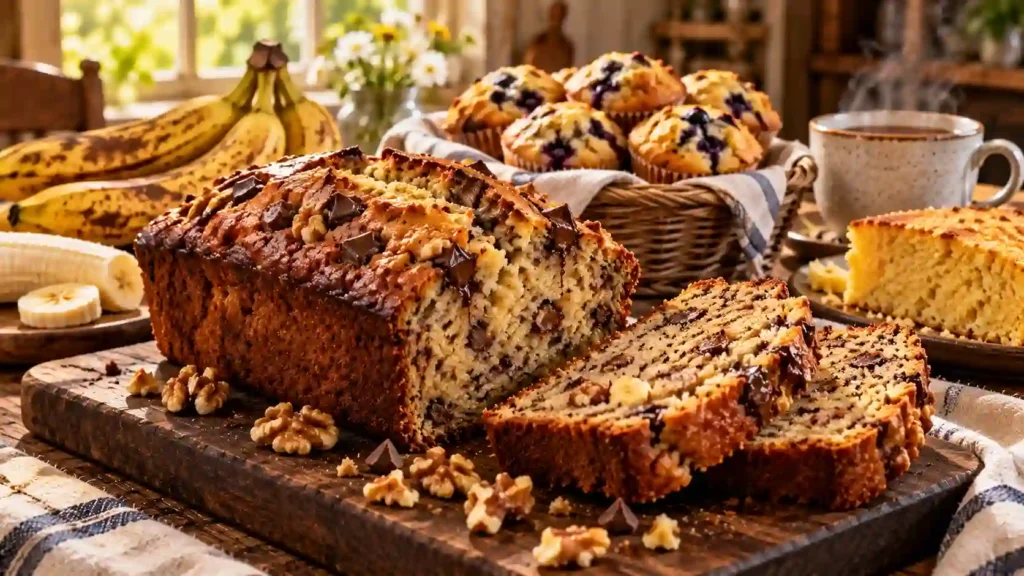
This master banana bread recipe yields a towering, golden loaf packed with deep banana flavor and a moist crumb. Follow these step-by-step instructions for guaranteed baking triumph.
- Prep the Pan: Grease an 8.5×4.5-inch metal loaf pan with butter. Line with parchment paper, leaving two inches of overhang along the sides to create a lifting sling.
- Mash the Bananas: In a medium bowl, mash four large overripe black bananas with a fork until mostly smooth. You need roughly one and a half cups of purée.
- Melt and Brown the Butter: Melt 115 grams of unsalted butter in a saucepan over medium heat, swirling until nutty and golden-brown. Pour over the mashed bananas to cool slightly.
- Whisk the Wet Base: Whisk in two large room-temperature eggs, three-quarters of a cup of dark brown sugar, a quarter cup of granulated white sugar, one teaspoon of pure vanilla extract, and two tablespoons of sour cream or Greek yogurt.
- Whisk the Dry Starches: In a large bowl, whisk two cups of all-purpose flour, one teaspoon of baking soda, half a teaspoon of fine sea salt, and half a teaspoon of ground cinnamon.
- Gentle Fold: Pour the banana mixture into the dry ingredients. Fold gently with a rubber spatula for fifteen seconds until just combined. Fold in half a cup of toasted chopped walnuts or dark chocolate chunks.
- The Center Score Trick: Pour batter into the prepared pan. Dip a butter knife in melted butter and draw a shallow line down the center of the batter. This score encourages a clean, picture-perfect domed crack.
- Bake Gently: Bake in a preheated oven at 175°C (350°F) for fifty-five to sixty-five minutes. A wooden skewer inserted into the center should emerge with moist crumbs, not wet batter.
- Cool and Savor: Let the loaf rest in the pan for fifteen minutes. Use the parchment sling to transfer the loaf to a wire cooling rack to cool completely before slicing.
Slice thickly and serve with softened salted butter or warm honey. Pair this comforting morning bake with fluffy griddle bakes from our celebrated pancake recipe collection.
Bakery-Style Dome Tops: Authentic Blueberry Muffins Recipe
Everyone loves the towering, sugar-crusted muffin tops displayed in upscale bakery display cases. Achieving an authentic bakery-style blueberry muffins recipe requires two specific scientific secrets.
First, professional bakeries use a two-temperature baking method. Bake the muffins at a scorching 220°C (425°F) for the first six minutes. This intense initial thermal burst causes baking powder to release carbon dioxide rapidly, propelling the batter upward into a tall, domed crown. After six minutes, reduce oven heat to 175°C (350°F) without opening the oven door, allowing the interior to bake through gently.
Second, prevent fresh blueberries from sinking to the bottom of the muffin cups by tossing them in a tablespoon of dry flour before folding. The light starch coating helps the berries cling to the batter. Furthermore, folding sour cream into the batter provides rich moisture and acidity that keeps the crumb tender. If you love burger patties, explore our skillet techniques in our smash burger recipe guide. Tall blueberry muffins bring coffeehouse elegance to weekend mornings.
Summer Garden Alchemy: Moist Zucchini Bread Recipe
When home gardens overflow with summer squash, a classic zucchini bread recipe transforms humble green vegetables into a sweet, spiced delicacy. Zucchini acts as a remarkable moisture reservoir in baked goods.
Grate fresh zucchini coarsely using a box grater, leaving the nutrient-dense green skin intact. Unlike savory fritters where you squeeze out liquid, leave the natural water in the grated zucchini for quick breads. The vegetable’s cellular water releases slowly during baking, keeping the crumb moist for days without adding heavy fats.
Season the batter generously with warm spices like ground cinnamon, ground nutmeg, and ground cloves. In addition, folding in toasted walnuts or pecans introduces pleasant crunch that contrasts against the tender crumb. You can explore artisanal bread dough elasticity in our master guide to pizza dough recipe crusts. Spiced zucchini bread is a beloved domestic treasure that even picky eaters adore.
Autumn Spice Perfection: Fragrant Pumpkin Bread Recipe
When autumn winds arrive, baking an authentic pumpkin bread recipe fills the kitchen with cozy comfort. This seasonal quick bread celebrates rich squash purée and aromatic spices.
Always select pure canned pumpkin purée rather than pre-seasoned pumpkin pie mix. Pure pumpkin allows you to control sugar and spice balance completely. Simmer the pumpkin purée in a saucepan for five minutes to evaporate excess water before mixing; this step concentrates earthy pumpkin flavor significantly.
Whisk the pumpkin with dark brown sugar, vegetable oil, eggs, and a generous blend of ginger, cinnamon, nutmeg, and allspice. The natural beta-carotene in pumpkin purée imparts a gorgeous deep amber hue to the crumb. Top the unbaked loaf with raw pumpkin seeds (pepitas) for a festive, crunchy crust. If you enjoy slow-simmered beef comfort, explore our homestyle beef stew recipe guide. Fragrant pumpkin bread represents autumn comfort at its absolute finest.
British Afternoon Tea Heritage: Flaky English Scones Recipe
Hailing from traditional British teatime parlors, an authentic scones recipe represents a masterclass in cold pastry technique. Unlike moist American loaves, traditional English scones are lightly sweetened and feature a tender, flaky crumb.
The secret to towering, flaky scones lies in keeping your butter ice-cold. Grate frozen butter directly into dry flour, using your fingertips to toss the shreds lightly until the mixture resembles coarse cornmeal. When the scones enter the hot oven, the tiny pockets of frozen butter melt rapidly, releasing steam that forces the pastry layers apart.
Add cold buttermilk or heavy cream, patting the dough gently into a thick disc without kneading. Cut into neat rounds using a sharp pastry cutter, pressing straight down without twisting. Twisting the cutter seals the dough edges, preventing the scones from rising tall. Bake at 200°C (400°F) for fifteen minutes until golden. Serve warm with clotted cream, strawberry jam, and hot black tea. Pair this teatime classic with flatbreads from our naan bread recipe collection for diverse entertaining.
Southern Skillet Gold: Authentic Buttermilk Cornbread Recipe
Across the American South, a skillet of freshly baked cornbread recipe gold anchors the dinner table. Traditional Southern cornbread differs sharply from sweet cake-like Northern varieties by prioritizing stone-ground cornmeal and savory bacon drippings.
Combine coarse yellow cornmeal with a small amount of flour, baking powder, baking soda, and salt. Whisk in plenty of rich buttermilk and two large eggs. Meanwhile, place a heavy seasoned cast-iron skillet inside the oven while it preheats to 220°C (425°F).
When scorching hot, drop two tablespoons of bacon grease or butter into the skillet, swirling to coat the sides. Pour the cornbread batter directly into the sizzling skillet; it should sizzle and crackle immediately. This instant thermal contact fries the bottom and sides into a shatteringly crisp, deep brown crust while keeping the interior crumb tender and moist. If you enjoy slow-cooked shredded meats, check our classic pulled pork recipe guide. Hot skillet cornbread is the ultimate soul-food companion.
Pan Physics: Loaf Pan Materials, Sizing, and Parchment Slings
Achieving an evenly baked loaf without scorched edges or a sunken raw center requires understanding pan materials. The type of pan you use alters heat transfer drastically.
Always choose heavy-gauge, light-colored aluminum or aluminized steel loaf pans. Dark non-stick pans absorb radiant heat too aggressively, scorching outer crusts before thick centers can bake through. Furthermore, glass baking pans are poor thermal conductors; they hold heat stubbornly, often causing overcooked rims. In addition, verify your pan dimensions: an 8.5×4.5-inch pan produces tall, proud domed loaves, whereas a wider 9×5-inch pan yields flatter, wider loaves that bake faster.
Always create a parchment paper sling across the width of the pan. Leave two inches of clean paper extending over both long sides. Once baked and cooled, you can gently lift the delicate loaf straight out of the pan without inverting it or damaging the tender top crust. You can review corporate regulatory standards and safety practices in our legal and government services directory. Proper pan physics guarantees bakery-caliber visual presentation.
Preventing the Sunken Center Dilemma: Baking Times and Toothpick Testing
Nothing is more disappointing than slicing into a gorgeous loaf only to find a gummy, collapsed center. Quick breads contain dense moisture and fruit starches that require patient heat penetration.
First, never rely solely on surface browning to judge doneness. The exterior crust browns within thirty-five minutes due to caramelized sugars, but the dense core often requires a full sixty minutes. If your loaf browns too quickly, tent a piece of aluminum foil loosely over the top during the final twenty minutes of baking to protect the crust.
Second, test for doneness using a thin wooden skewer inserted into the very center of the loaf. A small toothpick is often too short to reach the deepest core. The skewer should emerge clean or with a few dry crumbs attached. If it carries wet, glossy batter, bake for another seven minutes. Alternatively, an instant-read digital thermometer inserted into the center should register 96°C to 98°C (205°F to 208°F). If you enjoy precision searing on thick beef cuts, check our classic steak recipes. Testing properly guarantees a uniform crumb.
Freezing, Slicing, and Make-Ahead Storage Protocols
Quick breads and muffins represent outstanding make-ahead baked goods. In fact, like many rich bakes, banana bread often tastes noticeably better on the second day as moisture redistributes through the crumb.
Let your baked loaf cool completely on a wire rack for at least two hours before wrapping. Wrapping a warm loaf traps condensing steam, which turns the crust sticky and gummy. Wrap the cooled loaf tightly in plastic wrap, followed by a layer of aluminum foil. Store at room temperature for up to four days. Never refrigerate quick breads; cold refrigerator temperatures accelerate starch retrogradation, drying out the crumb rapidly.
Furthermore, quick breads freeze with extraordinary structural integrity. Slice the entire loaf into individual portions, wrap each slice in parchment paper, and store inside a zip-top freezer bag for up to three months. On busy mornings, drop a frozen slice directly into your toaster or warm it in an oven for two minutes. If you love crispy chicken breasts, explore our breaded cutlet techniques in our classic fried chicken recipe guide. Freezer slicing delivers instant breakfast luxury on demand.
Nutritional Balance: Potassium, Fiber, and Mindful Sweeteners
While traditional quick breads are celebrated as sweet morning treats, thoughtful ingredient adjustments create wholesome daily nourishment. Cooking from scratch gives you complete control over every element.
Overripe bananas supply rich natural potassium, vitamin B6, vitamin C, and dietary fiber. Potassium supports cardiovascular muscle function and healthy electrolyte balance. Furthermore, substituting half of the all-purpose flour with whole-wheat pastry flour or oat flour boosts complex dietary fiber. Dietary fiber slows sugar absorption, stabilizing energy levels throughout the morning.
In addition, sweet natural fruits like dates provide exceptional potassium, magnesium, and dietary fiber for clean, unrefined sweetness in baking. Discover nutrient-dense natural superfoods in our analysis of dates benefits. Discover how whole-food lifestyle frameworks support lifelong vitality in our comprehensive guide to a balanced diet. Mindful baking choices ensure quick breads support long-term wellness.
Side Dish Symphony: Coffee, Spreads, and Fresh Fruits
Because quick breads and muffins are naturally sweet and rich, thoughtful beverage and spread pairings complete the morning dining experience. Balancing sweet bakes with hot beverages satisfies every palate.
A hot cup of dark roast pour-over coffee, spiced chai, or Earl Grey tea cuts through rich banana and butter flavors effortlessly. In addition, serving warm banana bread with whipped honey butter, rich cream cheese, or homemade berry compote creates luxurious indulgence. If you crave warm autumn baking, explore our spiced bakes in our authentic apple pie recipe guide.
If you crave crisp greens alongside savory brunch menus, pair your feast with a romaine salad tossed with our zesty caesar salad recipe dressing. For delicate seafood dining on weekends, explore our ten-minute shrimp recipes collection. If you prefer lean white poultry on busy weeknights, explore our tender chicken breast recipes. Harmonious accompaniments elevate casual baking into an unforgettable culinary celebration.
Commercial Hospitality Careers in Pastry Arts and Boutique Bakeries
The global boom in boutique coffeehouses, artisanal bakeries, and luxury hotel breakfast buffets has created vibrant career opportunities across the food service industry. In cosmopolitan hospitality capitals like Dubai, five-star resorts and boutique cafes recruit talented pastry chefs, baker artisans, and breakfast station masters.
Culinary professionals who master precision ingredient scaling, batter chemistry, and high-volume morning production enjoy robust recruitment demand. If you are exploring professional vocational paths in gastronomy, review our comprehensive guide on hospitality tourism jobs. In addition, executive pastry chefs and bakery operations directors command prestigious compensation packages. Explore executive salary scales in our guide to the highest paying jobs.
Furthermore, bakery networks rely on temperature-controlled warehousing to store premium flours, sugars, and dairy safely. Candidates interested in supply logistics can explore opportunities in our guide on dubai warehouse logistics jobs. Dedicated culinary staff can advance into corporate leadership roles through strategic career change growth. Many international culinary talents relocate using our guide to work abroad. You can study statutory labor standards in our analysis of the labour law uae.
Frequently Asked Questions About Quick Breads and Muffins
Can I use frozen bananas for banana bread?
Yes, frozen bananas work wonderfully. Thaw them completely in a bowl before baking; they will release liquid that contains concentrated sugars. Stir all the fruit and juices directly into your batter for extra moisture.
Why is my banana bread dry and crumbly instead of moist?
Banana bread turns dry if too much flour is added, if yellow unripened bananas are used, or if the loaf is overbaked. Measure flour accurately by spooning it into measuring cups, use heavily speckled black bananas, and pull the loaf the moment a skewer emerges clean.
Why did my quick bread sink in the middle after cooling?
Quick breads sink in the middle if underbaked, if too much leavening agent was used, or if the oven door was opened repeatedly during baking. Excessive leavener causes batter to rise too fast and collapse before proteins set.
How do I keep nuts and chocolate chips from sinking to the bottom?
Toss chopped nuts or chocolate chunks in a tablespoon of dry flour before folding them into the batter. The light flour coating helps the mix-ins suspend evenly throughout the thick batter during baking.
Mastering this classic banana bread recipe gives you the culinary confidence to prepare tender, fragrant, and bakery-quality quick breads right in your own kitchen. By utilizing overripe fruit chemistry, respecting gentle folding techniques, and practicing patient cooling, you can create extraordinary sweet feasts that bring loved ones together. For additional culinary tutorials, kitchen advice, and verified lifestyle guides, connect with our specialist team via the Gulf Lights contact page. Discover more inspirational cooking articles on the Gulf Lights blog.