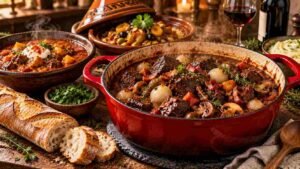
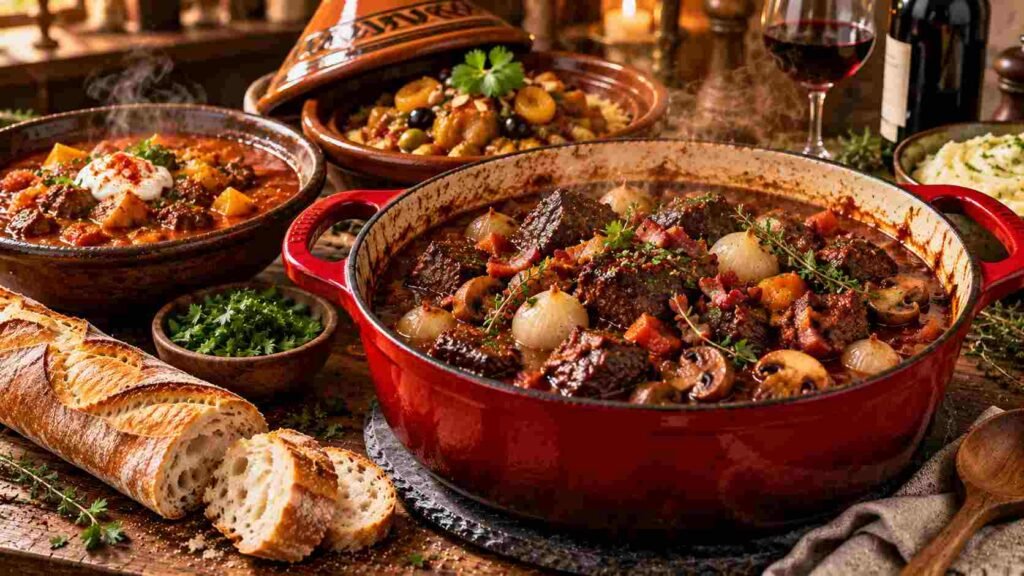
Simmering a classic beef bourguignon recipe fills the entire home with an intoxicating, aristocratic culinary aroma. Across historic French culinary traditions, slow braising represents the supreme expression of patient kitchen craftsmanship. The harmony of meltingly tender beef chuck, rich red reduction, crispy lardons, sweet pearl onions, and earthy mushrooms creates pure dining luxury. At Gulf Lights, we deliver verified culinary guides to elevate everyday home dining across the United Arab Emirates and beyond.
Mastering classical international stews does not require professional culinary diplomas or specialized copper cookware. In fact, achieving restaurant-caliber depth depends on meat searing thermodynamics, collagen breakdown physics, and balanced acid reductions. Furthermore, mastering these foundational braising methods unlocks beloved global treasures like aromatic Moroccan tagines, vibrant Hungarian goulash, and comforting Irish stews. Consequently, you can nourish your family with majestic, restaurant-grade banquets on relaxed weekends. Explore our complete culinary archive through our food category hub.
The Agrarian Origins of French Boeuf Bourguignon and Peasant Braising
The cultural journey of Boeuf Bourguignon began as a humble peasant specialty in the historic agricultural region of Burgundy. For centuries, Burgundian farmers worked alongside Charolais cattle, celebrated throughout Europe for their robust muscle structure. Working cattle developed dense, muscular connective tissues that proved tough under ordinary dry roasting methods.
Therefore, resourceful rural cooks developed a slow-cooking method to tenderize these tough cuts. They submerged cheap beef cubes in local red wine, simmering the meat over gentle hearth embers for hours. Furthermore, the natural acids in Burgundy wine softened rigid muscle filaments while infusing the meat with deep fruit complexity. You can review regional household grocery budgets and dining benchmarks in our guide to prices in dubai for food.
In 1903, master chef Auguste Escoffier refined this rustic farm dish, introducing it to luxury Parisian hotel menus. Later, Julia Child popularized the dish internationally, establishing it as the gold standard of classical French home entertaining. Moreover, similar comforting slow-simmered meat traditions unite diverse cultures worldwide. You can explore traditional Gulf grain and meat stews in our comprehensive guide to the national dish of uae. Boeuf Bourguignon celebrates the transformative magic of time, fire, and liquid.
The Culinary Chemistry of Braising: Collagen, Gelatin, and Temperature Regulation
Achieving melting tenderness in a meat stew requires understanding the biochemical breakdown of animal connective tissue. Cooking tough beef too rapidly squeezes moisture out, leaving dry, stringy meat.
Beef muscles contain abundant collagen, a triple-helix protein that forms tough connective sheaths around muscle fibers. At temperatures below 60°C (140°F), collagen remains rigid and gristly. However, when meat simmers gently between 71°C and 82°C (160°F to 180°F) in a moist environment, collagen denatures. The rigid protein strands unwind, transforming into silky, liquid gelatin. If you enjoy slow-simmered beef comfort, explore our homestyle beef stew recipe guide.
Furthermore, this dissolved gelatin absorbs cooking liquids, coating each individual muscle bundle in a lubricating glaze. Consequently, the meat turns fork-tender, yielding effortlessly without falling apart into dry shreds. In addition, the extracted gelatin thickens the braising liquid into a glossy, lip-smacking sauce. Maintaining gentle, low oven heat (150°C / 300°F) ensures collagen transforms into gelatin without boiling the meat fibers into tough leather.
Selecting the Perfect Cut: Chuck Roast vs Beef Shank vs Brisket
The success of your finished stew depends heavily on butcher cut selection. Lean, tender steaks like tenderloin or sirloin should never be used for braising. Lean cuts lack connective collagen, causing them to dry out and turn chalky under prolonged heat.
Well-marbled boneless beef chuck roast represents the undisputed gold standard for Boeuf Bourguignon. Cut from the steer’s shoulder, chuck roast contains an optimal ratio of intramuscular fat and connective tissue. As the fat renders, it bastes the meat internally, keeping the beef moist throughout hours of simmering. If you enjoy whole muscle cuts with high-heat sears, check our classic steak recipes.
Alternatively, cross-cut beef shanks or bone-in short ribs provide extraordinary richness. Beef shanks contain thick center marrow bones that release rich minerals and gelatin directly into the sauce. In contrast, beef brisket offers long, savory muscle strands that hold their shape exceptionally well during prolonged cooking. Review ground beef butchery dynamics in our master guide to ground beef recipes. Sourcing quality, well-marbled chuck guarantees succulent dining.
Wine Chemistry: Tannins, Acidity, and Alcohol-Free Red Grape Reductions
The defining soul of Boeuf Bourguignon lies in the rich, complex reduction that coats the beef. Understanding liquid chemistry ensures your sauce delivers deep, balanced fruit notes rather than harsh acidity.
Traditional French recipes mandate a full-bodied dry red wine, such as Pinot Noir from Burgundy, Cabernet Sauvignon, or Côtes du Rhône. Red wine contributes two vital elements: natural fruit acids and grape tannins. Natural malic and tartaric acids tenderize surface proteins while cutting through rich beef fat. Meanwhile, tannins bind to beef proteins, softening their astringency into smooth, rounded complexity. You can verify dairy baking measurements in our kitchen reference guide on 1 cup butter in grams.
For home cooks who prefer alcohol-free cooking, an authentic red grape reduction produces equally breathtaking depth. Simmer 750 milliliters of pure unsweetened red grape juice with two tablespoons of pomegranate molasses, two tablespoons of red wine vinegar, and beef bone broth. The pomegranate molasses provides natural fruit tannins and deep ruby color, while vinegar introduces essential acetic brightness. This balanced non-alcoholic reduction mimics the complex acidity of traditional French wine reductions flawlessly.
The Sacred Trinity of Bourguignon Garnishes: Lardons, Mushrooms, and Pearl Onions
What elevates Boeuf Bourguignon above ordinary beef stews is the classical French garnish trio. Cooking these three elements separately before folding them into the finished stew preserves their individual textures and flavors.
First, crisp cured beef lardons or smoked beef bacon provide smoky salinity and foundational cooking fat. Sauté the diced lardons until golden and crisp, removing them with a slotted spoon to leave savory rendered fat in the pan. Second, fresh pearl onions supply sweet, tender pops of caramelized flavor. Blanch whole pearl onions in boiling water for sixty seconds to slip their skins off effortlessly, then braise them in butter and beef stock until golden.
Third, brown cremini or button mushrooms introduce earthy umami. Sauté quartered mushrooms in smoking butter over high heat without crowding the skillet. High heat browns the exterior quickly while keeping the mushrooms juicy and plump. Never simmer raw mushrooms directly in the stew liquid, as boiling turns them rubbery and gray. If you enjoy thick skillet stews, explore our comforting chili techniques in our chili recipe guide. Sautéing garnishes separately guarantees visual elegance and textural contrast.
Mastering the Ultimate Beef Bourguignon Recipe at Home
This master beef bourguignon recipe delivers fork-tender beef chuck in a glossy, rich reduction garnished with pearl onions, mushrooms, and crispy lardons. Follow these step-by-step instructions for guaranteed dining triumph.
- Crisp the Lardons: In a heavy 6-quart enameled cast-iron Dutch oven, cook 150 grams of diced smoked beef bacon or lardons over medium heat until crispy. Remove with a slotted spoon, leaving rendered fat in the pot.
- Sear the Beef Cubes: Cut 1.2 kilograms of beef chuck into large five-centimeter cubes. Pat completely dry with paper towels. Sear in uncrowded batches over high heat for three minutes per side until deeply browned. Transfer to a side platter.
- Sauté the Aromatics: Add two sliced carrots and one sliced yellow onion to the hot fat. Cook for five minutes until lightly browned. Stir in three minced garlic cloves and two tablespoons of tomato paste, cooking for ninety seconds.
- Deglaze and Reduce: Pour in 750 milliliters of full-bodied red reduction or Pinot Noir, scraping up all caramelized browned fond from the bottom of the pot. Bring to a rapid boil, reducing the liquid by one-third.
- Add Broth and Herbs: Return the browned beef, crispy lardons, and resting juices to the pot. Pour in two cups of rich beef bone broth until meat is barely submerged. Add four fresh thyme sprigs, two bay leaves, and a teaspoon of kosher salt.
- Gentle Oven Braise: Cover tightly with a heavy lid. Transfer to a preheated oven at 150°C (300°F) and braise undisturbed for two and a half to three hours until beef yields effortlessly to a fork.
- Caramelize Pearl Onions: Sauté twenty peeled pearl onions in twenty grams of butter and half a cup of beef broth in a skillet for fifteen minutes until glazed and golden.
- Brown the Mushrooms: In a separate hot skillet, sauté 300 grams of quartered cremini mushrooms in butter over high heat for five minutes until golden-brown.
- Assemble and Glaze: Remove the Dutch oven from the oven. Discard thyme sprigs and bay leaves. Gently fold the caramelized pearl onions and browned mushrooms into the hot stew.
- Thicken if Desired: Simmer on the stovetop over low heat for five minutes until the sauce coats the back of a spoon with a glossy sheen. Garnish with chopped flat-leaf parsley before serving.
Serve immediately over buttery mashed potatoes or thick egg noodles. Pair this comforting classic with artisanal flatbreads from our naan bread recipe collection for diverse dinner spreads.
North African Aromatic Mastery: Authentic Moroccan Tagine and Chicken Tagine Recipe
Traveling south across the Mediterranean to the sun-drenched Atlas Mountains, an authentic moroccan tagine represents one of the world’s most fragrant braising traditions. Named after the earthenware cooking vessel, tagines balance tender meats with sweet fruits and warm spices.
An authentic chicken tagine recipe features bone-in chicken thighs marinated in ginger, garlic, saffron, turmeric, and fresh cilantro. Cooks sear the chicken gently before layering it with preserved lemons, cracked green olives, and sweet red onions. If you enjoy classic whole-poultry roasting, explore our foundational roast chicken recipe guide.
The preserved lemon rinds contribute salty, floral citrus oils that cut through rich poultry fat effortlessly. Furthermore, beef and lamb tagines frequently incorporate sweet dried apricots, prunes, and toasted almonds. The contrast between savory braised meat and sweet dried fruit creates an enchanting aromatic harmony. If you prefer lean white poultry on busy weeknights, explore our versatile chicken breast recipes. Moroccan tagines deliver vibrant, sun-drenched culinary warmth.
The Conical Clay Physics of the Tagine Pot
The distinctive conical earthenware tagine pot is a brilliant historical engineering achievement designed for arid desert environments. Understanding its aerodynamic thermodynamics helps you appreciate its cooking efficiency.
In traditional North African nomadic life, fresh cooking water was an extremely scarce resource. The heavy circular base of the tagine holds seasoned meat and vegetables over gentle charcoal embers. As internal moisture heats into steam, it rises into the tall, cool conical lid.
Because the cone’s pointed top remains exposed to cooler ambient air, the rising steam condenses along the interior clay walls. The condensed water droplets trickle continuously back down into the shallow base, basting the meat in a perpetual moisture cycle. Consequently, a tagine requires almost no added cooking water, cooking entirely in the natural juices of the ingredients. You can review corporate regulatory standards and safety practices in our legal and government services directory. Modern home cooks can replicate this moisture-lock dynamic using a heavy enameled Dutch oven.
Hungarian Soul Food: Authentic Hungarian Goulash and Goulash Recipe Secrets
Originating on the windswept Great Hungarian Plain during the ninth century, an authentic goulash recipe (Gulyás) represents the national soul of Central European cooking. Hungarian cattle herdsmen (gulyások) prepared this robust stew over open kettle fires called bogrács.
True hungarian goulash differs sharply from Western variations that incorporate ground beef and elbow macaroni. Authentic goulash is a rich, soupy stew crafted from cubed beef shank, yellow onions, and sweet bell peppers. Crucially, the liquid foundation relies on the natural juices of melting onions rather than thick tomato paste or flour roux. If you love thick comfort soups, explore our starch techniques in our potato soup recipe guide.
Simmer the beef with caraway seeds, garlic, diced carrots, and small pinched egg noodles called csipetke. Savoring tender beef enveloped in a fiery-red, aromatic paprika broth provides profound physical comfort. If you enjoy slow-cooked shredded meats, check our classic pulled pork recipe guide. Hungarian goulash is honest, rustic comfort food at its absolute finest.
The Pride of Budapest: Sweet Noble Paprika vs Smoked Paprika
The undisputed soul of Hungarian cooking is paprika, but using the correct variety is mandatory for authenticity. Many home cooks inadvertently ruin goulash by reaching for Spanish smoked paprika.
Spanish smoked paprika (pimentón) is dried over smoking oak fires, imparting a dominant campfire aroma that overwhelms delicate beef broths. In contrast, authentic Hungarian paprika (Édesnemes or Noble Sweet) is dried naturally in the sun before grinding. Hungarian sweet paprika delivers an intense crimson color, sweet vegetal pepper flavor, and gentle fruitiness without smokiness.
Furthermore, never add dry paprika to smoking-hot oil. Paprika contains high concentrations of natural fructose sugars that scorch in seconds, turning the spice bitterly acrid and ruining the entire pot. Always remove your cooking vessel from the heat source before stirring in paprika. Allow the warm onion juices and oil to dissolve the red powder gently before returning the pot to low heat. Understanding paprika dynamics guarantees a vibrant, sweet crimson broth.
Celtic Hearthside Tradition: Classic Irish Stew Recipe
Across the emerald hills of nineteenth-century Ireland, an authentic irish stew recipe represented the quintessential peasant comfort food. Historically, rural farming families prepared this unpretentious stew using tough mutton neck chops, potatoes, and yellow onions.
True Irish stew is celebrated for its radical culinary simplicity. It uses zero flour, tomato paste, or heavy wine reductions. Instead, cooks layer bone-in lamb shoulder or neck with thick-cut potatoes and onions inside a heavy pot, barely covering the ingredients with pure water. If you enjoy layered baked bakes, explore our celebrated best lasagna recipe.
As the stew simmers gently for two hours, the melting lamb fat and dissolving potato starches emulsify into a naturally creamy, comforting white broth. Modern variations frequently add sweet carrots and fresh thyme sprigs. Savoring sweet lamb meat paired with soft, broth-soaked potatoes delivers soothing warmth on rainy evenings. If you love burger patties, explore our skillet techniques in our smash burger recipe guide. Irish stew proves that humble pantry staples can achieve sublime comfort.
Belgian Beer-Braised Comfort: Authentic Carbonnade Flamande
Hailing from the misty historic towns of Flanders, an authentic carbonnade flamande is Belgium’s rich answer to French Boeuf Bourguignon. This decadent stew replaces red wine with dark Belgian abbey ale.
The secret to Carbonnade Flamande lies in balancing malty beer bitterness with sweet, tangy seasonings. Cooks brown beef chuck in rendered lardons before simmering it in a rich broth of caramelized yellow onions and dark Belgian Dubbel beer. In addition, Belgian cooks lay a slice of crusty sourdough bread smeared with sharp Dijon mustard directly on top of the simmering stew.
As the stew simmers for three hours, the mustard-coated bread dissolves slowly into the broth. The bread starches thicken the gravy into a velvety sauce, while Dijon mustard and a splash of cider vinegar provide bright acidity that cuts through malty beer sweetness. Serve piping hot with twice-fried Belgian frites and mayonnaise. If you enjoy crispy poultry cutlets, explore our breaded techniques in our classic fried chicken recipe guide. Carbonnade Flamande delivers malty, savory indulgence.
Maillard Caramelization and Fond Building: Deglazing Secrets
The greatest error home cooks make when preparing beef stew is overcrowding the pan during the initial meat sear. Searing meat properly is the foundational step of all master braises.
When cold, wet meat is crowded into a skillet, the pan temperature drops instantly below 100°C (212°F). Trapped moisture cannot escape as steam; instead, the meat boils in its own juices, turning a dull, unappetizing gray. In contrast, searing thoroughly dried meat in uncrowded single layers allows pan temperatures to exceed 150°C (300°F). At this heat, the Maillard reaction occurs, rearranging amino acids into hundreds of savory flavor compounds.
Furthermore, as meat sears, proteins caramelize onto the bottom of the pot, creating a dark, flavorful crust called “fond.” Never scrub this crust away. Pouring in wine, beer, or broth while scraping with a wooden spoon dissolves the fond back into the liquid. This dissolved fond provides the deep, savory backbone of your finished braising reduction. You can explore delicate protein coagulation physics in our master guide on how to boil eggs.
Thickening Dynamics: Beurre Manié, Root Vegetables, and Slow Reductions
A watery, runny stew fails to coat the palate, while a heavily floured stew tastes pasty and chalky. Understanding thickening dynamics allows you to achieve a luxurious, spoon-coating consistency.
First, allowing the braising liquid to reduce uncovered on the stovetop during the final ten minutes concentrates natural gelatin and flavors. Second, classical French pastry technique utilizes a thickening paste called “beurre manié” (kneaded butter). Knead equal parts softened butter and all-purpose flour into a smooth paste using your fingers. Whisk small marble-sized balls of beurre manié into the simmering stew.
The melting butter encapsulates flour starch granules, dispersing them evenly throughout the liquid without forming clumps. The starches swell in the heat, transforming thin broth into a glossy, velvety reduction within two minutes. Third, puréeing a cooked carrot or potato directly into the sauce thickens the gravy naturally with vegetable fiber. If you love sweet morning bakes, explore our fluffy breakfast treats in our pancake recipe collection.
Make-Ahead Aging: Why Braised Stews Taste Superior on Day Two
Experienced chefs universally agree that braised stews taste significantly better when served twenty-four hours after cooking. In fact, serving Boeuf Bourguignon fresh from the oven captures only a fraction of its potential.
As hot stew cools and rests in the refrigerator overnight, complex thermodynamic and biological changes occur. First, hot expanded muscle fibers contract during chilling, drawing flavorful braising liquid and wine reduction deep into the center of the meat. Second, harsh volatile acids mellow and harmonize with sweet aromatics, creating a rounded, unified flavor profile.
Third, rendered animal fats solidify into a firm, white cap on the surface of the chilled pot. You can effortlessly lift this solidified fat cap off with a spoon, leaving behind a clean, lean, and intensely savory sauce. Reheat gently over medium-low heat on the stovetop before serving. If you love flaky pastry dough, explore our master guide to apple pie recipe crusts. Overnight aging transforms great home cooking into four-star dining.
Nutritional Powerhouse: Bioavailable Collagen, Heme Iron, and Deep Satiety
Registered dietitians celebrate slow-simmered beef and bone stews as nutrient-dense foundations for sustained physical vitality. Savoring well-prepared braises delivers comprehensive nourishment and prolonged satiety.
Slow-braised beef chuck supplies rich complete dietary protein, bioavailable heme iron, and essential zinc. Heme iron is easily absorbed by the human body, supporting healthy red blood cell synthesis and cellular oxygenation. Furthermore, dissolved collagen releases abundant amino acids like glycine, proline, and glutamine into the broth. These amino acids support joint cartilage resilience, gut mucosal integrity, and restful sleep.
In addition, pairing braised meats with abundant root vegetables like carrots, onions, and garlic introduces prebiotic dietary fiber and antioxidant polyphenols. Discover nutrient-dense natural superfoods in our analysis of dates benefits. Discover how whole-food lifestyle frameworks support lifelong vitality in our comprehensive guide to a balanced diet. Wholesome stew cookery ensures indulgent dining supports long-term wellness.
Side Dish Symphony: Potato Purée, Crusty Breads, and Buttered Egg Noodles
Because slow-braised stews feature intensely rich, savory reductions, thoughtful starch accompaniments complete the celebratory dining experience. Starches provide the essential vehicle for capturing every drop of glossy sauce.
A mountain of silky French pomme purée (mashed potatoes) whipped with butter and cream represents Boeuf Bourguignon’s classical partner. In addition, wide buttered egg noodles tossed with fresh parsley provide comforting chew alongside Hungarian goulash. For Moroccan tagines, steaming semolina couscous fluffed with olive oil absorbs spiced floral broths effortlessly.
A crisp romaine salad tossed with our zesty caesar salad recipe dressing cuts through rich beef fats and heavy reductions beautifully. If you crave sweet celebration baking, explore our chocolate layer cakes in our chocolate cake recipe guide. For delicate ocean seafood variations, explore our ten-minute shrimp recipes collection. Harmonious accompaniments elevate casual stew dinners into an unforgettable culinary banquet.
Commercial Hospitality Careers in Saucier Stations and Classical French Kitchens
The global renaissance of classical European bistros, boutique hotel dining, and slow-food concepts has created vibrant career opportunities across the food service industry. In cosmopolitan hospitality capitals like Dubai, five-star resorts and French brasseries recruit talented sauciers, line cooks, and kitchen supervisors.
Culinary professionals who master precision stock reduction, collagen extraction science, and high-volume banquet service enjoy robust recruitment demand. If you are exploring professional vocational paths in gastronomy, review our comprehensive guide on hospitality tourism jobs. In addition, executive chefs and restaurant operations directors command prestigious compensation packages. Explore executive salary scales in our guide to the highest paying jobs.
Furthermore, restaurant networks rely on temperature-controlled warehousing to store fresh halal beef, poultry, and produce safely. Candidates interested in supply logistics can explore opportunities in our guide on dubai warehouse logistics jobs. Dedicated culinary staff can advance into corporate leadership roles through strategic career change growth. Many international culinary talents relocate using our guide to work abroad. You can study statutory labor standards in our analysis of the labour law uae.
Frequently Asked Questions About Beef Bourguignon and Global Stews
What is the best cut of beef for beef bourguignon?
Boneless beef chuck roast is the premier choice due to its rich intramuscular fat and connective collagen. Beef shanks and bone-in short ribs also yield extraordinarily tender results.
Why is the meat in my stew tough and chewy after two hours?
Meat remains tough if it has not cooked long enough for collagen to convert into gelatin, or if the heat was too high. Continue simmering gently over low heat (150°C / 300°F) until a fork slides into the meat with zero resistance.
Can I make beef bourguignon without alcohol?
Yes, simmer 750 milliliters of pure unsweetened red grape juice with two tablespoons of pomegranate molasses, two tablespoons of red wine vinegar, and beef broth for an identical sweet-tart reduction profile.
How do I keep my mushrooms from getting soggy in the stew?
Sauté quartered mushrooms in a separate smoking-hot skillet with butter until deeply browned, adding them to the stew only during the final ten minutes of simmering.
Mastering this classic beef bourguignon recipe gives you the culinary confidence to prepare rich, tender, and restaurant-quality braised stews right in your own kitchen. By understanding collagen conversion science, searing beef chuck to deep mahogany caramelization, and pairing melting meat with glazed pearl onions and mushrooms, you can create extraordinary comfort feasts that bring loved ones together. For additional culinary tutorials, kitchen advice, and verified lifestyle guides, connect with our specialist team via the Gulf Lights contact page. Discover more inspirational cooking articles on the Gulf Lights blog.