
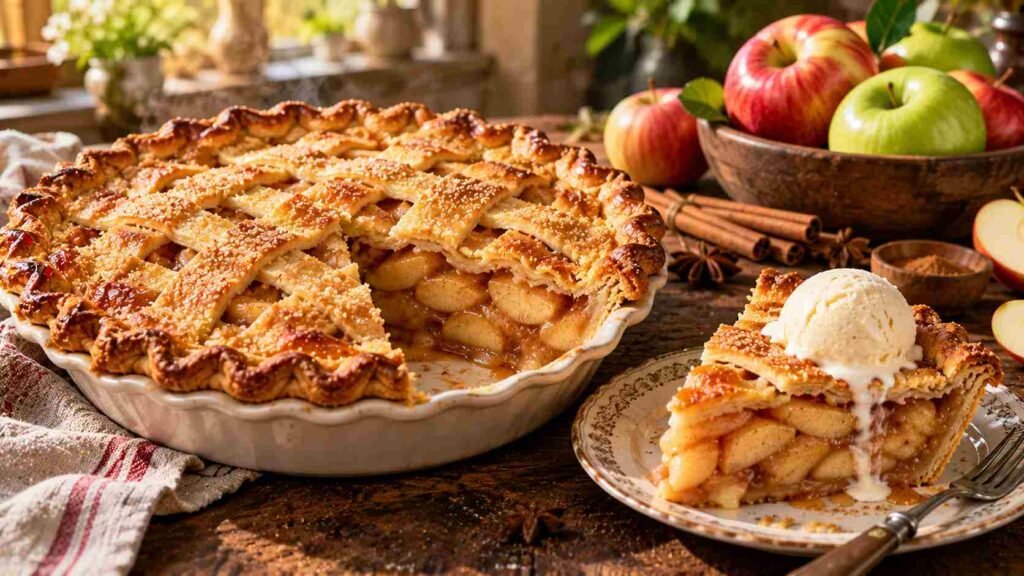
Baking a showstopping apple pie recipe from scratch is widely celebrated as the crowning pinnacle of domestic dessert baking. Across festive holiday gatherings and cozy family weekends, no dessert commands greater reverence than a golden, bubbling fruit pie. The contrast between an audibly flaky, buttery crust and tender, cinnamon-spiced orchard apples creates pure culinary bliss. At Gulf Lights, we deliver verified culinary guides to elevate everyday home dining across the United Arab Emirates and beyond.
Mastering fruit pies does not require generational secrets or professional pastry credentials. In fact, achieving bakery-caliber pies depends on fat temperature control, starch gelatinization, and moisture management. Furthermore, mastering fundamental pastry dough unlocks an entire universe of holiday showstoppers like velvety pumpkin pie, decadent pecan pie, and bubbling peach cobblers. Consequently, you can treat your loved ones to stunning, preservative-free artisanal desserts with complete confidence. Explore our complete culinary archive through our food category hub.
The Cultural Heritage of Fruit Pies: From Medieval Coffins to Modern Icons
The cultural journey of baked pastry crusts spans centuries of European culinary evolution. In medieval England, early pie crusts were known as “coffins” or “coffers.” These early thick pastry shells were hard, dense flour-and-water containers designed solely to preserve meats and fruits during baking. Diners rarely ate the tough crust itself, focusing instead on the steaming interior stew.
However, during the seventeenth and eighteenth centuries, pastry chefs incorporated generous amounts of rich butter into doughs. This innovation transformed pie crust into an edible, flaky delicacy. European settlers carried apple seeds to North America, planting orchards across the continent. You can review regional household grocery budgets and dining benchmarks in our guide to prices in dubai for food.
Over subsequent decades, apple pie became an international symbol of wholesome domestic hospitality. Moreover, similar comforting grain and fruit baking traditions flourish across diverse culinary cultures worldwide. You can explore traditional Gulf grain and meat stews in our comprehensive guide to the national dish of uae. Fruit pies celebrate the timeless art of turning seasonal harvests into joyful family banquets.
The Food Science of Flaky Pie Crust: Fat, Water, and Steam
Achieving that coveted, shatteringly crisp pie crust recipe is fundamentally an exercise in thermodynamic food science. A tough, dense, or greasy crust occurs when fat melts prematurely during mixing.
Flakiness requires solid fat pockets trapped between layers of hydrated wheat flour. As the pie bakes in a hot oven, the water trapped inside those cold butter pockets converts into steam. This expanding steam forces the surrounding flour layers upward, creating hundreds of distinct, paper-thin pastry leaves. If the butter melts before baking, it simply absorbs into the flour, resulting in a crumbly, shortbread-like texture rather than flaky layers.
Therefore, keeping your ingredients ice-cold is mandatory. Cube your butter and freeze it for fifteen minutes before cutting it into the flour. Furthermore, always use ice water to hydrate the dough. In addition, handle the pastry as little as possible. Human hands transfer body heat rapidly, melting delicate butter pockets and activating excess wheat gluten. You can compare dough hydration physics in our master guide to pizza dough recipe crusts.
Butter vs Shortening vs Lard: The Great Fat Debate
Bakers frequently debate which fat produces the superior pie crust: pure dairy butter, vegetable shortening, or traditional lard. Understanding fat properties allows you to customize your crust texture.
First, all-butter crusts deliver unmatched rich, nutty flavor that artificial vegetable fats cannot replicate. Butter contains roughly sixteen to eighteen percent water, which creates substantial steam for soaring flakiness. However, butter has a low melting point (32°C to 35°C / 90°F to 95°F), making all-butter dough delicate to handle. If you enjoy rich chewy bakes, explore our brown butter secrets in our chocolate chip cookie recipe guide.
Second, vegetable shortening contains one hundred percent pure fat with zero water. Shortening boasts a much higher melting point, making dough remarkably forgiving to roll and fluting beautifully without slumping. However, shortening lacks flavor completely. Consequently, many pastry chefs use a hybrid combination of seventy percent butter for flavor and thirty percent shortening for structure. You can verify dairy baking measurements in our kitchen reference guide on 1 cup butter in grams.
Apple Variety Chemistry: Balancing Tart Granny Smiths and Honeycrisps
The texture of your finished pie filling depends directly on the botanical structure of the apples you select. Baking with soft, mealy apples like Red Delicious produces a watery, applesauce-like purée.
Great fruit pies require firm cooking apples rich in natural pectin and malic acid. Firm apples retain their structural shape under extended heat, providing a toothsome bite. Granny Smith apples are the undisputed champion of baking, offering high acidity, firm cell walls, and bright tartness that cuts through sweet sugar. However, using Granny Smiths alone can taste one-dimensionally sour.
Therefore, professional pie bakers always blend two or three distinct apple varieties. Combine tart Granny Smiths with sweet, crisp varieties like Honeycrisp, Braeburn, or Pink Lady. Honeycrisp introduces juicy sweetness and floral perfume, while Granny Smith maintains firm architecture. Blending varieties guarantees an intricate balance of sweet, tart, and aromatic flavors in every bite. If you enjoy moist fruit bakes, explore our celebrated banana bread recipe guide.
Preventing the Gap: The Science of Macerating and Pre-Cooking Apples
Have you ever sliced into a freshly baked pie only to find a hollow cavern between the top crust and the shrunken apple filling? This disappointing phenomenon is known as the “pie gap.”
The pie gap occurs because raw apples contain roughly eighty-five percent water trapped inside cellular vacuums. In the hot oven, the top pastry crust sets into a rigid dome within twenty minutes. Meanwhile, the raw apples below release their internal water, shrinking by up to forty percent. The filling collapses downward while the crust stays domed, leaving an empty void.
Fortunately, you can eliminate the pie gap through maceration. Toss your sliced apples with sugar, lemon juice, and spices, letting them rest in a colander for thirty minutes. Osmosis draws out excess cellular liquid into a bowl below. Next, simmer that extracted spiced juice with butter in a saucepan until it reduces into a thick, syrupy caramel. Toss the reduced caramel back with the drained apples before filling the pie. This step pre-shrinks the fruit, ensuring your baked pie stays completely full and sliceable. You can review corporate regulatory standards and safety practices in our legal and government services directory.
Mastering the Ultimate Homemade Apple Pie Recipe at Home
This master apple pie recipe delivers a shatteringly flaky all-butter double crust packed with spiced, tender apples in seventy-five minutes of baking. Follow these step-by-step instructions for guaranteed baking triumph.
- Make the Flaky Dough: In a large bowl, whisk two and a half cups of all-purpose flour, one tablespoon of sugar, and one teaspoon of kosher salt. Cut 225 grams of cold cubed unsalted butter into the flour using a pastry blender until pea-sized butter bits remain.
- Hydrate Gently: Drizzle six to eight tablespoons of ice water over the flour, tossing with a fork until dough just holds together. Divide into two discs, wrap in plastic, and chill for two hours.
- Slice and Macerate Apples: Peel, core, and slice one kilogram of mixed Granny Smith and Honeycrisp apples into six-millimeter slices. Toss with half a cup of brown sugar, a quarter cup of white sugar, one teaspoon of cinnamon, a quarter teaspoon of nutmeg, and one tablespoon of lemon juice. Rest in a colander for thirty minutes, catching the liquid in a bowl.
- Reduce the Juices: Simmer the collected apple juices in a small saucepan with thirty grams of butter for five minutes until thick and syrupy. Toss back over the drained apples along with two tablespoons of cornstarch or tapioca starch.
- Roll the Bottom Crust: Roll one dough disc on a floured surface to thirty centimeters in diameter. Ease it gently into a 9-inch deep-dish glass pie plate without stretching.
- Fill and Lattice: Pour the apple filling into the crust, packing the slices tightly to eliminate air pockets. Roll the second dough disc, cut into two-centimeter strips, and weave an intricate lattice top over the apples.
- Crimp and Vent: Trim excess dough, fold the edges inward, and flute the rim with your fingers to seal securely.
- Egg Wash and Sugar: Brush the lattice crust lightly with an egg wash (one egg beaten with one tablespoon of milk). Sprinkle generously with coarse turbinado sparkling sugar. Explore egg wash chemistry in our guide on how to boil eggs.
- Bake with Heat Progression: Bake in a preheated oven at 220°C (425°F) on the bottom rack for twenty minutes. Reduce heat to 190°C (375°F) and bake for forty-five to fifty-five minutes until juices bubble vigorously through the lattice vents.
- Cool Completely: Transfer to a wire cooling rack and let rest undisturbed for at least four hours before slicing. Cooling allows starch to set the filling into sliceable layers.
Serve slightly warm with vanilla bean ice cream or sharp cheddar cheese. Pair this comforting classic with artisanal flatbreads from our naan bread recipe collection for diverse entertaining.
Autumn Holiday Royalty: Authentic Pumpkin Pie Recipe
No holiday dinner table is complete without the warm, spiced presence of an authentic pumpkin pie recipe. Unlike fruit-filled pies, pumpkin pie is an open-faced custard tart baked inside a single pre-baked pastry shell.
The secret to silky, crack-free pumpkin pie lies in gentle baking heat and ingredient ratios. Whisk pure pumpkin purée with eggs, heavy cream, evaporated milk, dark brown sugar, and pumpkin pie spice (cinnamon, ginger, nutmeg, and cloves). The evaporated milk provides rich dairy solids without excess water, creating an ultra-dense, custardy texture.
Blind bake your bottom pie crust with pie weights until pale golden before adding the filling. Pour the spiced custard into the warm crust, baking at 175°C (350°F) for fifty minutes. Turn off the oven when the outer edges are set but the center two inches still jiggle gently like gelatin. Let the pie cool inside the turned-off oven with the door propped open. This gradual cooling prevents the surface from cracking. If you love savory breakfast bakes, explore our custard techniques in our breakfast casserole recipe guide.
Southern Holiday Decadence: Classic Pecan Pie Recipe
Hailing from the historic plantations of the American South, an authentic pecan pie recipe delivers rich, caramelized luxury. This iconic dessert features crisp toasted pecans suspended in a molten brown sugar-caramel filling.
Combine dark brown sugar, pure cane syrup or dark corn syrup, melted butter, eggs, pure vanilla extract, and a splash of bourbon. Whisk until silky smooth, then fold in plenty of fresh pecan halves. The pecans float naturally to the surface during baking, toasting under direct oven heat while the rich caramel custard sets below.
Season the filling with half a teaspoon of sea salt; salinity is essential to temper the intense sweetness of the syrup. Bake in an unbaked pie shell at 175°C (350°F) for fifty minutes until puffed and set. Biting through toasted, crunchy pecans into a warm, gooey caramel center is pure southern luxury. If you enjoy slow-cooked shredded meats, check our classic pulled pork recipe guide. Pecan pie represents holiday decadence at its absolute finest.
Sun-Drenched Summer Comfort: Homestyle Peach Cobbler Recipe
When summer stone fruits reach peak sweetness, a bubbling peach cobbler recipe provides effortless dessert joy. Unlike pies that require meticulous dough rolling, cobblers celebrate rustic, unpretentious comfort.
Toss sliced fresh summer peaches with sugar, lemon juice, bourbon, and a touch of cornstarch. Melt a stick of butter directly inside a deep cast-iron skillet or baking dish. Pour a sweetened buttermilk batter over the melted butter without stirring, and spoon the macerated peaches across the top.
As the cobbler bakes at 190°C (375°F), the buttermilk batter rises magically through the fruit, baking into golden, fluffy biscuit dumplings. The peach juices bubble into a thick, amber syrup around the cake-like crust. Serve piping hot directly from the cast-iron skillet with generous scoops of vanilla bean ice cream. If you love burger patties, explore our skillet techniques in our smash burger recipe guide. Peach cobbler brings breezy summer warmth to the table.
Fast Weeknight Rustic Warmth: Crunchy Apple Crisp Recipe
When you crave the sweet spiced flavors of apple pie in under forty minutes, an authentic apple crisp recipe delivers immediate satisfaction. Apple crisp eliminates pie dough entirely, replacing it with a crunchy streusel topping.
Toss sliced tart apples with cinnamon and lemon juice, arranging them in a buttered baking dish. In a separate bowl, blend whole rolled oats, brown sugar, all-purpose flour, cinnamon, and cold cubed butter using your fingertips until clumpy streusel crumbs form. Scatter the oat crumble generously over the apples.
Bake at 180°C (350°F) for thirty-five minutes until the apples bubble softly and the oat topping turns deeply golden and crunchy. The oats toast into nutty clusters that contrast beautifully with tender spiced fruit. If you enjoy fluffy morning breakfast bakes, explore our celebrated pancake recipe guide. Apple crisp delivers comforting fall flavors with zero pastry stress.
Tropical Sunshine and Velvet Curd: Florida Key Lime Pie Recipe
Transporting your palate from autumn orchards to sunny tropical shores, an authentic key lime pie recipe represents the pinnacle of refreshing citrus elegance. Born in the nineteenth-century Florida Keys, this iconic pie requires no pastry rolling.
Authentic Key lime pie utilizes an audibly crisp graham cracker crust. Crush whole graham crackers into fine crumbs, tossing with melted butter and sugar before pressing firmly into a pie plate. Bake the crust for eight minutes to set. Meanwhile, whisk egg yolks, sweetened condensed milk, and fresh Key lime juice together into a smooth curd.
The natural citric acid in Key lime juice reacts chemically with the milk proteins and egg yolks, thickening the filling naturally. Bake for fifteen minutes at 175°C (350°F) to pasteurize the eggs, then chill in the refrigerator for at least six hours. The silky, tart lime custard balances against sweet, buttery graham crumbs effortlessly. Top with clouds of freshly whipped heavy cream. If you enjoy quick shellfish preparations, explore our ten-minute shrimp recipes. Key lime pie provides clean, electrifying tropical brightness.
Baking Thermodynamics: Pie Plates, Heat Deflection, and Crisp Bottom Crusts
The greatest disappointment in pie baking is a soggy, pale bottom crust known colloquially as the “soggy bottom.” Preventing this requires mastering heat transfer physics.
First, always bake pies in standard tempered glass pie plates (such as Pyrex) or heavy ceramic dishes. Glass is an exceptional conductor of radiant heat, and it allows you to look through the bottom of the dish to verify that the crust has browned into a deep golden hue. Avoid disposable aluminum tins; thin metal bends easily and deflects heat, leaving bottom crusts pale and raw.
Second, preheat a heavy baking stone, steel plate, or rimmed baking sheet on the lowest oven rack for forty-five minutes. When you place your cold pie plate directly onto this scorching metal surface, heat transfers instantly into the bottom butter layers. This rapid thermal contact fries the bottom crust into a crisp barrier before fruit juices can seep in. If you enjoy precision searing on thick beef cuts, check our classic steak recipes. High bottom heat guarantees crisp slices every time.
The Mandatory Cooling Rest: Why You Must Never Cut Hot Fruit Pies
The intoxicating aroma of freshly baked pie tempts many home cooks to slice into it immediately upon leaving the oven. However, slicing into a piping hot fruit pie is the fastest way to ruin hours of careful work.
Pie thickeners like cornstarch, tapioca, and natural fruit pectin require specific temperatures to complete their chemical work. While boiling in the oven, starches swell and burst. However, they establish their firm, gelled matrix only as the temperature drops below 45°C (113°F). Slicing a hot pie causes liquid juices to pour out like soup, leaving dry fruit behind.
Therefore, let your baked fruit pie rest undisturbed on a wire cooling rack at room temperature for at least four full hours. During this cooling window, the fruit filling sets into distinct, sliceable tiers that hold their architectural shape on the plate. If you prefer warm pie, re-warm individual cooled slices in a 150°C (300°F) oven for ten minutes right before serving. If you enjoy slow-simmered beef comfort, explore our homestyle beef stew recipe guide. Patience guarantees picture-perfect slices.
Nutritional Balance: Whole Fruits, Antioxidants, and Mindful Indulgence
While holiday pies are celebrated as rich festive indulgences, cooking from scratch allows you to incorporate wholesome, natural nutrition. Mindful baking choices support long-term wellness.
Orchard apples supply abundant dietary fiber, specifically soluble pectin. Pectin supports digestive regularity and helps regulate healthy blood lipid levels. Furthermore, apples and berries are loaded with polyphenol antioxidants like quercetin and anthocyanins, which protect cells against oxidative inflammation. In addition, using real Ceylon cinnamon provides proven metabolic benefits that support stable blood glucose regulation.
Furthermore, sweet natural fruits like dates provide exceptional potassium, magnesium, and dietary fiber for clean, unrefined sweetness in baking. Discover nutrient-dense natural superfoods in our analysis of dates benefits. Discover how whole-food lifestyle frameworks support lifelong vitality in our comprehensive guide to a balanced diet. Mindful dessert choices ensure sweet baking aligns with long-term wellness.
Side Dish Symphony: Gelato, Custards, and Aged Cheeses
Because warm spiced fruit pies deliver sweet, tart, and cinnamon notes, thoughtful accompaniments complete the celebratory dining experience. Balancing sweet bakes with contrasting textures satisfies every palate.
A generous scoop of premium vanilla bean gelato or homemade whipped cream melting over warm apple pie represents culinary perfection. In addition, an ancient Yorkshire and New England tradition serves warm apple pie with a thick wedge of sharp aged cheddar cheese. The salty, savory tang of aged cheese cuts through sweet cinnamon apples, creating an addictive flavor harmony.
If you crave crisp greens alongside savory holiday meals, pair your feast with a romaine salad tossed with our zesty caesar salad recipe dressing. If you prefer lean white poultry on busy weeknights, explore our tender chicken breast recipes. For celebratory main courses, explore our classic fried chicken recipe guide. Harmonious accompaniments elevate casual baking into an unforgettable culinary celebration.
Commercial Hospitality Careers in Pastry Arts and Boutique Bakeries
The global boom in artisanal bakeries, luxury dessert lounges, and high-end hotel pastry departments has created vibrant career opportunities across the food service industry. In cosmopolitan hospitality capitals like Dubai, five-star resorts and boutique patisseries recruit talented pastry chefs, pie makers, and baking supervisors.
Culinary professionals who master precision dough scaling, lamination science, and high-volume banquet production enjoy robust recruitment demand. If you are exploring professional vocational paths in gastronomy, review our comprehensive guide on hospitality tourism jobs. In addition, executive pastry chefs and bakery operations directors command prestigious compensation packages. Explore executive salary scales in our guide to the highest paying jobs.
Furthermore, bakery networks rely on temperature-controlled warehousing to store premium butter, flours, and frozen fruits safely. Candidates interested in supply logistics can explore opportunities in our guide on dubai warehouse logistics jobs. Dedicated culinary staff can advance into corporate leadership roles through strategic career change growth. Many international culinary talents relocate using our guide to work abroad. You can study statutory labor standards in our analysis of the labour law uae.
Frequently Asked Questions About Baking Fruit Pies
Why is the bottom crust of my apple pie soggy?
Bottom crusts turn soggy if the pie is baked in a disposable tin, if the bottom heat is insufficient, or if raw watery apples are used. Bake in a glass pie plate placed directly on a preheated baking steel on the lowest oven rack.
What is the best thickener for apple pie filling?
Cornstarch and tapioca starch are the best thickeners for fruit pies. They create a clear, glossy gel that sets firmly without clouding the filling or imparting a chalky flour taste.
Can I freeze an unbaked apple pie and bake it later?
Yes, unbaked apple pie freezes exceptionally well. Assemble the pie completely in a freezer-safe dish, wrap tightly in plastic wrap and aluminum foil, and freeze for up to three months. Bake directly from frozen at 200°C (400°F), adding fifteen minutes to the baking time.
How do I keep my pie crust edges from burning in the oven?
Check your pie after thirty minutes of baking. If the fluted outer edges are browning too rapidly, wrap a ring of aluminum foil or a silicone pie crust shield around the rim to protect it while the center continues baking.
Mastering this classic apple pie recipe gives you the culinary confidence to prepare shatteringly flaky, fragrant, and bakery-quality desserts right in your own kitchen. By respecting butter thermodynamics, macerating orchard apples, and allowing your pie to cool completely, you can create extraordinary sweet feasts that bring loved ones together. For additional culinary tutorials, kitchen advice, and verified lifestyle guides, connect with our specialist team via the Gulf Lights contact page. Discover more inspirational cooking articles on the Gulf Lights blog.